
Yellow Lower Leaves in Mid-Flower: Deficiency or Natural Shading?
The situation
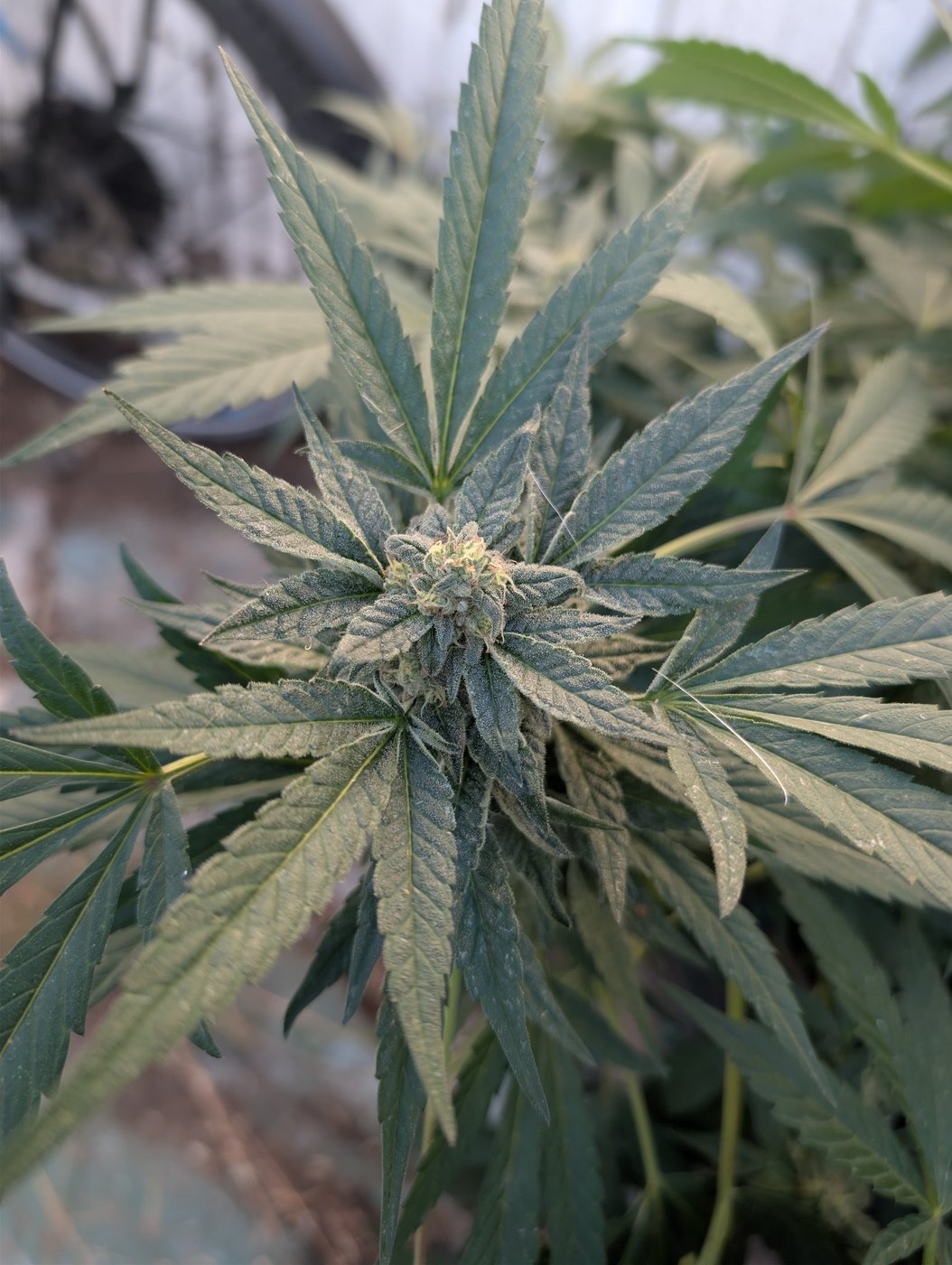
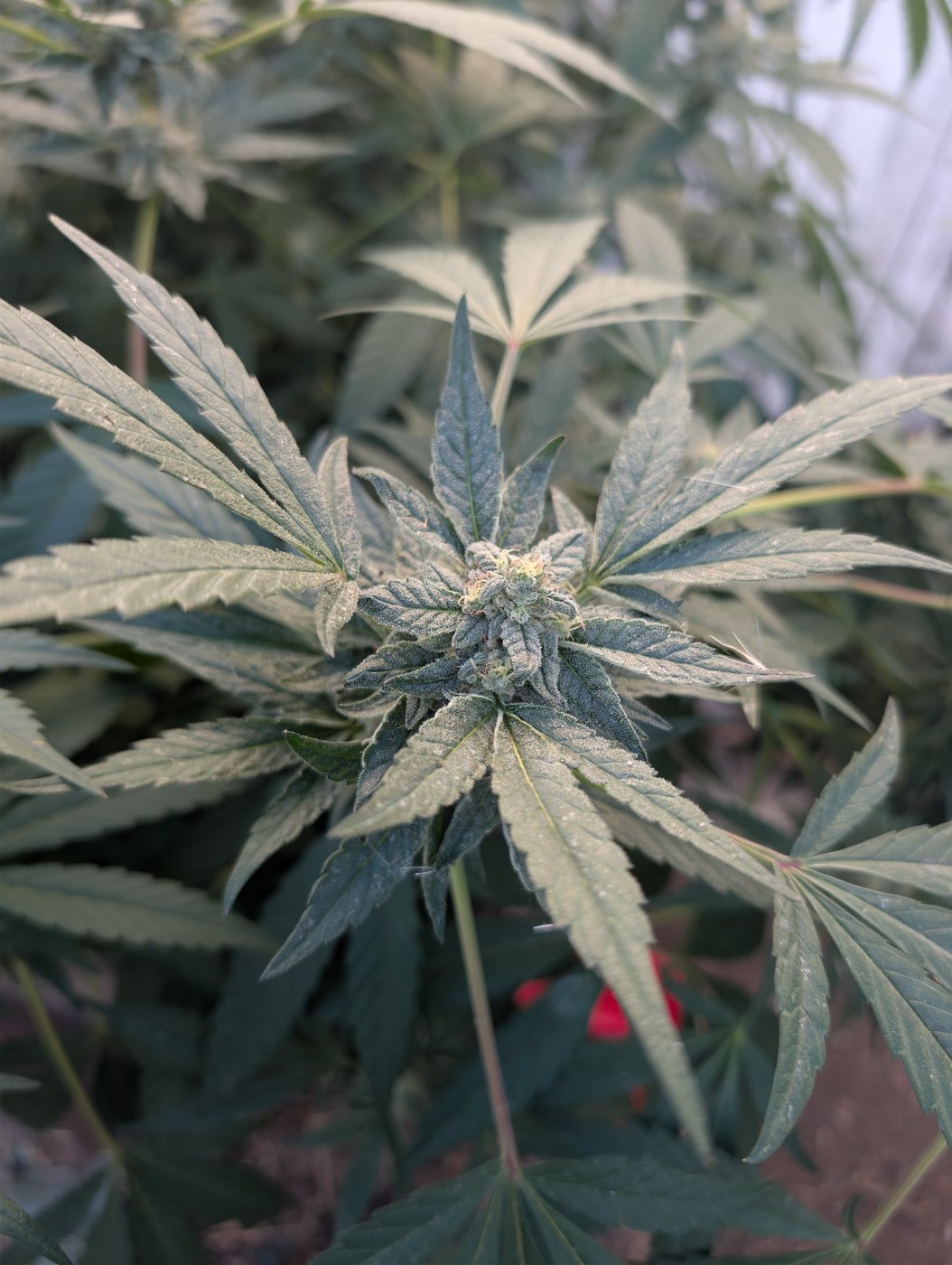
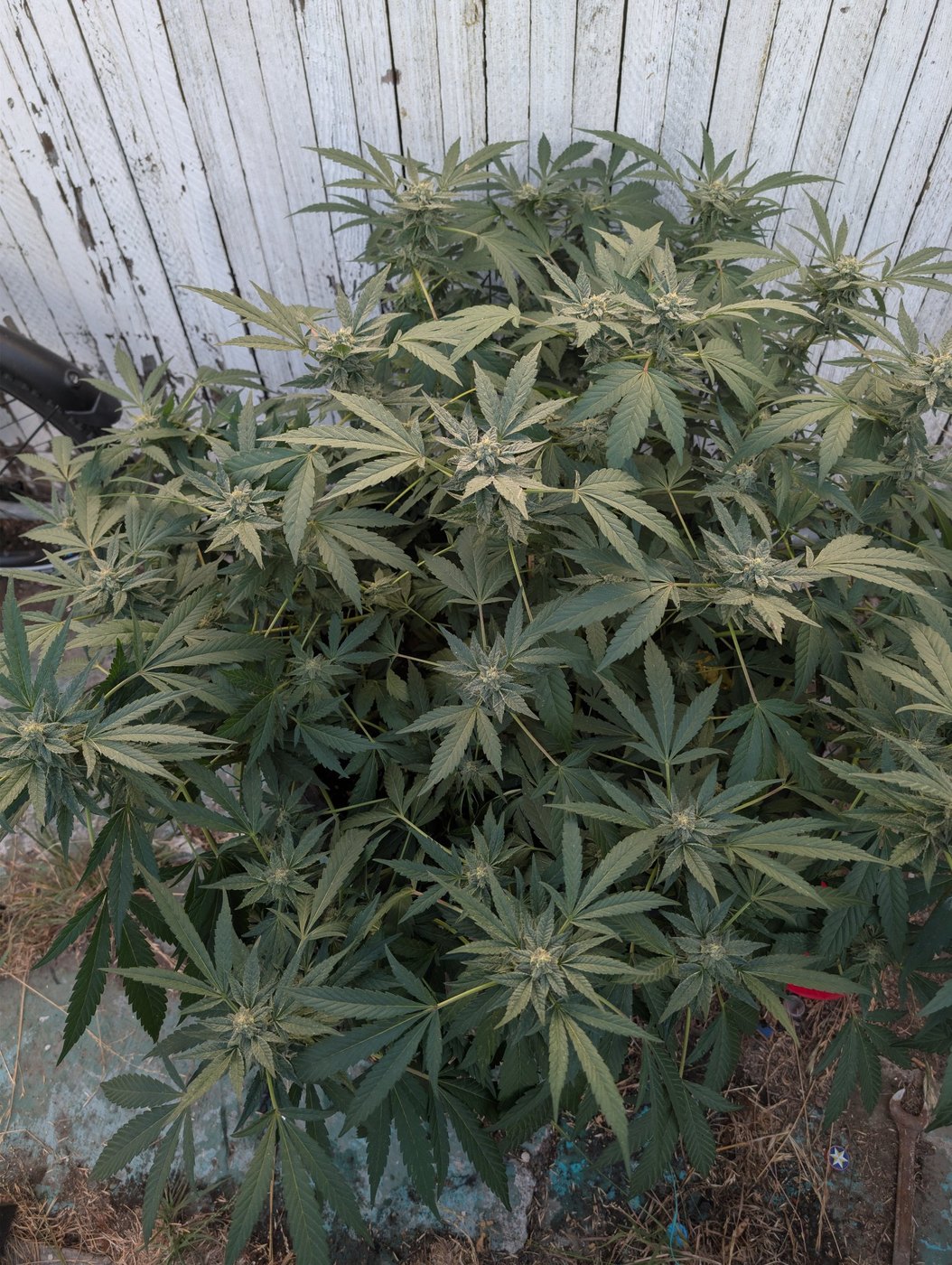
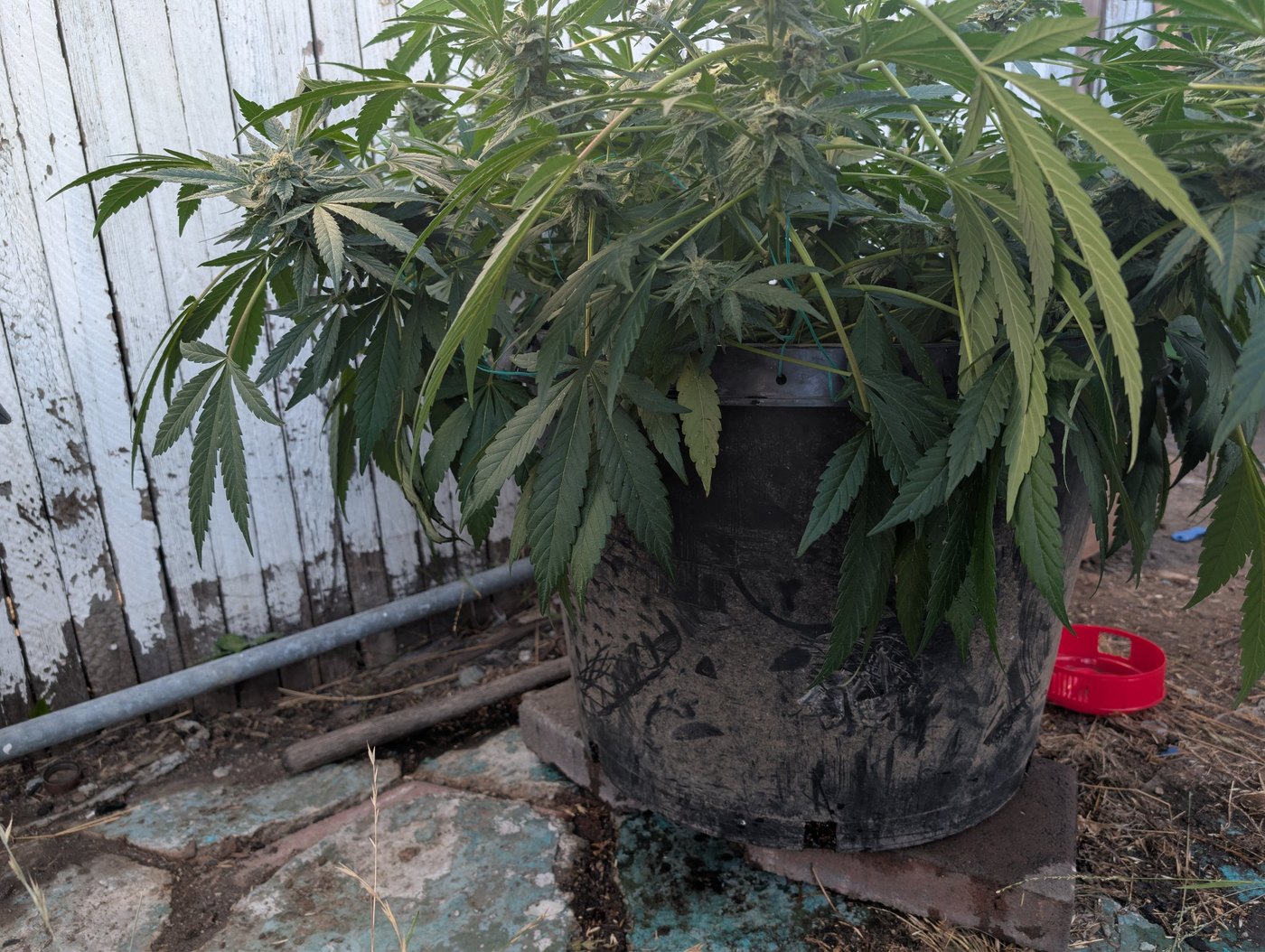
Our grower has a beautiful, bushy Purple Pomegranate hybrid growing outdoors in a massive 30-40 gallon pot of coco coir. The weather that day was a comfortable 74F with 45% relative humidity (a warm, dry day perfect for flowering plants). The upper canopy looked phenomenal, flat, wide, and absolutely loaded with developing bud sites sporting fresh white pistils and early resin frost.
But down below, it was a different story. The lowest, heaviest leaves drooping over the rim of the pot were turning bright yellow. Fearing these shaded leaves were "energy vampires" draining the plant, the grower fed four gallons of bloom nutrients and considered doing a heavy "lollipop" prune to completely strip the bottom of the plant.
The diagnosis
Let us use our clinician's logic to localize these symptoms. The yellowing is occurring exclusively on the oldest, lowest growth. This points directly to a mobile nutrient issue, specifically nitrogen. When a plant needs nitrogen to build flowers, it can easily pull it from old leaves and send it to new growth.
However, this is not a genuine soil deficiency. In a massive 30-40 gallon container of coco, a true shortage is highly unlikely, especially with regular feeding. Instead, this is natural senescence caused by shading. The upper canopy is so dense and wide that almost zero sunlight is reaching the lowest leaves. Since those leaves cannot photosynthesize without light, the plant is reclaiming their mobile nutrients to feed the swelling buds above, then letting the useless leaves die off.
We must also address the lollipop idea. Heavy lollipoping (stripping the lower third of the plant) is great in late veg or the first 15 days of flower, but doing a harsh strip-down in mid-flower can cause severe stress, stun flower development, or even trigger hermaphroditic traits.
The solution
- Do not do a harsh, high lollipop prune. Stripping the lower third this late in flower will shock the plant and reduce your yields.
- Gently snip away only the dead, completely yellow, or decaying lower leaves on the bottom quarter of the plant to improve airflow and prevent mold.
- Remove any weak, spindly, light-starved lower shoots (popcorn sites) that are hidden deep in the shade, but leave the healthy green foliage intact.
- Let the large container dry out. Since you just watered with 4 gallons of nutrient solution, wait until the top 2-3 inches of the medium feel bone dry to the touch before watering again.
- Keep your daytime temperature around 72-80F and relative humidity at 45-50% (VPD of 1.3-1.5) to keep nutrient transpiration flowing smoothly.
How to avoid this
- Train early in the vegetative stage using Low Stress Training (LST) to spread the canopy wide before flowering begins.
- Perform your major defoliation and lollipoping during transition (week 1-3 of flower) so the plant has time to recover before heavy bud production starts.
- Avoid overwatering large pots of coco, as wet, cold roots can mimic nutrient deficiencies by slowing down nutrient uptake.
- Monitor light penetration through your canopy: if lower leaves are in 100% shade, expect them to yellow and prune them preventatively before they rot.
Facing something similar? Start a free journal and I'll look at your plant: photos in, diagnosis out, 24/7.
Get a free diagnosis