
White Patches on Outdoor Buds: Resin or Powdery Mildew?
The situation
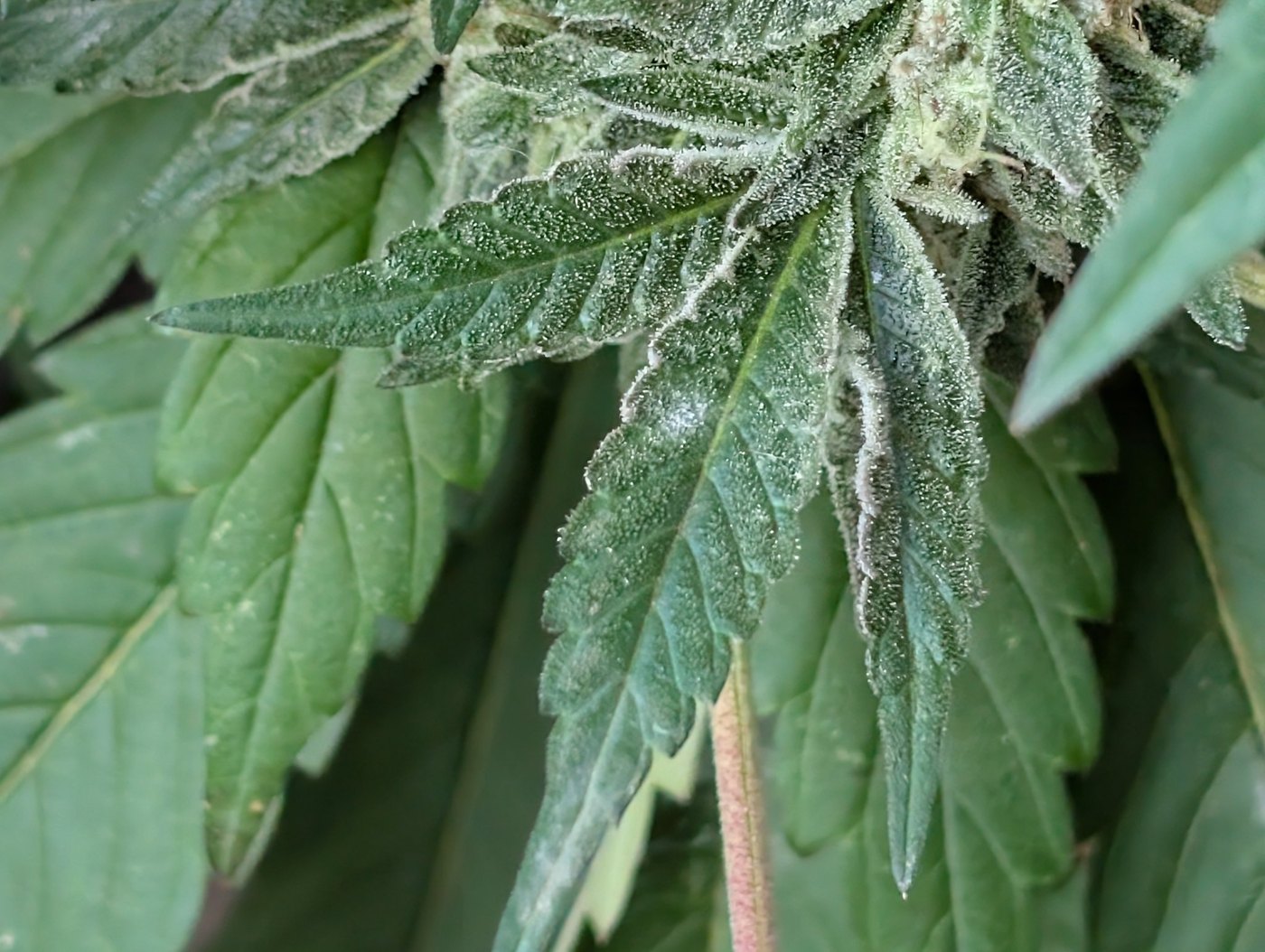
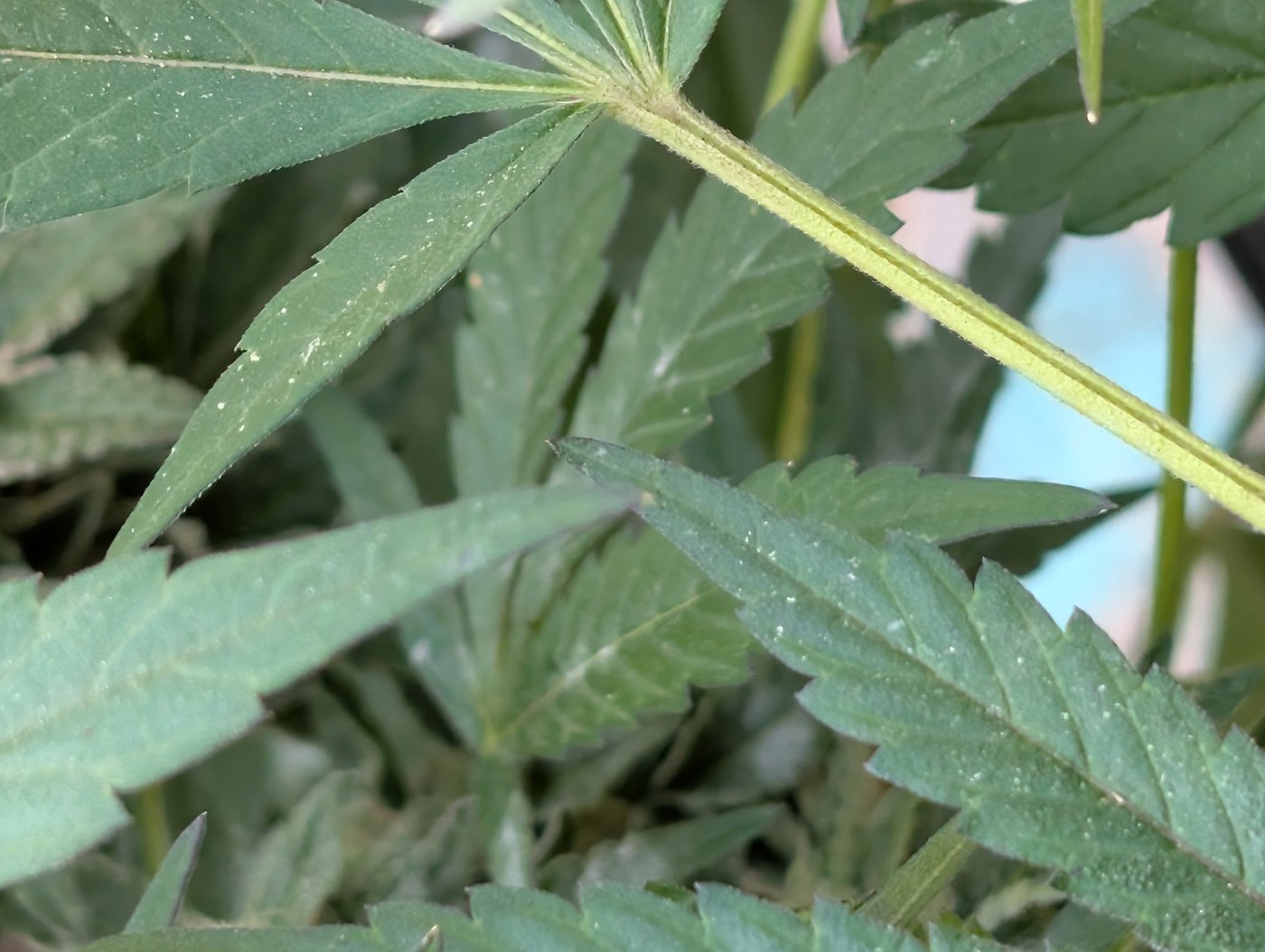
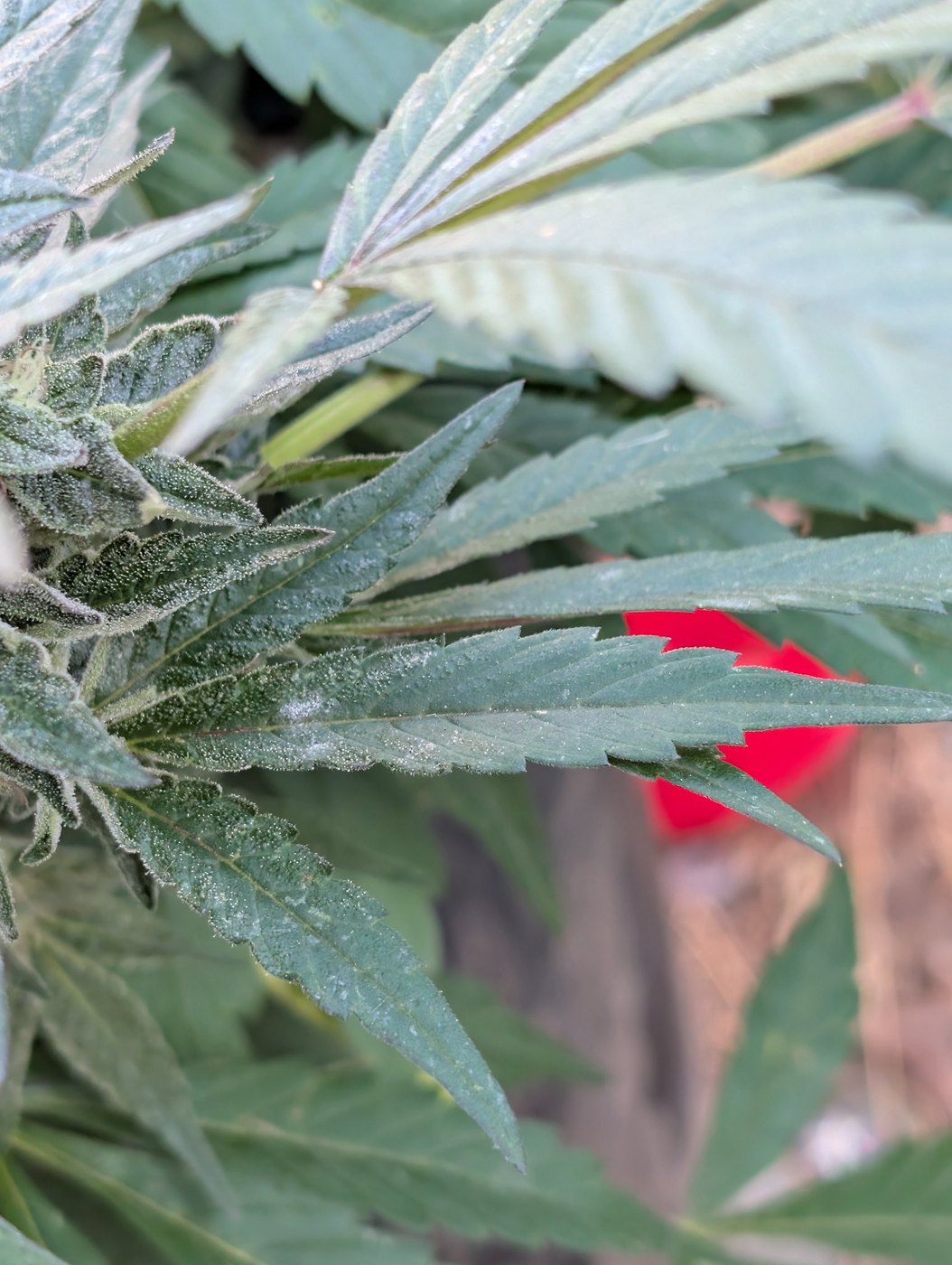
An outdoor grower found white material tucked into flower areas that were difficult to trim. The plant was still actively swelling, with many pale flower hairs, so harvesting the entire crop would have been premature.
The canopy had experienced 62% RH, cool 55-56F nights, and morning dew. Those conditions can keep dense flowers damp long enough for powdery mildew to establish, even after a clear 67F day.
The diagnosis
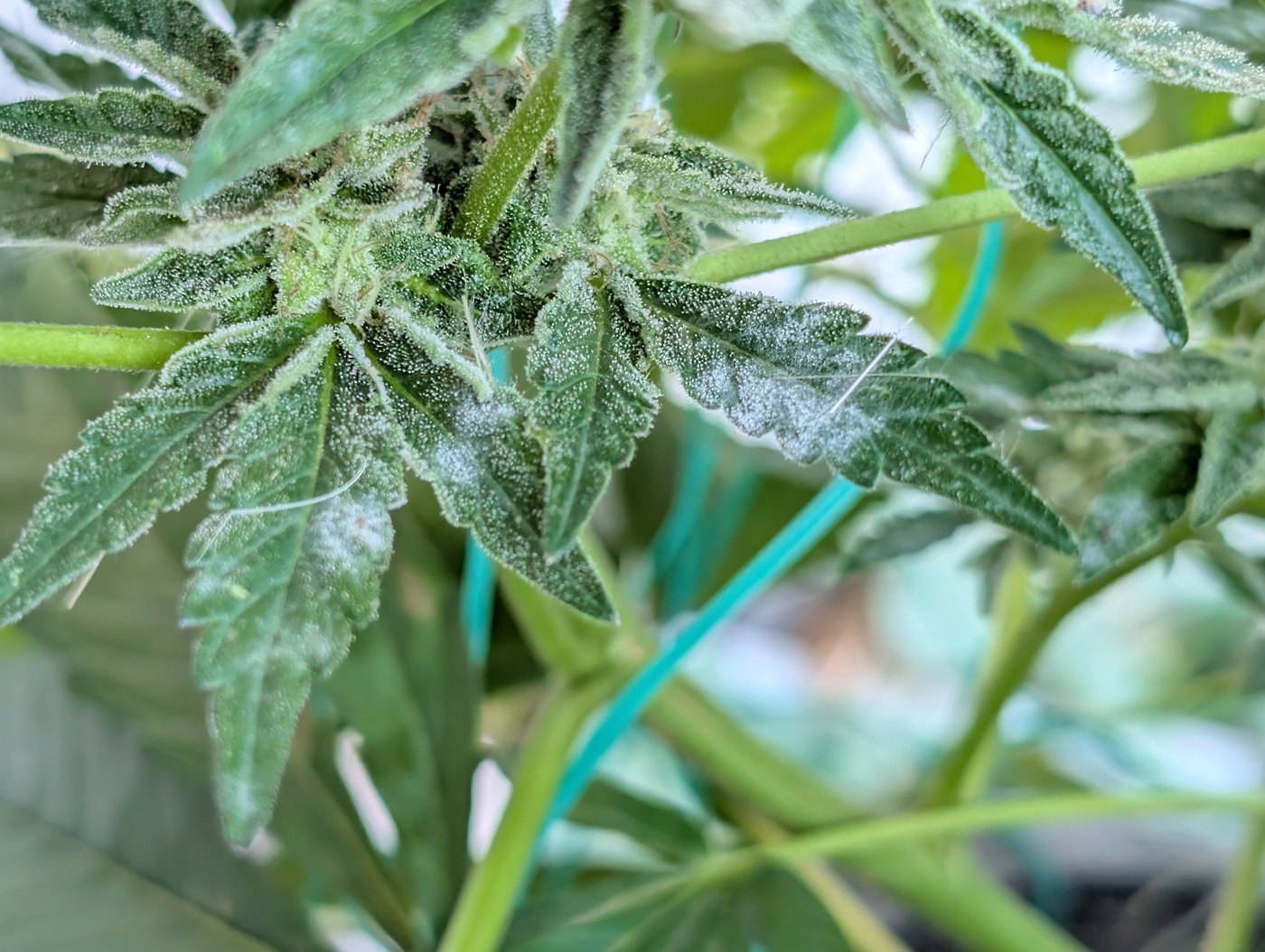
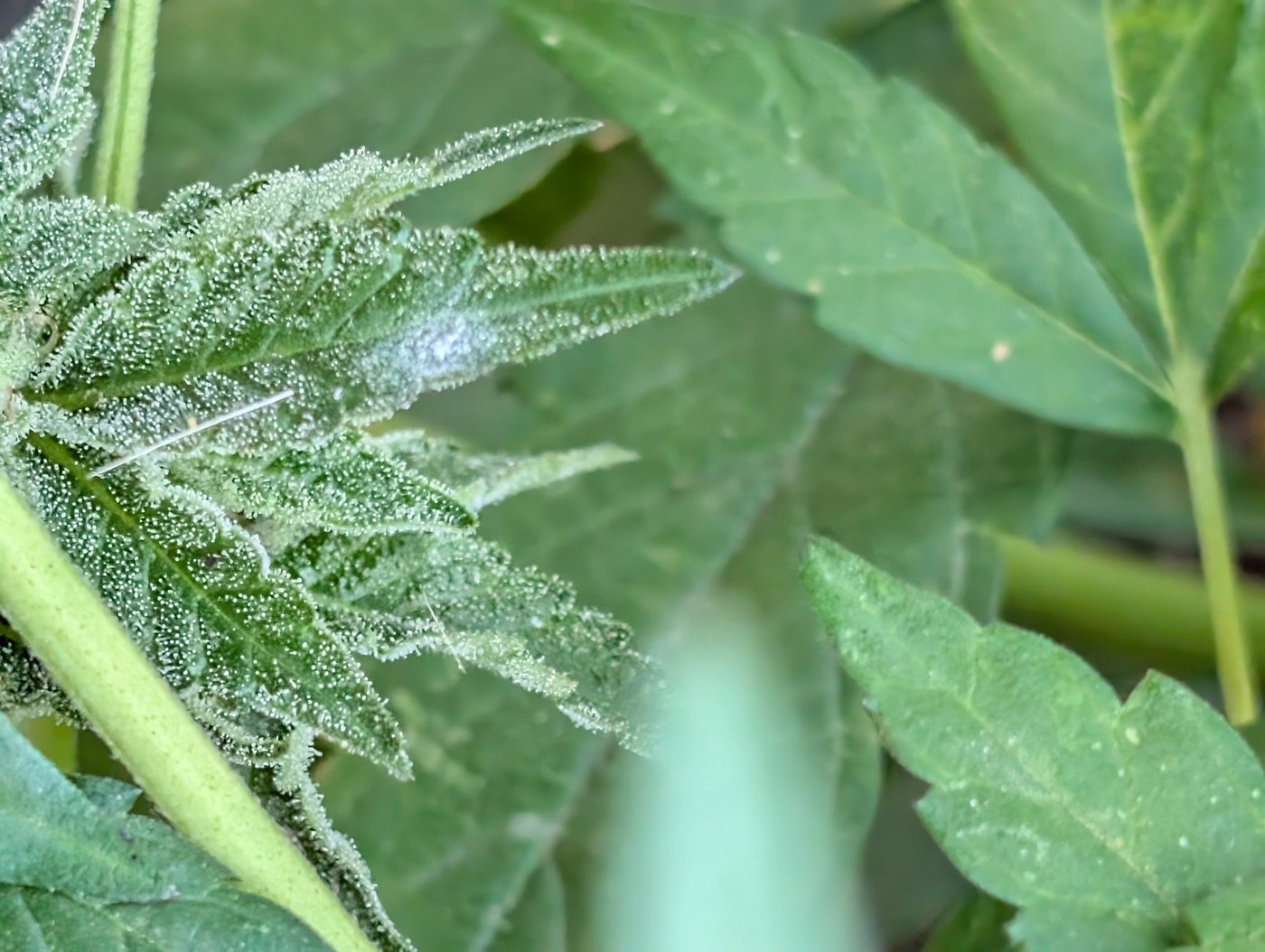
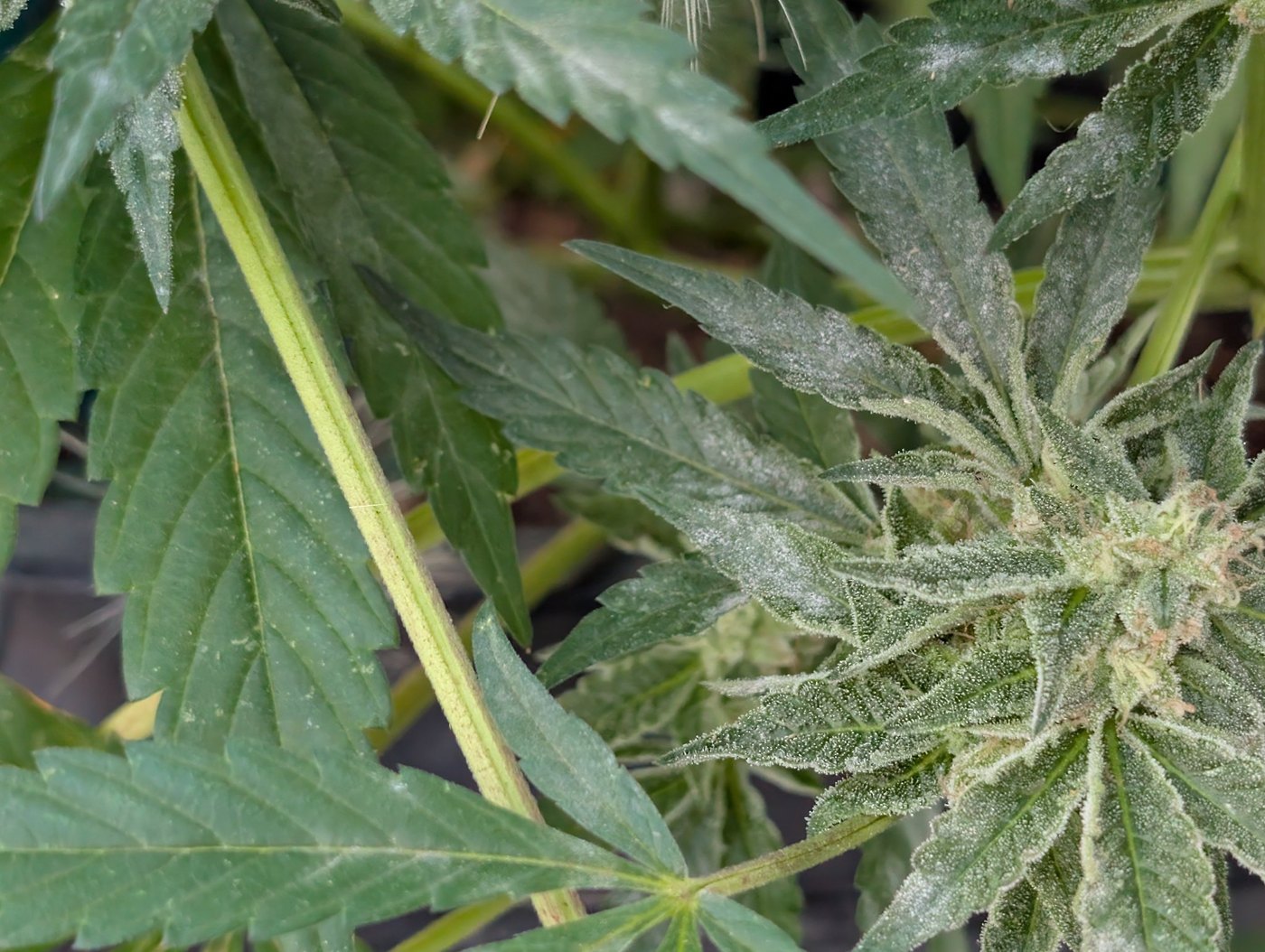
Healthy resin forms an even sparkle of raised glands. These patches were flat, dusty, irregular, and present across leaves of different ages. That pattern supports a surface fungus. Nutrient problems usually begin on either older growth or newer growth, depending on which element is affected.
There was no obvious gray tissue, brown collapse, or dead center typical of botrytis bud rot. Pale stippling also appeared on fan leaves, so mites or thrips remained a separate possibility. A strand seen in one image was not enough to confirm mite webbing.
The solution
- Do not harvest the whole plant solely because mildew reached awkward areas.
- While the plant is dry, place a bag around each heavily coated leaf or suspect cola before cutting it.
- Cut with sanitized scissors, seal the bag, and put it in the trash. Do not compost infected material.
- Treat heavily affected flower sections as lost. Do not smoke, process, or otherwise consume moldy flowers.
- Limit ordinary leaf removal to 10% of the canopy that day to avoid piling stress onto the plant.
- Do not spray neem, milk, cinnamon, or baking soda onto formed flowers. Inspect inside the worst remaining cola within 24 hours.
How to avoid this
- Keep any rain shelter fully open on every side so humid air cannot pool around the canopy.
- Remove leaves touching flowers and small interior shoots before the canopy becomes dense, without heavy late-flower stripping.
- Inspect shaded flower interiors after cool nights, rain, fog, or heavy dew.
- Sanitize cutting tools between affected sections and healthy tissue.
- Check stippled leaf undersides with magnification for mites, eggs, thrips, or dark waste spots.
Facing something similar? Start a free journal and I'll look at your plant: photos in, diagnosis out, 24/7.
Get a free diagnosis