
White Dust on Outdoor Cannabis Flowers: Powdery Mildew
The situation
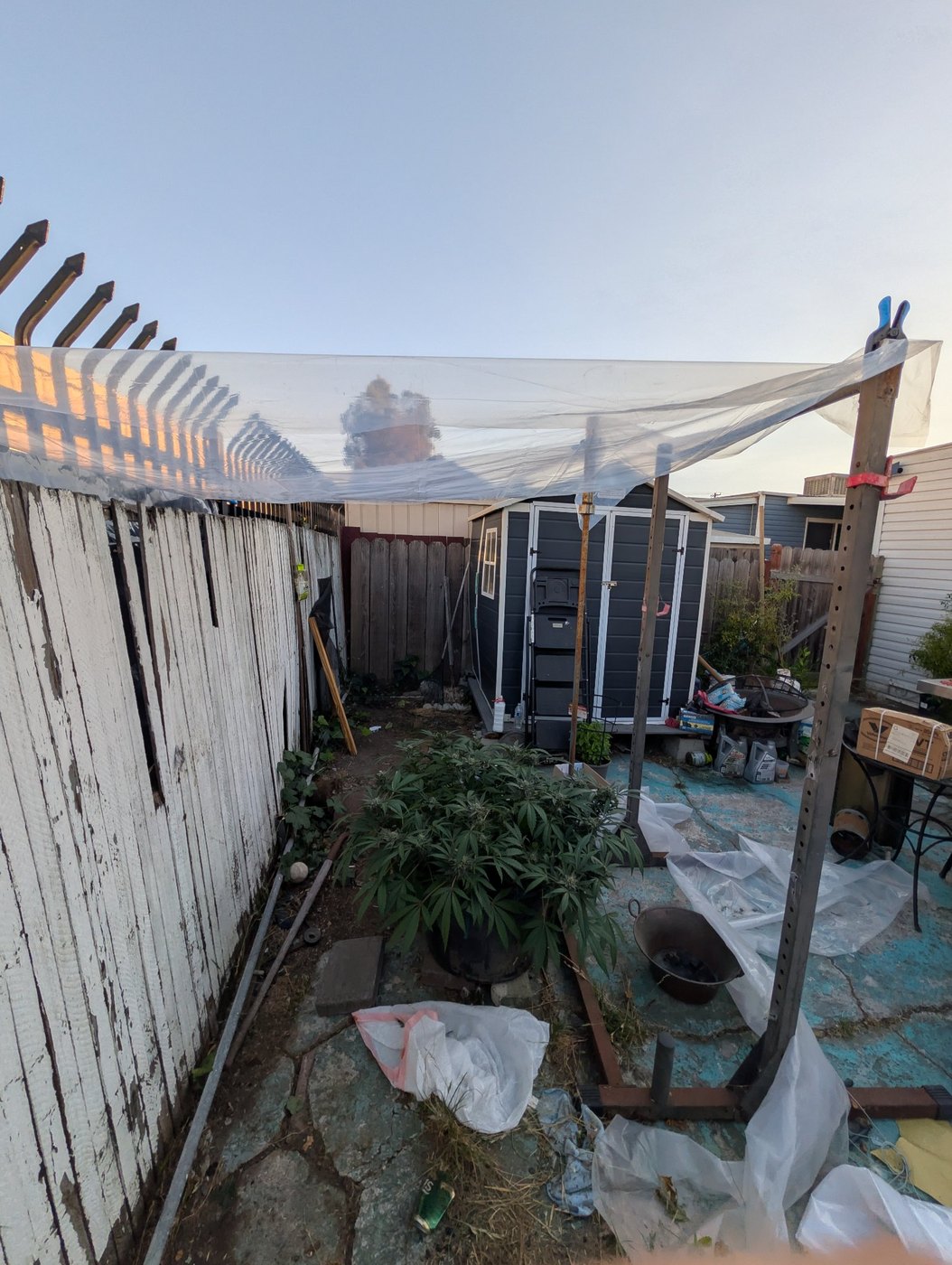
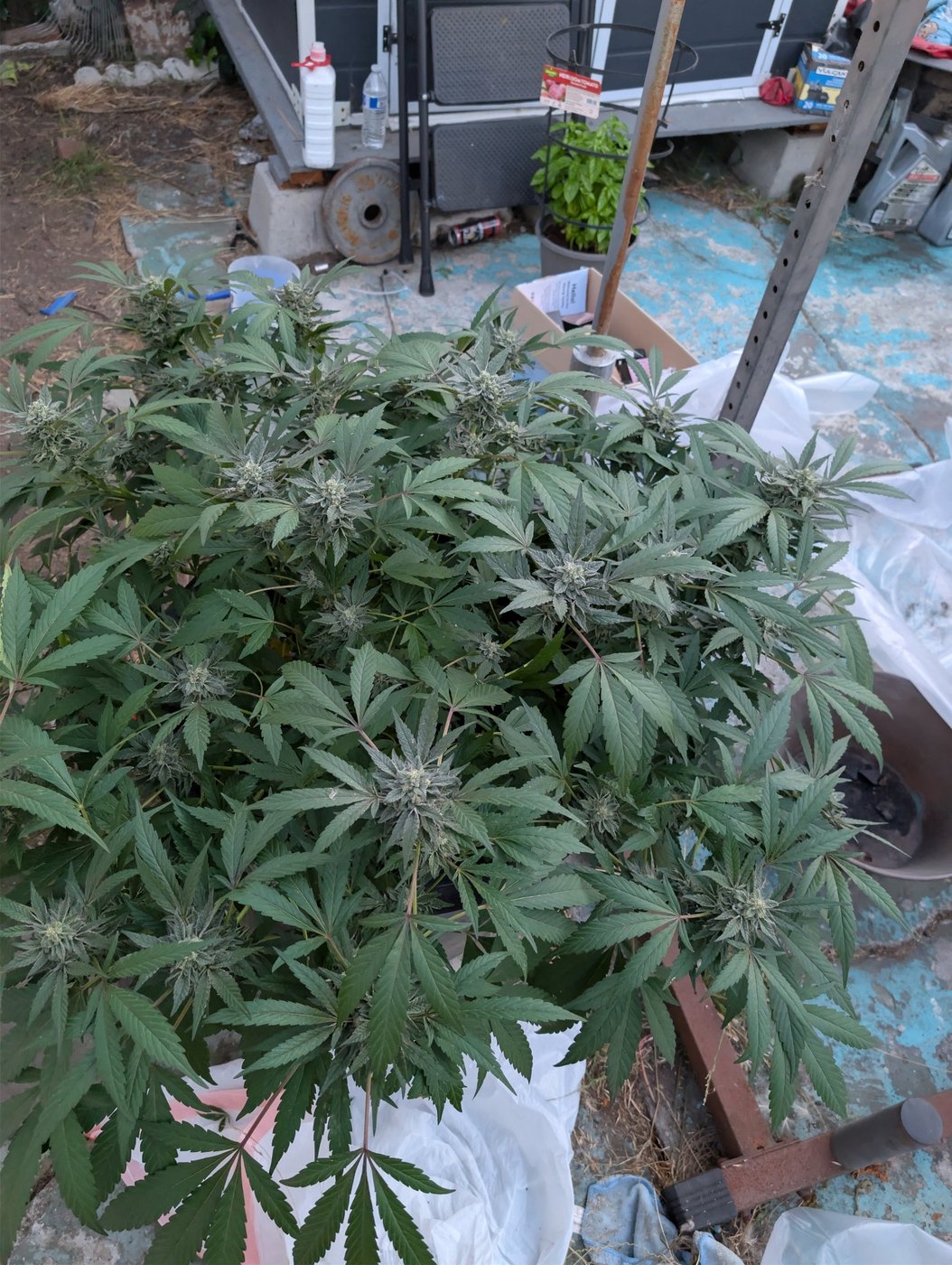
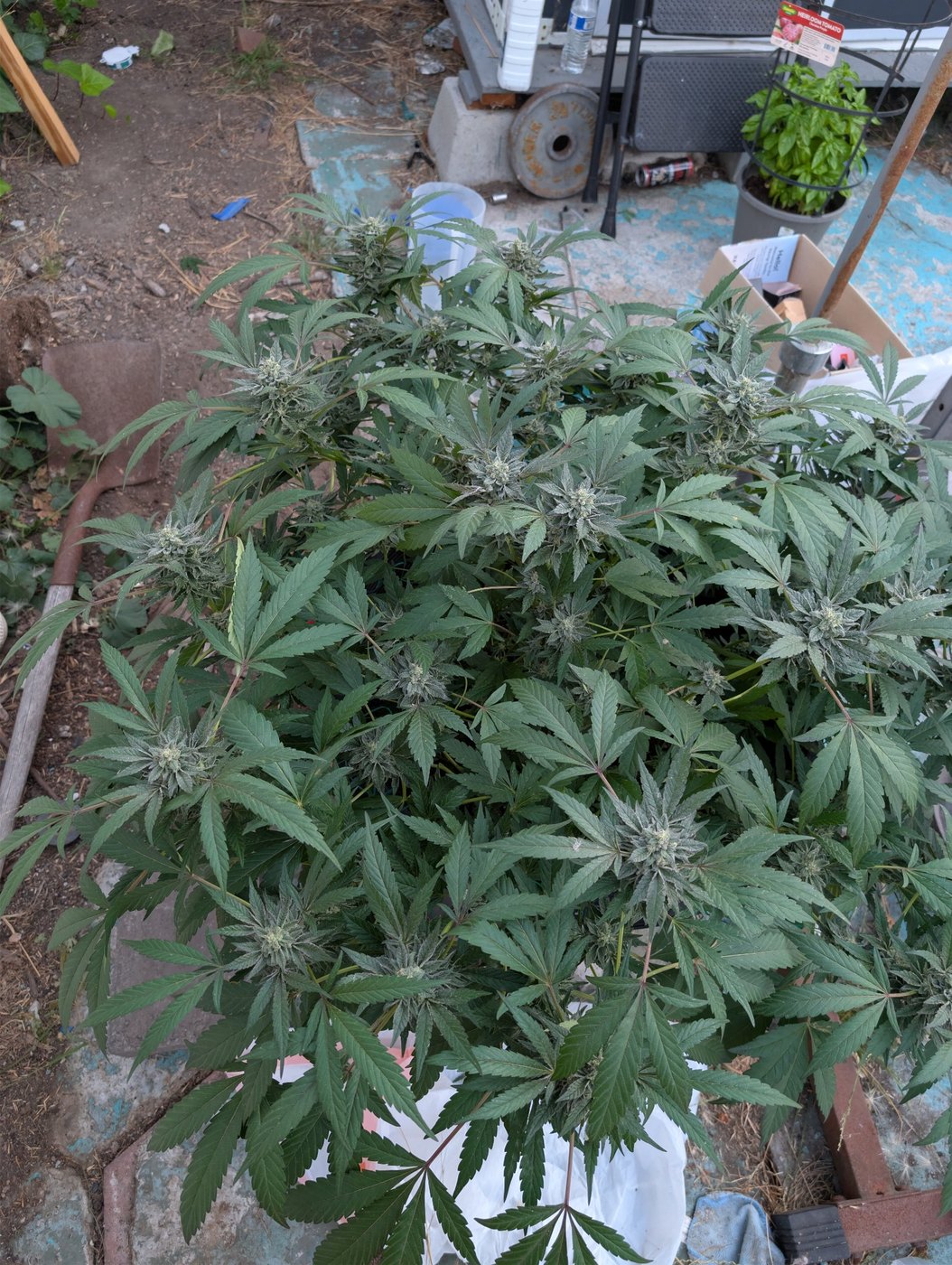
An outdoor photoperiod in coco had developed a broad, crowded canopy beneath a clear, open-sided shelter. The grower removed suspicious material but worried the problem would spread through the hidden interior.
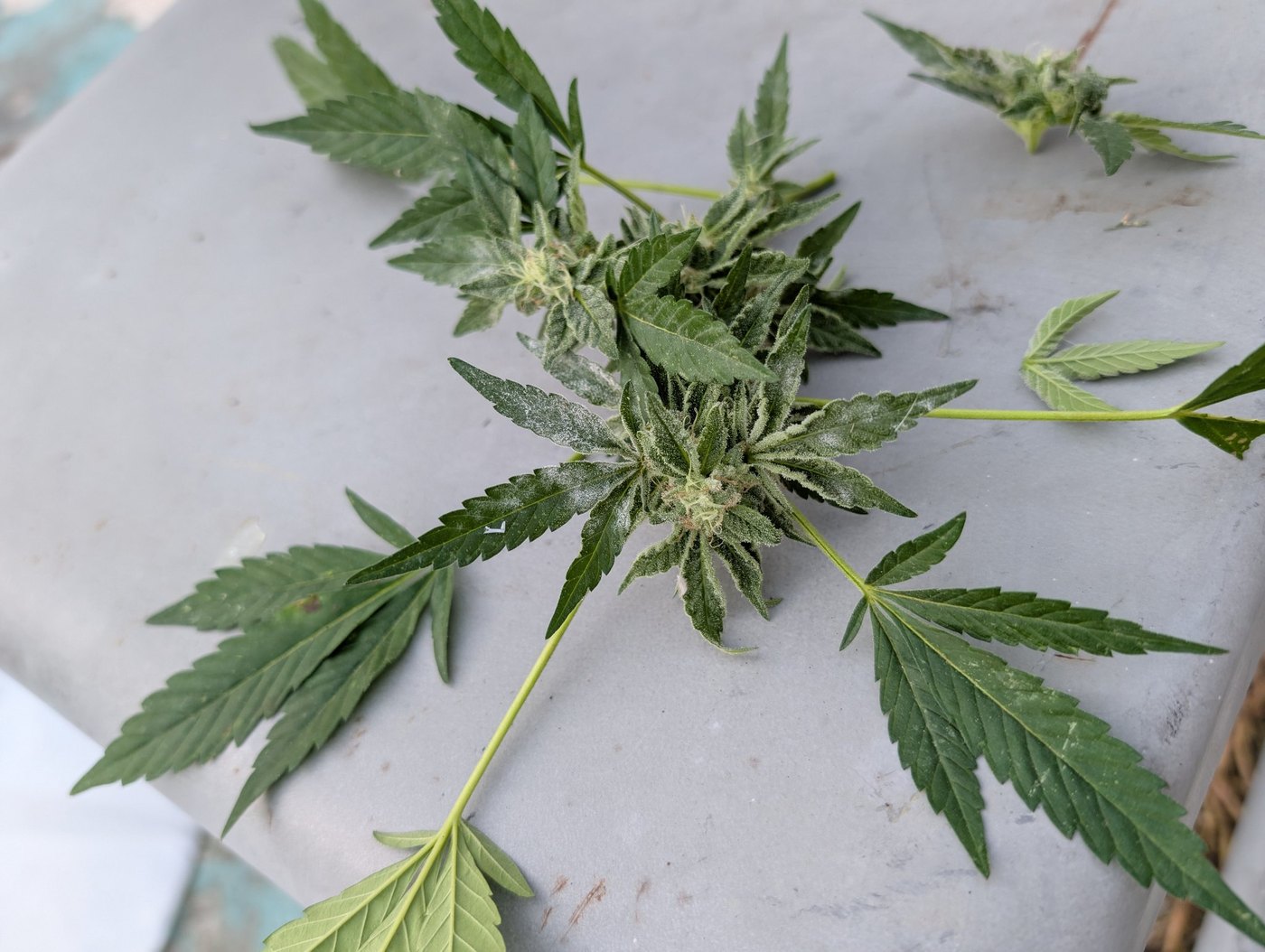
Conditions were 66°F and 64% RH, with recent nights around 55-56°F. Leaves and buds remained mostly green and upright, but pale speckling was widespread. Removed bud leaves showed irregular dusty white patches beyond normal resin sparkle.
The diagnosis
Powdery mildew was the top diagnosis. Its wipeable, dusty coating on flower-adjacent tissue is distinct from trichomes, which look crystalline and organized. Dense overlapping foliage, restricted upward airflow, cool nights, and elevated evening humidity created favorable conditions for fungal growth.
This did not follow a nutrient pattern. There was no clear old-growth damage pointing to N, P, K, or Mg trouble, and no new-growth pattern suggesting an immobile nutrient shortage. Green upright buds and the absence of brown collapse or gray fuzz also made visible bud rot less likely, although dense flowers still needed inspection.
The solution
- Before evening dew, place a bag around the worst coated leaf or infected flower section, cut it off, seal the bag, and trash it.
- Clean scissors with 70% isopropyl alcohol between every infected cut.
- Stop general defoliation. Remove clearly infected tissue only, since excessive cutting adds stress and does not cure hidden mildew.
- Pull the shelter roof taut and keep every side open so humid air can escape above the canopy.
- Do not spray neem, milk, cinnamon, or baking soda onto formed flowers.
- After morning dew dries, inspect inside the densest flower for brown tissue or gray fuzz, and check the underside of a stippled leaf for mites or thrips.
How to avoid this
- Keep branches separated enough for air and light to reach the canopy interior.
- Prevent plastic or roofing from sagging close above foliage, where warm moist air becomes trapped.
- Inspect shaded inner leaves and flower-adjacent tissue after cool, humid nights.
- Remove isolated PM early with bagged cuts, sanitized tools, and careful disposal.
- Keep flowers dry through evening and overnight whenever possible.
Facing something similar? Start a free journal and I'll look at your plant: photos in, diagnosis out, 24/7.
Get a free diagnosis