
Are Those Pistils or Just Stipules? Reading Preflowers Right
The situation
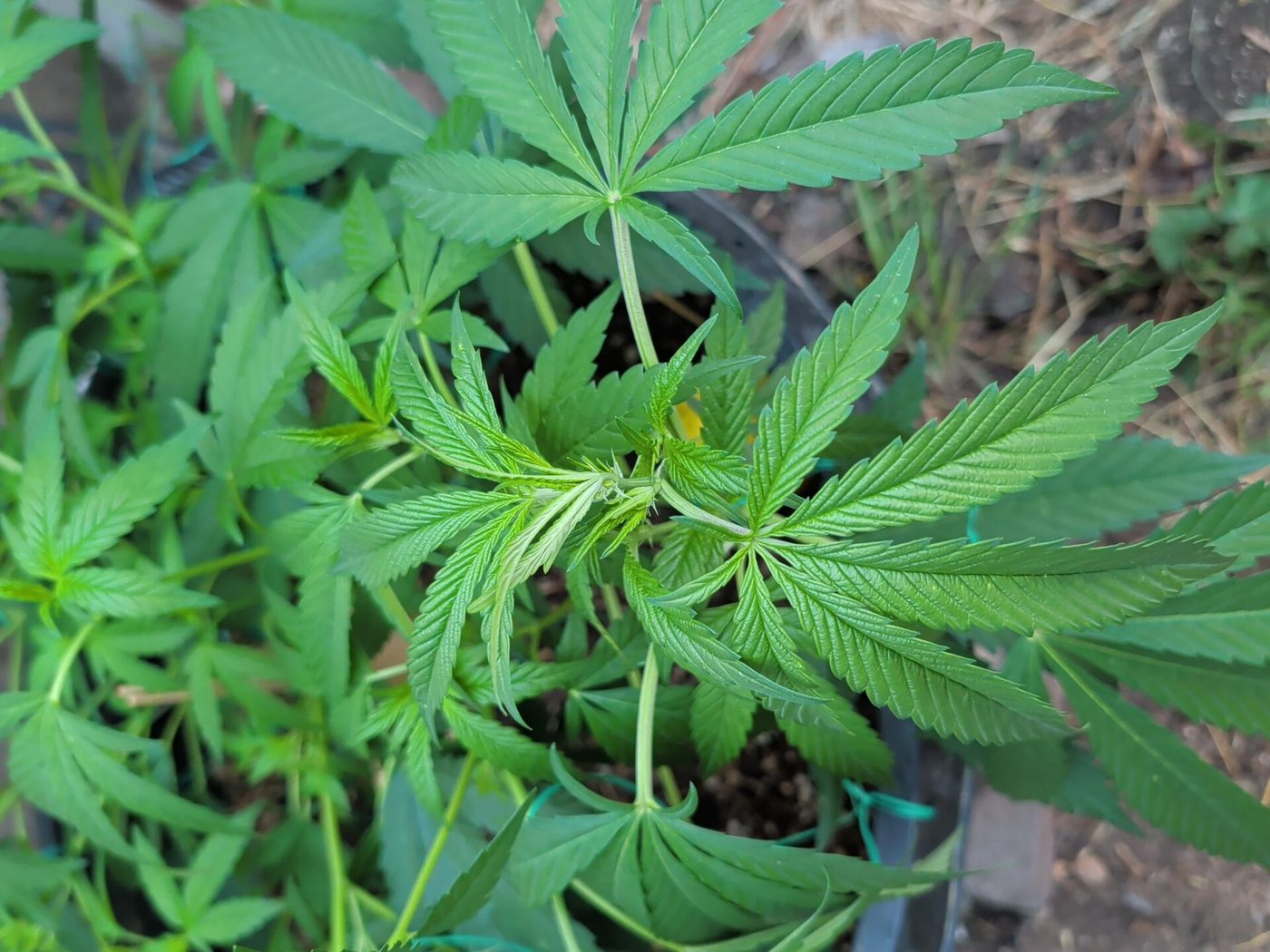
Day 43 of veg, outdoor coco grow in a 30-40 gallon pot, photoperiod hybrid, mild 71F day with clear skies and 61% RH. The plant is textbook happy: 20 days of praying green, symmetric canopy, fresh LST holding the donut open, no pests on a nearby sticky trap.
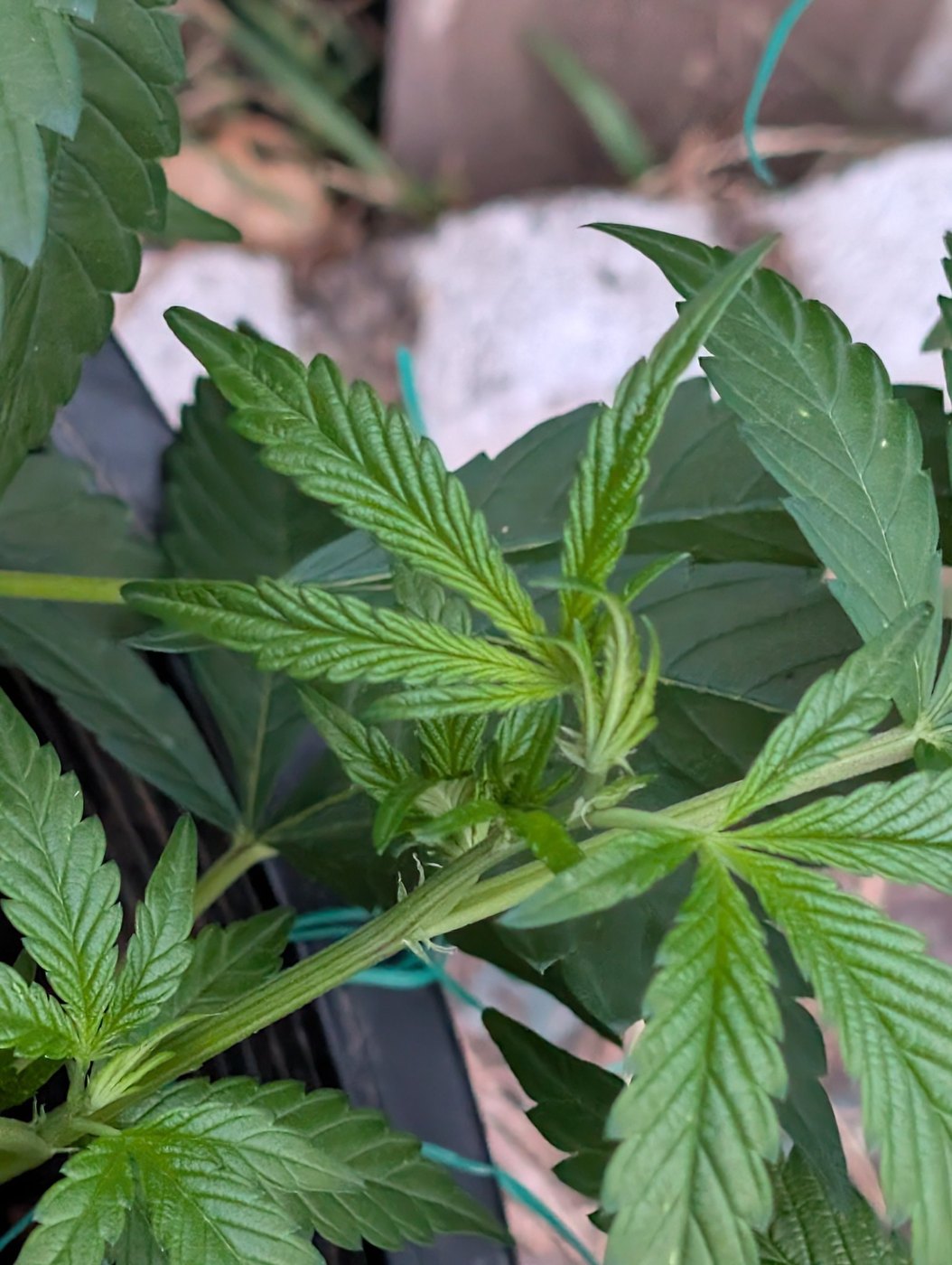
The grower zoomed in on a node and asked the classic question every new grower asks around week 6: "Is that a pistil? Am I looking at a female preflower?" Two thin white filaments were tucked into the leaf axil, and they sure looked like the hairs everyone talks about.
But look closer at the photo and there is no rounded green bract behind those hairs. Just straight little threads coming right off the node.
The diagnosis
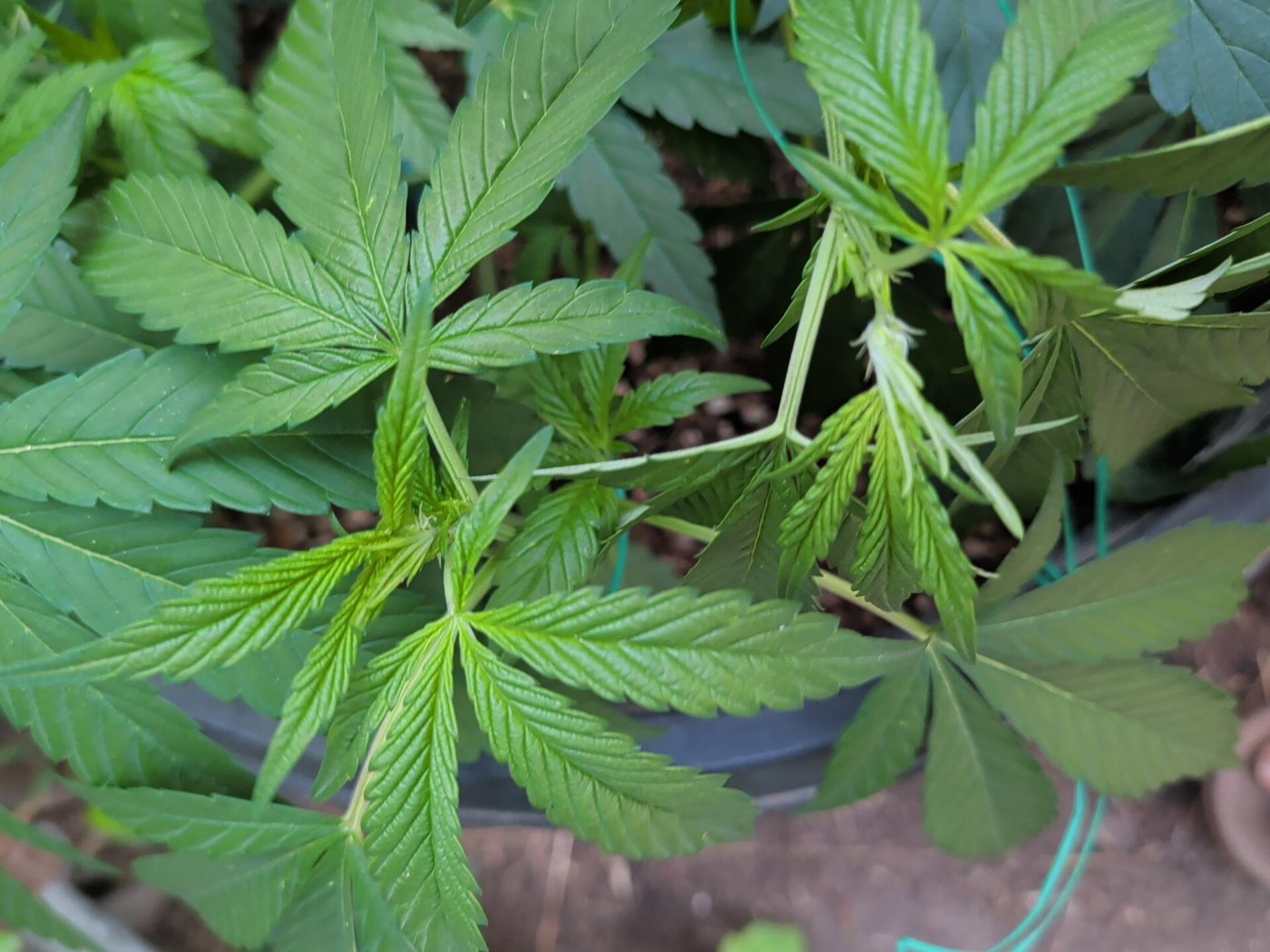
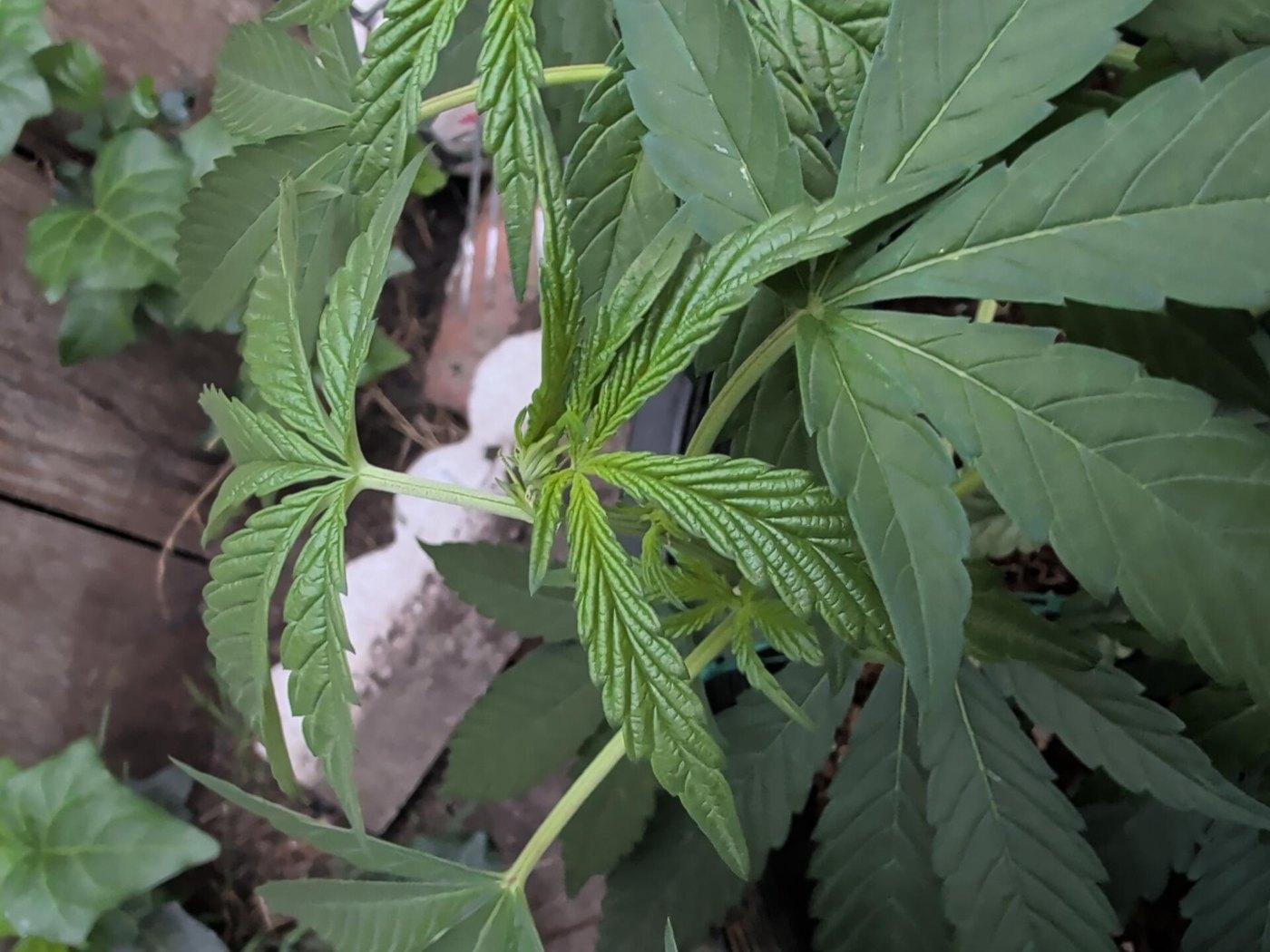
True preflowers grow out of a calyx, a small teardrop-shaped bract that sits at the node, with two white pistils emerging from IT. No calyx, no preflower. What you almost always see first, and what fools nearly everyone once, is stipules: paired filaments at every leaf axil that have been there since seedling. They are not sex-related and they show up on males, females, and every node of every plant.
Here is the shortcut this case turned on: this plant is a clone. Clones inherit sex from the mother cutting, not from anything you see in the photo. If the mother was female (which is standard for any clone stock worth taking), the clone is female with 100% certainty. You do not need to wait for pistils to know, the lineage already told you.
Preflowers are still useful to spot for timing (they tell you the plant is mature enough to flip), but for a clone they are a confirmation, not a reveal.
The solution
- Do nothing to the plant. She is healthy and the sex question is already answered by her lineage.
- Check the node again in 3-5 days. Real preflowers look like tiny green teardrops (the calyx) with two white hairs sticking out. Filaments alone with no bract behind them are stipules.
- For a seed-grown plant, wait until node 5 or 6 before hunting for preflowers. Anything earlier is almost always stipules.
- If you truly can't tell, snap a close-up in bright even light with the camera parallel to the node, not angled down. Angle hides the calyx.
- Male preflowers form small rounded balls on a short stalk (no hairs). If you see those, act fast to isolate.
How to avoid this
- Learn what stipules look like on YOUR plants early in veg, then you'll never mistake them again.
- For clones, write the mother's sex in your notes on day one. That is your answer, done.
- Don't chase sex signs before week 6 of veg on seed plants. You'll drive yourself nuts and the plant will tell you when it's ready.
- Use the calyx test, not the hair test. Hairs are cheap. Calyxes are the real tell.
- Keep taking those top-down praying-canopy photos. A healthy plant makes sex ID way easier than a stressed one.
Facing something similar? Start a free journal and I'll look at your plant: photos in, diagnosis out, 24/7.
Get a free diagnosis