
Splitting the Main Stem During LST: How to Save Your Canopy
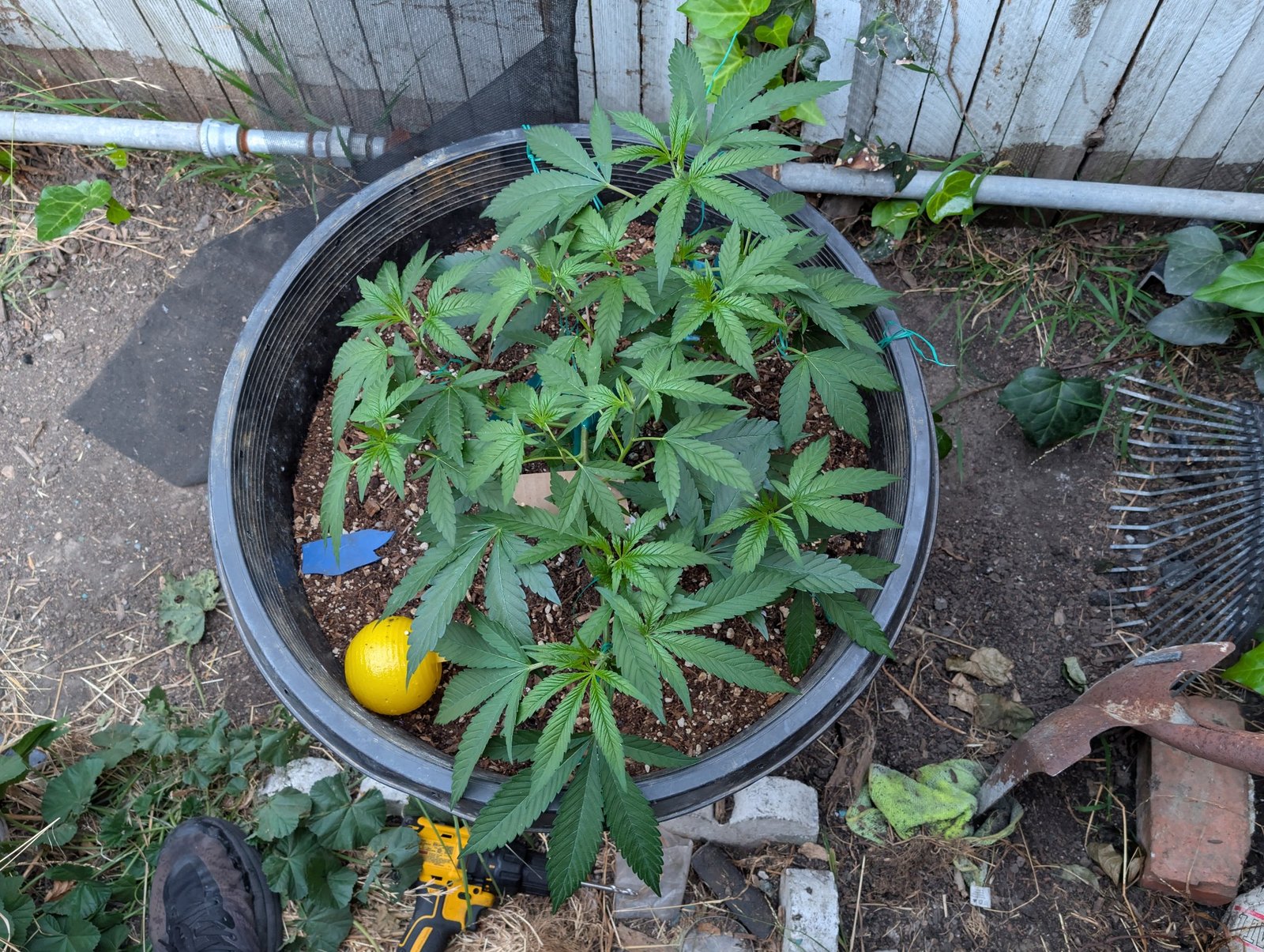
The setup
Our grower was pushing a beautiful Purple Pomegranate hybrid in a massive 30-40 gallon coco pot outdoors. While pulling down branches to create a wide, flat canopy, the main stem split right down the center at the main intersection.
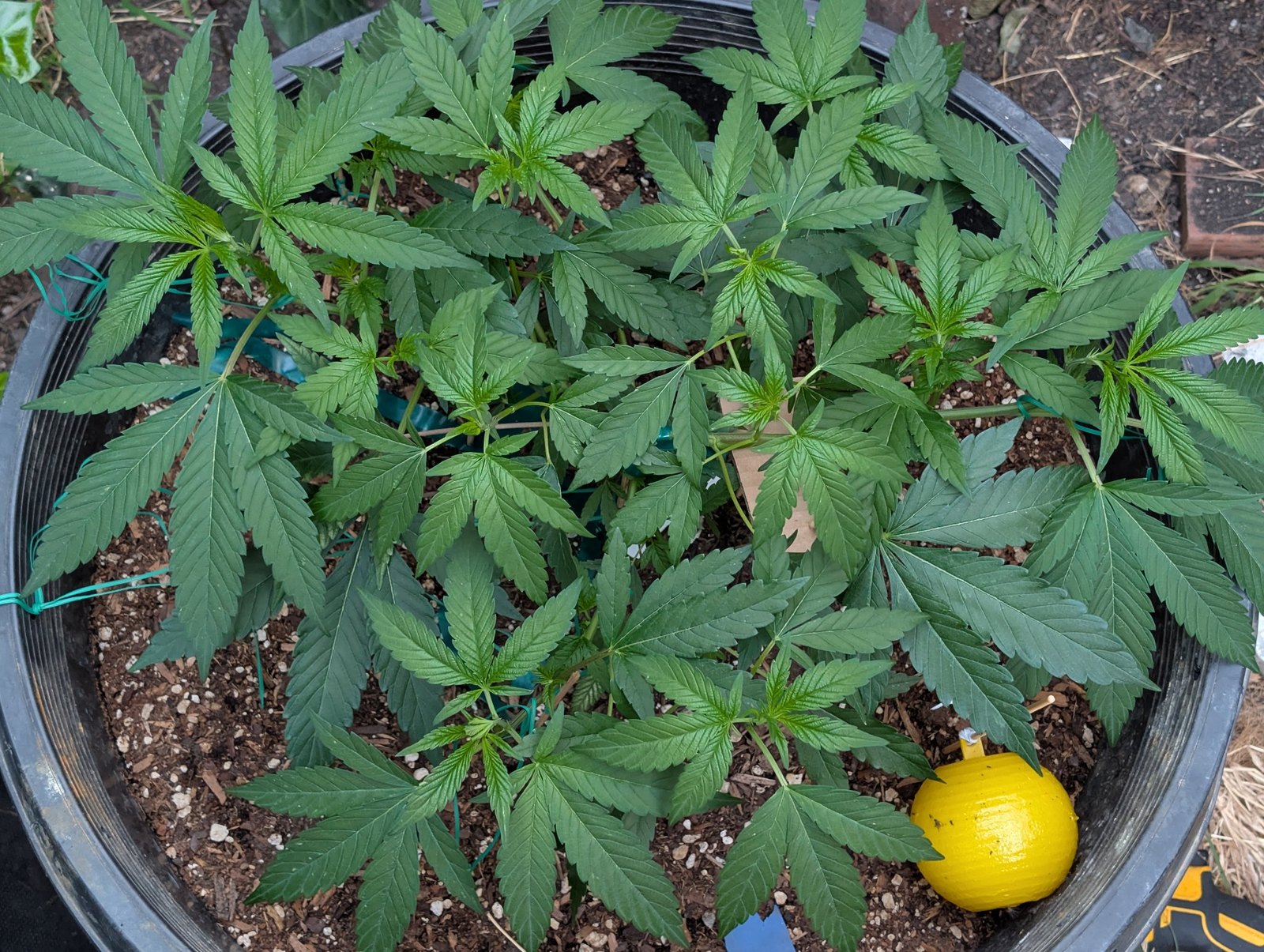
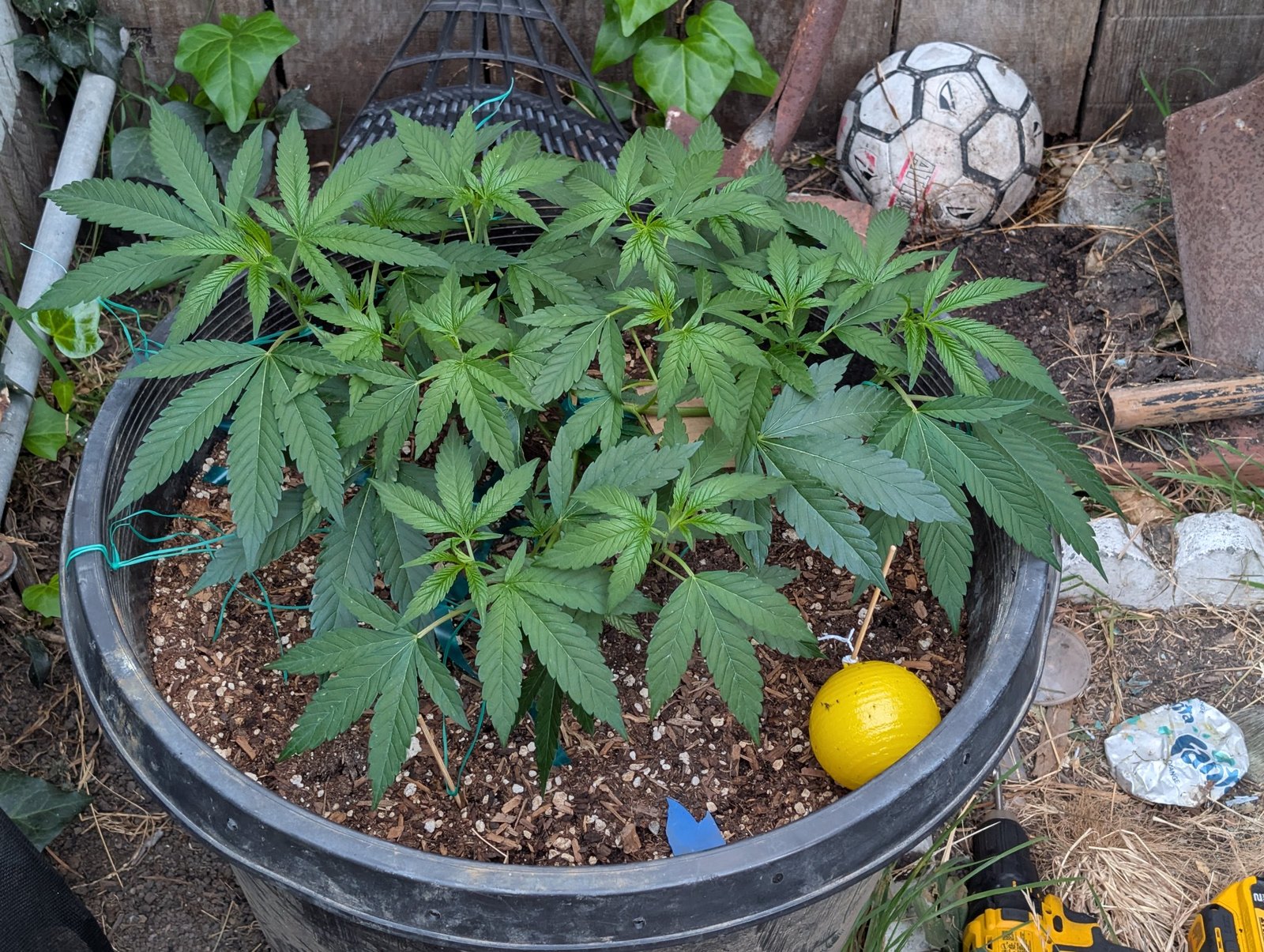
It was a classic training mishap. The grower quickly stabilized the split and watched closely. On a 66F day with 67 percent humidity, they noticed the plant looked surprisingly happy despite the trauma. No leaves were drooping, and the training wires were still holding the canopy wide.
Why it worked
The diagnostic key here is leaf turgor (water pressure in the leaves). If a split completely destroys the plant's plumbing, the leaves above the break will wilt within hours because water cannot reach them. In this case, the leaves were fully turgid and praying toward the sun, proving the xylem and phloem pathways were still functioning.
We also noticed a yellow sticky trap catching early fungus gnats near the coco surface. The plant's deep green color showed that the recent pH adjustment to 6.3 was keeping nutrient uptake right on target, which gave the plant the energy it needed to heal.
How to replicate it
- Leave the training ties and the splint completely alone for at least 7-10 days to let the wound heal.
- Allow the plant to focus its energy on building a woody knuckle (a thick, calcified joint) at the split site.
- Let the top 2-3 inches of coco dry out slightly between waterings to disrupt the fungus gnat life cycle.
- Keep watering at a stable pH of 5.8-6.3 to ensure calcium is fully available for building new cell walls at the wound site.
Keep it going
- Wrap tape or a soft plant tie around the main crotch before applying heavy sideways pressure to lateral branches.
- Train your plants in the afternoon when they are slightly less turgid and more pliable, rather than in the morning when they are stiff with water.
- Support heavy branches with stakes or trellis netting as they grow to prevent outdoor winds from reopening the healing split.
Facing something similar? Start a free journal and I'll look at your plant: photos in, diagnosis out, 24/7.
Get a free diagnosis