
Repairing a Split Main Stem Junction from Over-Tensioned LST
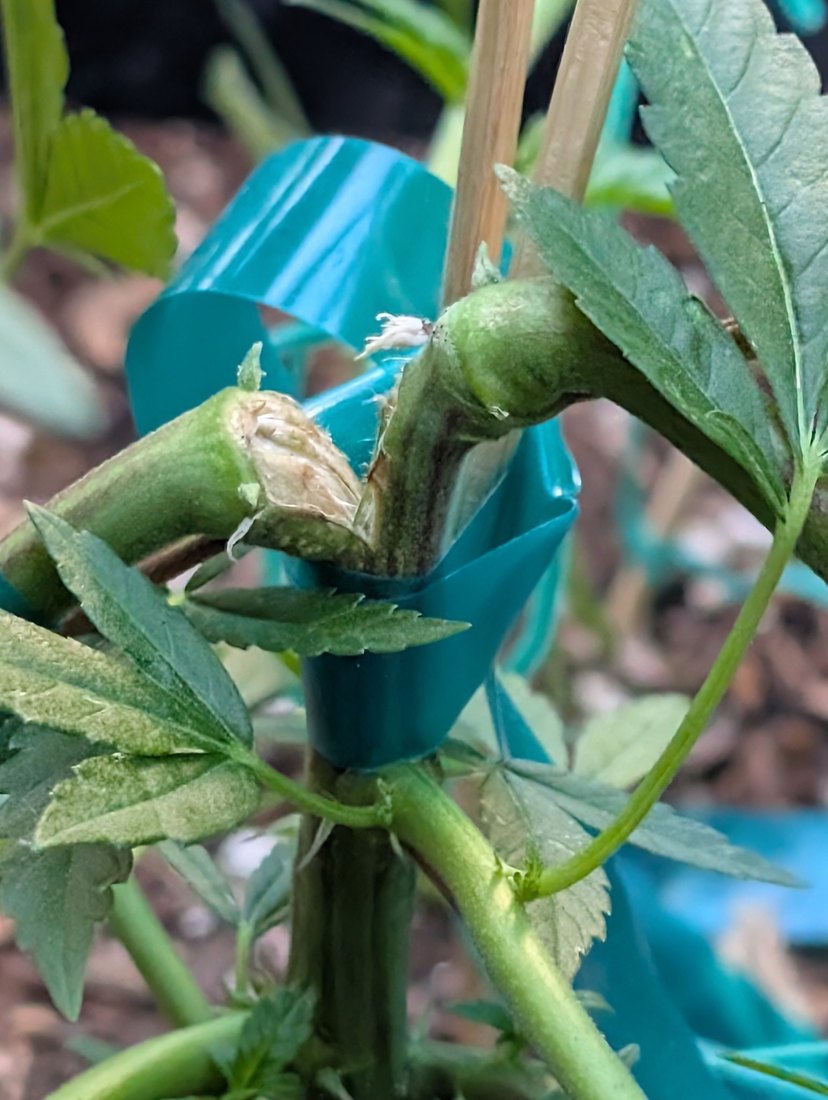
The situation
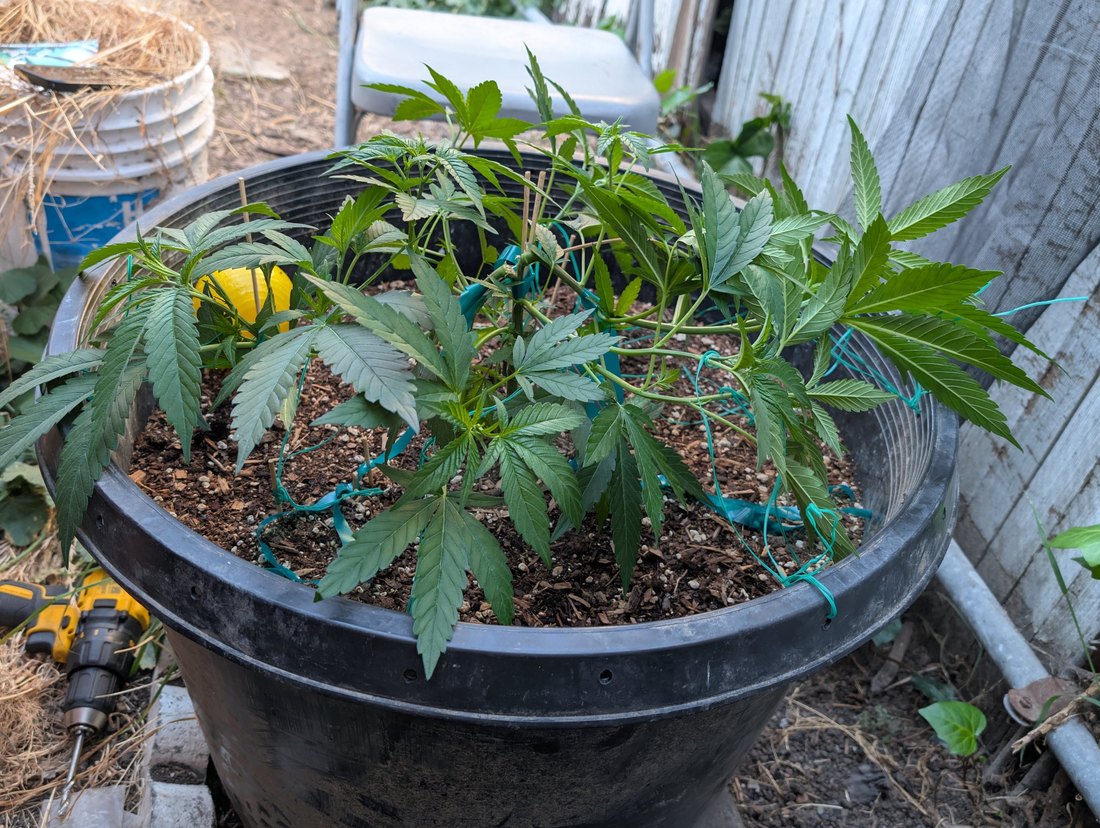
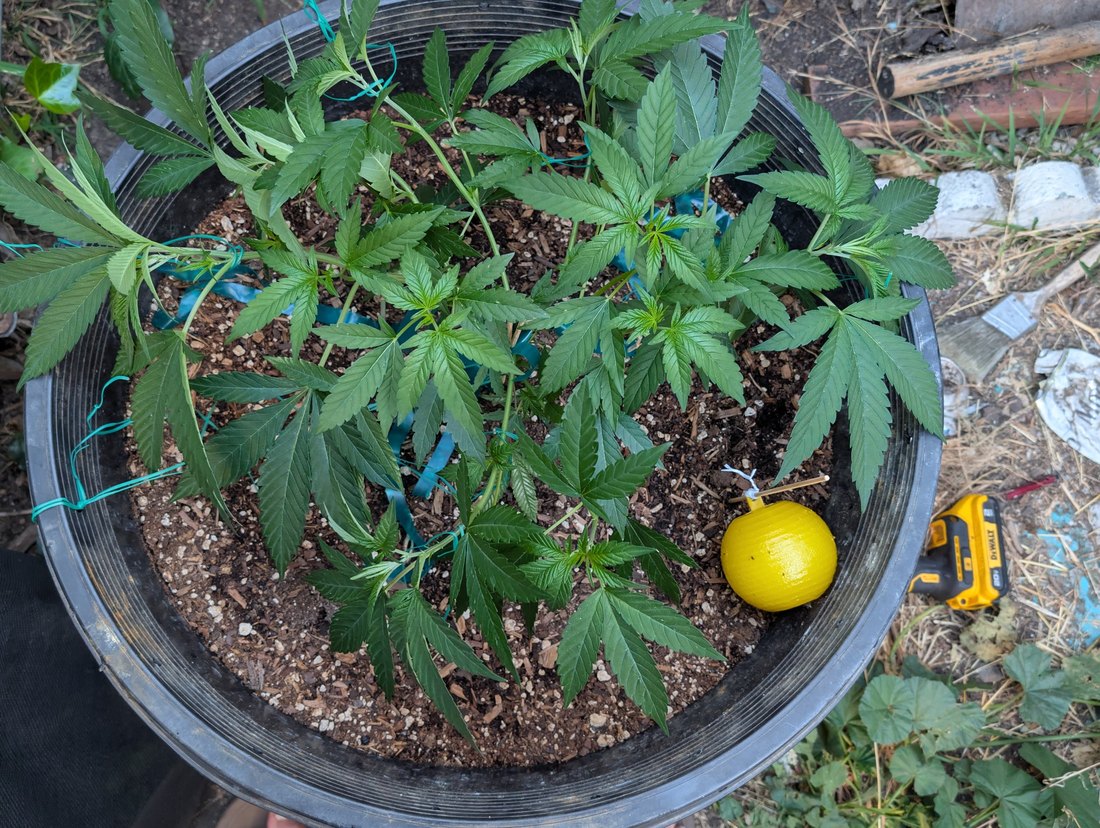
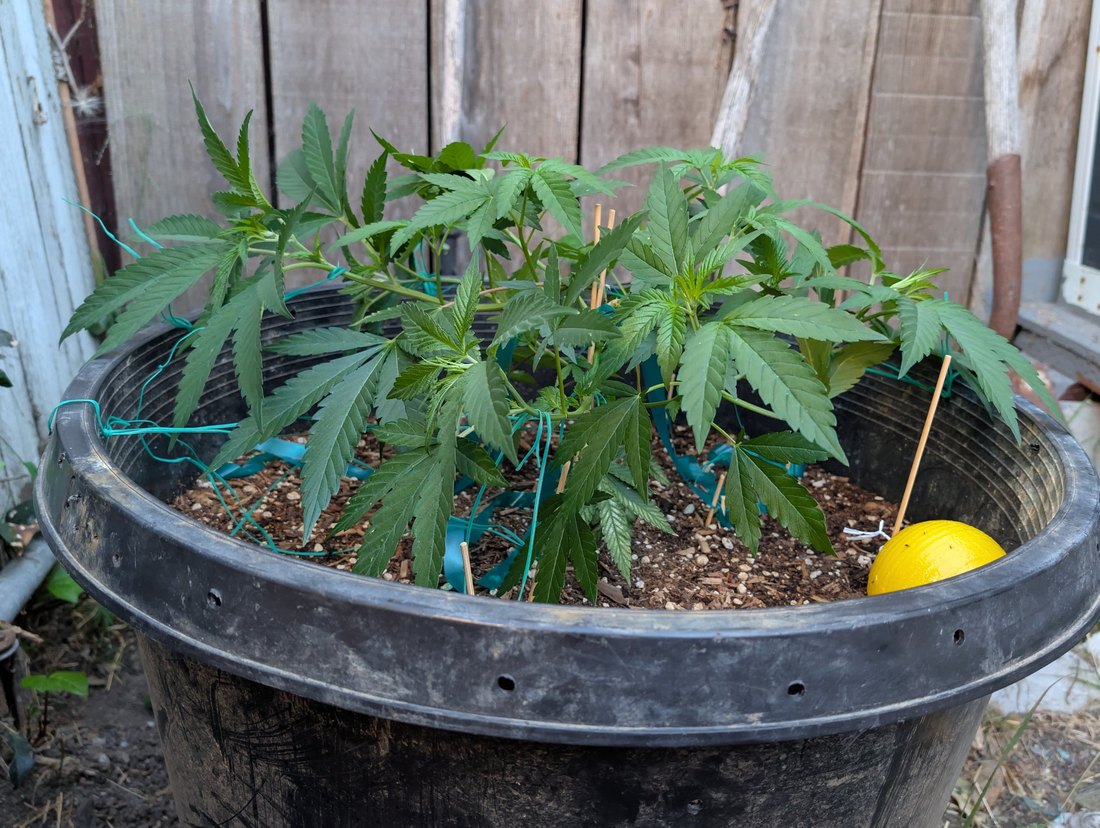
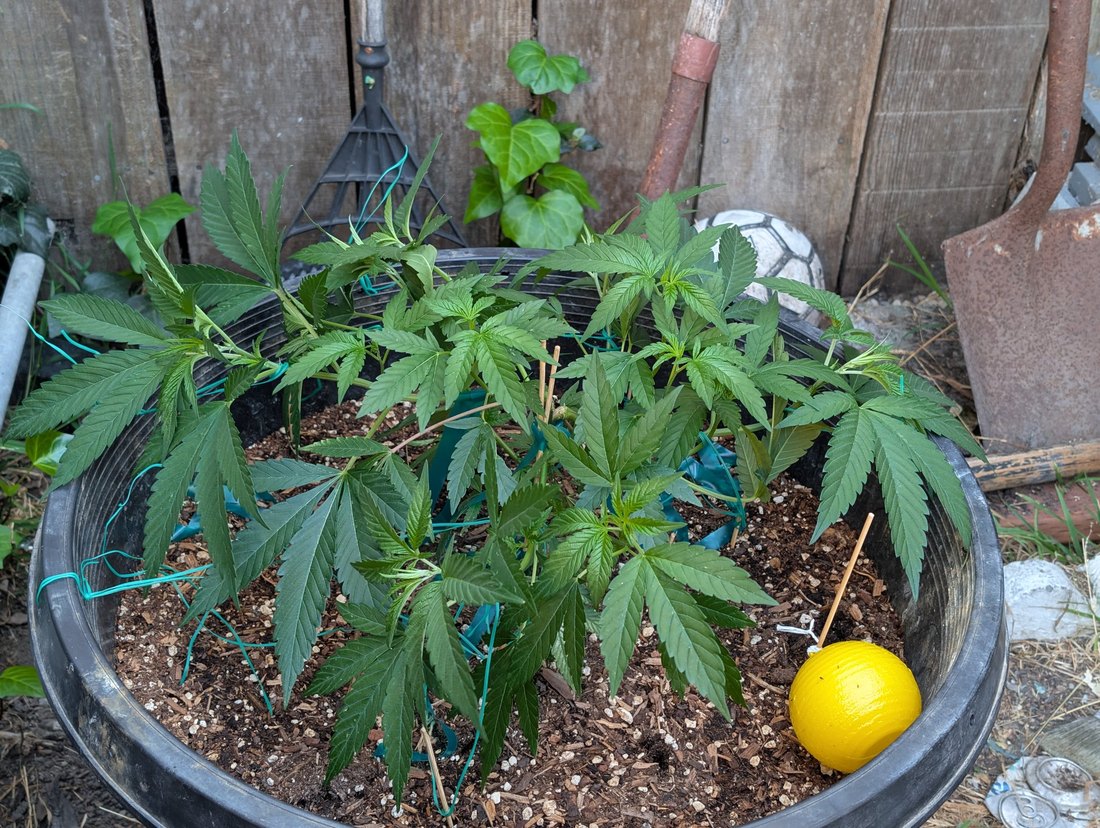
Our grower has a gorgeous Purple Pomegranate photoperiod hybrid stretching her limbs in a massive 30-40 gallon pot of coco outdoors. On a beautiful, clear 69°F day with 66% humidity, they decided to adjust the low-stress training (LST) ties to open up the canopy. The goal was noble: spread those branches wide to maximize the outdoor sun.
The canopy itself looked phenomenal: flat, wide, and praying to the sky with vibrant green turgor. But the lateral branches were pulled just a bit too far without supporting the main crotch. The high water pressure inside these fast-growing stems made them stiff, resulting in a sudden, deep split right down the center of the main node junction.
The diagnosis
As a clinician, I localized this symptom instantly. This is not a biological disease or a nutrient deficiency: it is pure mechanical trauma. When plants are young, healthy, and fully hydrated (turgid), their stems are like crisp celery. If you pull two main lateral branches outward without anchoring the joint below them, the tension concentrates at the V-junction, forcing a clean split.
The good news is that cannabis is incredibly resilient. The vascular system (the xylem and phloem that carry water and food) is still intact on the outer edges of the split. If we act quickly to press those two halves back together, the plant will graft itself back together, forming a thick, woody knuckle that is often stronger than the original stem. We ruled out fungal pathogens because the tissue inside the split was clean, white, and freshly exposed.
The solution
- Stop all training immediately: Untie or loosen the tension on the branches that caused the split to relieve the pulling force.
- Bind the split tightly: Gently push the two halves of the stem back together so the inner tissues touch. Wrap the junction firmly with plant tape, electrical tape, grafting tape, or even a heavy-duty zip tie.
- Support the weight: Insert a sturdy bamboo stake right next to the main stem and tie both main branches to it. This prevents wind from shifting the branches and tearing the wound open again.
- Keep the wound dry: Keep water from your watering can or morning dew out of the open crack while wrapping it to prevent fungal infections.
- Wait 10-14 days: Leave the binding in place for two weeks. When you gently peel it back, you will see a large, swollen knuckle of scar tissue showing she is healed.
How to avoid this
- Support the crotch first: Before pulling branches outward, wrap a soft tie around the main junction to reinforce it against outward tension.
- Train when thirsty: Do your heavy LST bending right before watering when the plant is slightly less turgid and the stems are more pliable, not right after a heavy feed when they are stiff and snap-prone.
- Use gradual tension: Tighten your ties in small increments over several days rather than pulling them to their final position all at once.
- Massage the stems: Gently roll the stem between your thumb and forefinger to soften the inner fibers before making a major bend.
Facing something similar? Start a free journal and I'll look at your plant: photos in, diagnosis out, 24/7.
Get a free diagnosis