
Reading the Recovery: How to Know a Burned Plant Has Bounced Back
The setup
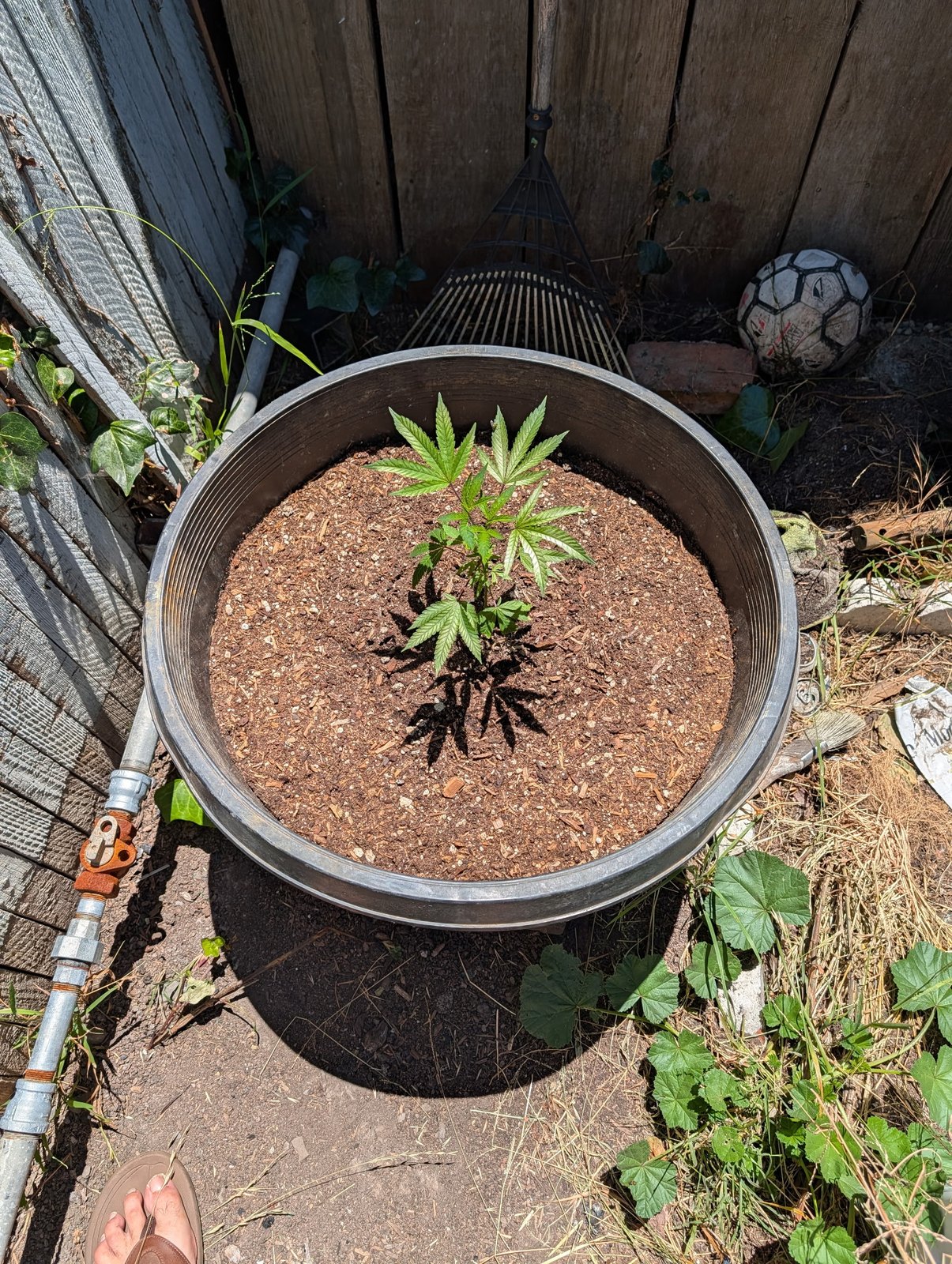
Our grower had a small Bruce Banner clone in a 30-gallon fabric pot outdoors, sitting in full midday sun at 70°F and 72% RH. About 17 hours earlier, older leaves showed tan margins — a classic burn/high-pH event that had everyone nervous.
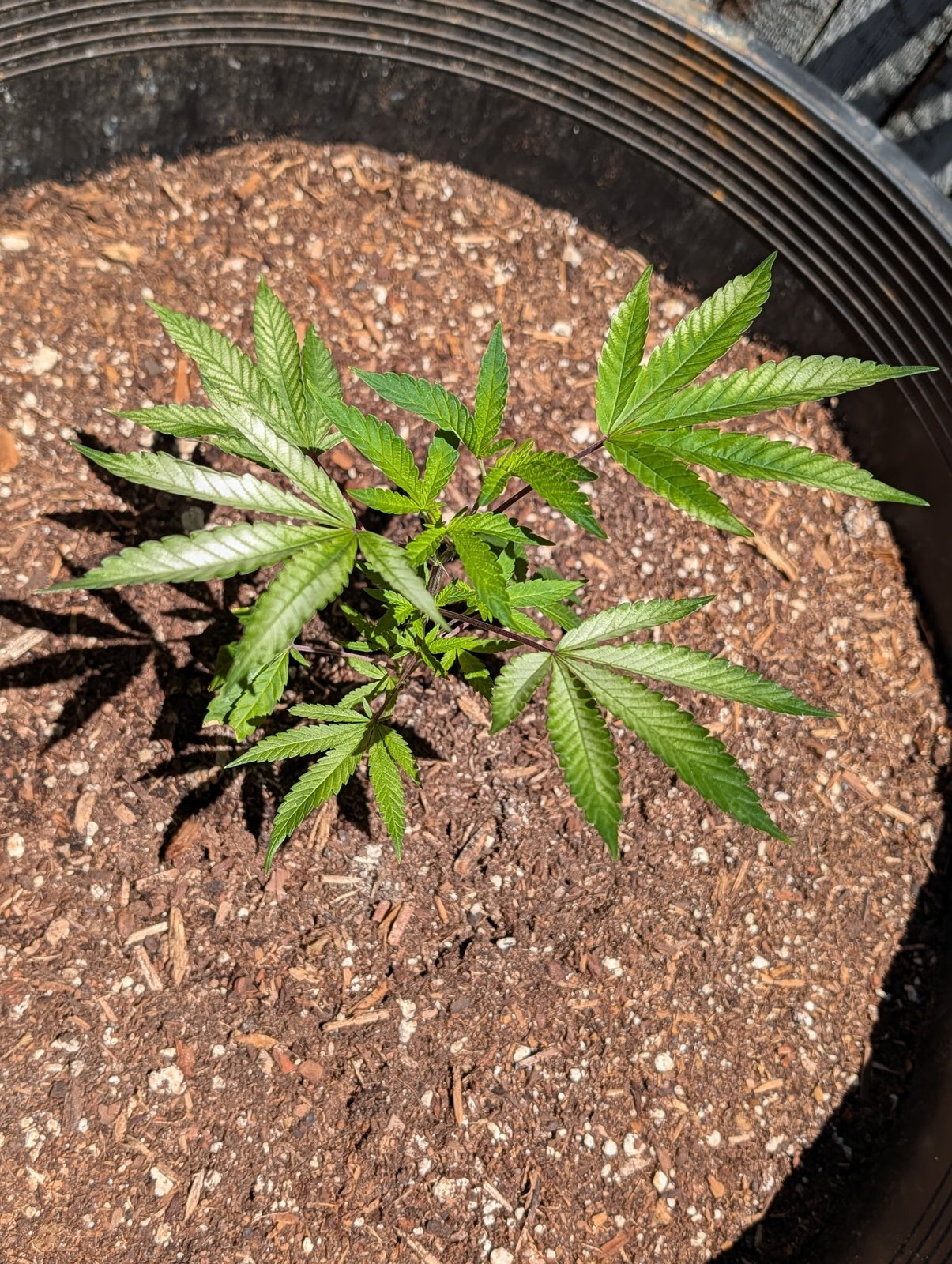
By the next check-in, the wide shot showed a compact healthy canopy casting a crisp shadow on a light-tan, matte, slightly crusted soil surface. The top-down shot showed medium-green blades, sharp serrations, good turgor, and tight new growth stacking at the center. Purple petioles were loud — pure Bruce Banner anthocyanin, not phosphorus.
The only remaining evidence of yesterday's event was faint tan nibble on one or two older tips. Nothing fresh, no spots, no PM, no pests.
Why it worked
The diagnostic trick with any burn or lockout event is simple: **damage on old leaves is history, damage on new leaves is now.** Old leaves don't heal — they carry the scar. What tells you if the problem is still active is what the newest growth looks like once the plant has had a day to respond.
Here the new growth came in uniformly green, tight-noded, and undamaged. That rules out ongoing root-zone trouble at this moment. The purple petioles were a genetic red herring — Bruce Banner throws anthocyanin hard, especially with cool nights, and it has nothing to do with P.
The soil read told us the next move. A dry, matte, light-tan surface plus a crisp midday shadow (strong transpiration pulling water up fast) means the rooted core is at or near dry-down. She wasn't asking for food — she was asking for a drink, and a chance to rinse whatever pushed pH the wrong way yesterday.
How to replicate it
- Water with pH 6.5 plain water — no nutrients. Ride the Fox Farm soil charge another 7-10 days.
- Pour in a tight 6-8 inch ring around the stem, not the whole pot surface — you only want to wet the rooted zone, not the outer soil the roots haven't colonized yet.
- Use ~1-1.5 gallons: enough to gently rinse the root zone as a light corrective flush, not enough to drown the outer soil.
- Go slow. Stop the moment the surface darkens and you see the first hint of seepage at the base.
- Lift the pot before and after watering — learn the "wet weight" vs "dry weight" by feel. This is the single best watering skill you'll ever build.
- Re-photo in 48 hours. New growth still clean = fully recovered. Back to normal cadence.
Keep it going
- After any burn or pH scare, wait a full day before reacting — let the plant tell you if it's still active. Reflexive feeding on top of a stressed root zone is how small problems become big ones.
- Always check new growth, not old, to judge whether a problem is current or already resolved.
- Know your strain's genetics — purple stems/petioles on Bruce Banner and many hybrids are anthocyanin, not P deficiency. Check the leaf blade before chasing phosphorus.
- In a big pot with a small plant, ring-water around the stem until roots colonize the outer soil. Soaking the whole pot creates a swampy dead zone that invites gnats and root issues.
- Lift the pot every watering. Weight beats moisture meters, finger tests, and every gadget on the market.
Facing something similar? Start a free journal and I'll look at your plant — photos in, diagnosis out, 24/7.
Get a free diagnosis