
Perfect Outdoor LST: How to Train a Wide, Flat Canopy in Large Pots
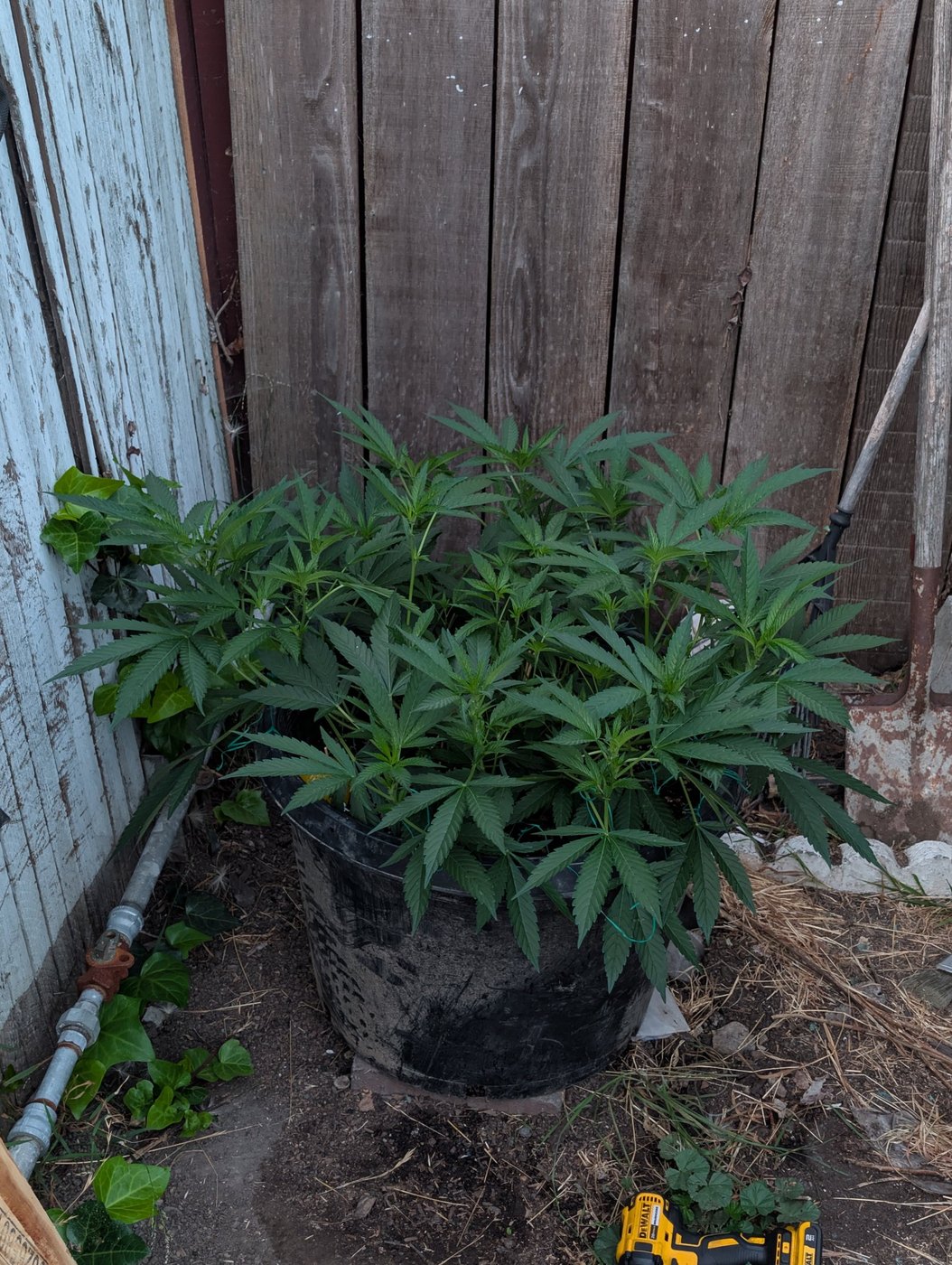
The setup
Our grower is running a Purple Pomegranate hybrid outdoors in a massive 40-gallon container. At day 48 of the vegetative stage, the plant is in spectacular health. The weather on inspection day is cool and damp: 55F with 87 percent relative humidity under clear skies. This cool, wet air slows down transpiration, meaning the plant drinks much slower than it would on a hot summer afternoon.
The grower is preparing for a move and needs to transition the plant to a low-maintenance schedule, checking on it only every other day. To pull this off, the plant needs a resilient root zone and a canopy structured to handle outdoor light efficiently without constant adjustment.
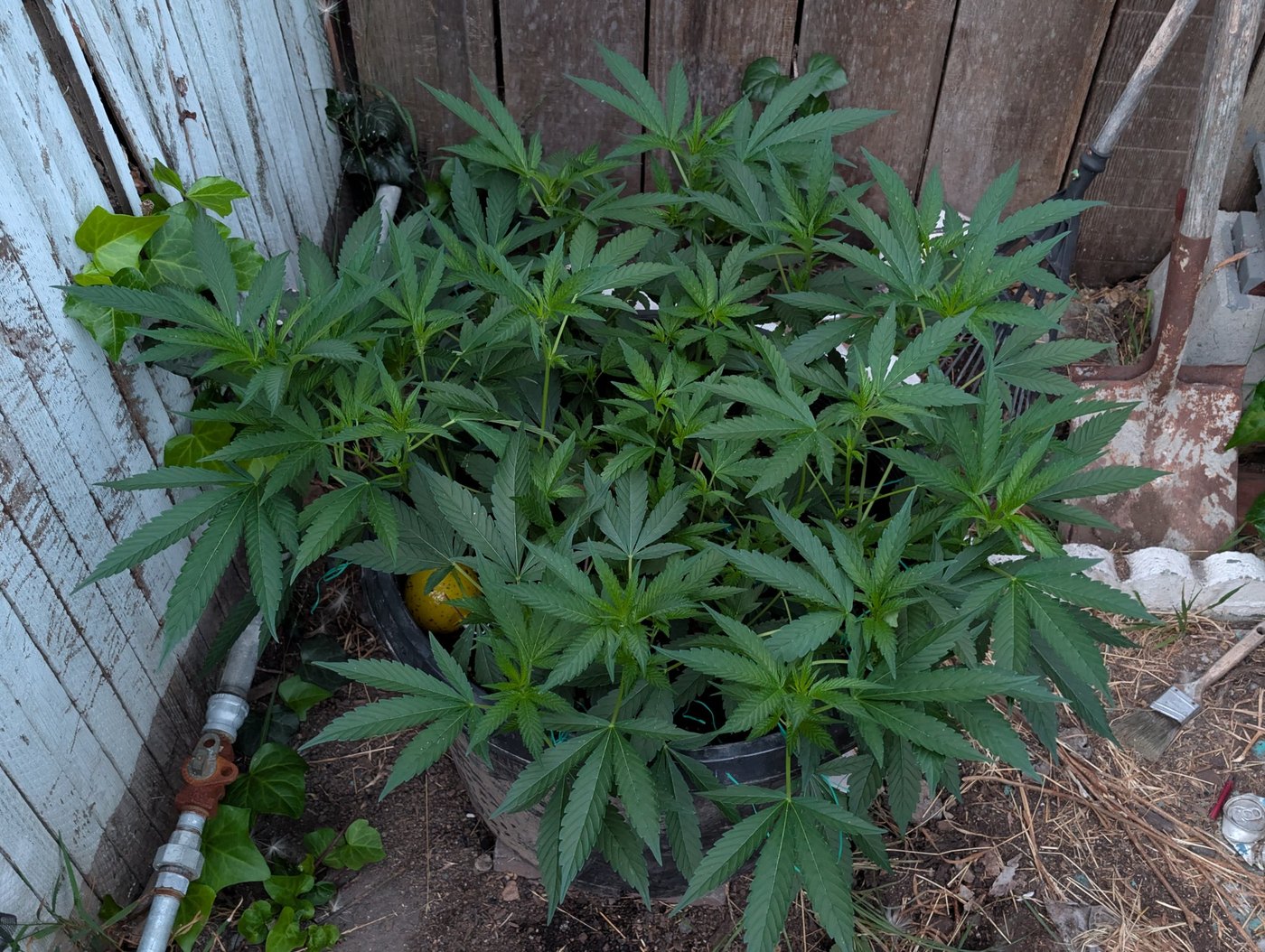
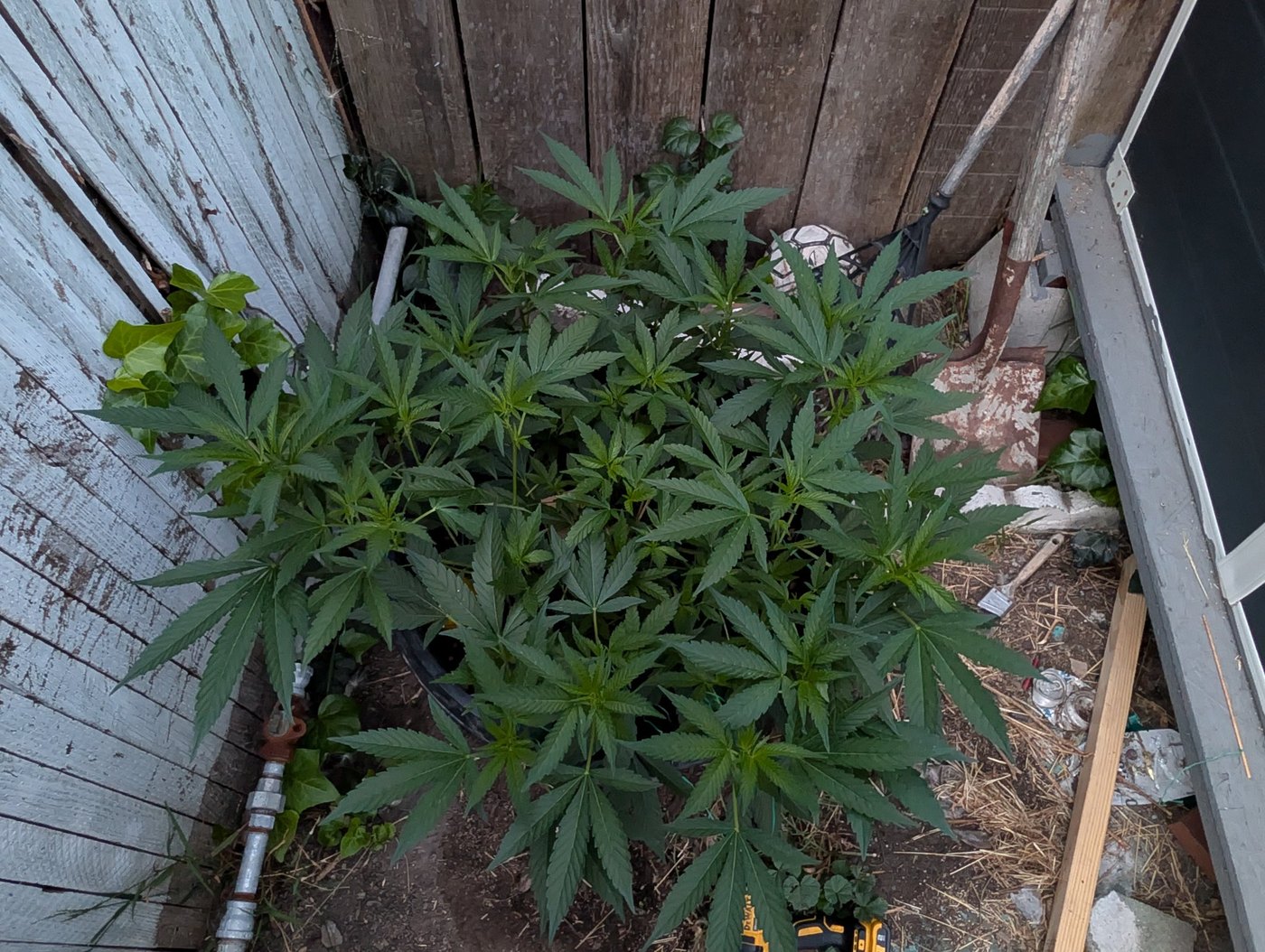
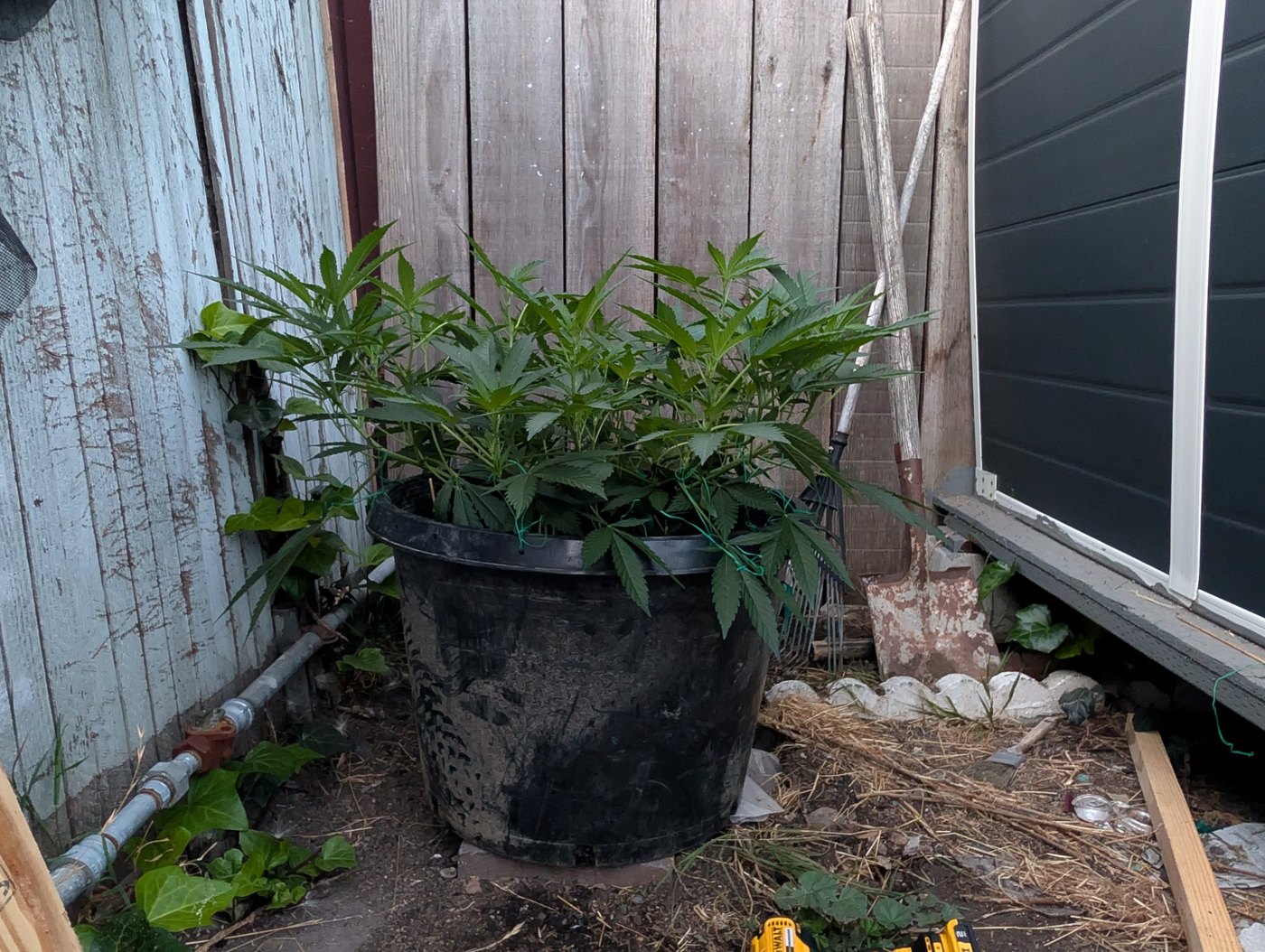
Why it worked
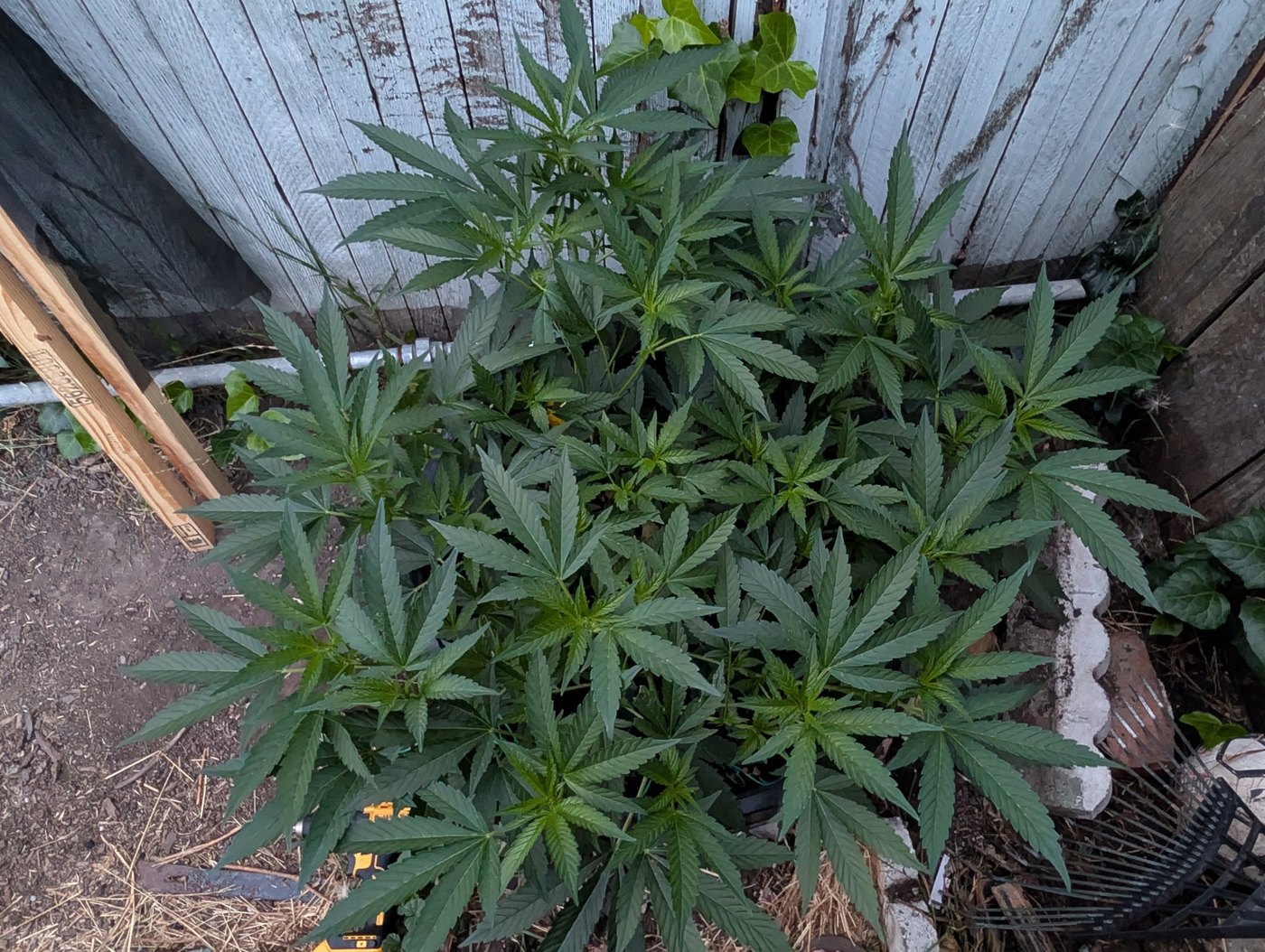
This is a textbook win for low-stress training (LST). By starting early and using soft ties anchored to the rim of the 40-gallon pot, the grower has redirected growth hormones away from a single main shoot and spread them evenly across dozens of side branches. The result is a perfectly flat, wide green carpet that maximizes solar coverage. Every single leaf gets direct sunlight instead of shading its neighbors.
The massive 40-gallon root volume acts as an incredible buffer. In coco or large amended mixes, this volume holds water and nutrients beautifully. In cool 55F weather, a pot this size can easily go 3-4 days between waterings. This physical reservoir, combined with a highly efficient canopy, is exactly what makes the grower's upcoming every-other-day schedule safe and highly practical.
How to replicate it
- Maintain the low profile: Continue using soft garden ties to guide any runaway shoots down to the container rim, keeping the canopy level.
- Let the pot dry down: With 55F temps and 87 percent humidity, do not water on a calendar schedule. Wait until the top 3 inches (about 7.5 centimeters) of the medium feel dry to the touch.
- Next feed plan: Since the plant just received a strong vegetative feeding, the next cycle should be plain water adjusted to a pH of 6.3-6.5 to prevent any salt buildup in the massive pot.
- Set up the helper: If a caregiver is checking in on off-days, teach them the finger-dip method to check moisture rather than letting them water on a strict timer.
Keep it going
- Watch for damp mornings: High humidity (87 percent) can invite pests or fungal spores. Keep the lower canopy clean by removing any leaves touching the medium.
- Monitor transition to stretch: As the season progresses and flowering begins, these flat branches will shoot upward. Keep ties ready to manage the initial stretch.
- Keep runoff clean: Test the pH of any water that drains out of the pot once a month to ensure the root zone stays in the ideal 6.0-6.5 zone.
Facing something similar? Start a free journal and I'll look at your plant: photos in, diagnosis out, 24/7.
Get a free diagnosis