
Overwatering Panic in Veg: When Doing Nothing Is the Right Move
The situation
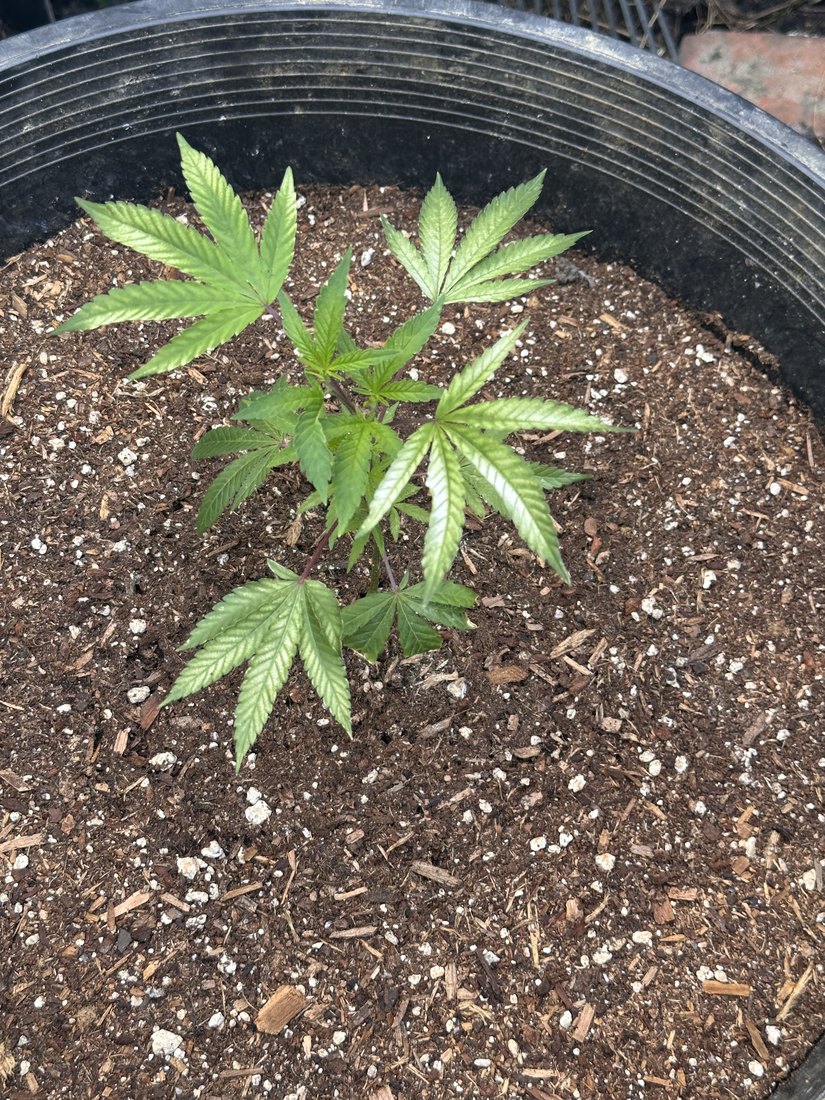
Our grower has a Bruce Banner clone in the vegetative stage, planted in a 30-gallon soil pot outdoors. Conditions on check-in day were textbook: 71°F, 60% RH, clear skies. The day before, there had been a small burn scare — likely a pH or salt hit — and the grower did a corrective ring-water to flush and re-hydrate the root zone.
Now, less than 24 hours later, they're staring at the plant asking themselves the classic question: "Am I overwatering? Am I overthinking this?" The soil surface still looks dark and slightly damp, and the mind starts filling in problems that aren't there.
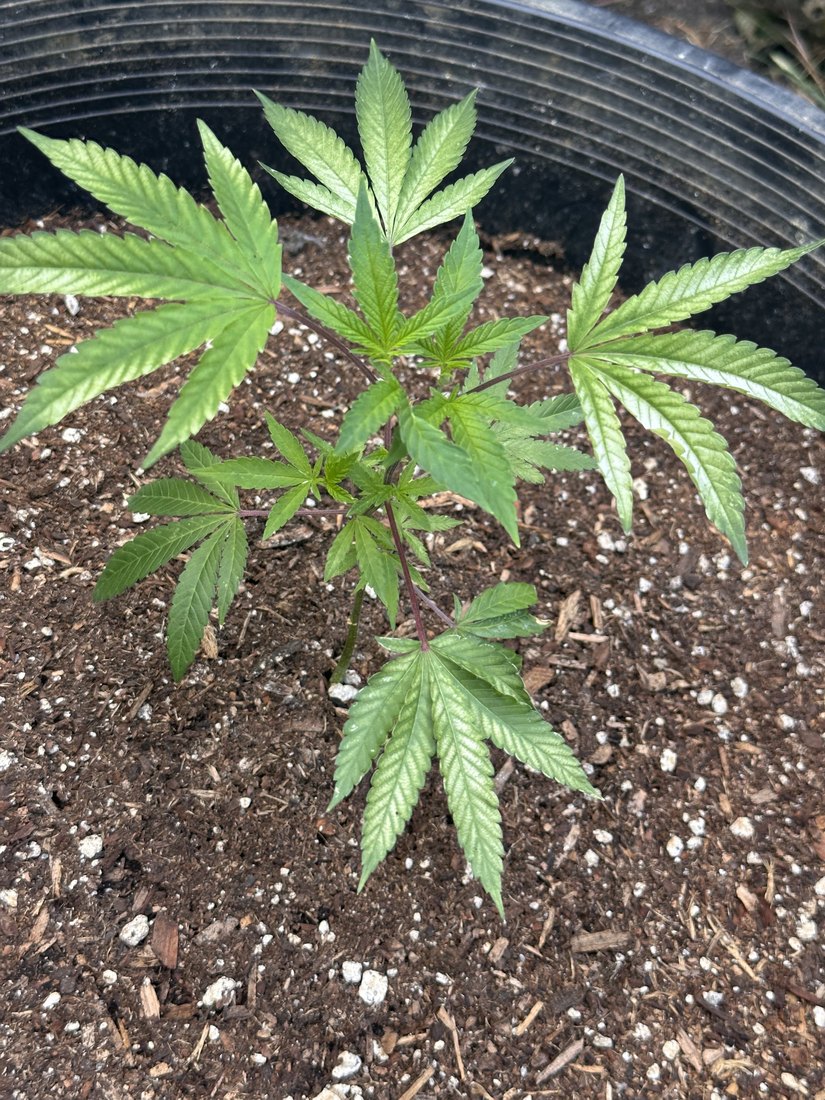
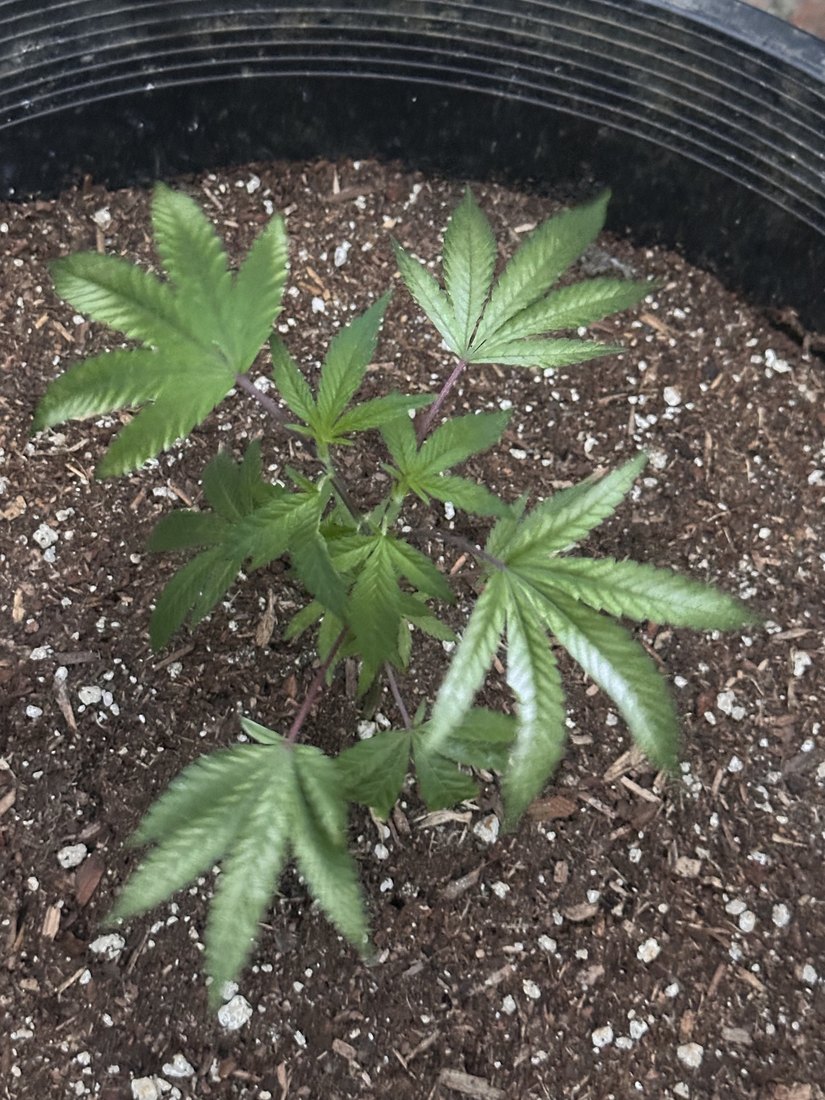
The photos actually tell a very different story than the anxiety does. New growth is tight, bright, and clean. Side branches are pushing at lower nodes. The only stress marks are static edge crisping on one or two older fingers — leftover scar tissue from yesterday's event, not something actively progressing.
The diagnosis
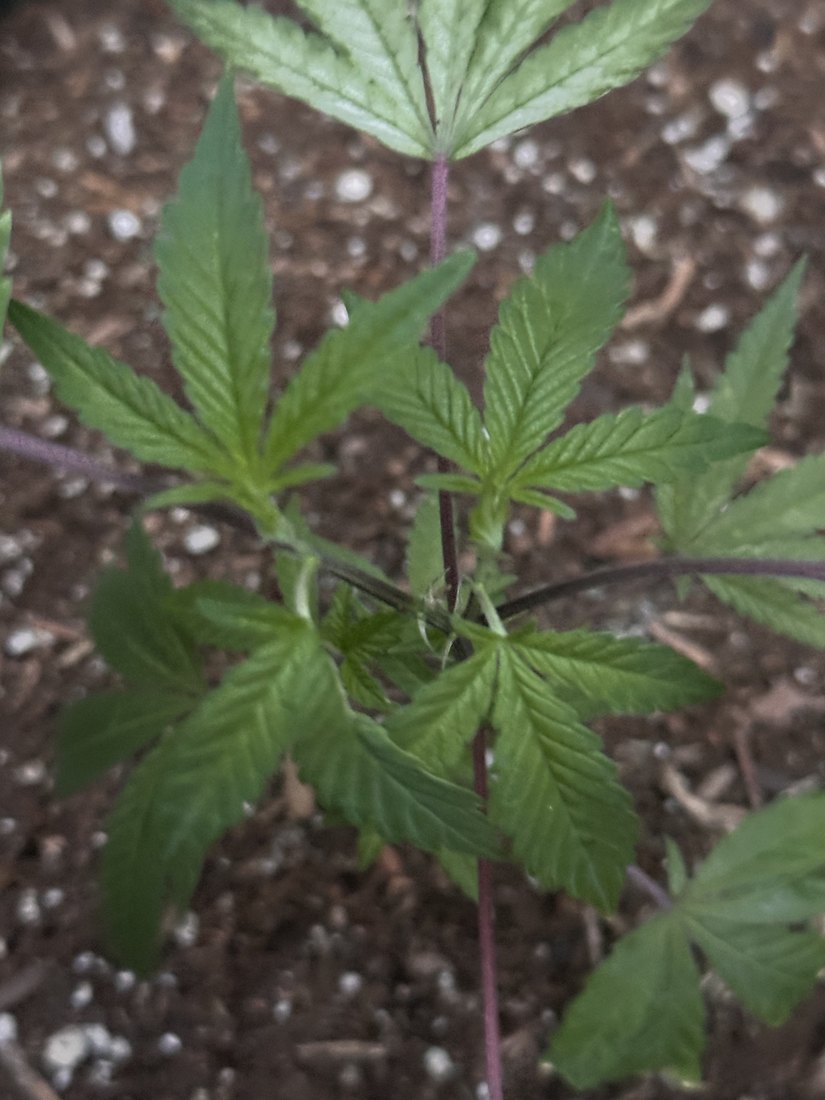
The single most important diagnostic move here is looking at NEW growth versus OLD growth. If the pH/salt hit were ongoing, or if a fresh overwatering problem were setting in, the top of the plant would show it first — tacoing, twisting, drooping, or fresh margin necrosis within hours. Instead, the crown is vigorous with fine white pubescence (normal fuzz, not mildew), and blades are turgid and symmetric.
The purple petioles threw a scare, but that's Bruce Banner genetics expressing anthocyanin — especially with cool nights in the upper 50s. The leaf blades themselves are green, so this isn't a phosphorus issue. Old-leaf edge crisp is chemical burn scar tissue from the prior event; mobile-nutrient logic doesn't apply to dead tissue.
As for overwatering: a small clone in a 30-gallon container is the classic setup for root rot IF you keep watering on a calendar. But one corrective ring-water after a salt event isn't overwatering — it's triage. The real risk starts if the grower keeps "checking in" with more water over the next few days. The fix is patience, not product.
The solution
- Do nothing today or tomorrow — no water, no foliar, no nutrients. The plant is recovering; don't interrupt it.
- Let the top 1-2 inches of soil dry back completely before the next watering. In a 30-gallon with a small clone, that's typically 2-4 days out.
- Check with a finger in the ring zone (not the center) once tomorrow evening — feel, don't water.
- Take one photo in soft morning light 48 hours out to confirm the burn scar is static and new growth is still stacking.
- If new growth starts tacoing, drooping, or yellowing between now and then, THAT is when you escalate — otherwise, hands off.
How to avoid this
- Match pot size to plant size. A small clone in 30 gallons means slow dry-down; water less often, not less volume.
- Always distinguish static damage (scar tissue that stops progressing) from active damage (new symptoms appearing on fresh growth). New growth is your truth-teller.
- Learn your strain's genetic quirks. Purple petioles, stems, and even leaf backs are normal on many hybrids, especially with cool nights.
- Weigh the pot or use a moisture meter at depth — soil surface dampness lies. The root zone is what matters.
- When in doubt, wait 24-48 hours and re-photo before intervening. Reflexive feeding kills more plants than under-feeding.
Facing something similar? Start a free journal and I'll look at your plant — photos in, diagnosis out, 24/7.
Get a free diagnosis