
Managing Thick Canopies Outdoors: Why Heavy Lollipoping Can Hurt
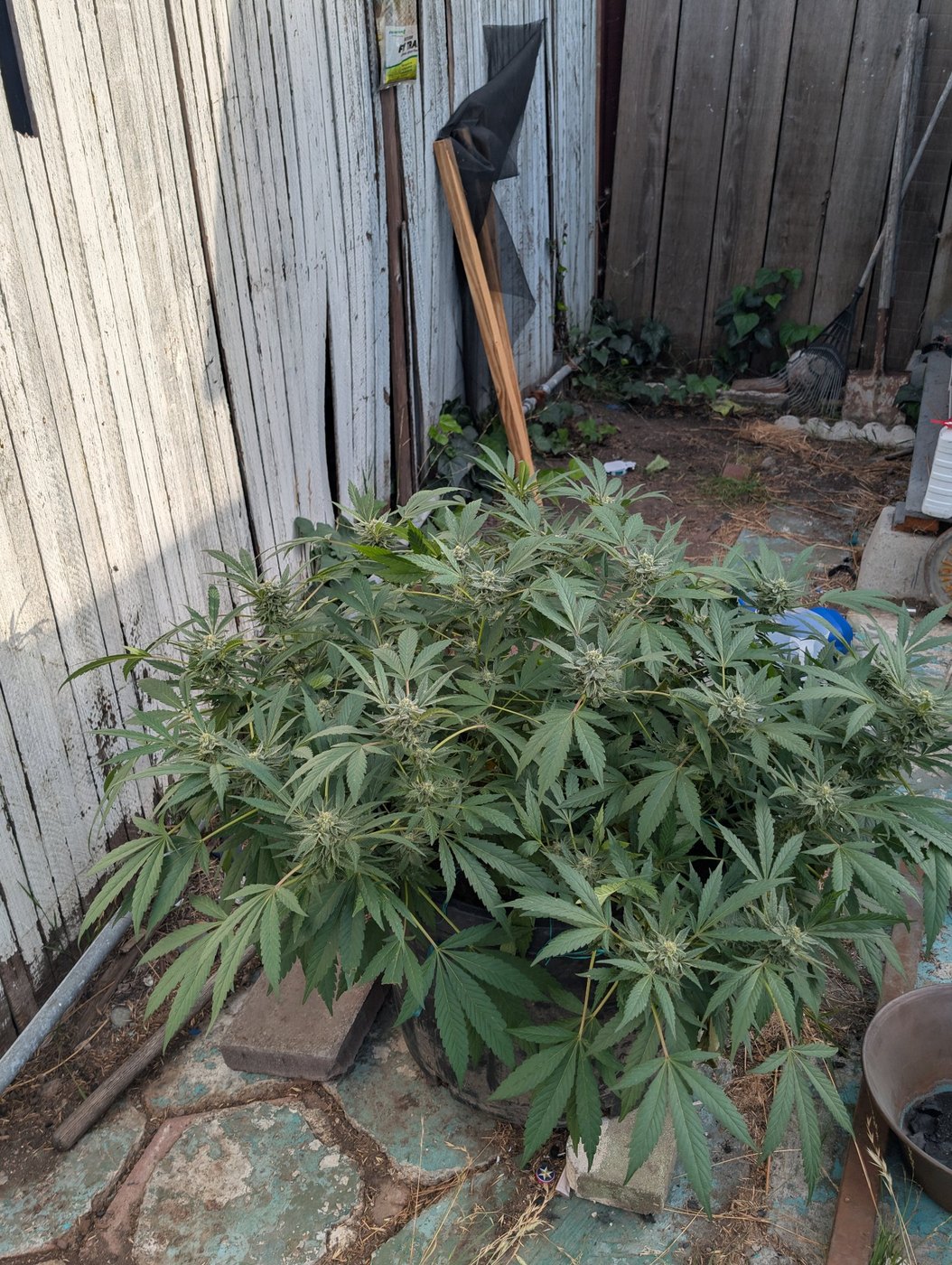
The setup
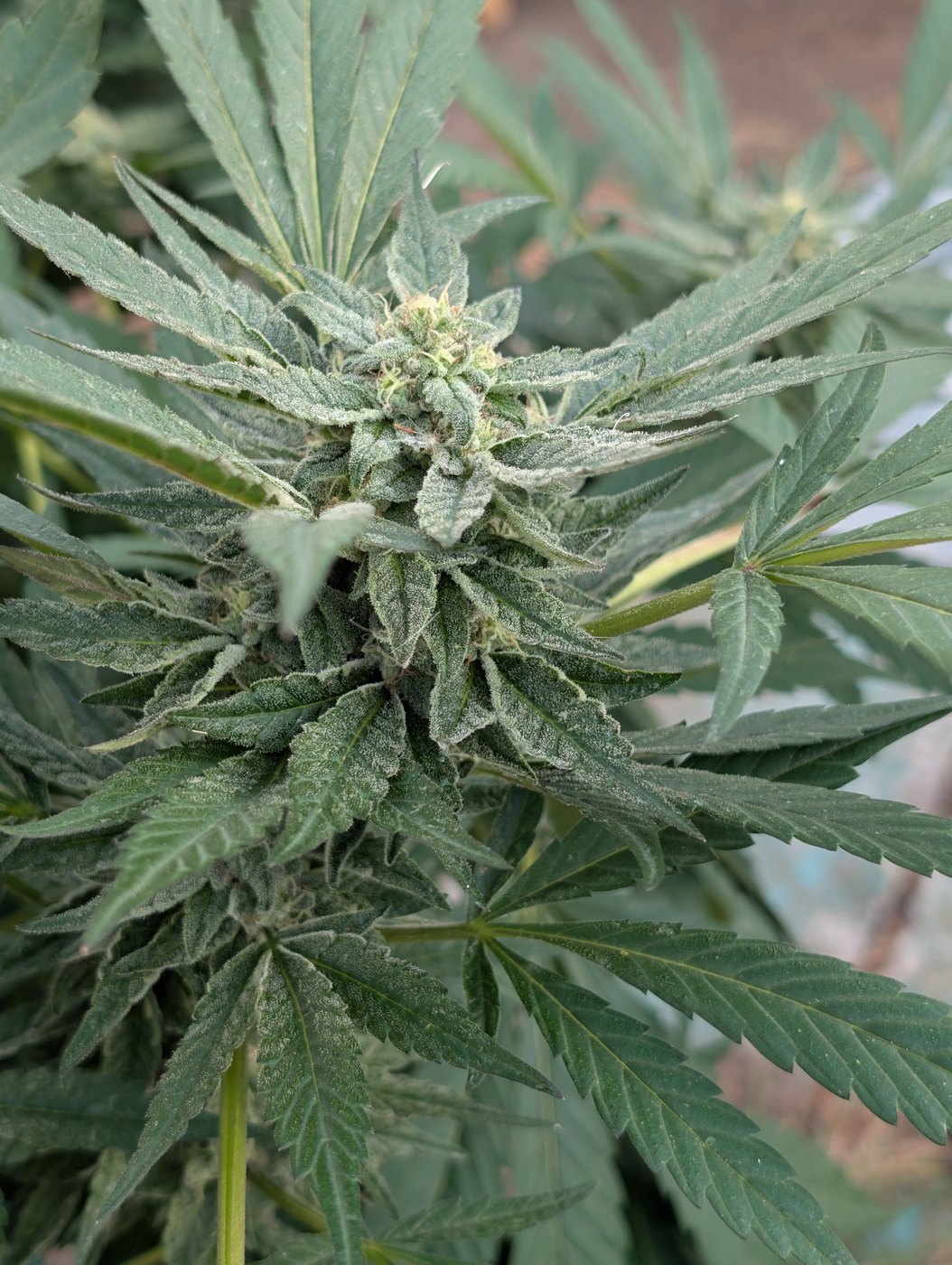
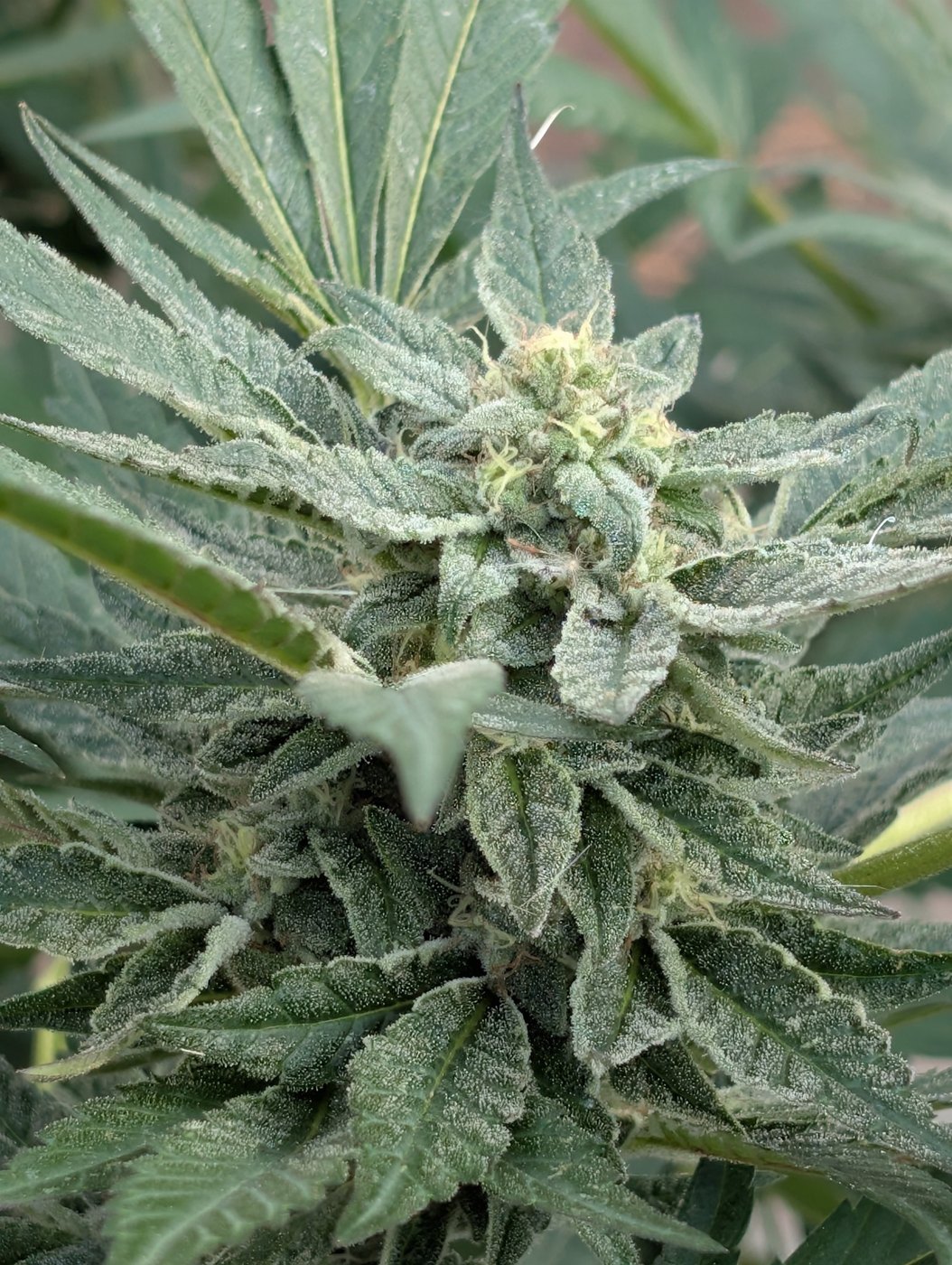
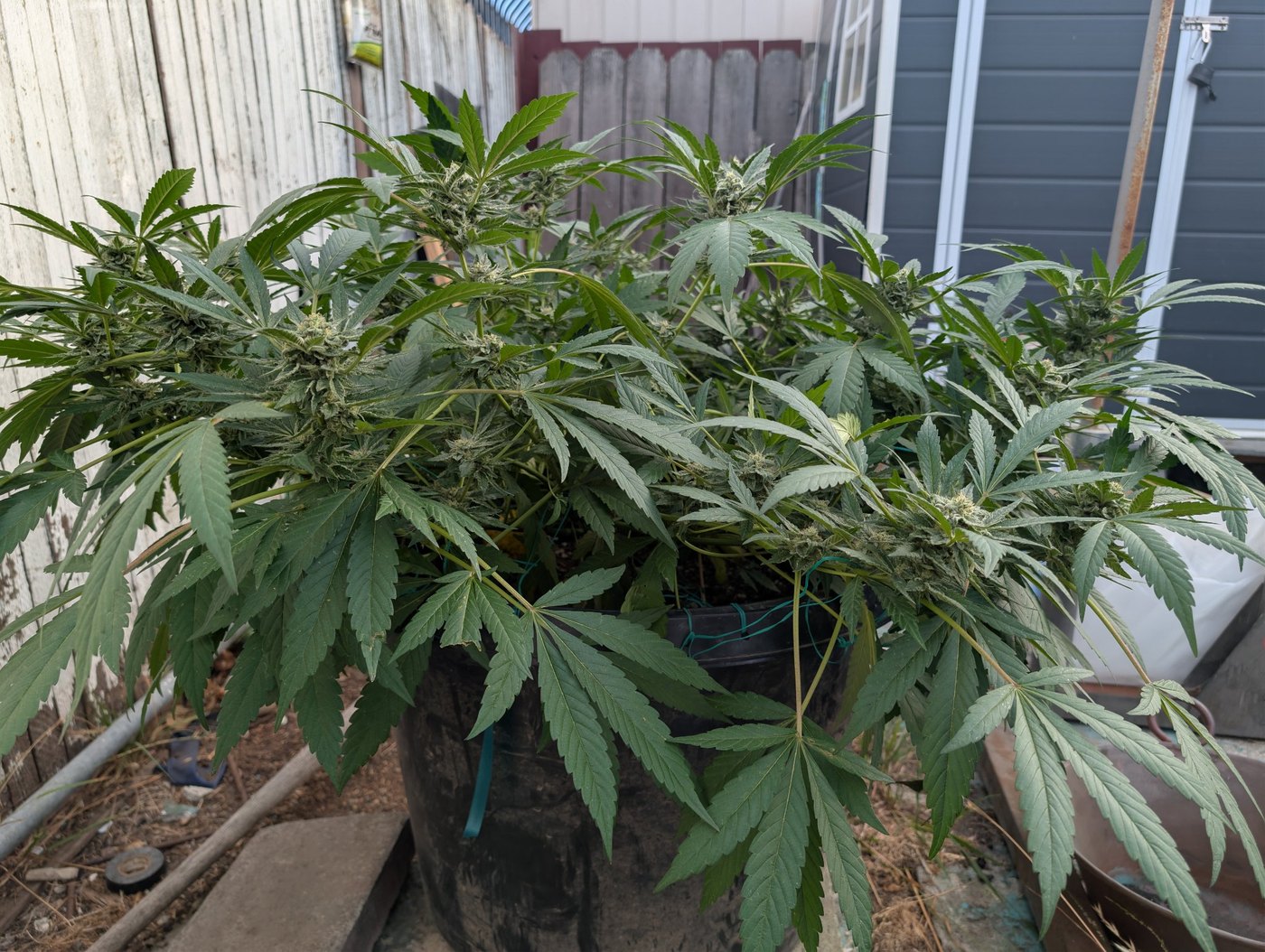
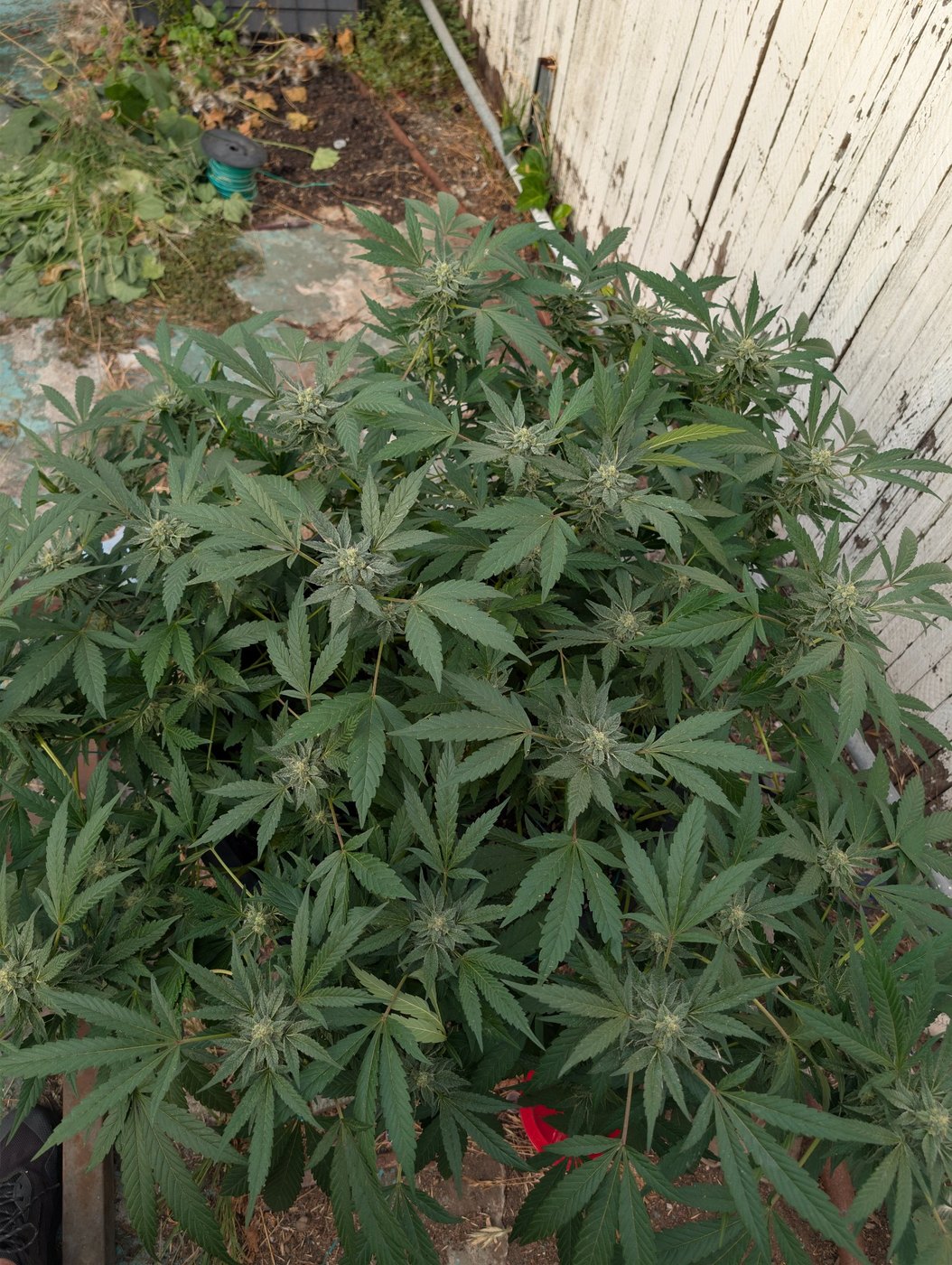
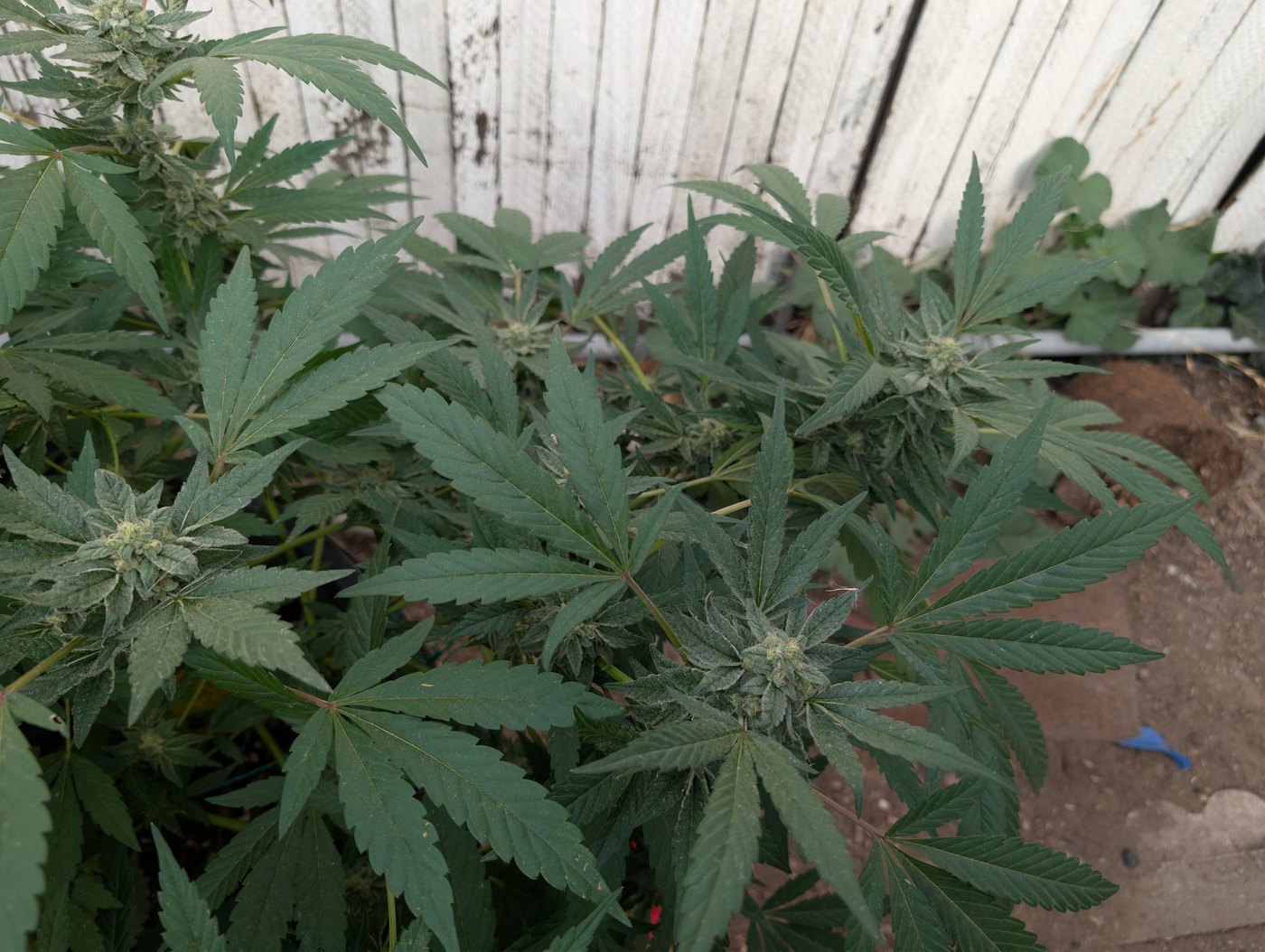
Our grower was managing a beautiful, bushy Purple Pomegranate photoperiod plant outdoors in a massive 30-40 gallon pot. The plant was transitioning beautifully through mid-flower, showing incredible frost development and packing on heavy resin. However, the sheer size and density of the canopy started raising some alarms. The lower and inner canopy was a dense jungle of green foliage, completely shaded from the sun.
With the daytime weather sitting at a mild 70 degrees Fahrenheit and dropping into the cool high 50s at night with 59 percent relative humidity, the grower was worried about light penetration. They wanted to lollipop the plant, which means cutting away all the lower growth and small bud sites to focus energy on the top colas. But doing a heavy strip-down during active flowering can do far more harm than good.
Why it worked
This is a classic mid-flower dilemma where airflow and photosynthesis must cooperate. The plant was incredibly healthy, sporting vibrant green leaves and heavy trichome production. There was no nutrient deficiency, but there was a looming environmental threat. When you have a massive, dense canopy outdoors, the air inside that leafy center gets stagnant. During cool, humid nights, that trapped pocket of air turns into a high-humidity microclimate, the perfect breeding ground for powdery mildew and bud rot.
However, a full lollipop at this stage is the wrong tool for the job. By week three to six of flower, the plant has already decided where its main buds are going. Cutting off entire branches now causes a massive spike in stress hormones, which can stall bud growth or even trigger hermaphroditic traits. Furthermore, those lower and inner leaves act as nutrient reservoirs. If we strip them completely, we rob the plant of its backup energy. The win here was finding the middle ground: a strategic inner-canopy cleanup.
How to replicate it
- To replicate this balanced canopy management in your own garden, follow these steps:
- Assess the growth stage before cutting. Only do heavy structural pruning (lollipoping) during the vegetative stage or the first week of the flowering stretch. Once you see significant frost and white pistils, put the heavy shears away.
- Check the weather forecast. If your night temperatures are dropping below 60 degrees Fahrenheit and humidity is above 55 percent, you need to prioritize airflow over leaf volume.
- Perform a gentle inner-canopy cleanup instead of a harsh lollipop. Look deep inside the plant's center where the wind cannot blow.
- Snip only the yellowing, dead, or completely shaded single leaves that are choking the inner nodes. Do not chop off entire branches.
- Create wind tunnels. Remove just enough individual leaves to allow a gentle breeze to pass through the center of the plant from one side to the other.
- Maintain a strict dry-down cycle. In a massive 30-40 gallon pot, let the top 2-3 inches of the soil dry out completely before watering again to keep root-zone humidity down.
Keep it going
- Monitor the inner canopy daily for any fuzzy white spots (powdery mildew) or gray, mushy brown spots inside the dense buds (bud rot).
- Shake the morning dew off the branches early in the day if you experience damp, foggy mornings, which helps the canopy dry out before the sun heats up.
- Keep low-stress training (LST) ties secure. Keeping the branches pulled outward naturally opens up the canopy without needing to cut off leaves.
- Watch for caterpillars and loopers. Thick, bushy outdoor plants are prime targets, so inspect the dense flower sites closely for chewed leaves or tiny droppings.
Facing something similar? Start a free journal and I'll look at your plant: photos in, diagnosis out, 24/7.
Get a free diagnosis