
Training in Giant Pots: How to Manage LST and Wet Soil in Foggy Weather
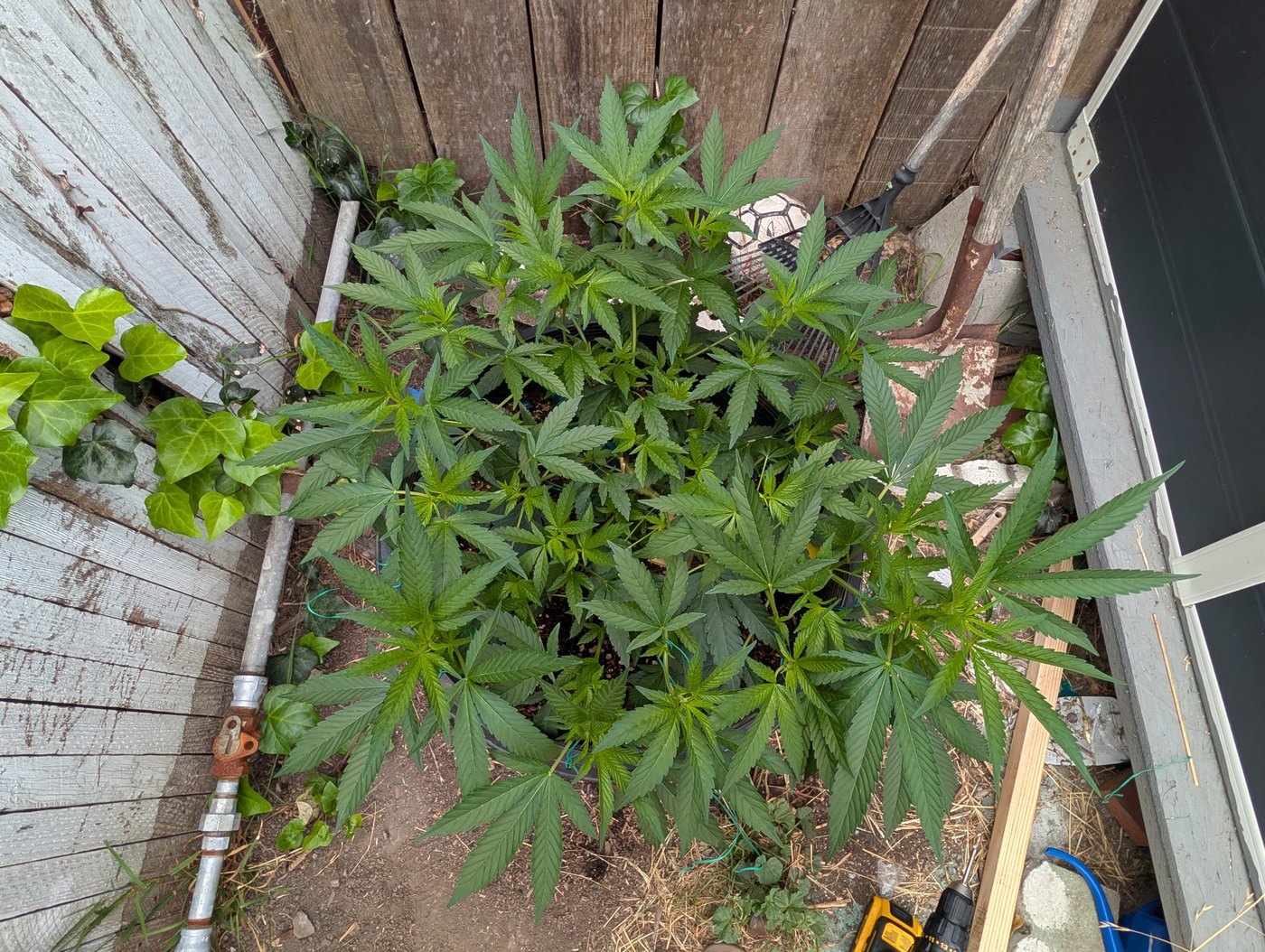
The setup
Our grower is running a beautiful Purple Pomegranate hybrid outdoors in a massive 30-40 gallon container. The plant is on day 44 of vegetative growth, shaping up into a wide, flat, bushy canopy. The grower is actively using low stress training (LST), which means gently bending and anchoring branches outward to expose the inner nodes to maximum sunlight.
The challenge comes from the local climate. The morning started with a chilly 60 degrees Fahrenheit (15.5 degrees Celsius) and a thick 95 percent humidity fog. Despite a predicted afternoon spike of 91 degrees Fahrenheit (32.7 degrees Celsius), the massive volume of medium in the pot remains damp from the night before, presenting a classic watering dilemma.
Why it worked
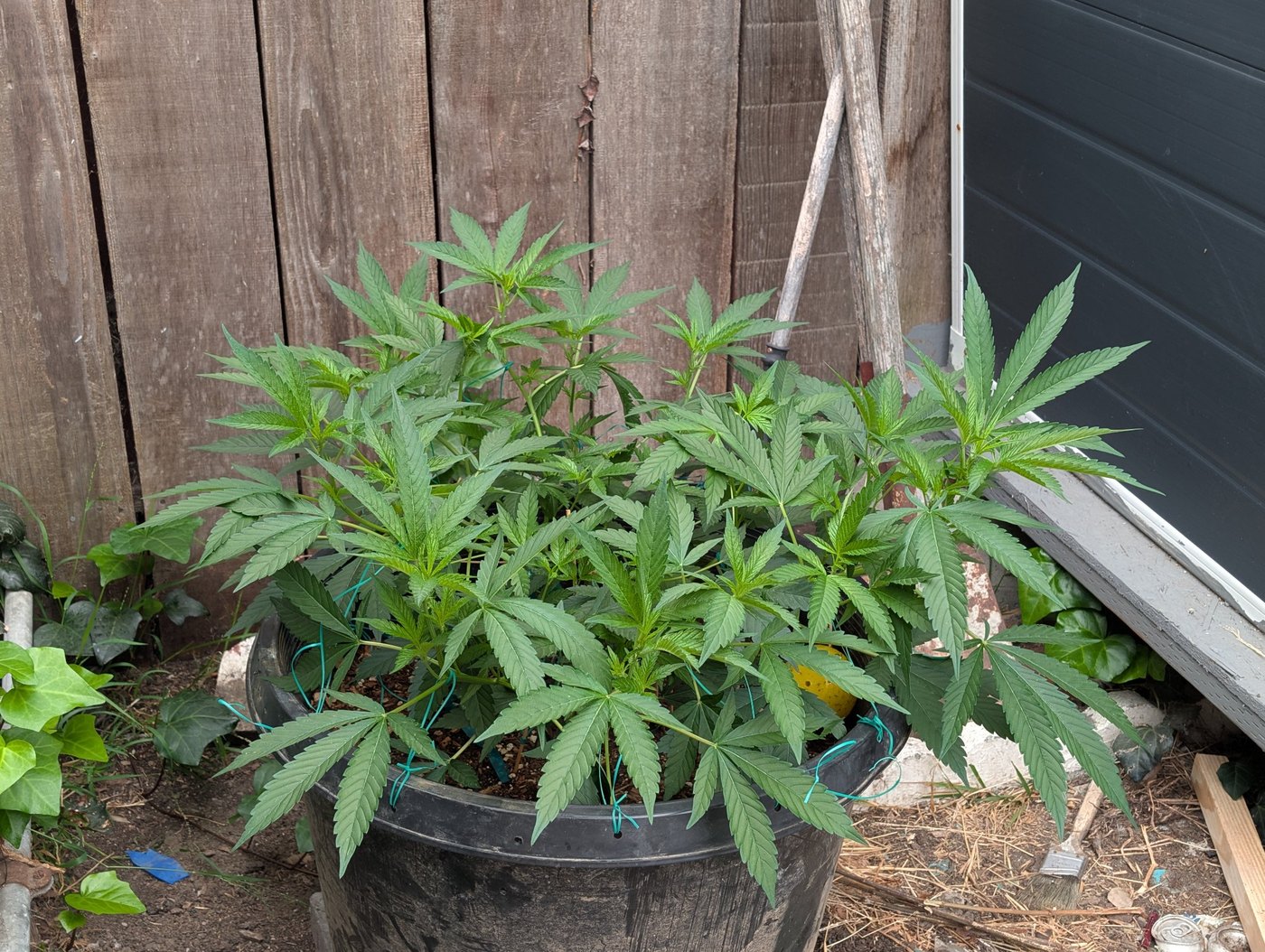
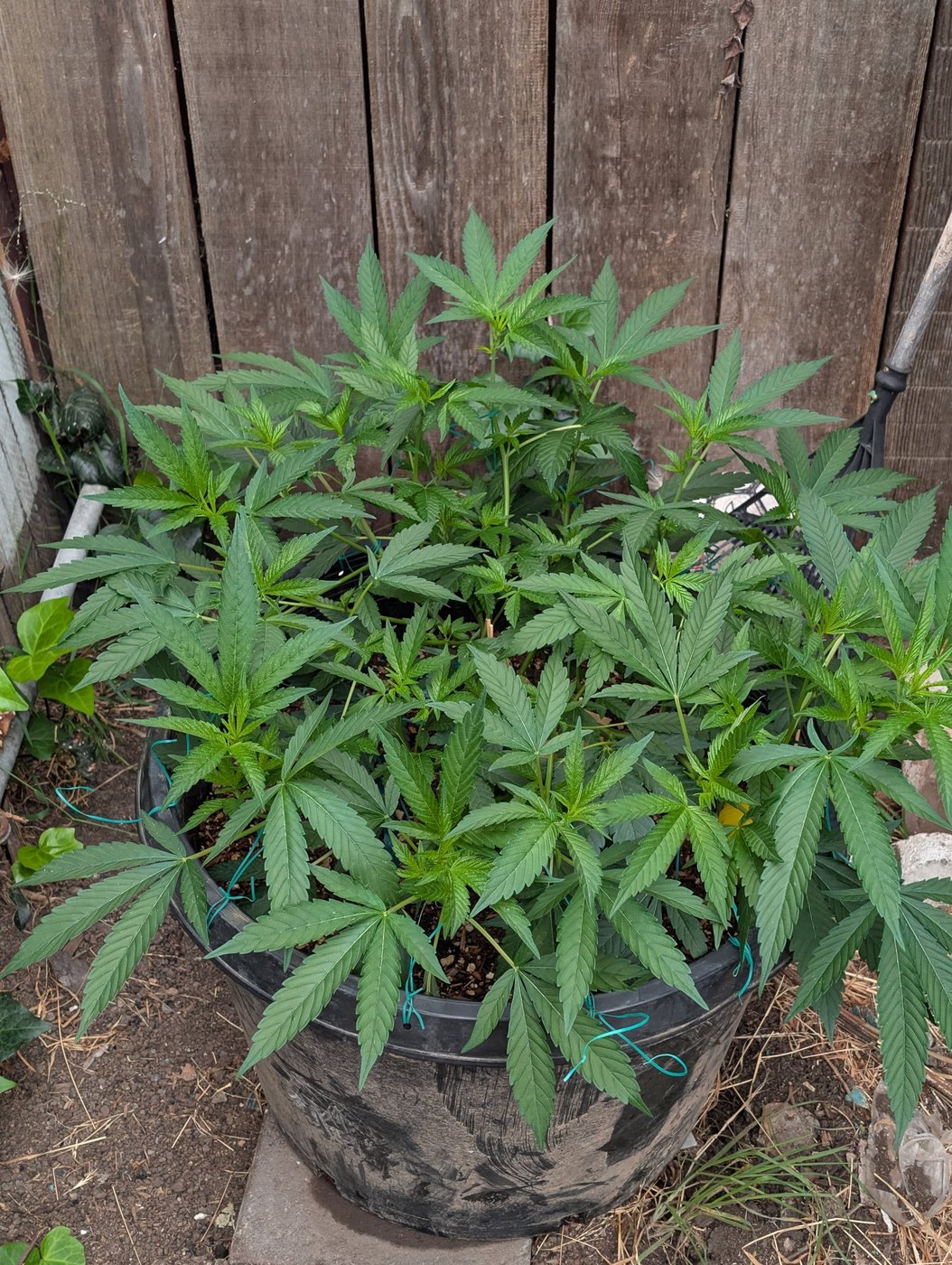
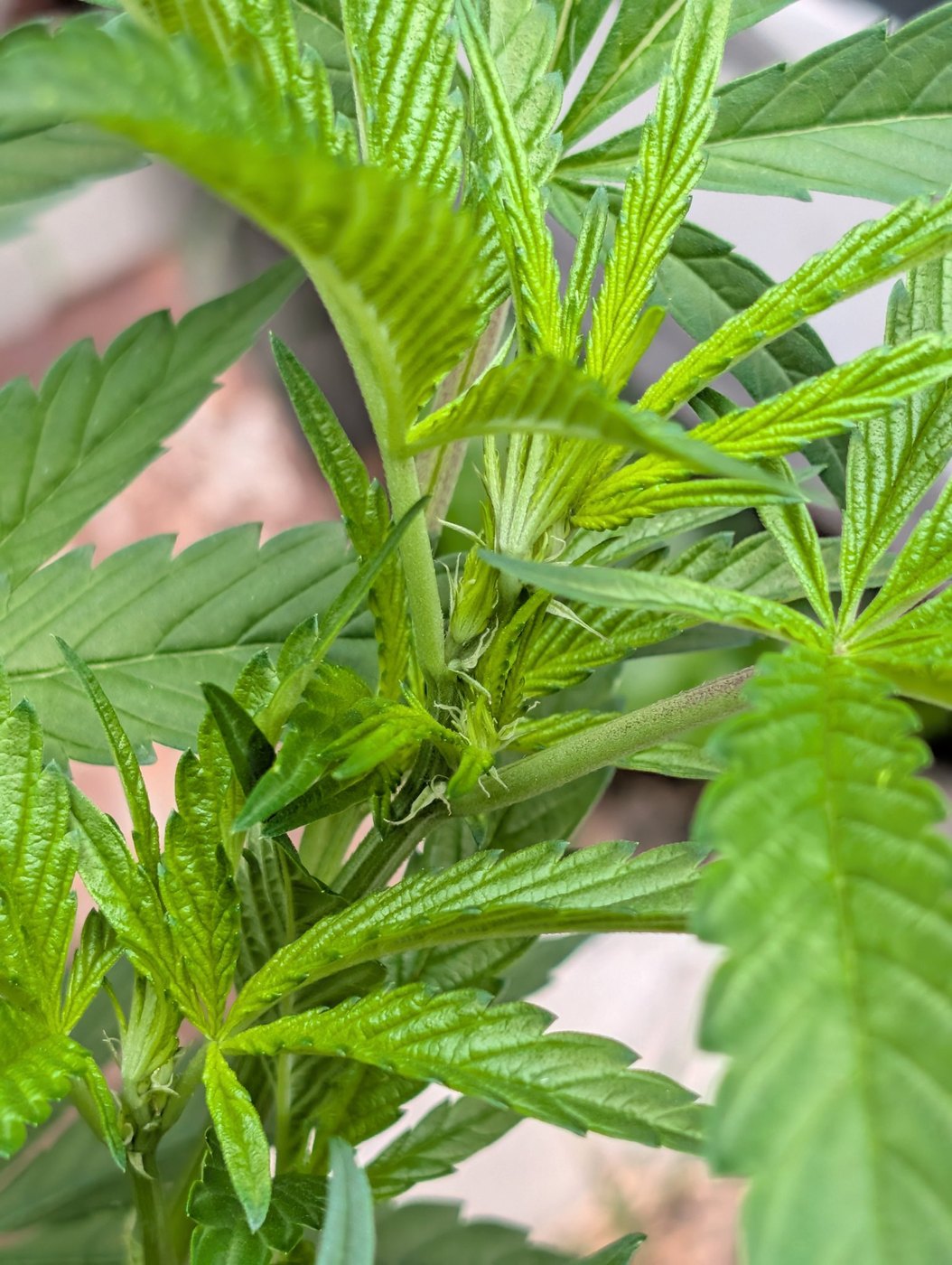
This is a textbook win of patient cultivation and stellar canopy management. The leaves are praying upward, showing perfect turgor, which is the water pressure inside the cells that keeps them upright. The uniform, vibrant green color across the plant tells us the root zone is highly functional and there are no nutrient lockout issues.
The giant pot size acts as a massive thermal and moisture buffer. In 95 percent humidity, transpiration, which is how plants sweat, slows to a crawl. Even though a hot afternoon is coming, watering a damp pot of this size just because the sun is coming out would drown the roots, cutting off oxygen and risking root rot. The grower wisely chose to tighten the LST ties and let the medium dry down naturally.
How to replicate it
- Use soft garden ties to anchor branches outward, keeping the pull gentle but firm to expose the center of the plant.
- Check the moisture of massive containers by inserting a finger 2-3 inches deep, rather than relying solely on surface appearance.
- Hold off on watering when the root zone is damp, even if a hot afternoon is forecasted, as large pots hold ample moisture reserves.
- Allow the plant to naturally dry down for 24-48 hours to pull oxygen back into the root zone.
- Adjust watering volume based on daily weather swings, using foggy mornings to extend dry periods and hot afternoons to trigger the next feed.
Keep it going
- Monitor local relative humidity (RH) to anticipate how quickly your medium will dry out.
- Keep LST ties adjustable so you can easily slacken or tighten them as branches thicken.
- Watch for the classic praying leaf posture as your sign that root oxygenation and moisture levels are perfectly balanced.
- Avoid heavy defoliation during high humidity windows to prevent open plant wounds from catching airborne mold spores.
Facing something similar? Start a free journal and I'll look at your plant: photos in, diagnosis out, 24/7.
Get a free diagnosis