
How to Low-Stress Train Giant Outdoor Coco Pots for Flat Canopies
The setup
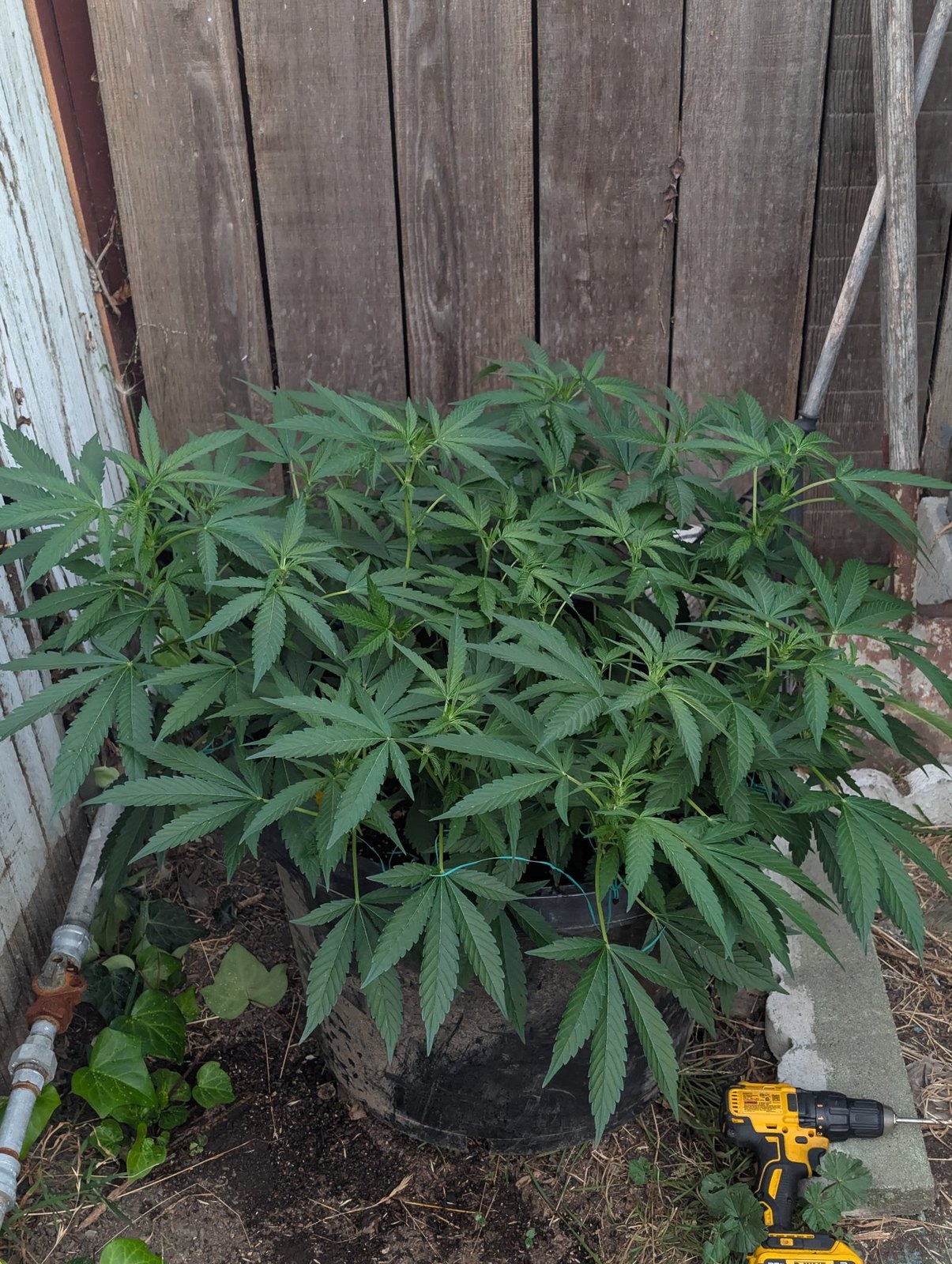
We are looking at a gorgeous Purple Pomegranate photoperiod at day 51 of vegetative growth. She is sitting outdoors under a mostly sunny sky, soaking in 71F temperatures and 63 percent relative humidity. But here is the kicker: she is living in a massive 30-40 gallon pot filled with coco coir, a medium typically reserved for small indoor pots with automated watering.
Our grower just completed a heavy round of low-stress training (LST), pulling the branches down and pinning them flat to the fabric rim. They watered with two gallons of plain water adjusted to a pH of 6.3, aiming to keep her lush and hydrated.
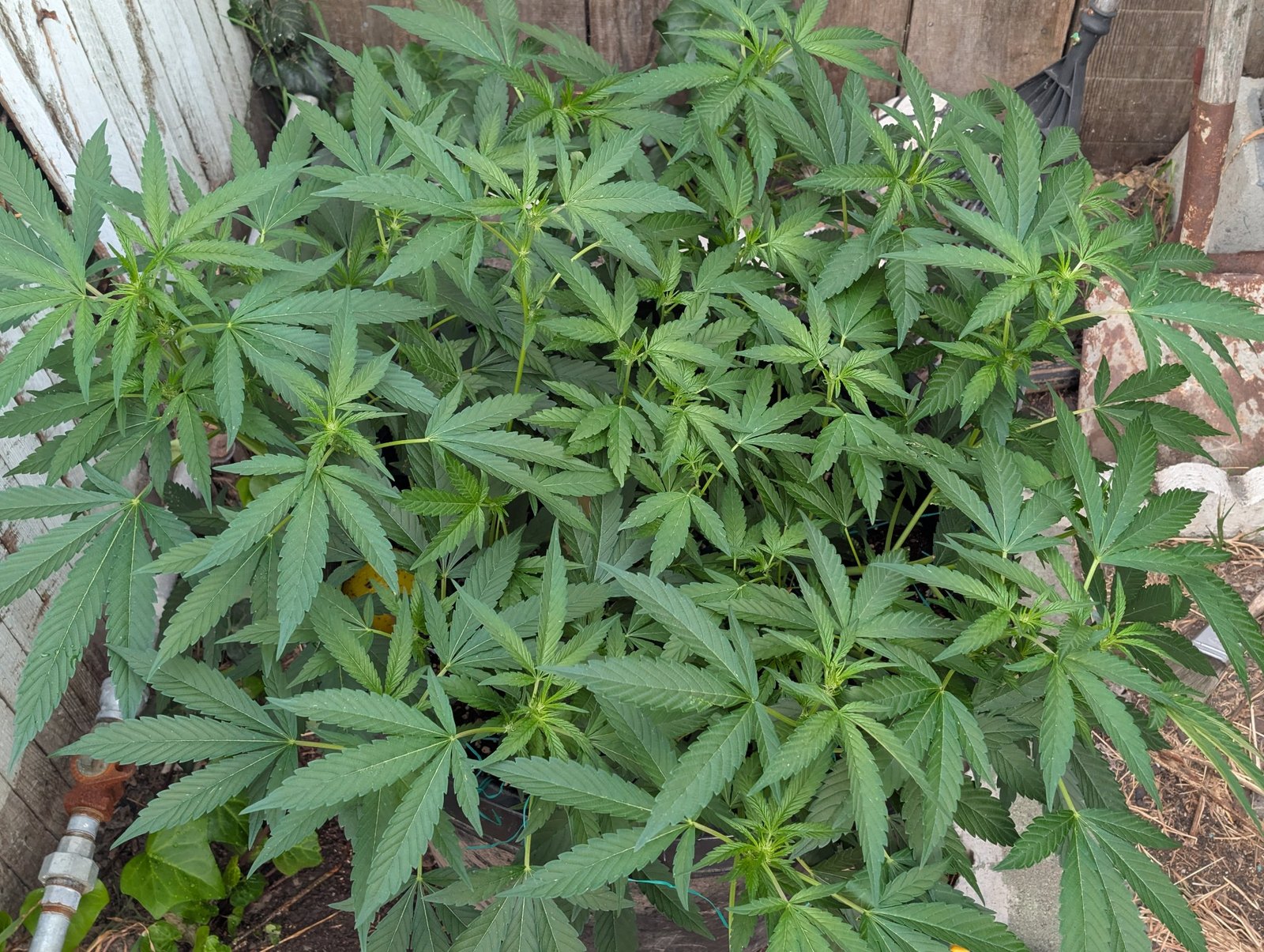
The canopy is a sea of uniform green. There is no tip burn, no yellowing, and no pest damage. It is a textbook example of vegetative phase perfection, but managing a giant pot of coco outdoors presents unique watering challenges that can easily turn a win into a soggy, anaerobic root zone.
Why it worked
Why does this setup work so well? Usually, coco coir is treated like hydroponics, watered daily to runoff in small 3-5 gallon pots. When you scale up to a 40-gallon pot outdoors, the rules of physics change. The massive volume of coco holds a tremendous amount of water, acting more like a sponge than a fast-draining hydro setup.
The leaf posture here is excellent. The leaves are turgid (full of water pressure) but not heavy or drooping, meaning the roots are getting a perfect balance of oxygen and moisture. The pH of 6.3 is the sweet spot for outdoor coco, keeping essential nutrients like nitrogen and magnesium fully available.
The training is top-tier. By pinning the main shoots level with the outside rim of the pot, the grower has broken apical dominance. This tricks the plant into distributing growth hormones equally, turning what would have been lower, shaded branches into main, light-catching tops.
How to replicate it
- Let the pot dry down for 3-4 days before watering again, allowing the roots to search for moisture and breathe.
- Lift the edge of the pot or feel the top 3 inches of coco to ensure it is bone-dry before adding more liquids.
- Continue using soft garden ties to gently pin new shoot extensions to the pot rim as they grow past the edge.
- Tuck large fan leaves under developing shoots rather than cutting them off, preserving her energy factories while letting light reach the center.
- Keep the watering pH in the 5.8-6.3 range to ensure optimal nutrient uptake as she prepares for the pre-flower transition.
Keep it going
- Avoid daily watering in giant pots, even in coco, as cold or damp root zones will stall outdoor growth.
- Watch for high wind conditions that can catch a flat, sail-like canopy and tear branch joints.
- Inspect under the dense canopy regularly for pests or humidity pockets, especially on cool, damp mornings.
Facing something similar? Start a free journal and I'll look at your plant: photos in, diagnosis out, 24/7.
Get a free diagnosis