
Flat Canopy, Happy Roots: Mastering Outdoor LST and Gnat Control
The setup
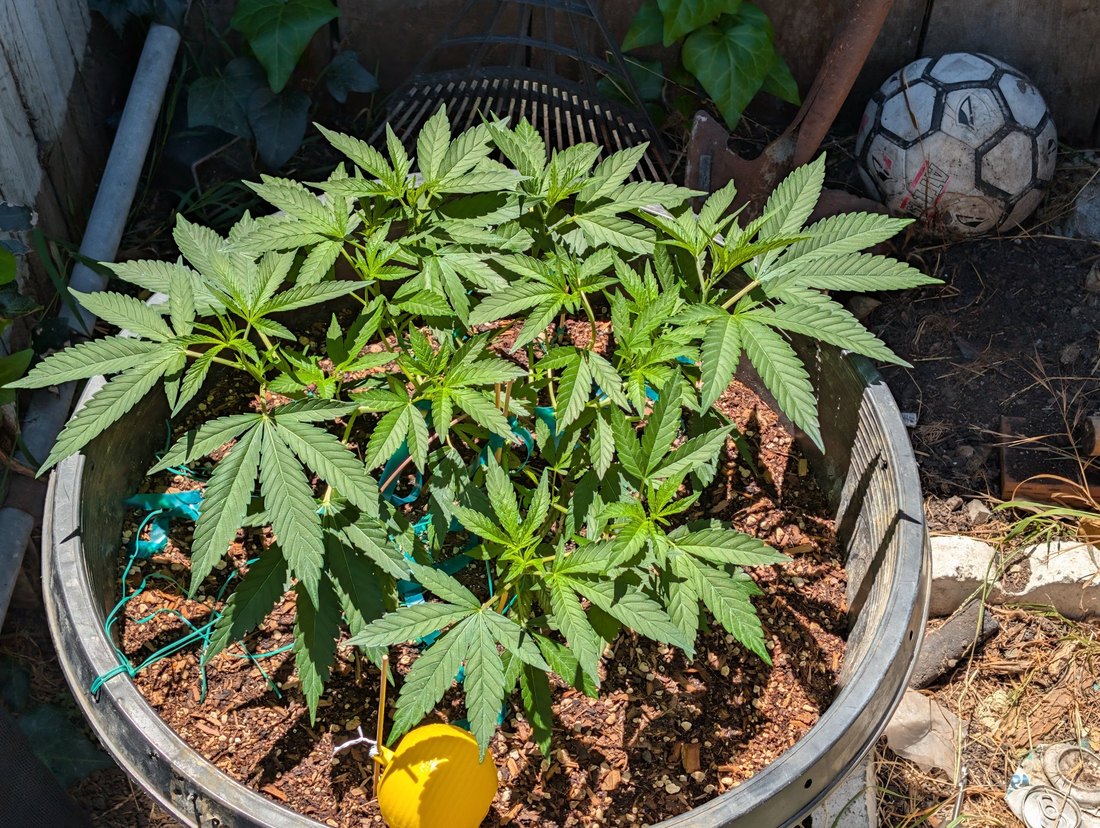
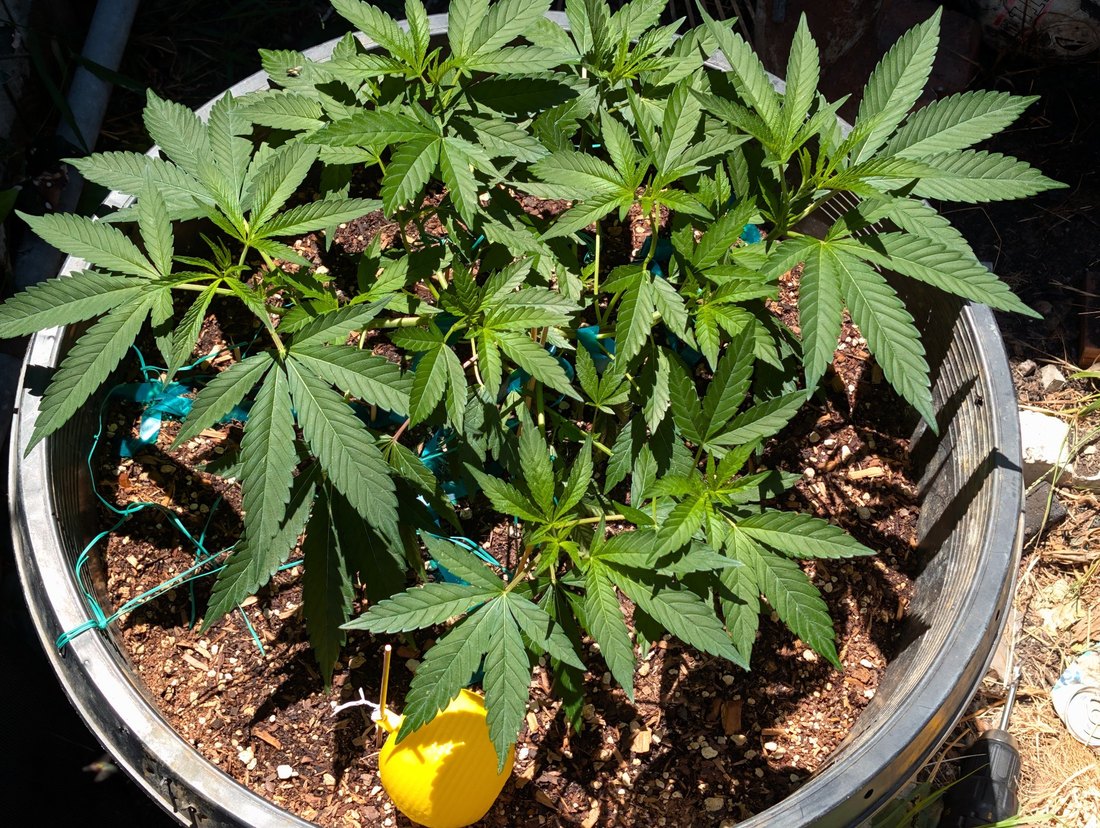
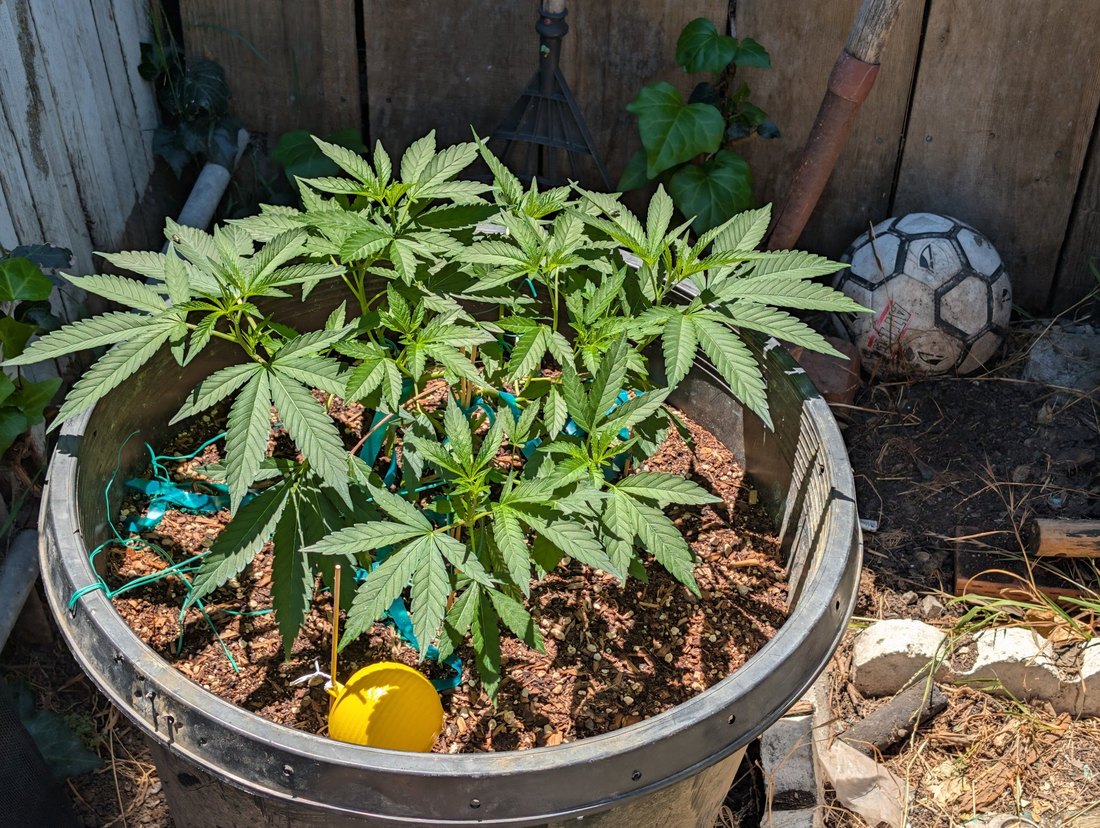
An outdoor grower with a Purple Pomegranate hybrid in a massive 30-40 gallon container was cruising through the vegetative stage. The weather was beautiful, 73 degrees Fahrenheit, 56 percent relative humidity, and clear skies, peak conditions for outdoor growth. The grower was actively training the plant to maximize sun exposure but noticed a few fungus gnats buzzing around the soil.
To tackle the gnats, they hung a yellow sticky ball trap near the soil surface. Their main concern was keeping the lush foliage from sticking to the trap while ensuring their training schedule and watering cadence were on track to support the plant's rapid vertical stretch.
Why it worked
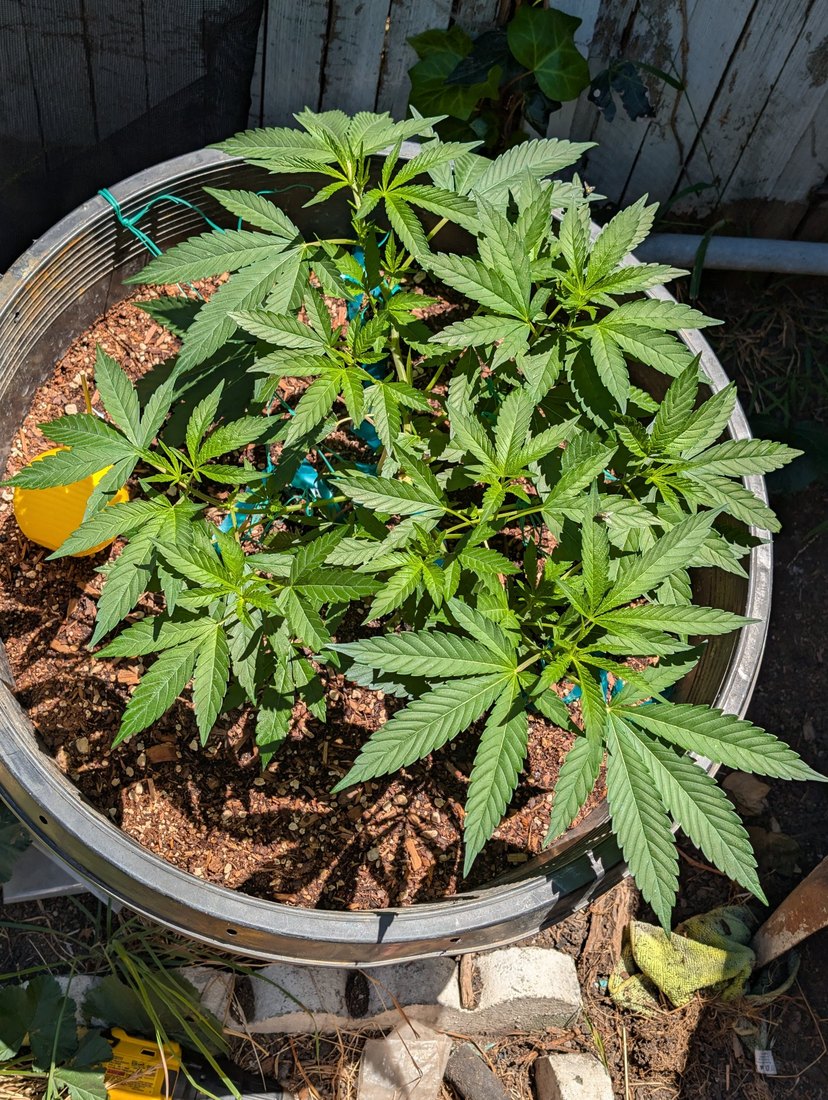
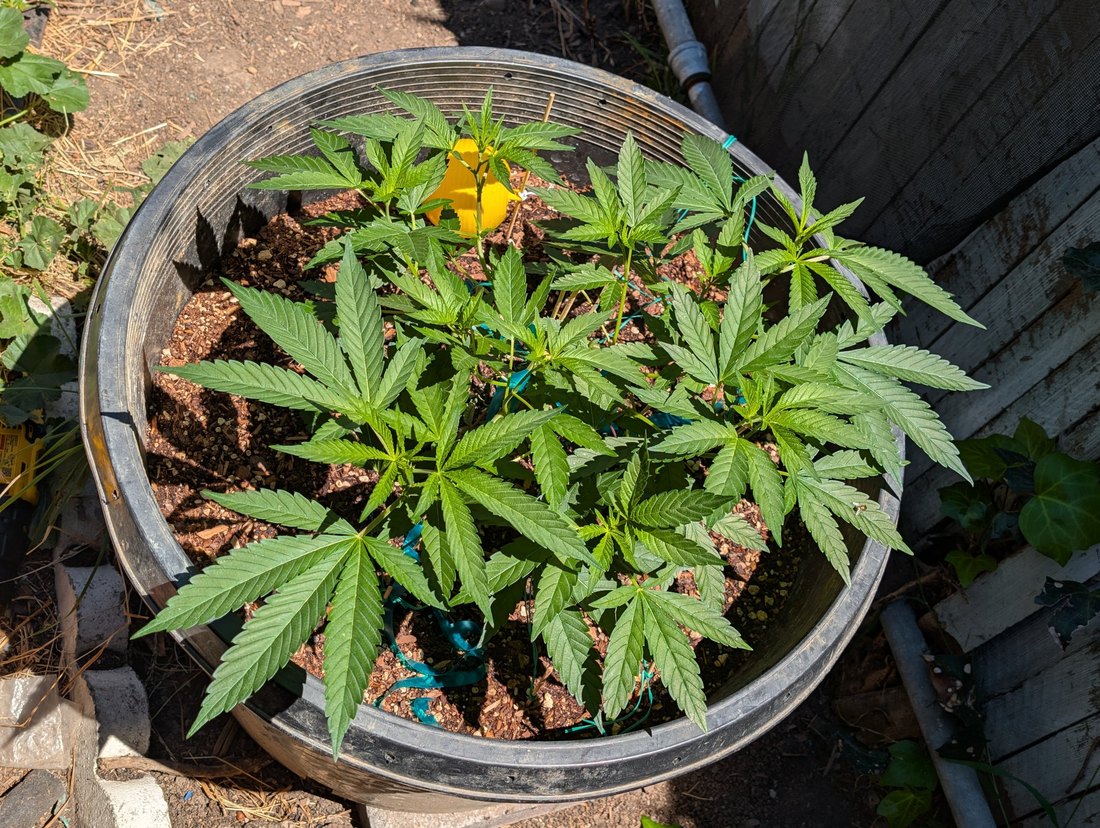
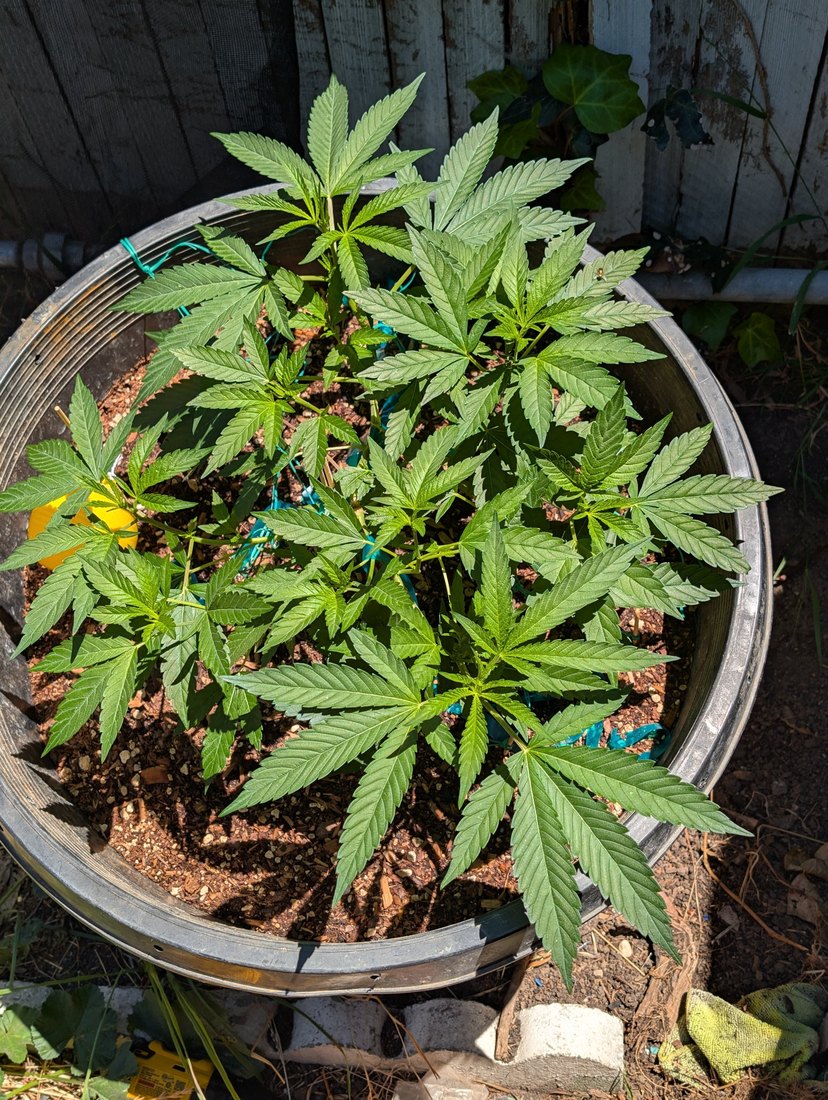
This setup is a textbook win because of two key moves: excellent low stress training (LST) and proactive moisture management. The canopy is perfectly flat because the grower successfully broke apical dominance. Apical dominance is the plant's natural habit of sending growth hormones, called auxins, straight to the highest single tip, making it grow like a Christmas tree. By gently pinning the main shoots down, those hormones redirected evenly to the lower branches, turning the plant into a wide, flat solar panel.
On the pest front, the grower's watering habits are saving the day. Fungus gnat larvae need constant moisture in the top 1-2 inches of soil to survive. By letting this massive 30-40 gallon container dry down between waterings, the grower is naturally dehydrating and killing off the larvae before they can damage the root hairs. The sticky trap simply catches the remaining flying adults, breaking the breeding cycle without a single drop of harsh pesticides.
How to replicate it
- Start low stress training early when stems are young and pliable, using soft rubber-coated garden wire to gently pull branches horizontal.
- Train branches outward like the spokes of a bicycle wheel to open up the center of the plant and expose hidden growth nodes to direct midday sun.
- Dehydrate fungus gnat larvae by letting the top 3 inches of soil dry out completely before you water again.
- Use physical yellow sticky traps placed close to the soil surface to catch adult gnats before they can lay more eggs.
- Position sticky traps carefully, gently tucking or pruning away any fan leaves that are in danger of sticking to the adhesive surface.
Keep it going
- Monitor the weight of your containers to gauge water water usage, waiting until the pot feels significantly lighter before watering.
- Avoid overwatering in large containers, as massive volumes of soil hold moisture much longer than small pots and invite root pests.
- Keep the soil surface clean by removing fallen leaves or organic debris that can trap moisture and feed gnat larvae.
- Transition from training to strategic defoliation as the canopy thickens to maintain excellent airflow through the center of the plant.
Facing something similar? Start a free journal and I'll look at your plant: photos in, diagnosis out, 24/7.
Get a free diagnosis