
Flat Canopy Masterclass: Perfect Outdoor LST and pH Recovery
The setup
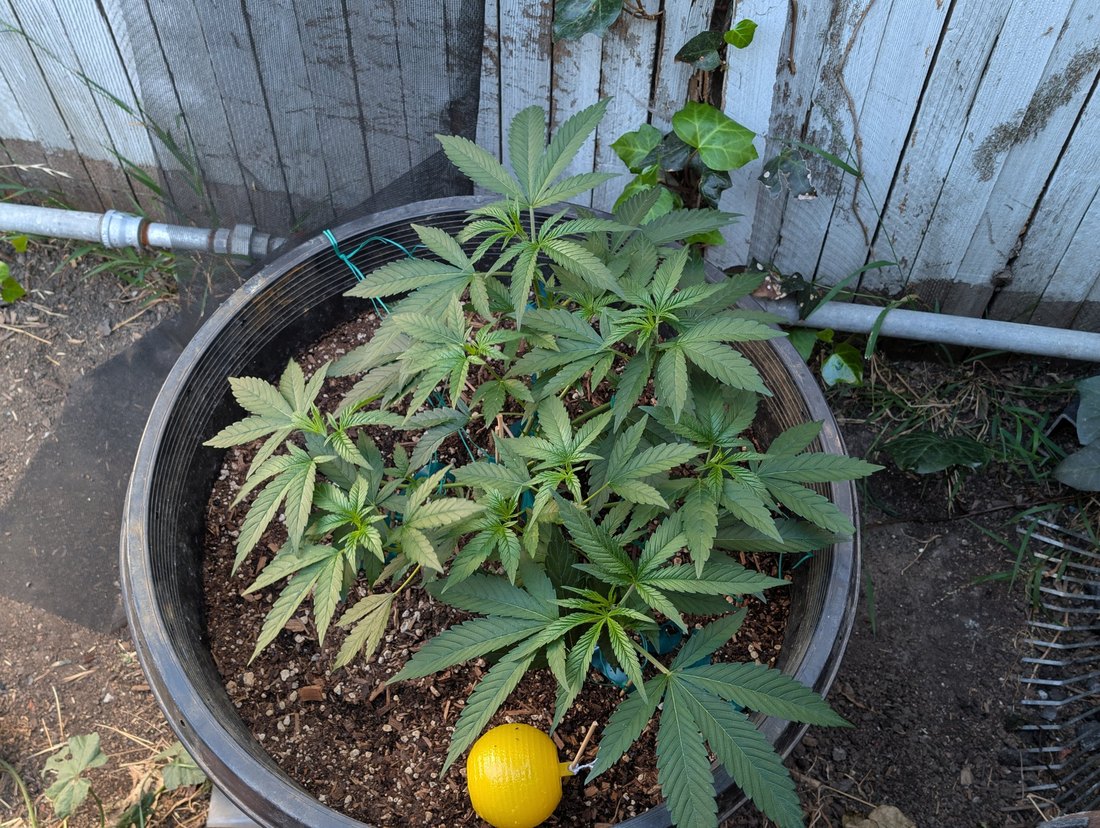
Our grower is running a Purple Pomegranate hybrid outdoors in a massive 30-40 gallon pot filled with coco coir. At Day 30 of vegetative growth, the plant is basking in 71F temperatures and 65% humidity under clear skies.
The grower wanted to know if it was time to do another round of low stress training (LST) to open up the canopy. The plant had already filled out beautifully, showing excellent symmetry, broad leaf surface area, and active, praying leaves.
A couple of weeks prior, the plant faced a minor pH imbalance that caused slight color variations on the outer leaves. By dialing back inputs and watering at a stable 6.3 pH, the grower stabilized the rhizosphere, setting up the perfect window for further training.
Why it worked
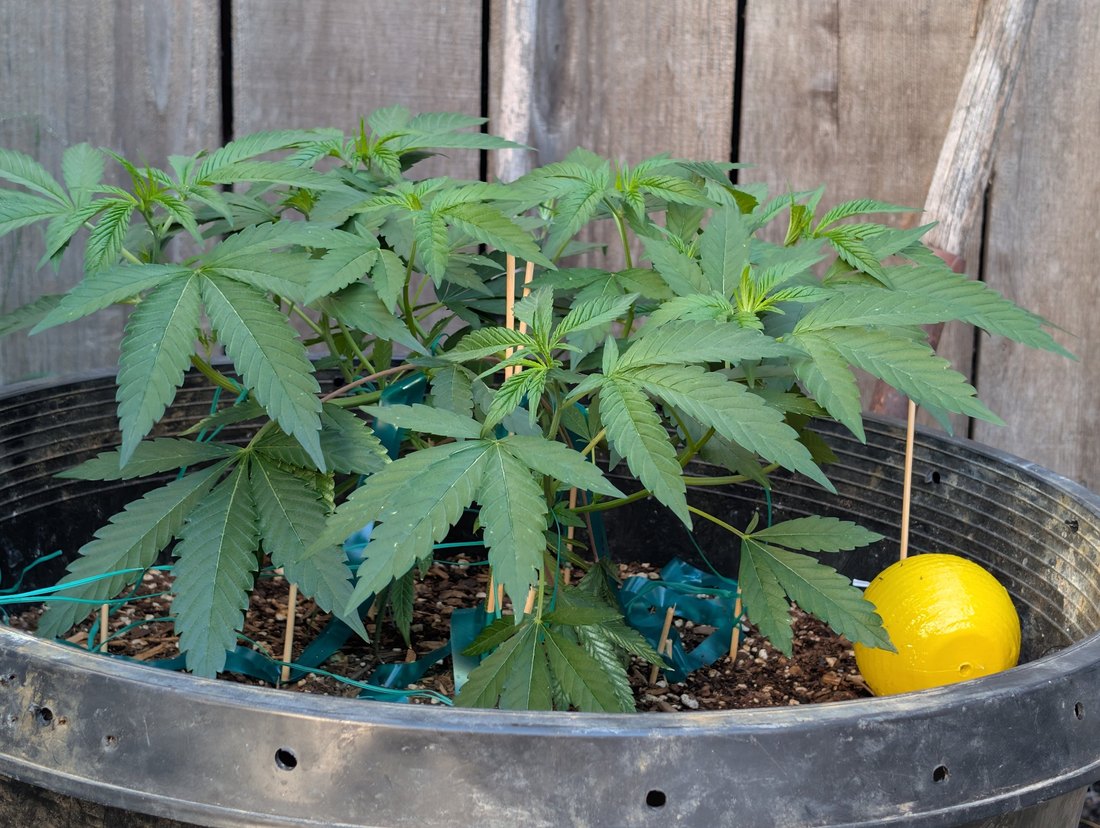
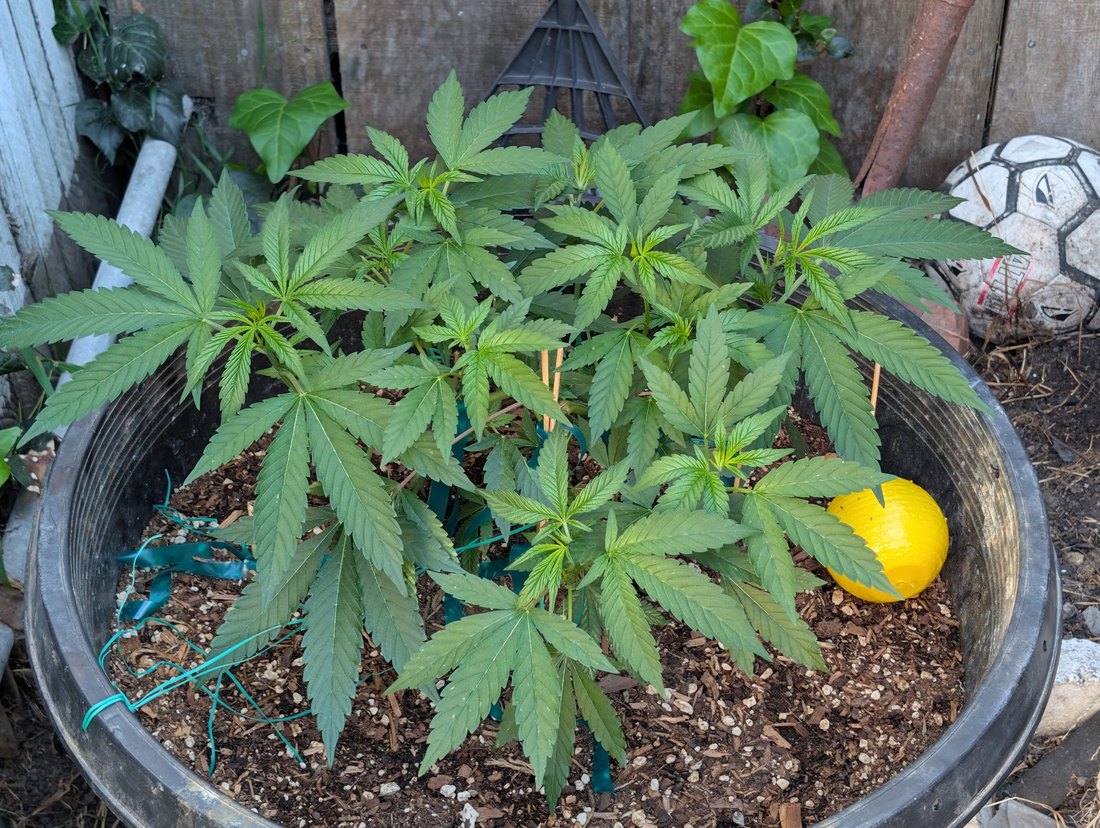
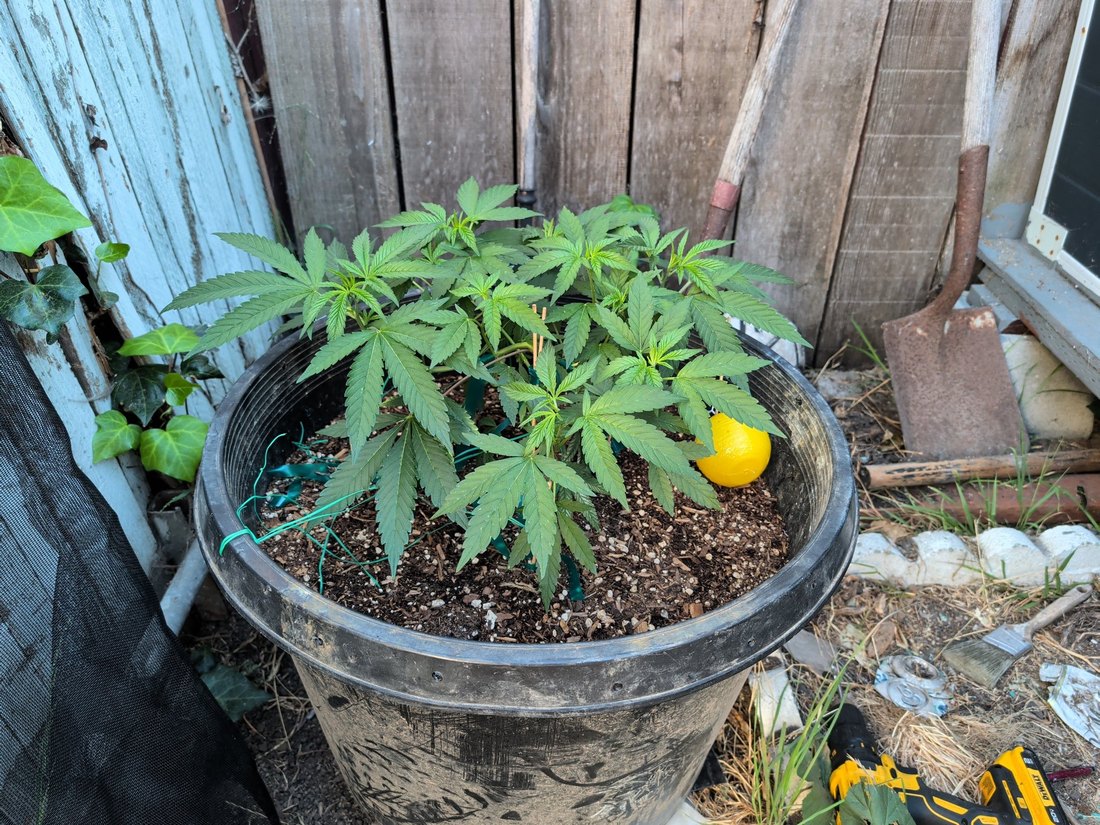
This is a textbook win. The combination of early low stress training and quick corrective action on a pH drift has resulted in a flat, high efficiency canopy. We call this "building the solar panel" because maximizing horizontal leaf area capture is the goal of the vegetative phase.
The leaf posture is actively praying (edges turned slightly upward, showing high turgor pressure), which indicates excellent root health and transpiration. The slight pale-green variation on the oldest growth is simply a footprint of the past pH fluctuation, not an active deficiency.
The primary challenge now is managing water in a massive 30-40 gallon container of coco. Outdoors, coco can hold onto moisture too long if the root system has not fully colonized the vast volume, which invites fungus gnats.
How to replicate it
- Perform a light round of LST by gently pinning the outermost lateral branches wider to maintain the flat green table shape.
- Leave the center growth alone during this session to let it push upward and create the next tier of canopy.
- Initiate a strict 3-day dry down period with no water or nutrients to starve out any fungus gnat larvae in the large medium volume.
- Place yellow sticky cards or balls directly on the soil surface to trap adult fungus gnats before they can lay more eggs.
- Resume watering only when the top 2-3 inches of the coco feel dry and the container feels noticeably lighter.
Keep it going
- Monitor runoff pH weekly to ensure it stays between 5.8-6.3, catching drifts before they show on the leaves.
- Water by weight (not by calendar) to prevent the bottom of giant pots from turning into cold, anaerobic zones.
- Keep LST ties loose enough to accommodate expanding stem diameters as the plant grows.
- Maintain a clean soil surface free of decaying organic matter to deny pests a breeding ground.
Facing something similar? Start a free journal and I'll look at your plant: photos in, diagnosis out, 24/7.
Get a free diagnosis