
Training Massive Outdoor Plants: Flat Canopy LST in 40-Gallon Pots
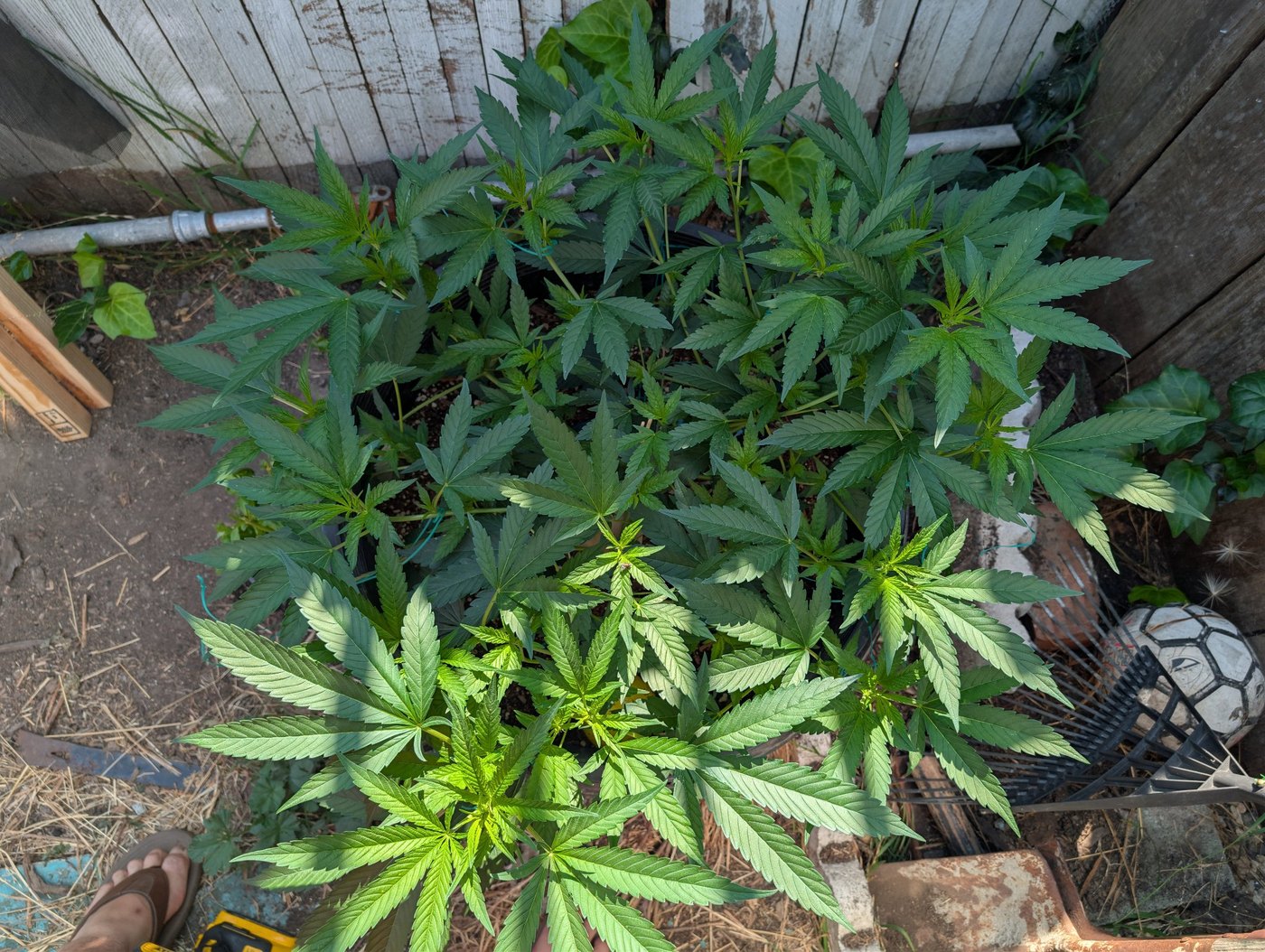
The setup
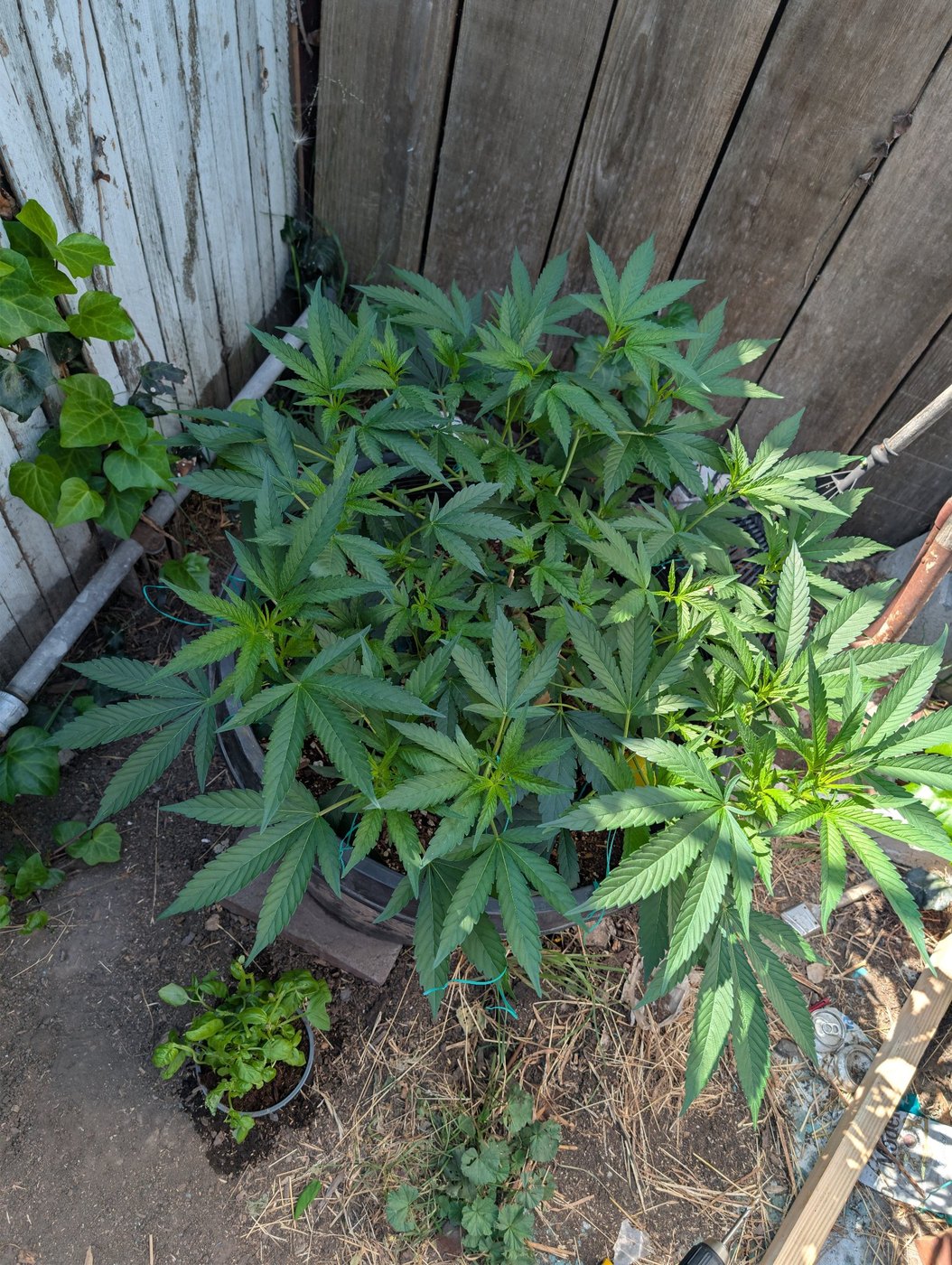
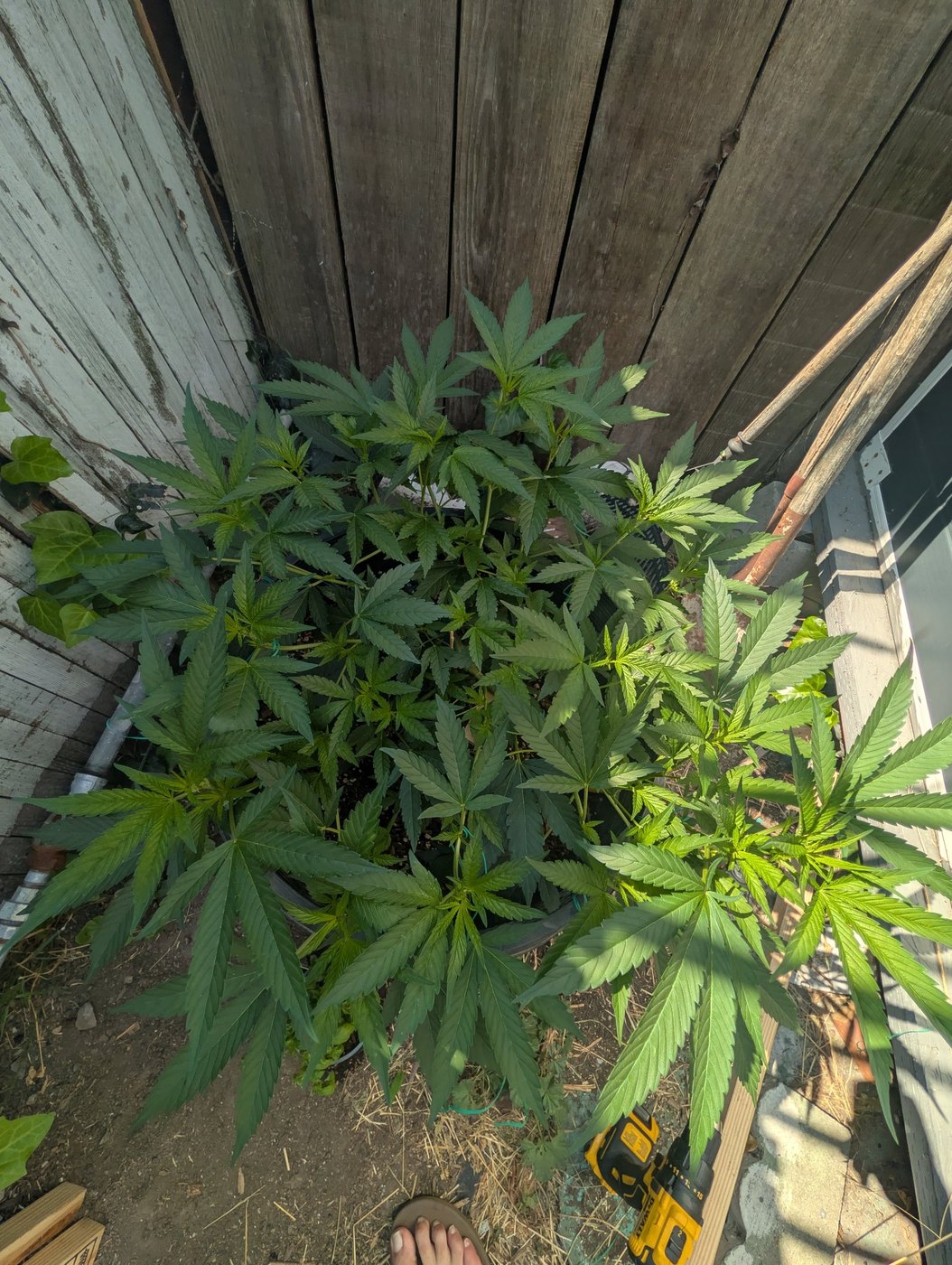
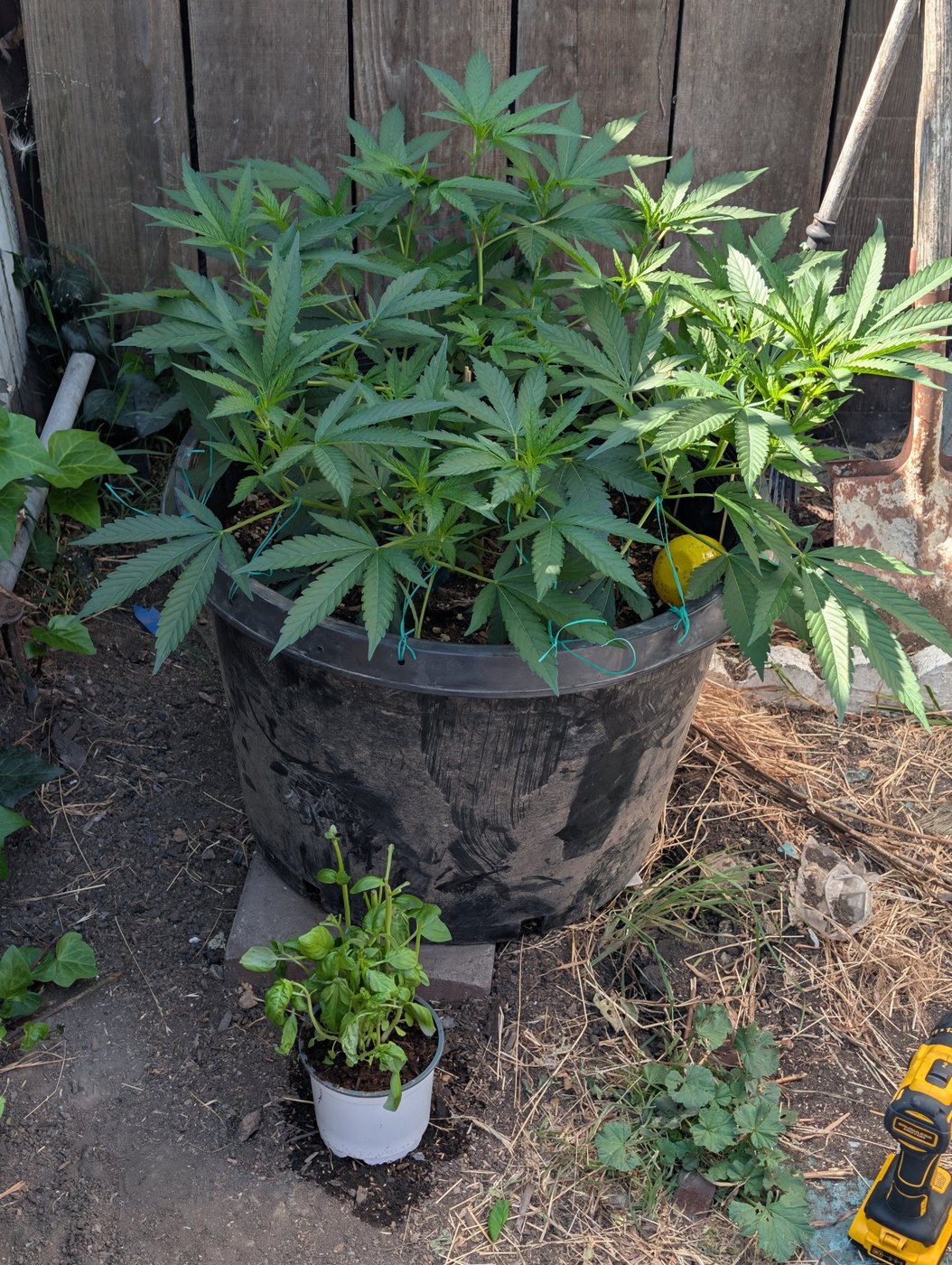
An outdoor grower wanted a wide, bushy plant with dozens of top bud sites but wanted to avoid the recovery delay that comes with high-stress topping. They set up a Purple Pomegranate hybrid in a massive 40-gallon container filled with coco.
Growing outdoors in a pot this size brings unique environmental challenges. On a cool, clear day at 68F with a high relative humidity of 78 percent, water evaporates very slowly from such a large volume of medium. The grower needed a strategy to maximize sunlight capture across the entire plant while keeping outdoor pests at bay without harsh chemicals.
Why it worked
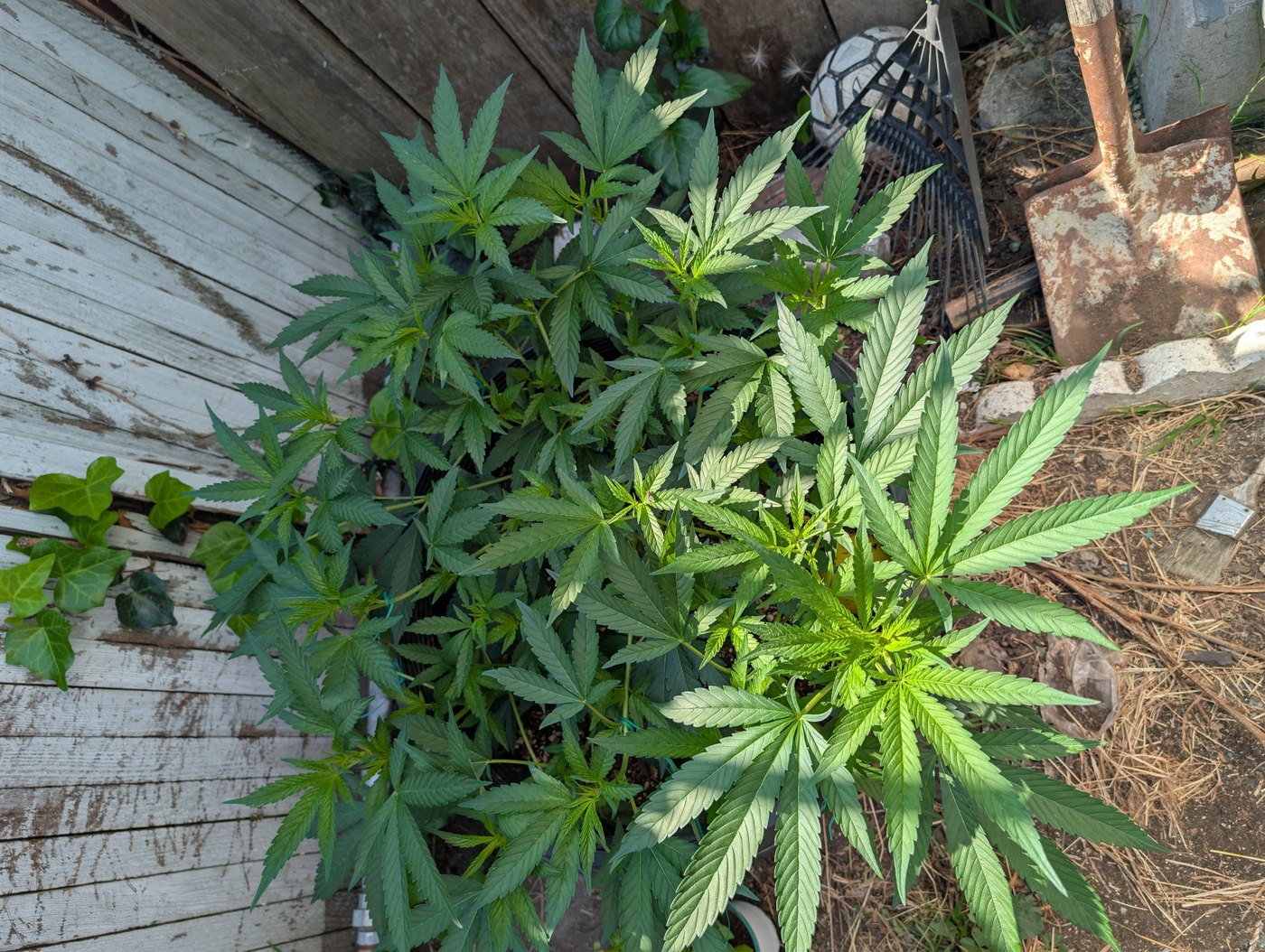
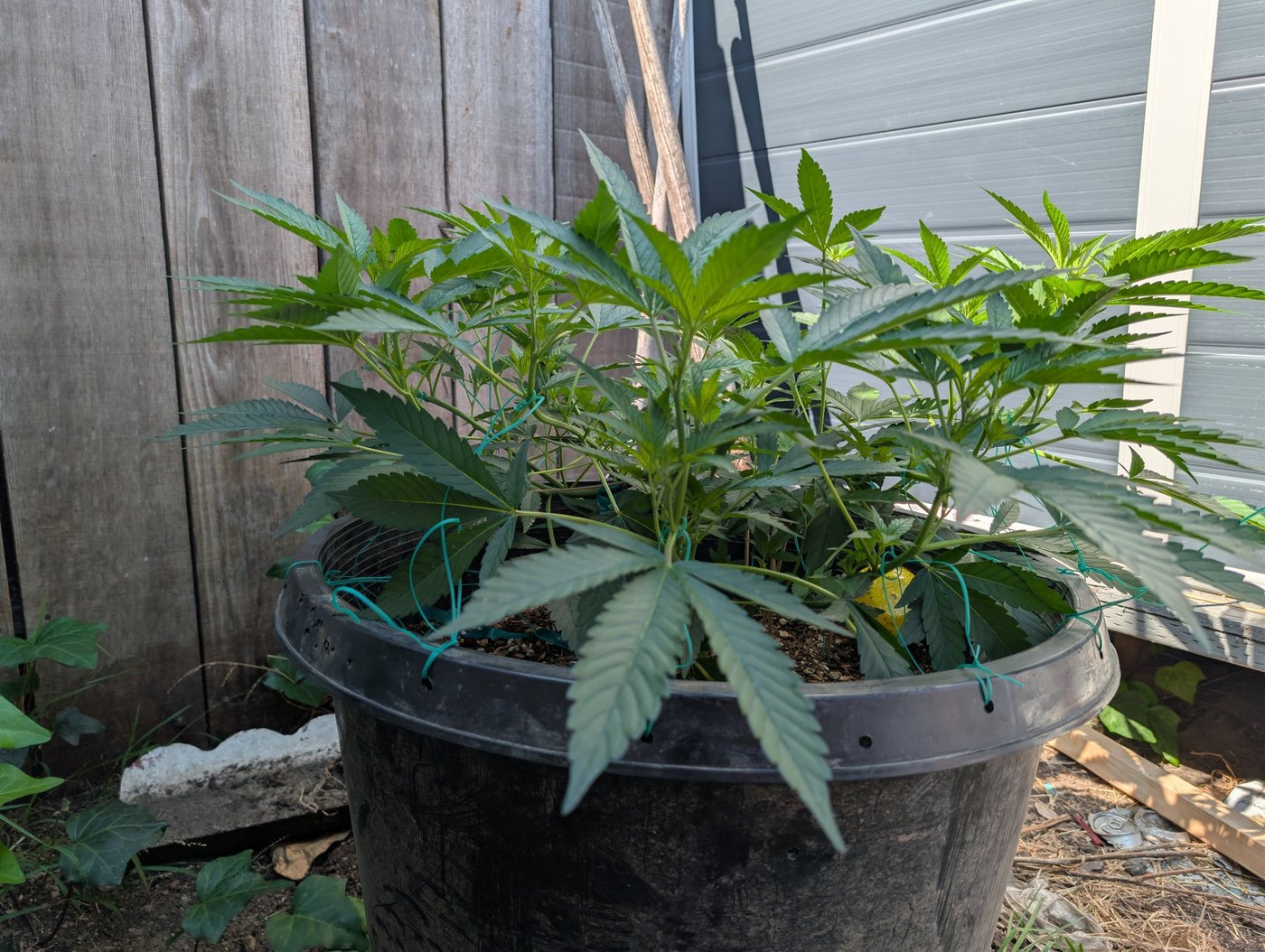
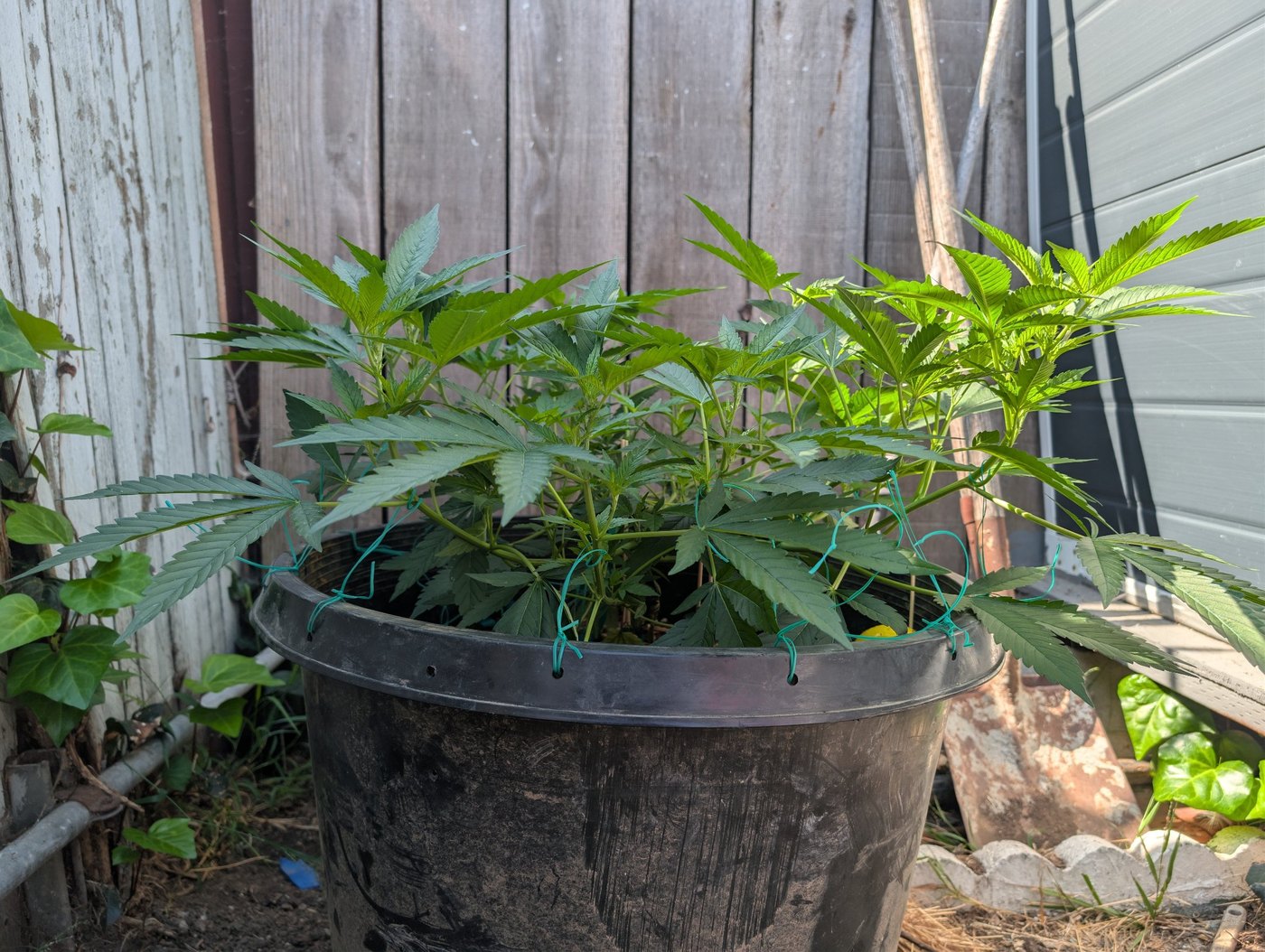
This setup is a textbook win because of low stress training (LST). By anchoring sturdy, rubber-coated green ties directly through the rim of the 40-gallon pot, the grower gently pulled the main branches down into a horizontal profile. This technique breaks apical dominance (the plant's genetic habit of growing like a single Christmas tree) and coaxes the inner nodes to shoot upward as brand-new, uniform main tops.
The grower also made a brilliant ecological move by placing a companion basil plant right in the container space. Basil naturally releases aromatic terpenes that repel common outdoor pests like thrips and fungus gnats. Because a 40-gallon volume of coco holds onto water for days, the grower's patience in letting the medium dry down between waterings ensures the rhizosphere (the root zone) gets plenty of oxygen to prevent root rot.
How to replicate it
- Select a massive container, 30-40 gallons, to give the root system the room it needs to support a giant outdoor canopy.
- Drill holes along the plastic pot rim to create secure, custom anchor points for your training ties.
- Use soft, thick garden ties to gently pull branches outward and downward while they are young and bendable, keeping the canopy height completely uniform.
- Place a companion basil or marigold plant right at the base of the main stem to serve as an active organic pest guard.
- Wait for a complete dry-down before watering again, checking the medium 2-3 inches deep with your finger to ensure the roots do not suffocate.
Keep it going
- Check branch pliability daily and adjust or tighten the ties weekly as the plant pushes through its vegetative growth spurt.
- Track daily weather patterns, remembering that cool, humid days mean you must stretch the time between waterings.
- Inspect the undersides of the leaves regularly for early signs of pests, even with companion plants standing guard.
- Keep the center of the canopy slightly thinned out to ensure breezy airflow and prevent moisture buildup as the humidity rises.
Facing something similar? Start a free journal and I'll look at your plant: photos in, diagnosis out, 24/7.
Get a free diagnosis