
Flat Outdoor Canopies: Managing Big Pots in Cold, Damp Weather
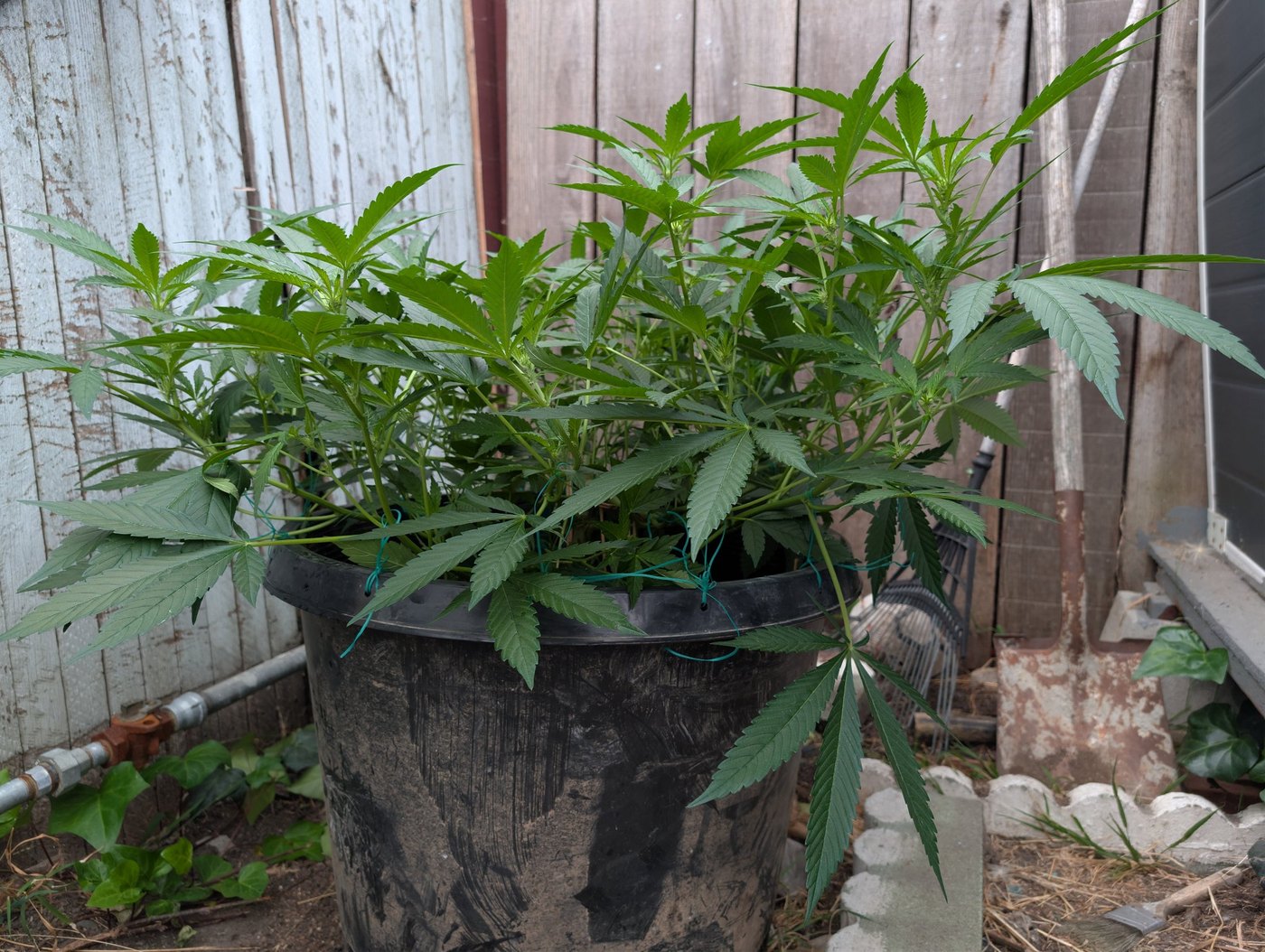
The setup
Imagine walking out to your garden on a cold, foggy morning. The temperature is hovering around 59F (15 degrees Celsius), and the air is thick with 93% relative humidity, meaning the air is almost completely saturated with water. Your photoperiod plant is sitting in a massive 30-40 gallon container, midway through her vegetative cycle on day 54. This is exactly where our grower found themselves.
In conditions like these, the biggest risk is root suffocated by waterlogging. The plant's transpiration, which is the process of water moving through the plant and evaporating from the leaves, slows down to a crawl in cold, humid air. If you water on a strict calendar schedule instead of reading the soil, you will quickly drown the root zone.
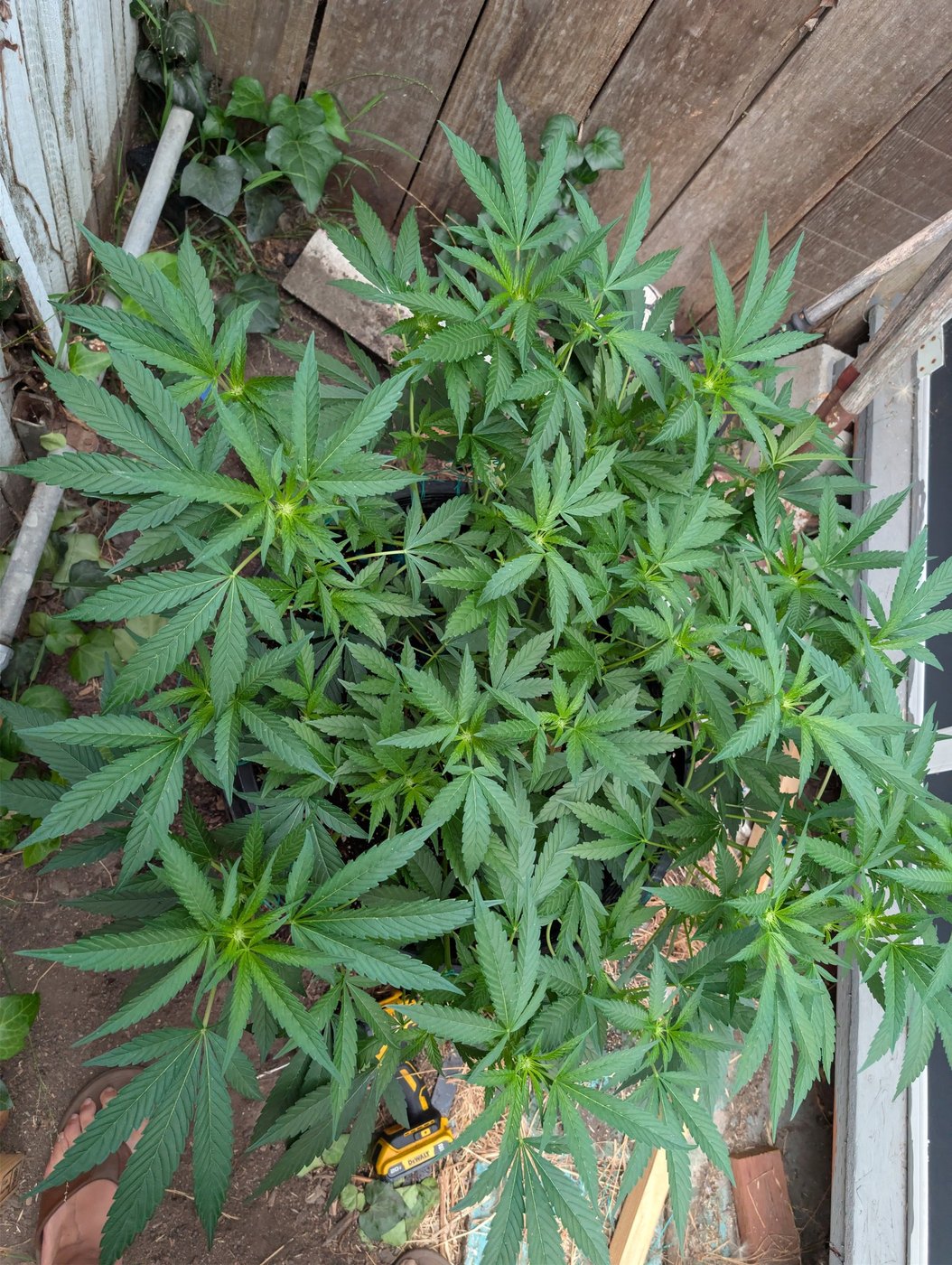
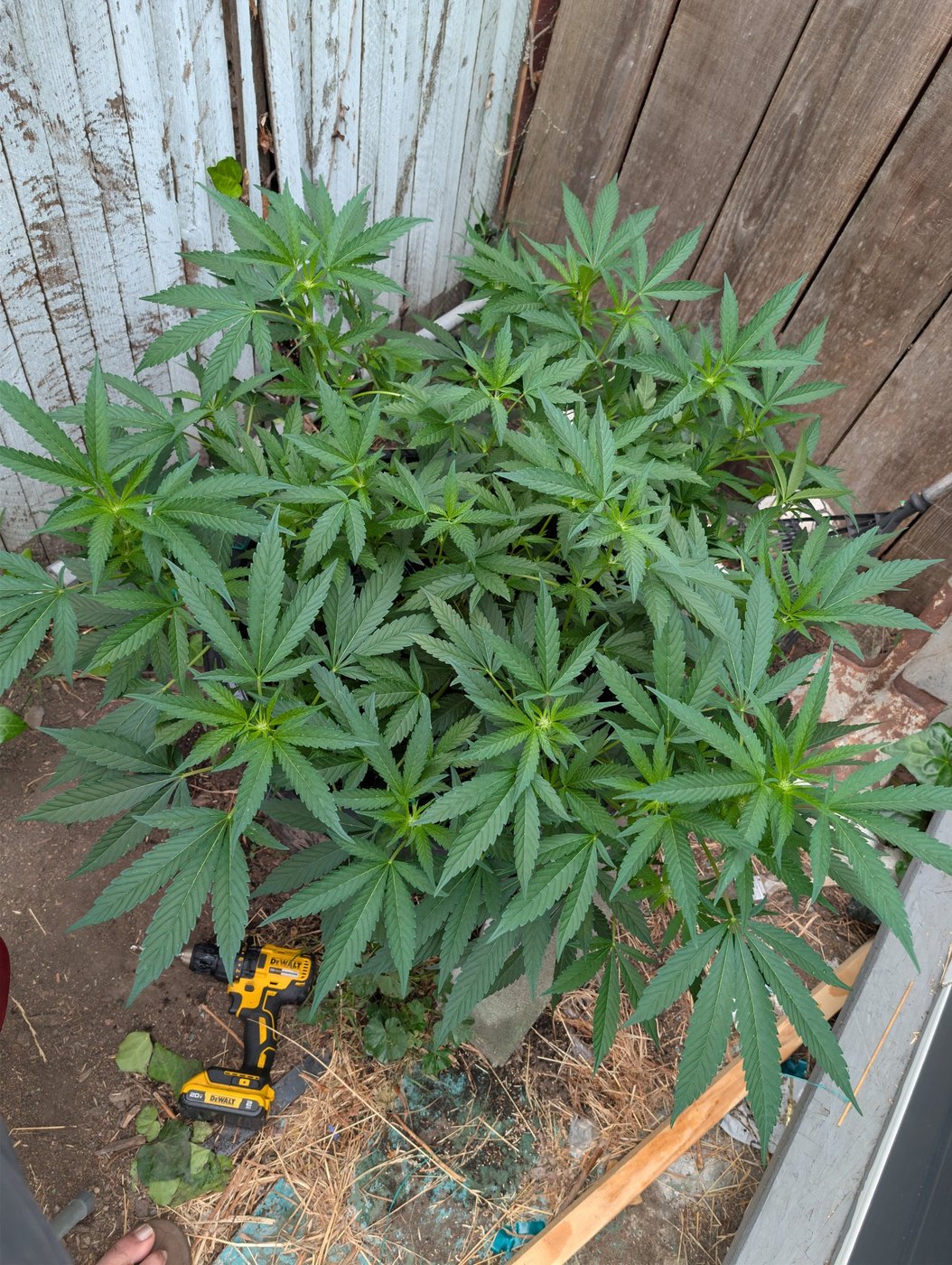
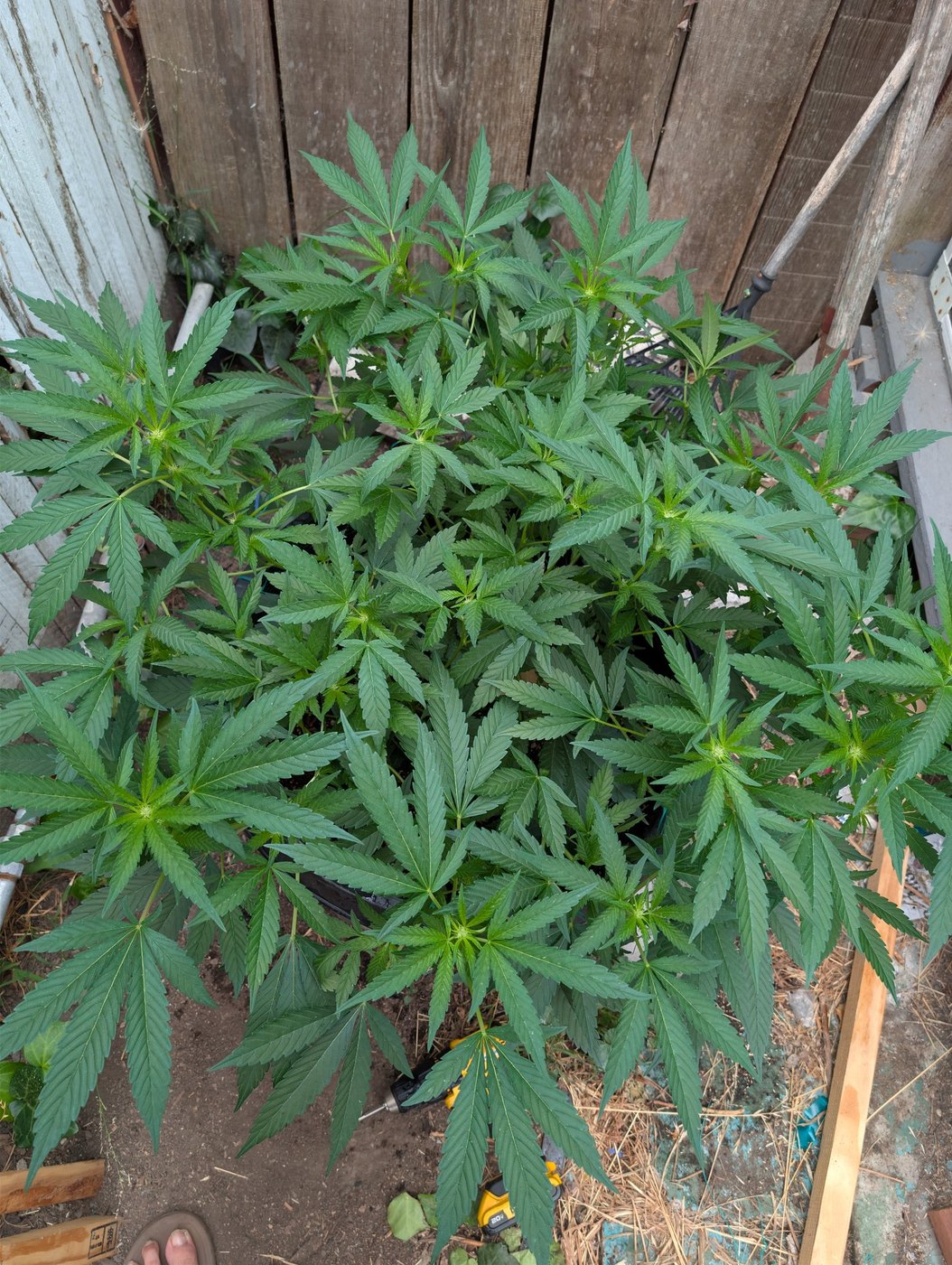
Yet, despite the damp and chilly weather, this particular plant is thriving. She has a wide, flat, table-like canopy of vibrant green leaves. The secret to this success lies in a combination of smart training and highly disciplined watering.
Why it worked
Why is this plant performing so beautifully when the weather is working against her? First, the canopy architecture is perfect. The grower used low-stress training (LST) by gently bending and securing the branches outward using soft wire ties. This broke apical dominance, which is the plant's natural tendency to grow tall like a Christmas tree, and forced the lower side shoots to rise up and form a flat carpet of growth tips.
Second, the grower mastered the dry-down cycle. In a massive 30-gallon container, the soil holds a vast reservoir of moisture. Under cool, overcast skies, that water stays in the root zone much longer because the plant is not drinking rapidly. By feeding two gallons of organic nutrients and then waiting 3-4 days for the pot to dry out before watering again, the root zone received a perfect balance of moisture and oxygen.
This dry-down period is critical. As the soil dries, air is pulled down into the root zone, supplying the roots with oxygen (which they need to breathe and grow). If the grower had watered every day, the roots would have drowned, leading to yellowing leaves and droopy growth.
How to replicate it
- Bend and tie early: Start LST while stems are still soft and pliable, pulling the main stem down and securing it to the rim of the pot to encourage lateral growth.
- Space your branches: Use soft garden wire to gently pull branches away from each other, opening up the center of the plant to let light and fresh air penetrate.
- Read the weather, not the calendar: On cool, humid days (like 59F and 90% plus humidity), skip watering until the top 2-3 inches of soil are dry to the touch.
- Measure the volume: For large 30-40 gallon pots, a watering volume of 2-3 gallons (about 7-10% of container volume) is perfect to moisten the root zone without waterlogging it.
- Keep the pH stable: Keep your water adjusted to a pH of 6.3 for soil or organic mixes to ensure all major nutrients remain fully available to the roots.
Keep it going
- Elevate the container: Place large pots on pot feet or a pallet to keep them off the cold, wet ground, which improves drainage and deters pests.
- Watch the leaf posture: If leaves start to droop or cup downward like claws, it means the root zone is staying too wet; increase the days between waterings.
- Tuck, do not cut: Keep tucking large fan leaves underneath the developing bud sites rather than cutting them off, preserving the plant's natural solar panels.
- Prep for the stretch: As the weather transitions, be ready to increase watering frequency when the sun returns and temperatures rise above 75F.
Facing something similar? Start a free journal and I'll look at your plant: photos in, diagnosis out, 24/7.
Get a free diagnosis