
Mastering Outdoor LST: How to Build a Flat, Massive Coco Canopy
The setup
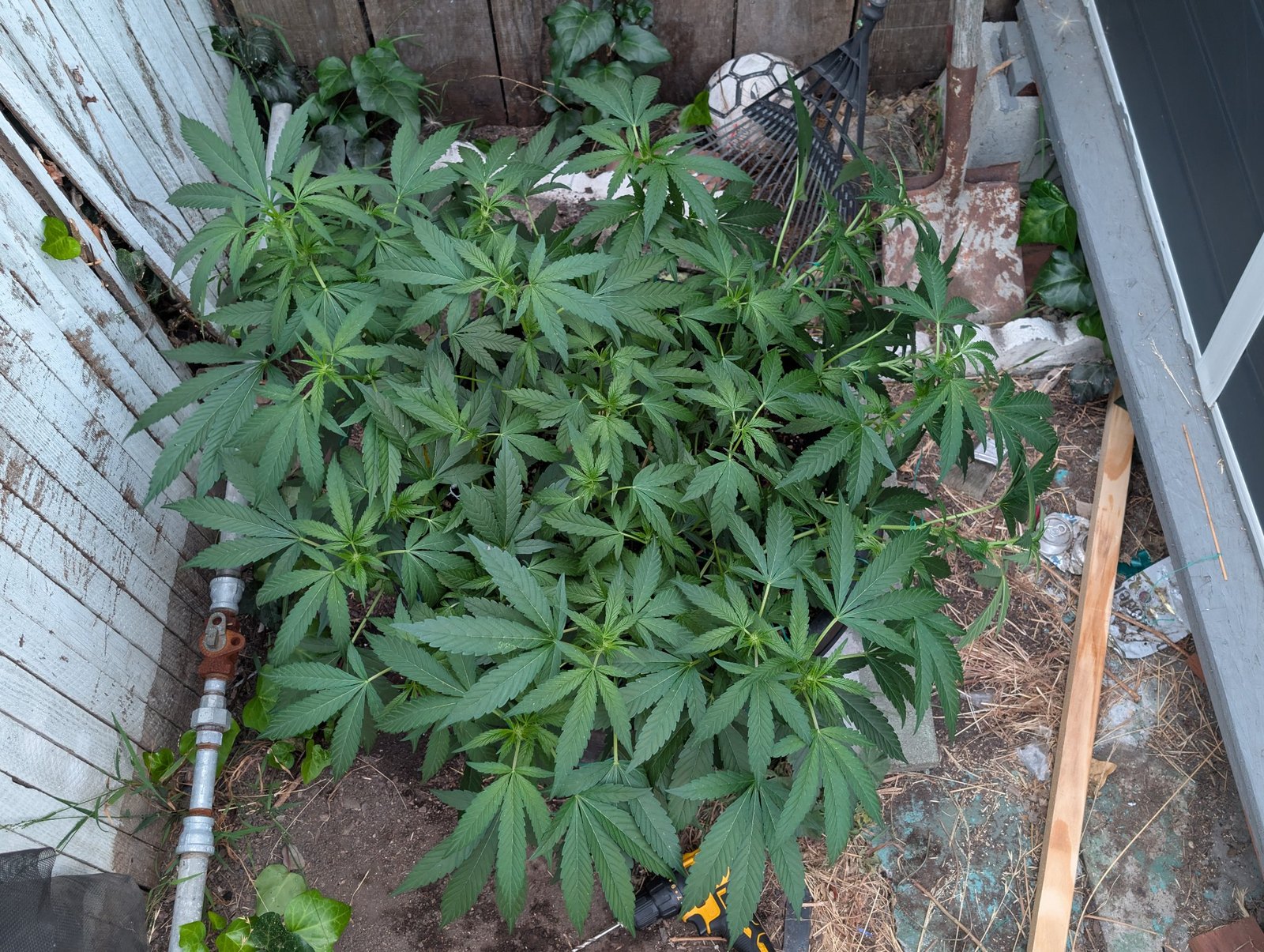
Our grower is running a photoperiod hybrid, Purple Pomegranate, outdoors in a massive 30-40 gallon container of coco coir. On Day 51 of the vegetative stage, under a pleasant 71F, 63% humidity sky, this plant is absolutely thriving. But outdoor plants in huge pots can quickly become dense, leafy bushes where inner bud sites get choked out of light.
Instead of letting nature take its vertical course, our grower used strategic Low Stress Training (LST) to pull the outer branches down and outward. The pot is elevated on concrete blocks to ensure excellent drainage and airflow underneath, preventing cold root zones or stagnant water from inviting root rot and pests.
Why it worked
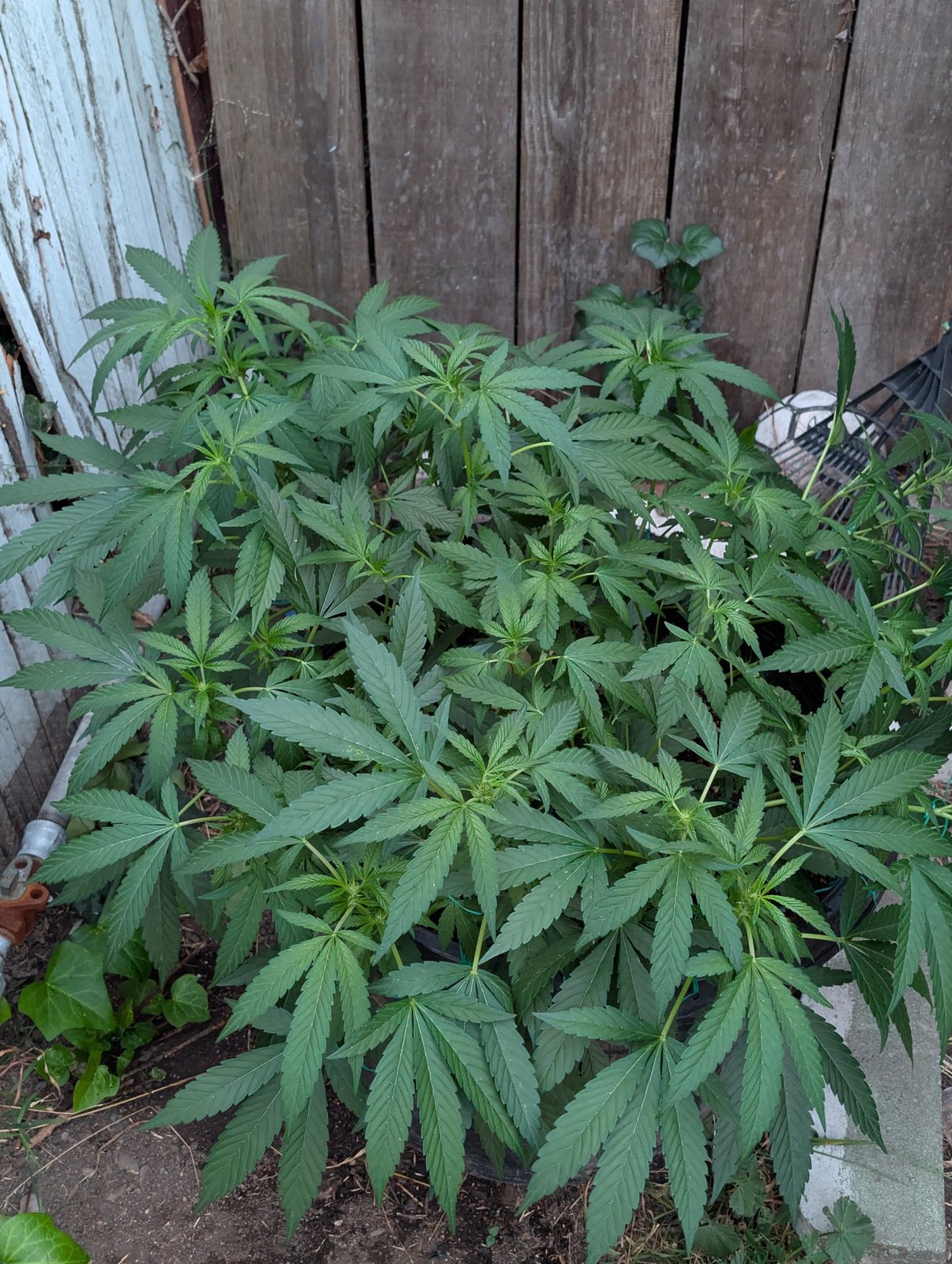
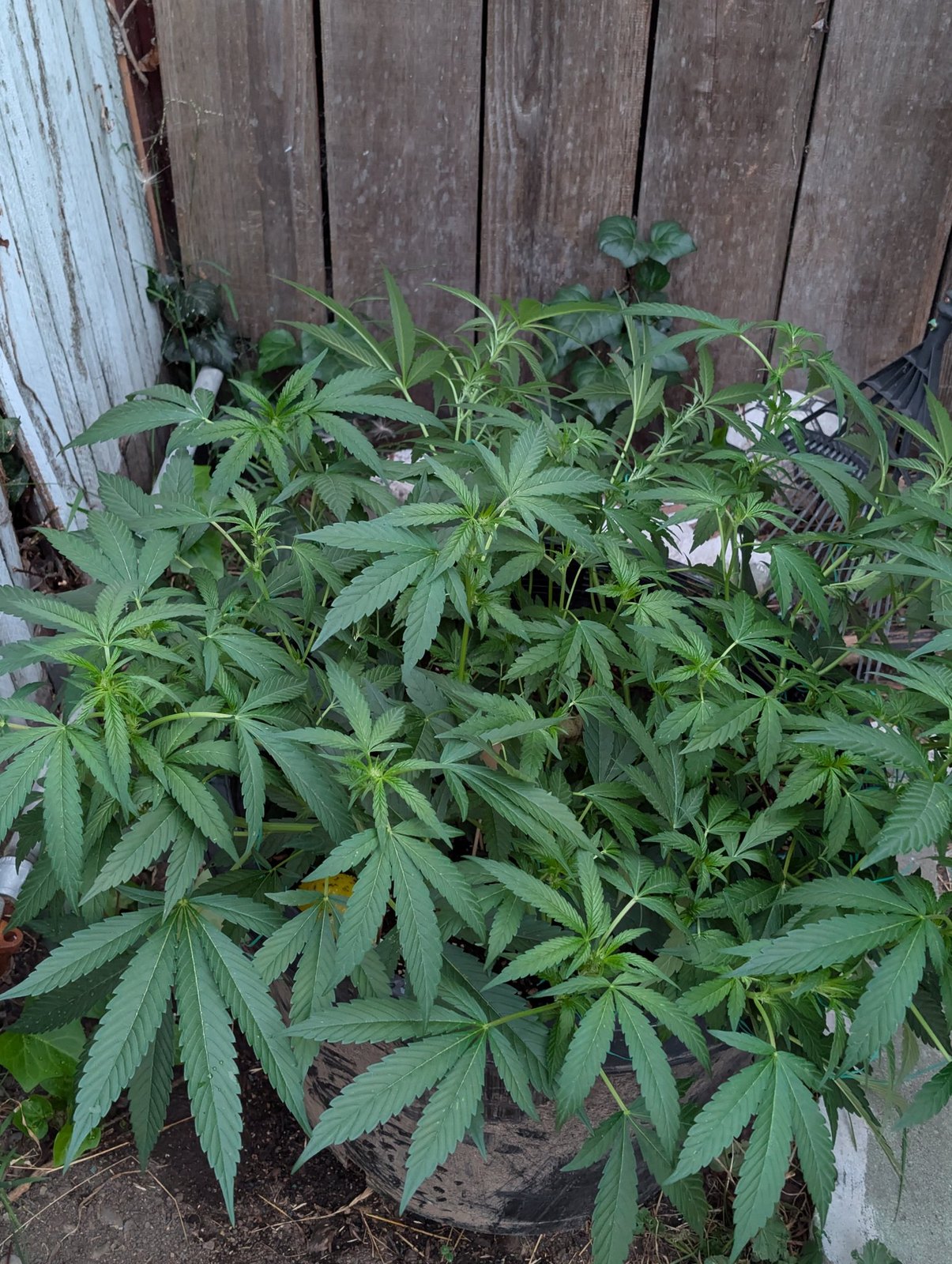
This execution is a masterclass in canopy management. By pulling the taller outer branches down to the rim of the pot with soft training wires, the grower has broken apical dominance. This redirects the plant's natural growth hormones, called auxins, evenly across all node sites rather than just the main tip.
The result is a perfectly flat, horizontal green tabletop that maximizes the sun's energy. Every single shoot now gets equal, direct sunlight (around 1000+ PPFD from the midday sun) instead of being shaded. Furthermore, this plant successfully recovered from past root-zone acidity issues because the huge volume of coco is kept elevated, ensuring oxygen gets to the root zone to maintain a healthy root pH of 5.8-6.2.
How to replicate it
- Elevate large fabric pots on blocks or risers to keep the bottom of the root zone aerated and prevent chilling from the cold ground.
- Start training early when stems are pliable, using soft rubber-coated garden wire secured to the container rim to gently pull branches outward.
- Aim for a flat, saucer-like shape by pulling the tallest branches down to the level of the lowest shoots, allowing light to reach the interior.
- Keep the medium consistently moist and fed with a balanced vegetative nutrient profile (EC 1.2-1.6, pH 5.8-6.0 for coco) to support the explosive new growth pushing up from the center.
- Monitor the new vertical shoots weekly, continuing to tie them down as they grow to maintain the flat canopy profile before the pre-flower stretch.
Keep it going
- Watch the weather closely as summer advances, increasing watering frequency during heat waves to prevent the massive coco volume from drying out completely.
- Check the tie-down wires weekly to ensure they are not cutting into the expanding, thickening stems as the plant puts on girth.
- Prepare to transition to a higher phosphorus and potassium feed (EC 1.6-2.0) as the plant enters the pre-flower stretch in the coming weeks.
- Keep a close eye on the under-canopy airflow, clearing away any yellowing or shaded bottom leaves to prevent pests and powdery mildew.
Facing something similar? Start a free journal and I'll look at your plant: photos in, diagnosis out, 24/7.
Get a free diagnosis