
Huge Outdoor Canopies Without Topping: Masterclass in LST
The setup
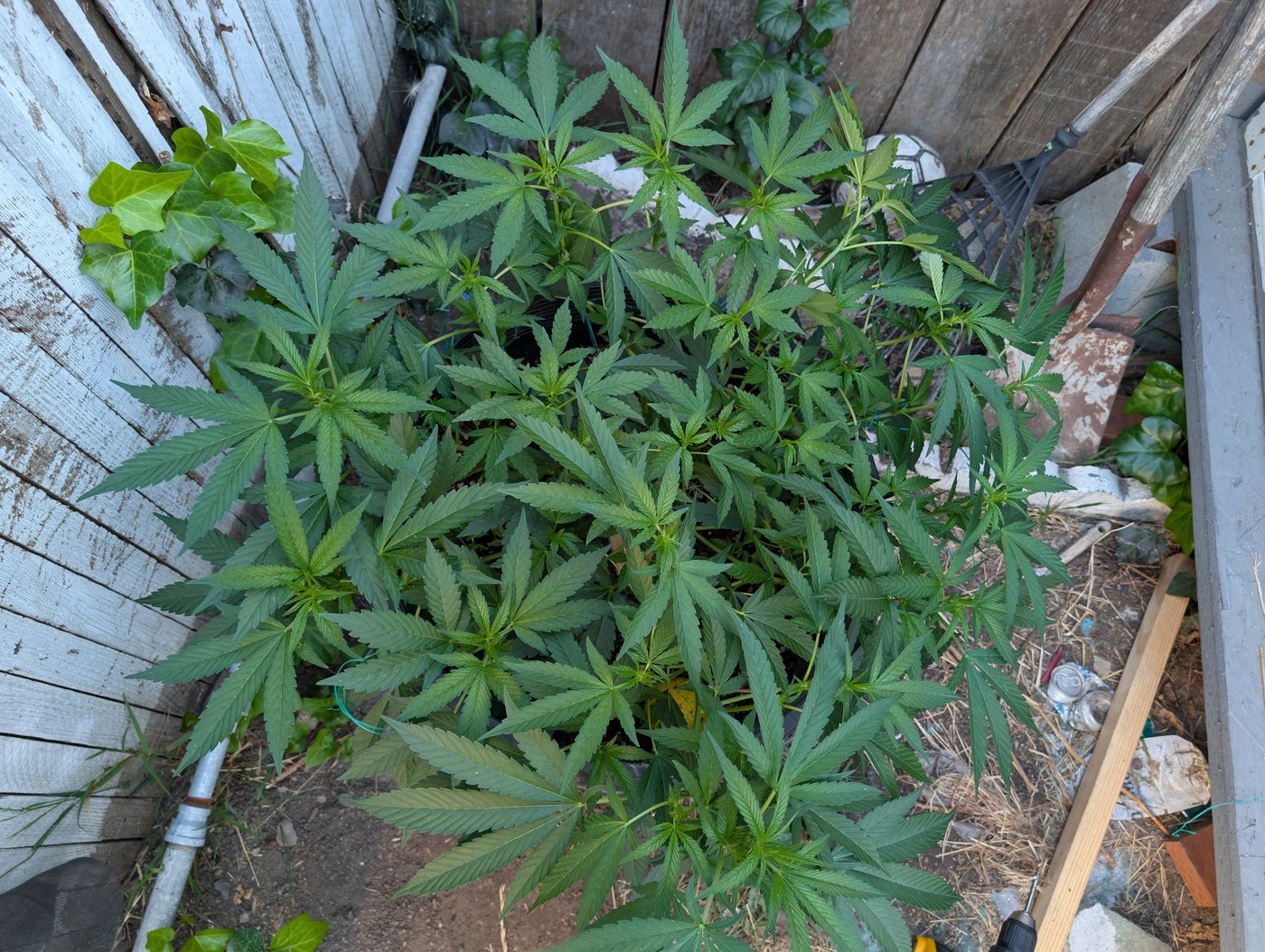
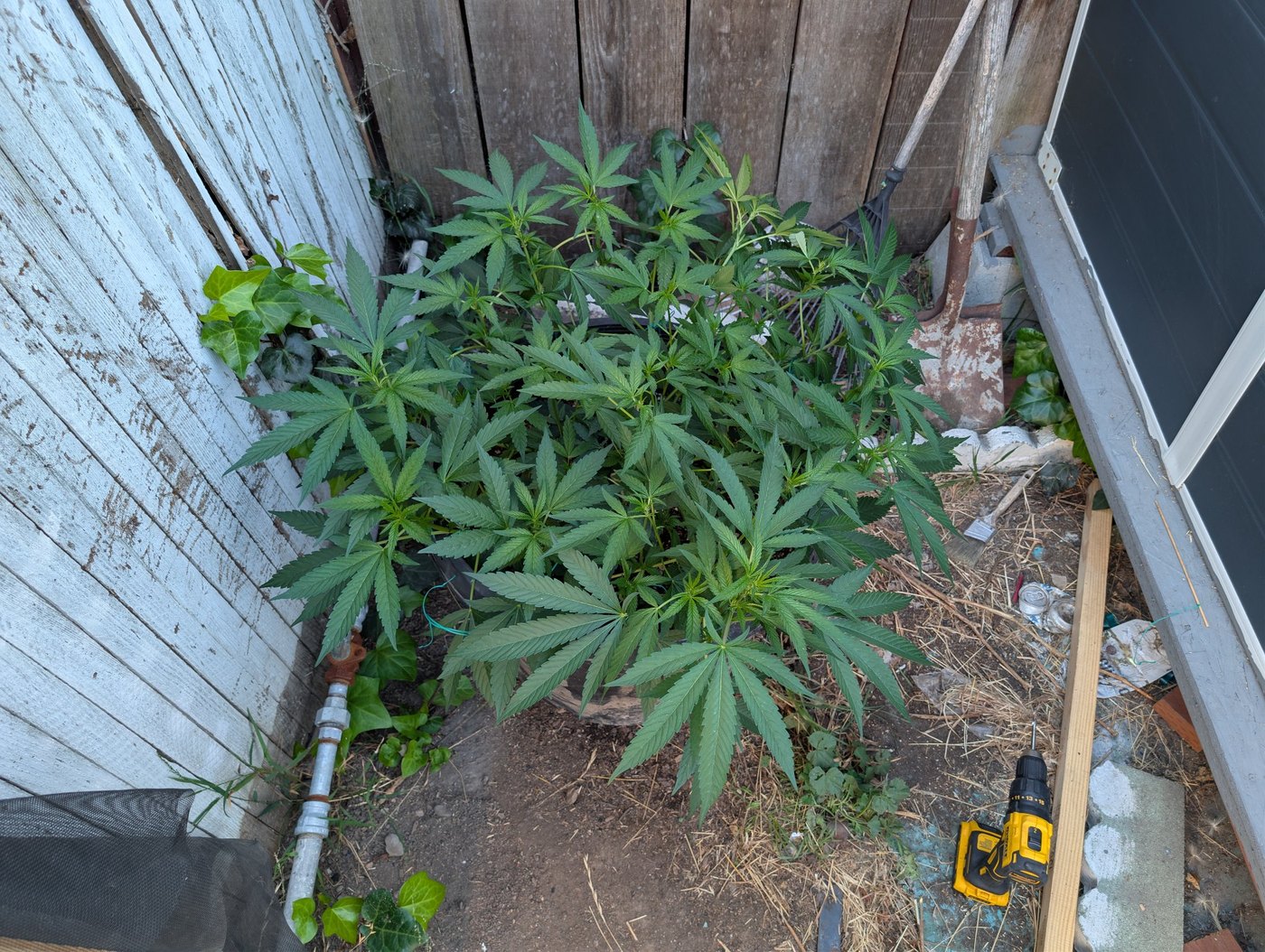
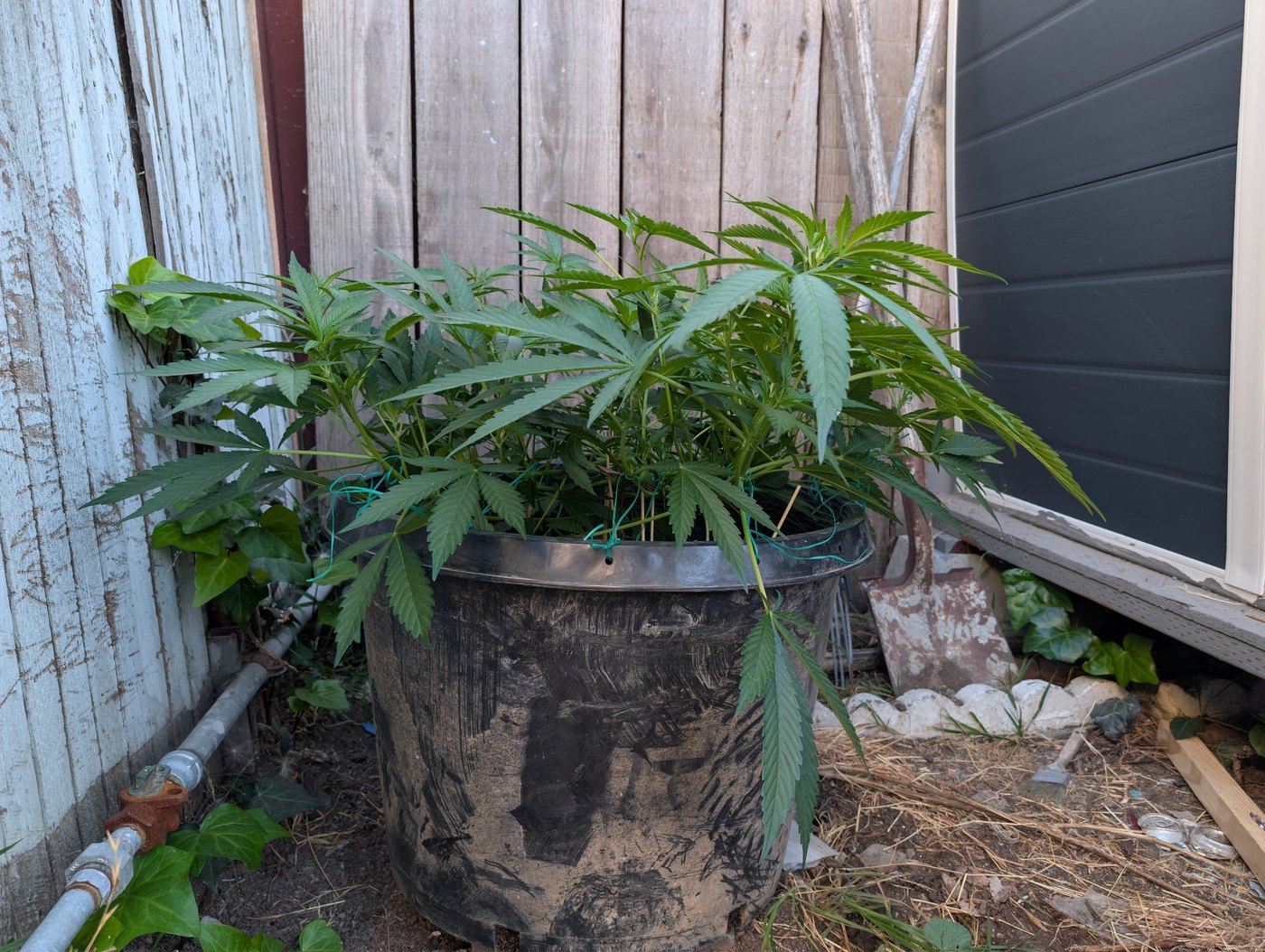
An outdoor grower working with a photoperiod hybrid in a massive 40-gallon container has built an incredibly wide, flat canopy. The plant is currently on Day 48 of veg, sitting in cool, humid coastal conditions of 64F and 74% humidity under clear skies.
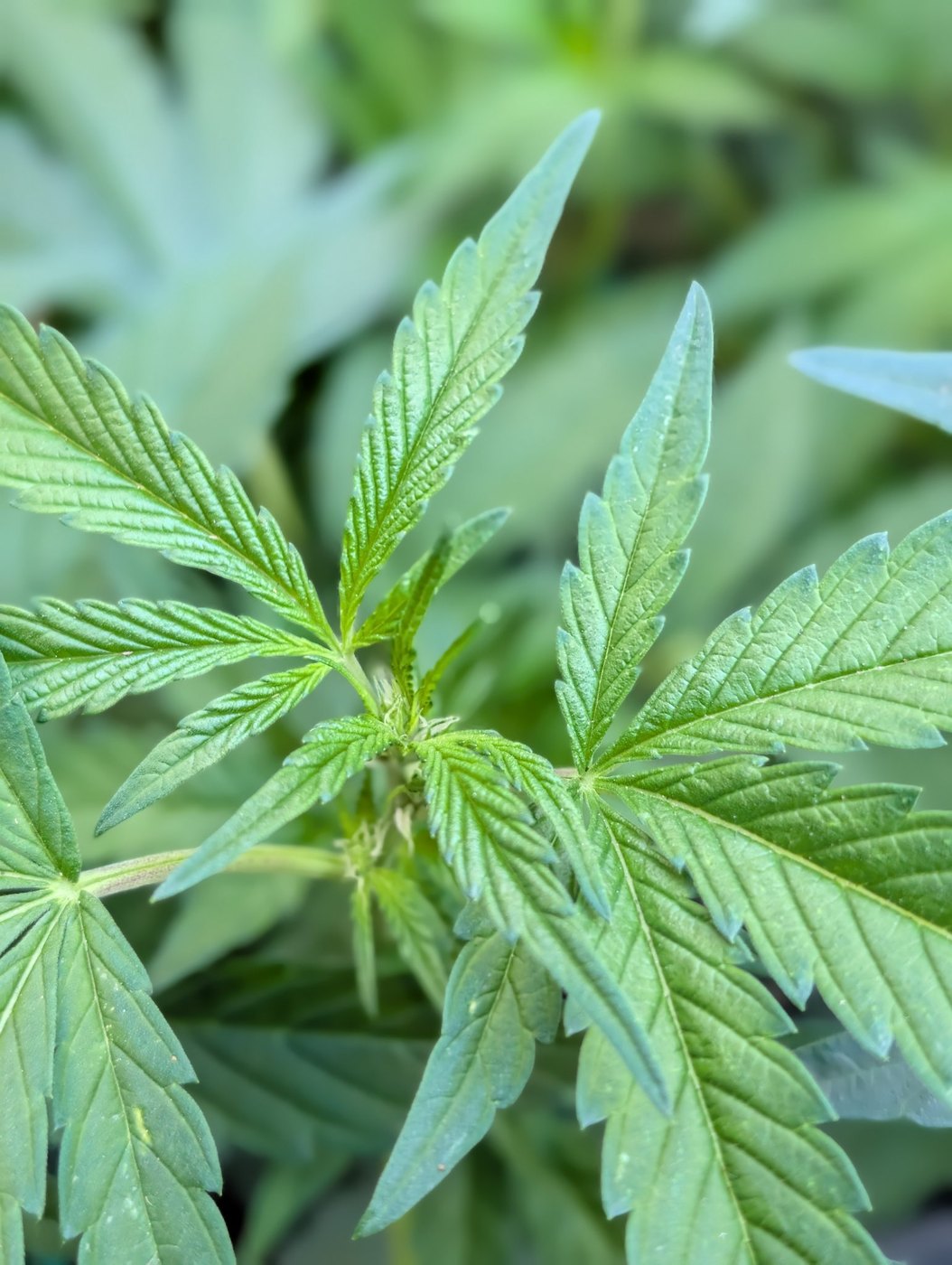
The grower used green training wires anchored directly to the container rim to pull lateral branches outward. The result is a lush, dinner-table-flat profile with excellent turgor (water pressure inside the cells) and deep green leaves. In the center, a single tiny yellow leaf has dropped from lack of light, while the node tips are just starting to push their very first white pistils, the female pre-flowers.
Why it worked
This is a textbook win for low-stress training (LST) and microclimate management. By pulling the branches horizontally early, the grower broke apical dominance, which is the main stem's natural urge to grow tallest. This redistributed the plant's growth hormones, called auxins, evenly to all side shoots, creating dozens of potential main colas instead of just one.
The tiny yellow leaf in the deep center is not a nutrient deficiency. It is natural senescence, meaning the plant is shedding a shaded leaf that costs more energy to maintain than it produces. The early white pistils show the plant is starting its pre-flower transition, meaning a rapid stretch phase is about to begin.
How to replicate it
- Anchor training wires securely to the pot rim using soft-coated plant wire, pulling branches gently outward to create a flat, wheel-spoke layout.
- Avoid topping or heavy defoliation during this pre-flower transition to prevent hormone disruption and save the plant's energy reserves for the upcoming stretch.
- Let the root zone dry down naturally during cool, humid days (like 64F with 74% RH) before watering again to prevent root suffocation and encourage root expansion.
- Water with plain, pH-adjusted water (6.3-6.5 for this large-volume setup) only when the top three inches of the medium feel completely dry.
- Keep all healthy fan leaves intact at this stage, as they act as solar panels and nutrient batteries to power the explosive pre-flower growth.
Keep it going
- Monitor the weather closely: cool, damp mornings slow down water uptake, so adjust watering frequency to match evaporation rates.
- Look for the first white pistils at the node joints to identify the exact transition point between late vegetative growth and early stretch.
- Gently remove only the completely yellow, dead, shaded-out leaves in the deep interior to maintain airflow and prevent pests.
- Get ready to transition the feed from nitrogen-heavy vegetative nutrients to phosphorus and potassium-rich bloom nutrients over the next two weeks.
Facing something similar? Start a free journal and I'll look at your plant: photos in, diagnosis out, 24/7.
Get a free diagnosis