
How to Train Outdoor Giants for a Flat and Productive Canopy
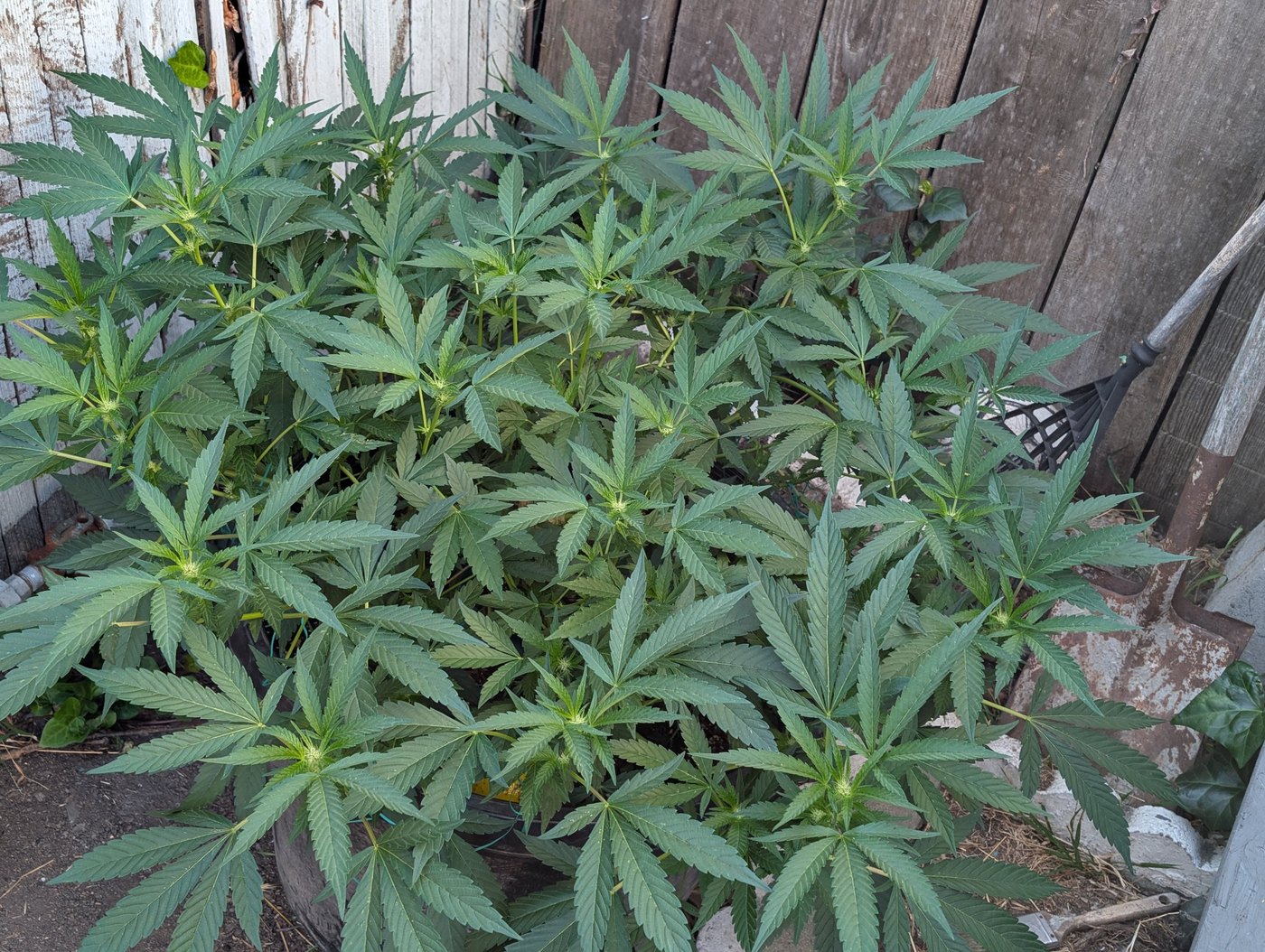
The setup
An outdoor grower is running a Purple Pomegranate hybrid in a massive 30-40 gallon container. The plant is currently on Day 57, sitting in a cool, partly cloudy outdoor environment at 64F with 75% relative humidity (the amount of moisture in the air). The grower has been practicing low stress training (LST) to keep the plant wide and flat.
The canopy is a vibrant forest green with zero signs of nutrient issues or pests. What makes this entry special is the timing: the plant is showing its very first white pistils (the female hair-like structures at the nodes), signaling the official transition into pre-flower.
Why it worked
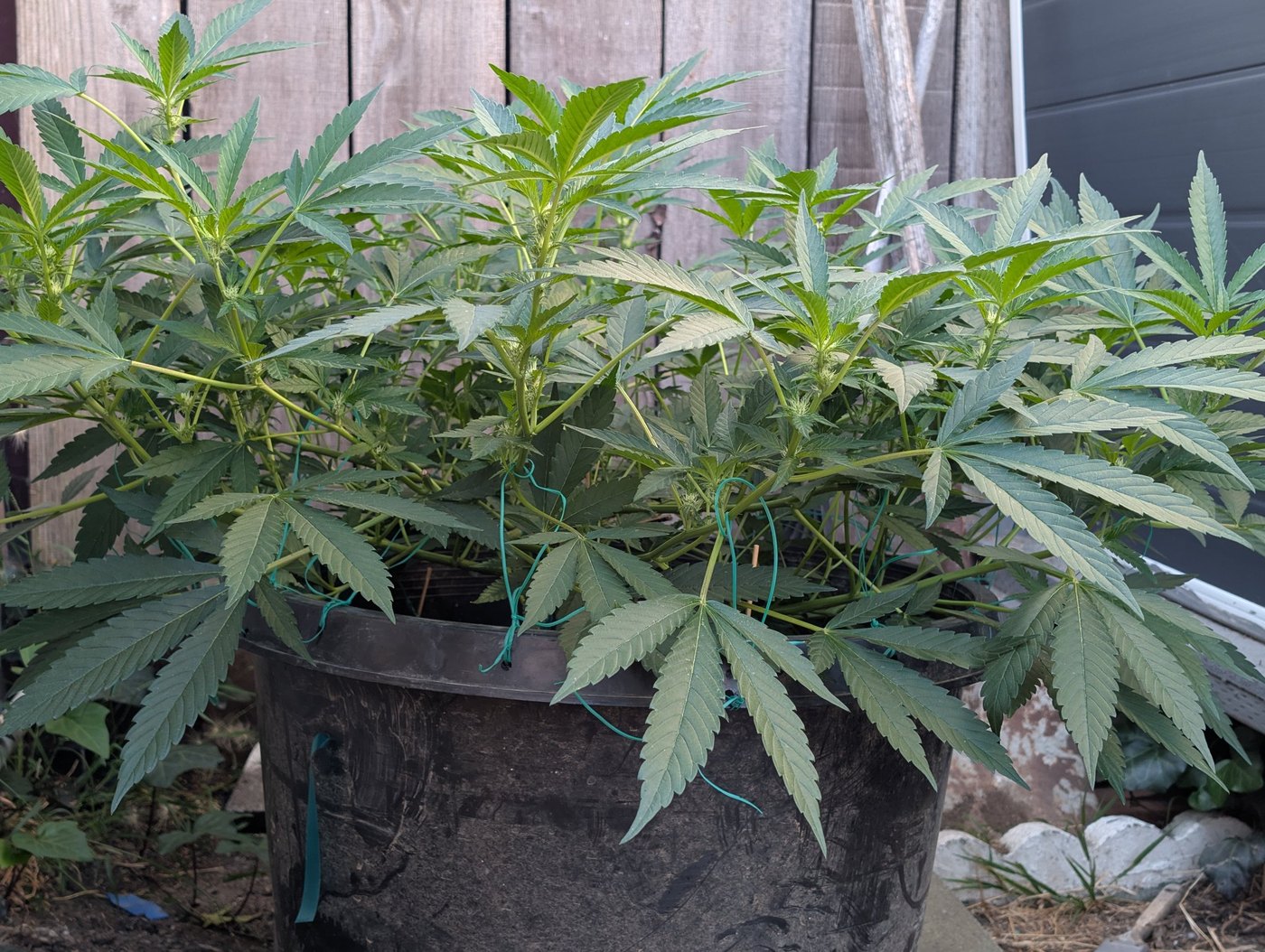
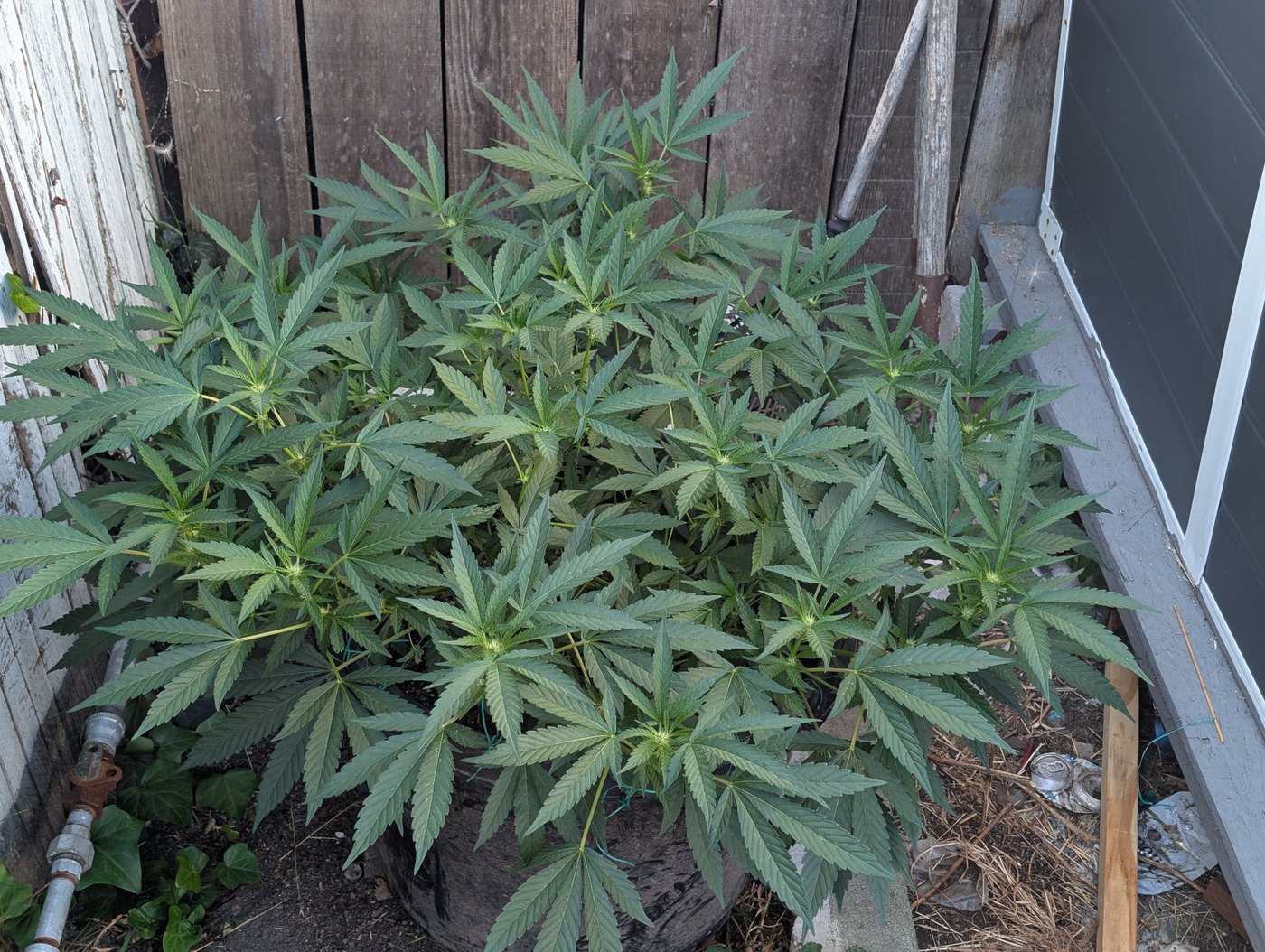
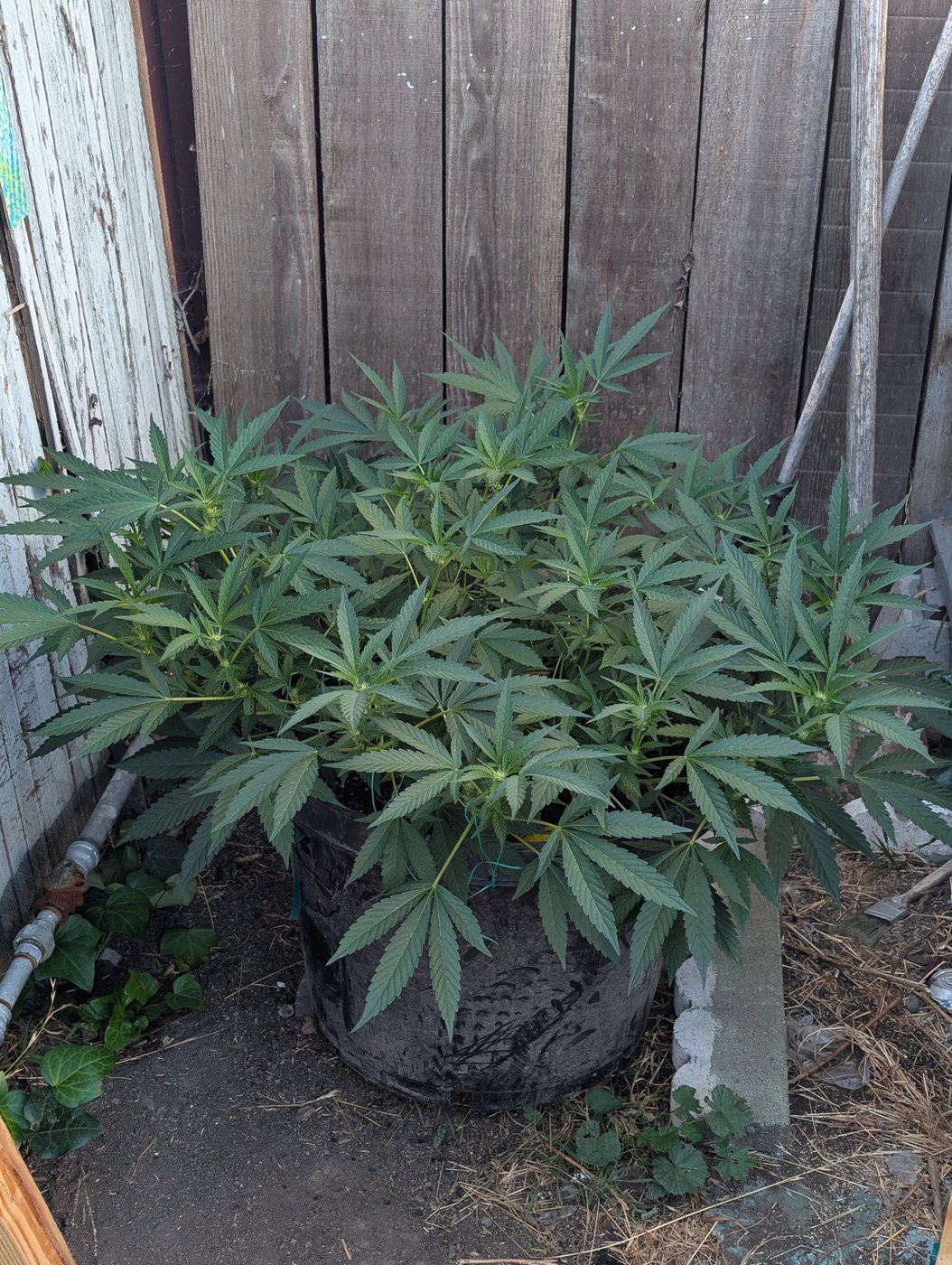
This is a masterclass in canopy management. The grower has used green soft-wire ties to anchor the main branches directly to the rim of the huge pot. This bends the branches outward, breaking apical dominance (the plant's natural habit to grow like a Christmas tree) and allowing light to reach the lower nodes.
Because the light is distributed evenly, all branches are rising at the same height, forming a flat table of future bud sites. The leaf turgor (fluid pressure keeping the leaves upright and proud) is perfect, proving the root system in this massive container is breathing and drinking perfectly despite the cool, damp 75% humidity air.
How to replicate it
- Secure the perimeter: Use soft rubber-coated garden wire to gently pull branches down and outward, anchoring them to the pot rim or fabric pot walls using punches or binder clips.
- Time it right: Complete major bending during the vegetative stage when branches are flexible, before they woody up and stiffen during early flowering.
- Space the shoots: Aim for a flat, open hand shape where every major branch has at least 4-6 inches (10-15 cm) of breathing room from its neighbors to prevent mold and trap sunlight.
- Let the light in: Tuck large fan leaves (the big solar-panel leaves) under developing shoots instead of cutting them, preserving the plant's energy factories while exposing new growth.
- Prepare for the stretch: Expect the plant to double in size over the next 2-3 weeks as the pre-flower stretch begins, so ensure your ties are secure but not choking the expanding stems.
Keep it going
- Check tie tightness weekly to ensure the expanding wood does not grow over the wire and choke the branch's nutrient flow.
- Watch the weather closely during cool 64F days, as large pots dry out much slower in high humidity, meaning you must wait until the top 3 inches of medium are bone-dry before watering.
- Keep leaf tucking as your primary light-exposure method, reserving heavy defoliation only for crowded indoor spaces or high-humidity pockets.
- Transition your nutrient mix slowly, gradually tapering down nitrogen and ramping up phosphorus and potassium as the stretch peaks and true buds begin to form.
Facing something similar? Start a free journal and I'll look at your plant: photos in, diagnosis out, 24/7.
Get a free diagnosis