
Flat Canopies Without Cutting: Master Outdoor LST and Leaf Tucking
The setup
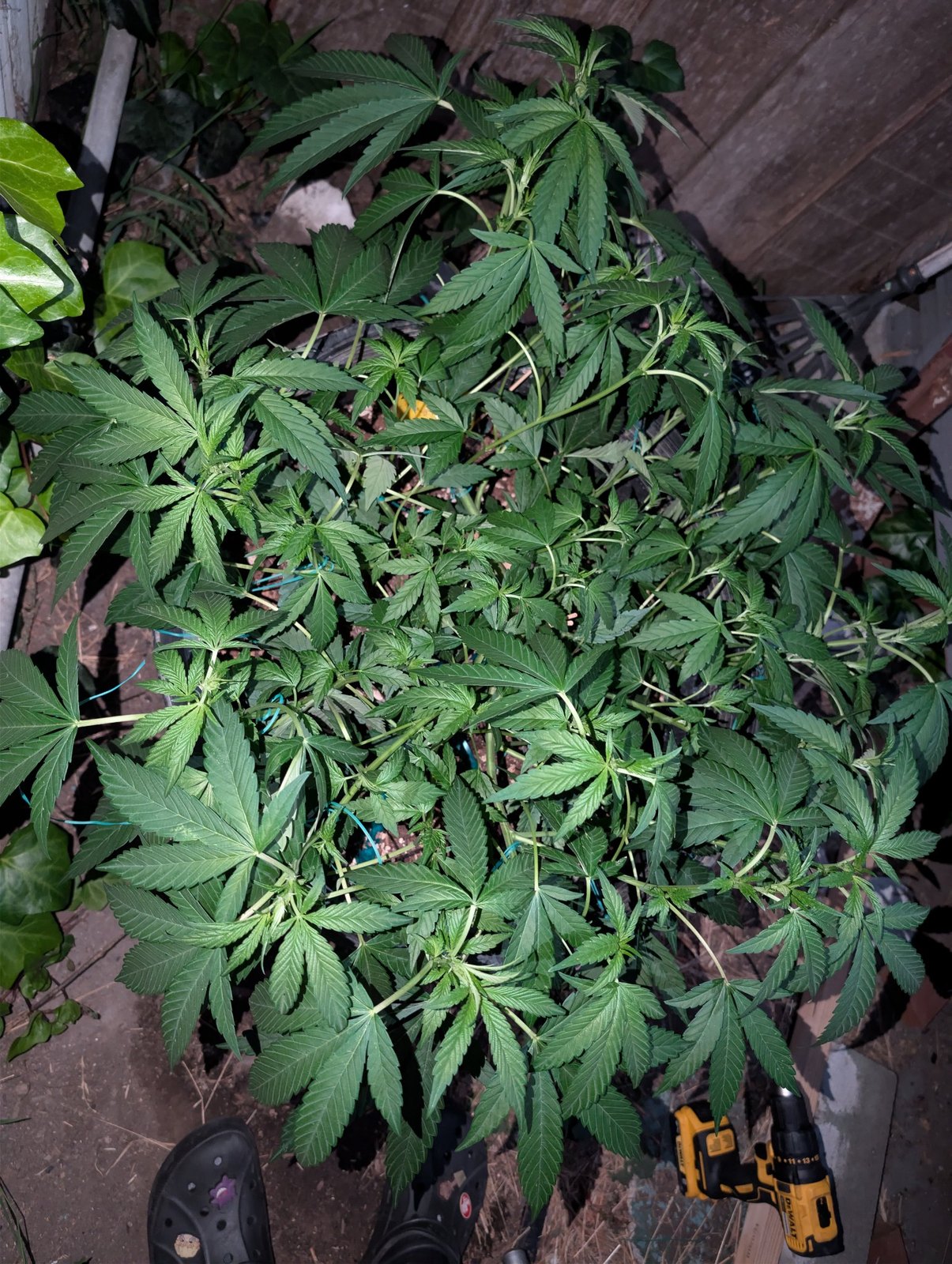
A grower running a Purple Pomegranate hybrid photoperiod outdoors in a massive 30-40 gallon container of coco coir achieved a beautifully wide, flat canopy by Day 46 of the vegetative stage. The weather that day was a comfortable 67 degrees Fahrenheit (19 degrees Celsius) with a relative humidity of 65 percent under clear skies.
The grower had just finished resecuring low-stress training (LST) ties and tucking large fan leaves to expose the inner nodes. However, during an evening check, they noticed the leaves were drooping slightly. They wondered if this was a sign of underwatering, overwatering, or a deeper root zone issue.
Why it worked
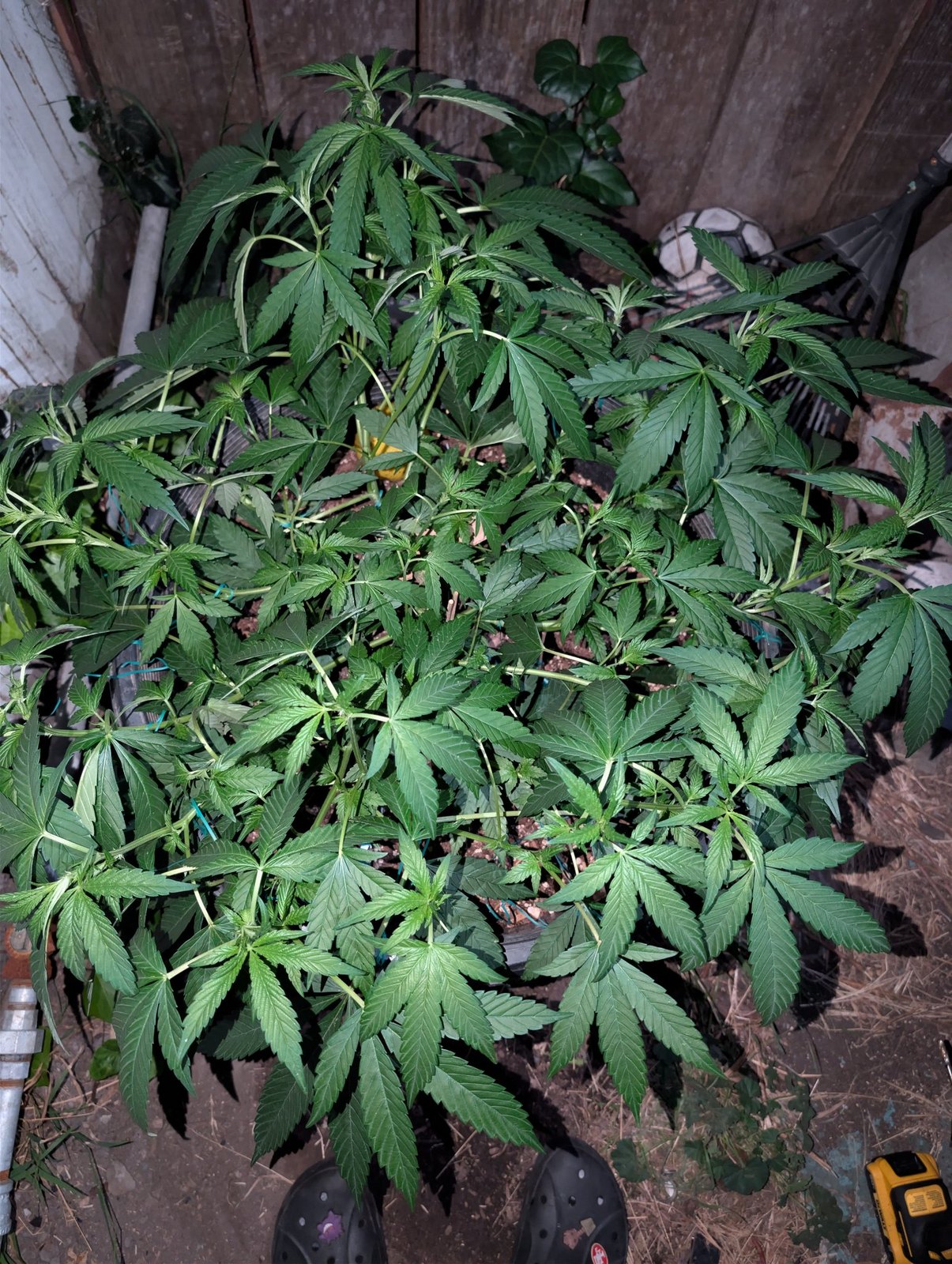
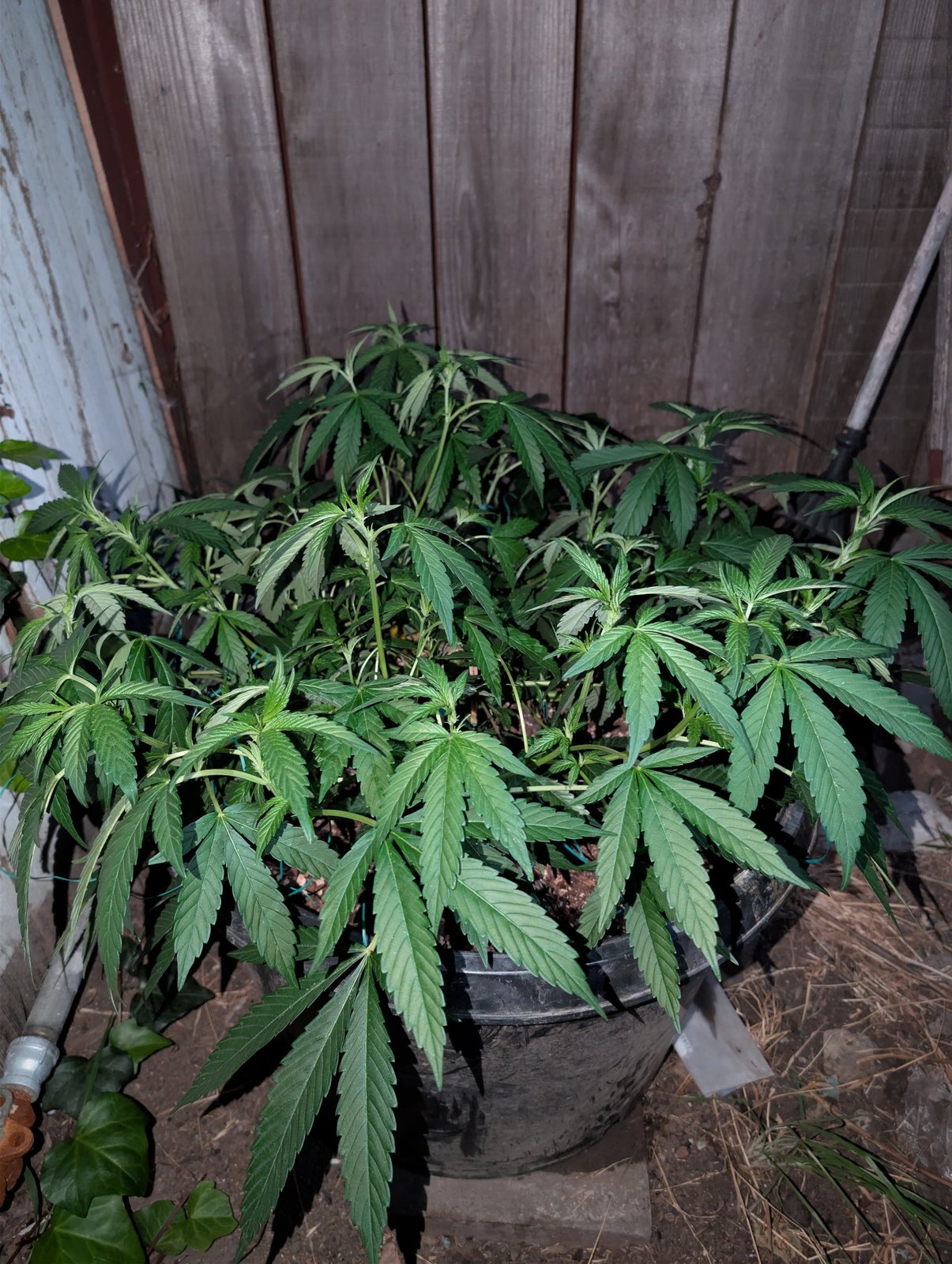
This case is a textbook example of master-level canopy management. The wide, flat shape was achieved through early, consistent LST and leaf tucking instead of premature topping. Tucking the leaves instead of cutting them kept the plant's solar panels intact, maintaining maximum energy production for rapid growth.
The slight evening leaf droop is completely normal. It is caused by nyctinasty, which is the natural nighttime sleep posture where a plant relaxes its leaves after sunset, combined with a dry container that is ready for its scheduled morning watering. Because the uniform deep green color extends from the oldest bottom leaves to the newest top shoots, we can rule out any mobile or immobile nutrient deficiencies.
How to replicate it
- Start training early when the main stem and side branches are young, green, and highly pliable (bendy).
- Use soft, rubber-coated garden wire or thick soft ties to gently pull the main stem and outer branches down parallel to the container rim.
- Secure the ties to the lip of your pot (drilling small holes in the plastic rim makes perfect anchor points).
- Instead of cutting off healthy fan leaves, gently tuck them downward and behind emerging lateral (side) shoots to expose those lower growth points to direct light.
- Water large containers slowly and in a wide circle around the outer edges of the pot to encourage the root system to stretch outward in search of moisture.
- Allow the medium to dry out slightly between waterings, which creates a healthy wet-to-dry cycle that prevents root rot and encourages root respiration (breathing).
Keep it going
- Avoid training dry plants; water your garden a few hours before bending branches so the cells are hydrated and the stems are less likely to snap.
- Keep pruning to an absolute minimum during early and mid-vegetative growth, as every healthy leaf removed reduces the plant's ability to photosynthesize.
- Learn the difference between a thirsty droop (where the leaf stem or petiole is limp and saggy) and night sleep (where the leaf stem remains firm but the leaf blade points downward).
- Monitor your container weight by lifting the edge of the pot to accurately time your waterings rather than relying on calendar days.
Facing something similar? Start a free journal and I'll look at your plant: photos in, diagnosis out, 24/7.
Get a free diagnosis