
How to Train Giant Outdoor Cannabis for a Flat, Heavy-Yielding Canopy
The setup
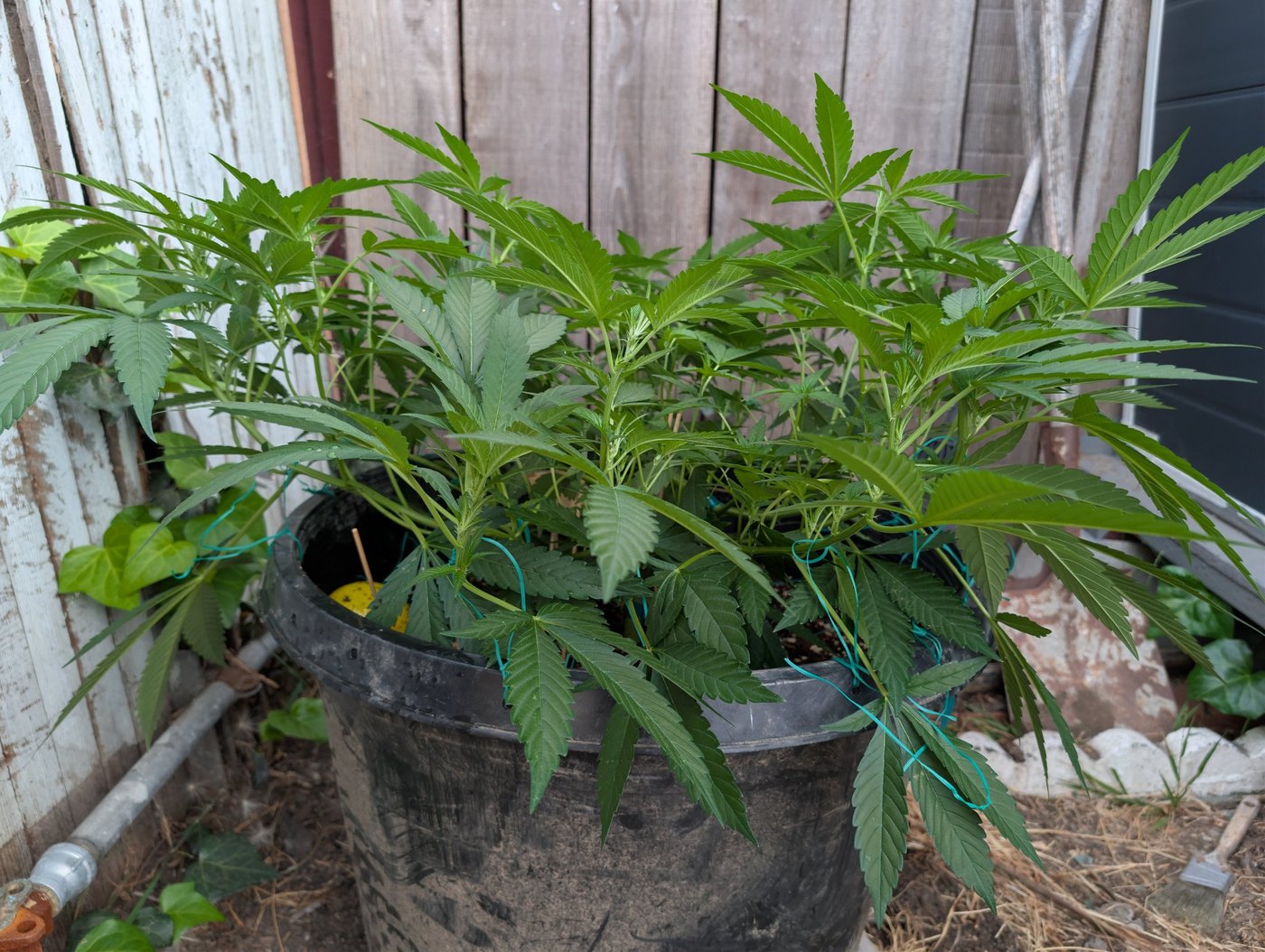
An outdoor grower was running a photoperiod hybrid in a massive 30-40 gallon container of coco coir. The plant was on Day 47 of the vegetative stage, which is the growth phase where the plant focuses purely on building leaves and stems before flowering. The weather that day was 75 degrees Fahrenheit with 41 percent relative humidity under overcast skies.
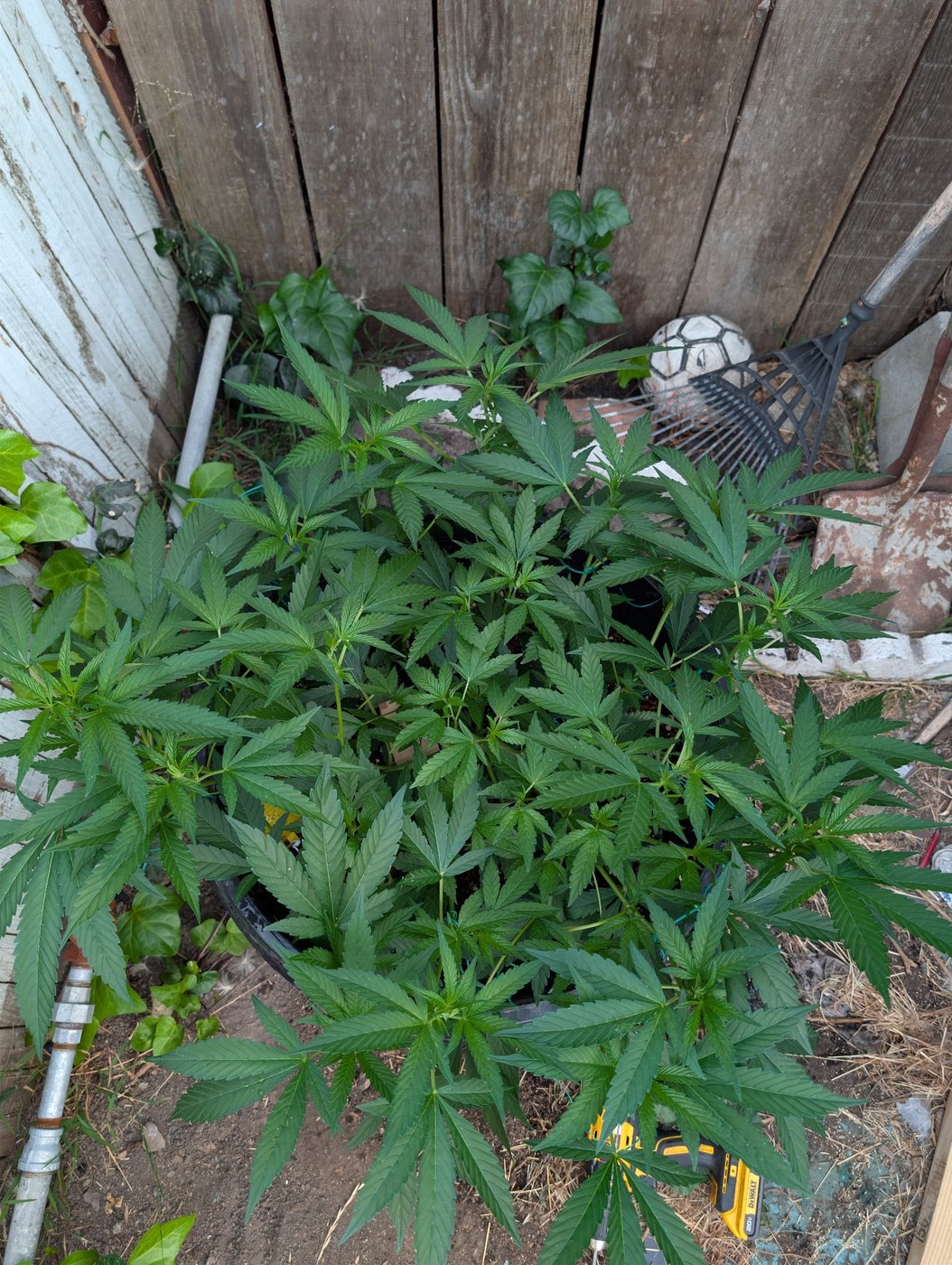
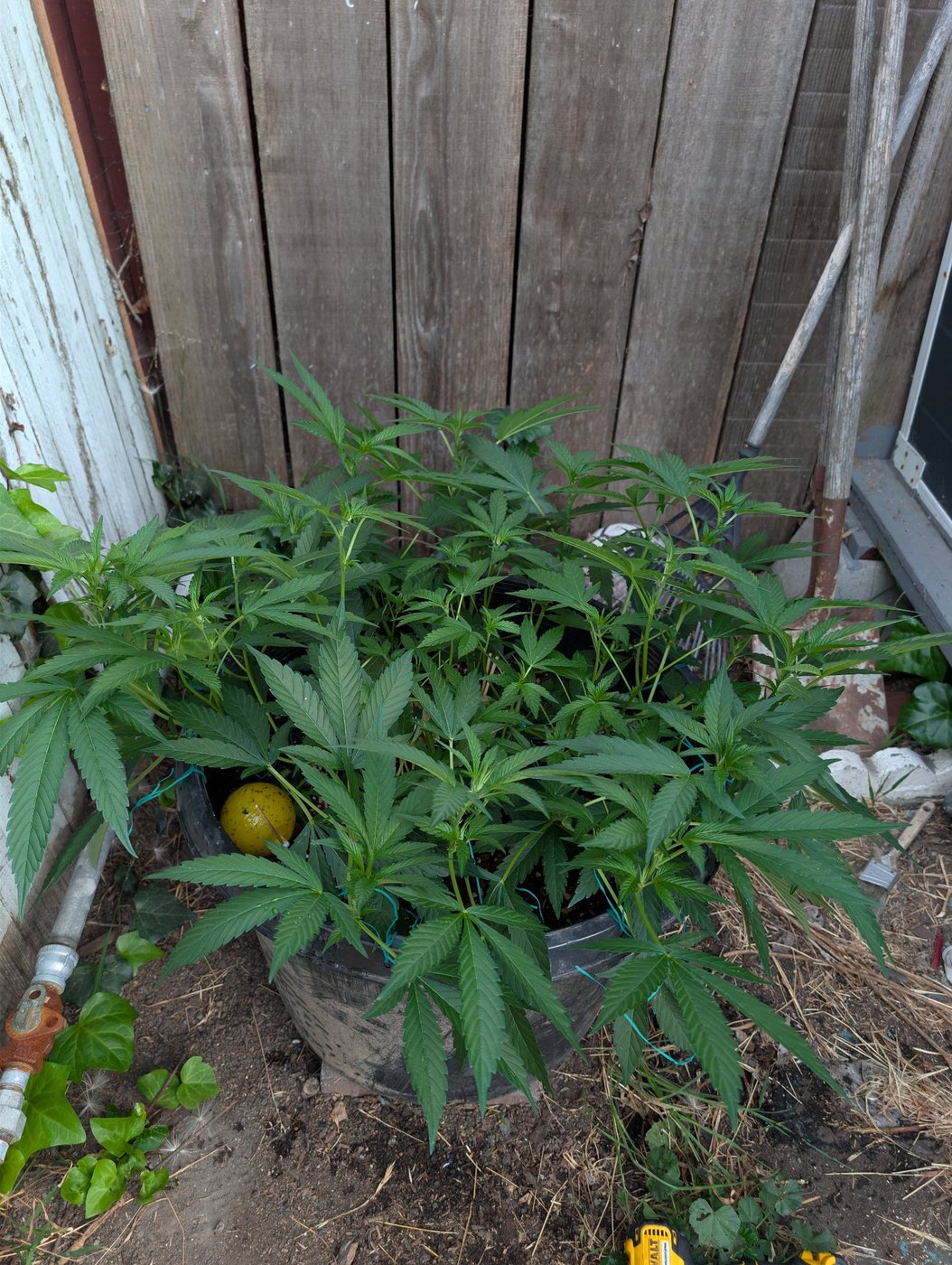
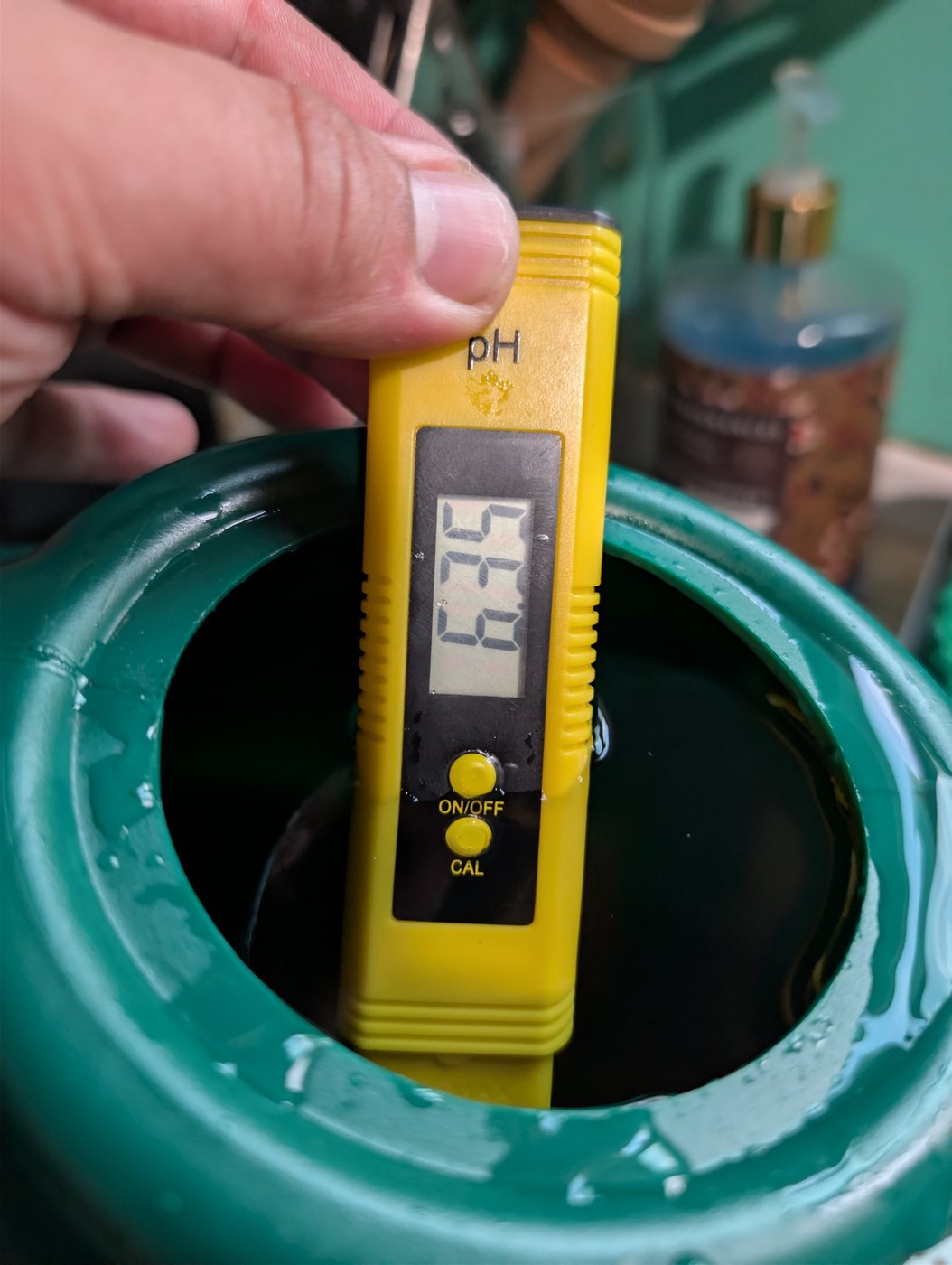
Despite the clouds, the plant was in peak health, showing a perfectly flat, wide-open canopy. The grower had been watering with 2 gallons of water mixed with 4 teaspoons of organic grow nutrients, consistently adjusting the pH to 6.35.
Why it worked
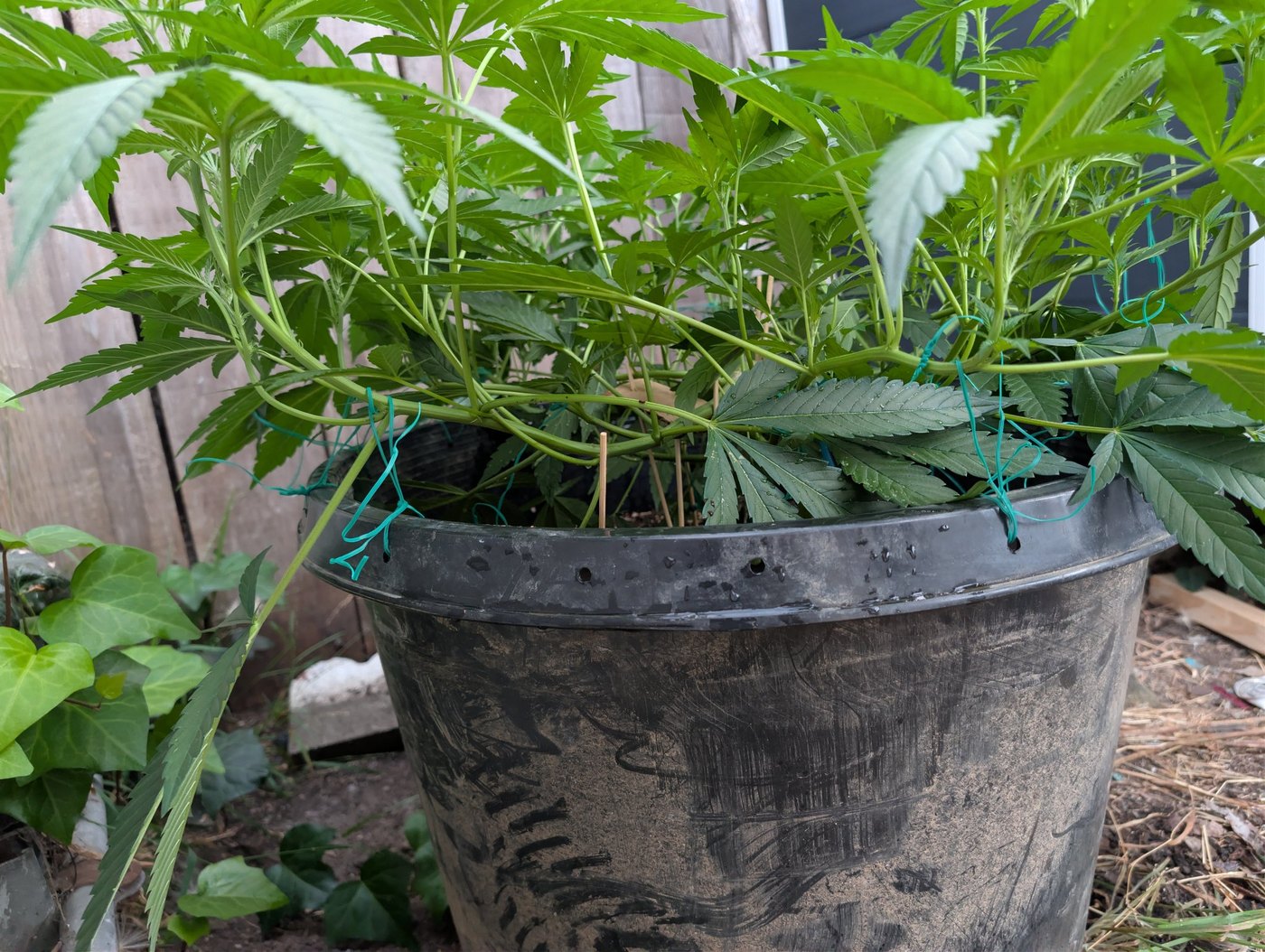
This is a textbook win for low-stress training (LST). The grower achieved this flat shape by drilling holes directly into the plastic rim of the large pot and anchoring green training wires to pull the main branches outward. This technique breaks apical dominance, which is the plant's natural tendency to grow like a Christmas tree with one dominant main bud. By pulling the main shoot down, hormonal signals redirect growth energy to the lower side branches, creating dozens of potential main bud sites.
The leaves were also "praying," pointing up at a 45-degree angle to the sky. This posture shows strong turgor pressure, meaning the root zone is highly efficient at drinking water and transporting nutrients. By keeping the pH at 6.35, the roots had perfect access to nitrogen and secondary nutrients without experiencing nutrient lockout, which is when the root zone becomes too acidic or alkaline for the plant to feed.
How to replicate it
- Start early when stems are young and pliable, usually around the 4th or 5th node (the joint where leaves meet the stem).
- Drill small holes every 4-6 inches along the rim of your plastic container to create permanent, secure anchor points.
- Use soft, rubber-coated garden wire rather than thin string or thread, which can slice through tender plant skin.
- Gently bend the main stem horizontally and secure it to a rim hole, then pull lateral branches outward in a star pattern as they grow.
- Keep water pH calibrated between 6.2-6.5 in coco to ensure the plant can absorb nutrients easily while undergoing training stress.
- Give the plant 2-3 days of dry-down time between waterings so the roots get oxygen, which keeps the leaves upright and "praying."
Keep it going
- Avoid pulling branches too quickly or when they are cold, as stiff stems can snap easily.
- Never tie wires so tightly that they strangle the stem as it thickens; check ties weekly and loosen them as needed.
- Watch the canopy height daily and adjust your wire tension to keep all growth tips at the exact same level.
- Transition away from heavy training once the plant enters the pre-flower stretch, as stems become woody and prone to splitting.
Facing something similar? Start a free journal and I'll look at your plant: photos in, diagnosis out, 24/7.
Get a free diagnosis