
How to Prep Massive Outdoor Coco Pots for the Bloom Transition
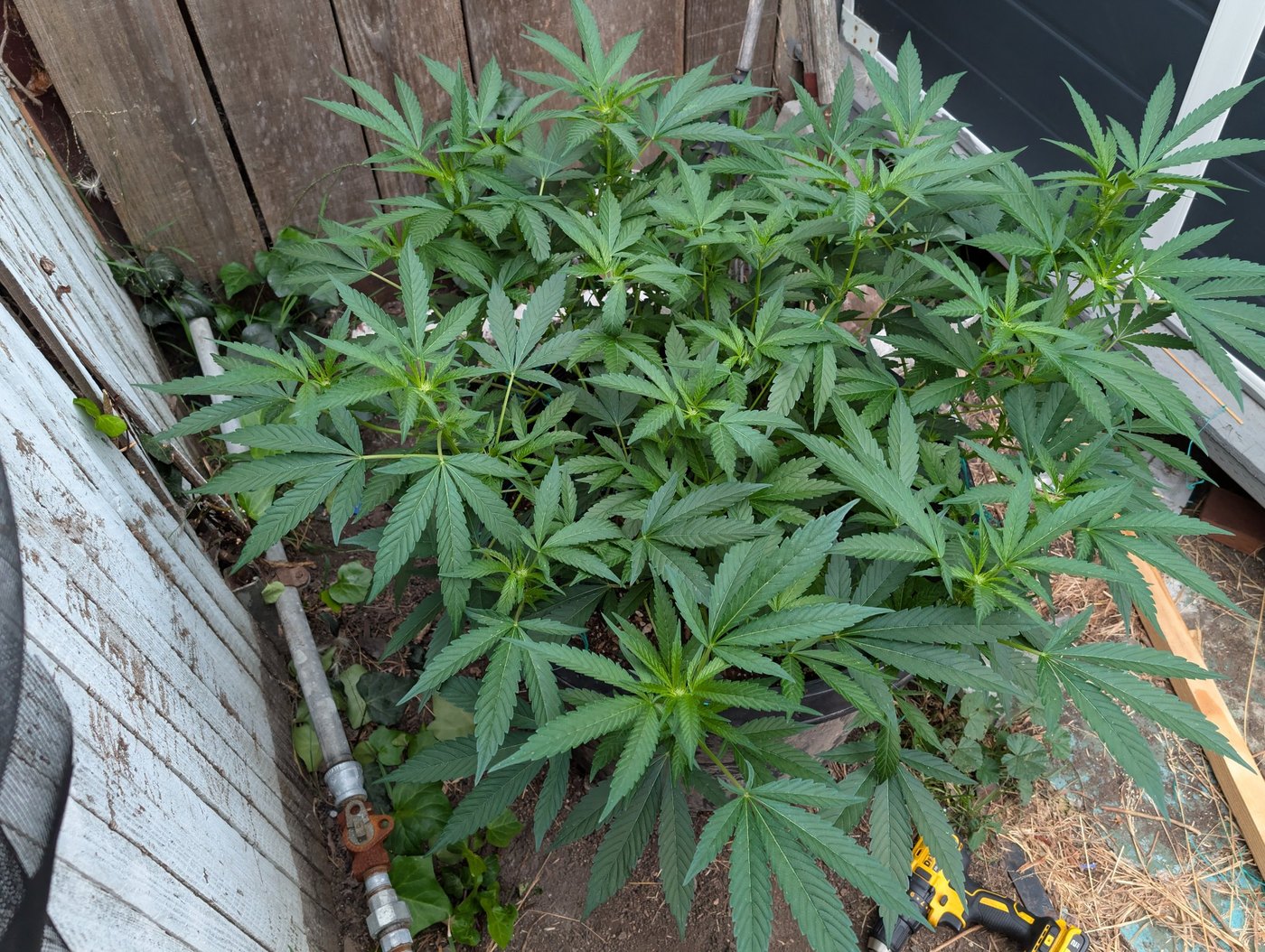
The setup
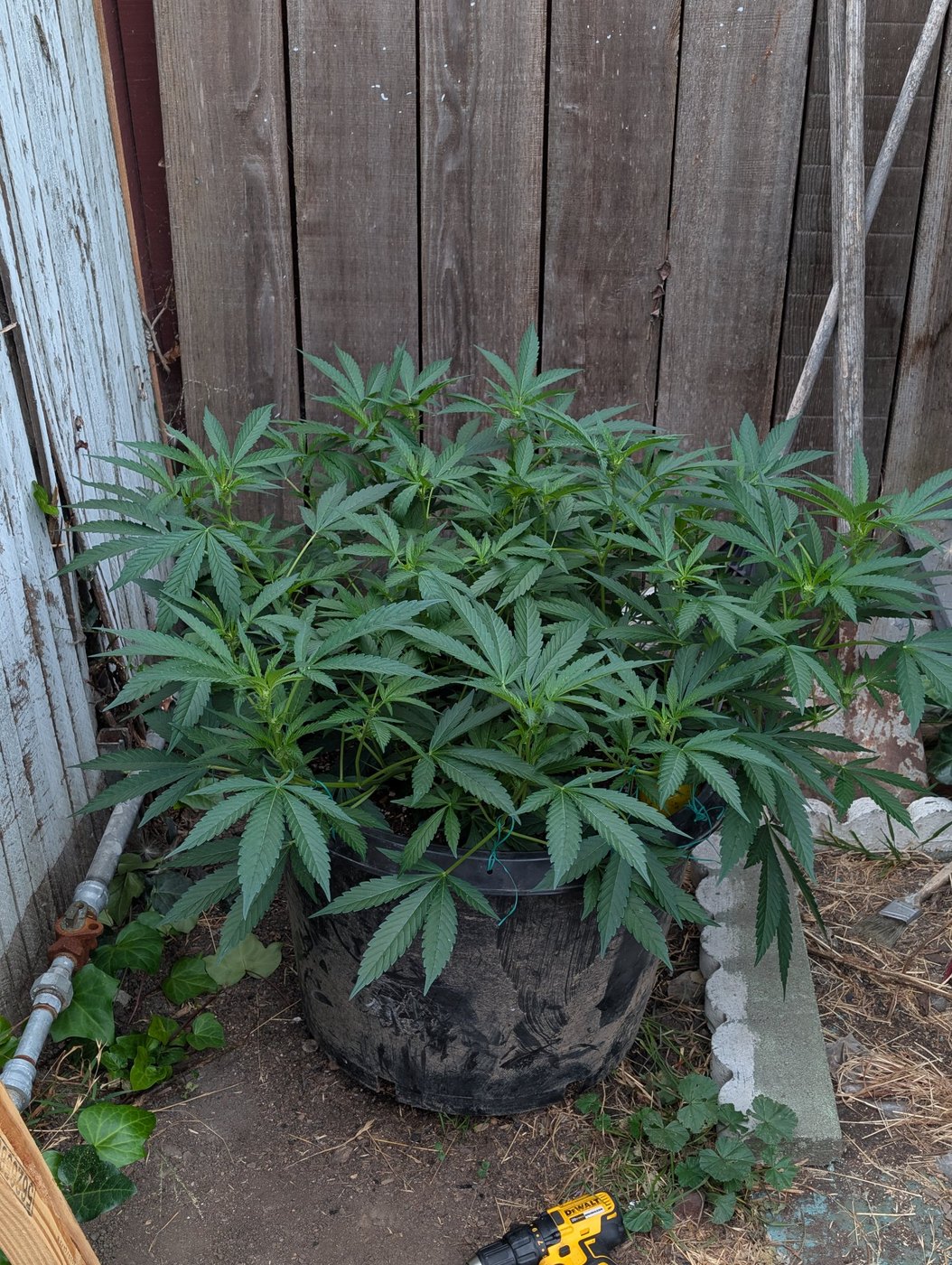
Imagine managing a massive, flat canopy of Purple Pomegranate in late vegetative growth on day 54. This plant lives in a giant 40-gallon pot of coco outdoors, under challenging conditions of 59 degrees Fahrenheit (15 degrees Celsius) and 93 percent relative humidity on an overcast day.
Despite the cold, damp weather, the grower maintained outstanding water turgor, which is the natural water pressure keeping the leaves standing proud. The topsoil was just drying out, signaling it was time for a drink. The grower wanted to know exactly when and how to start introducing organic inputs like Neptune's Fish Fertilizer (2-4-1) and Seaweed (0-0-1) without shocking the root zone.
Why it worked
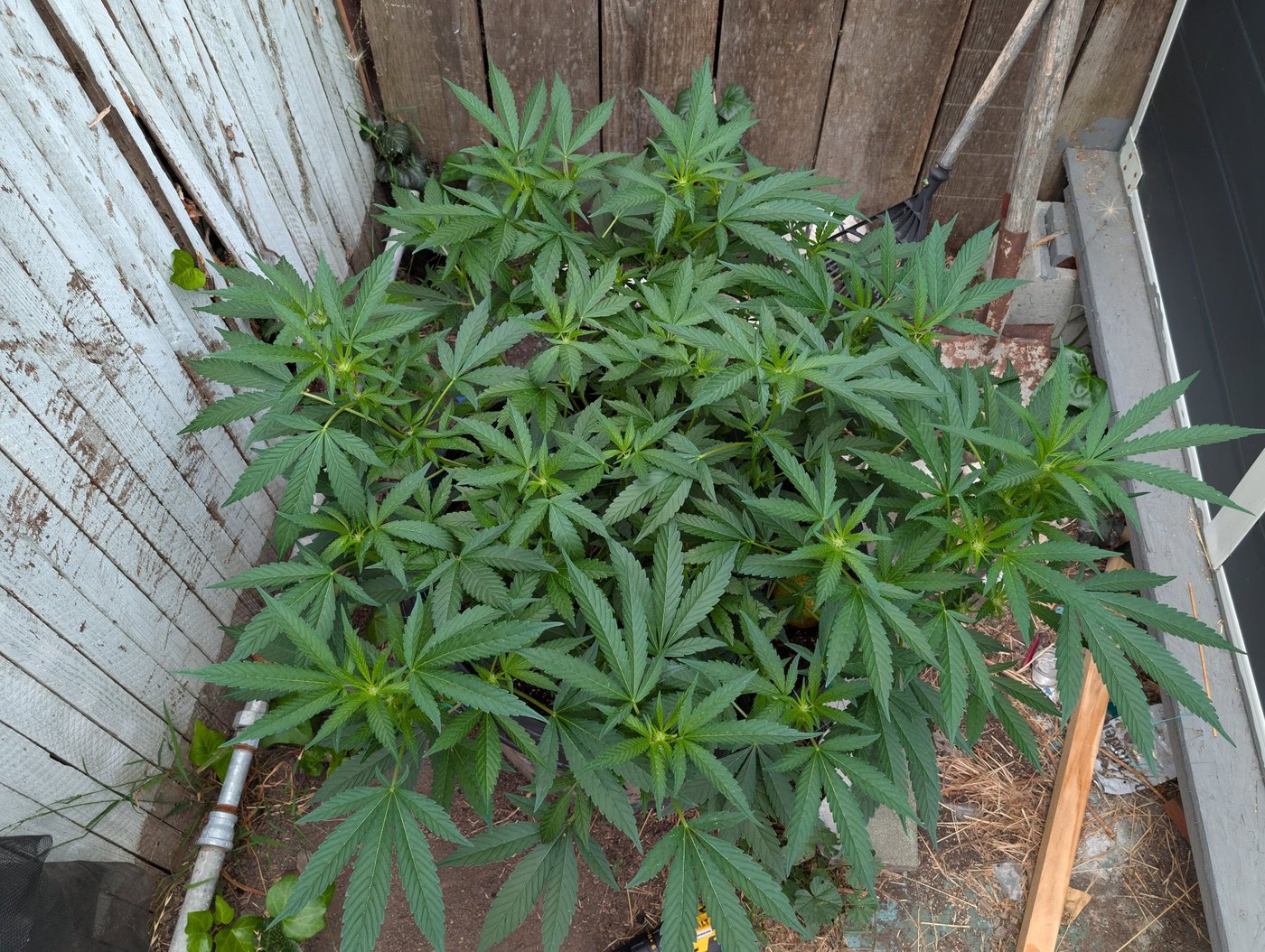
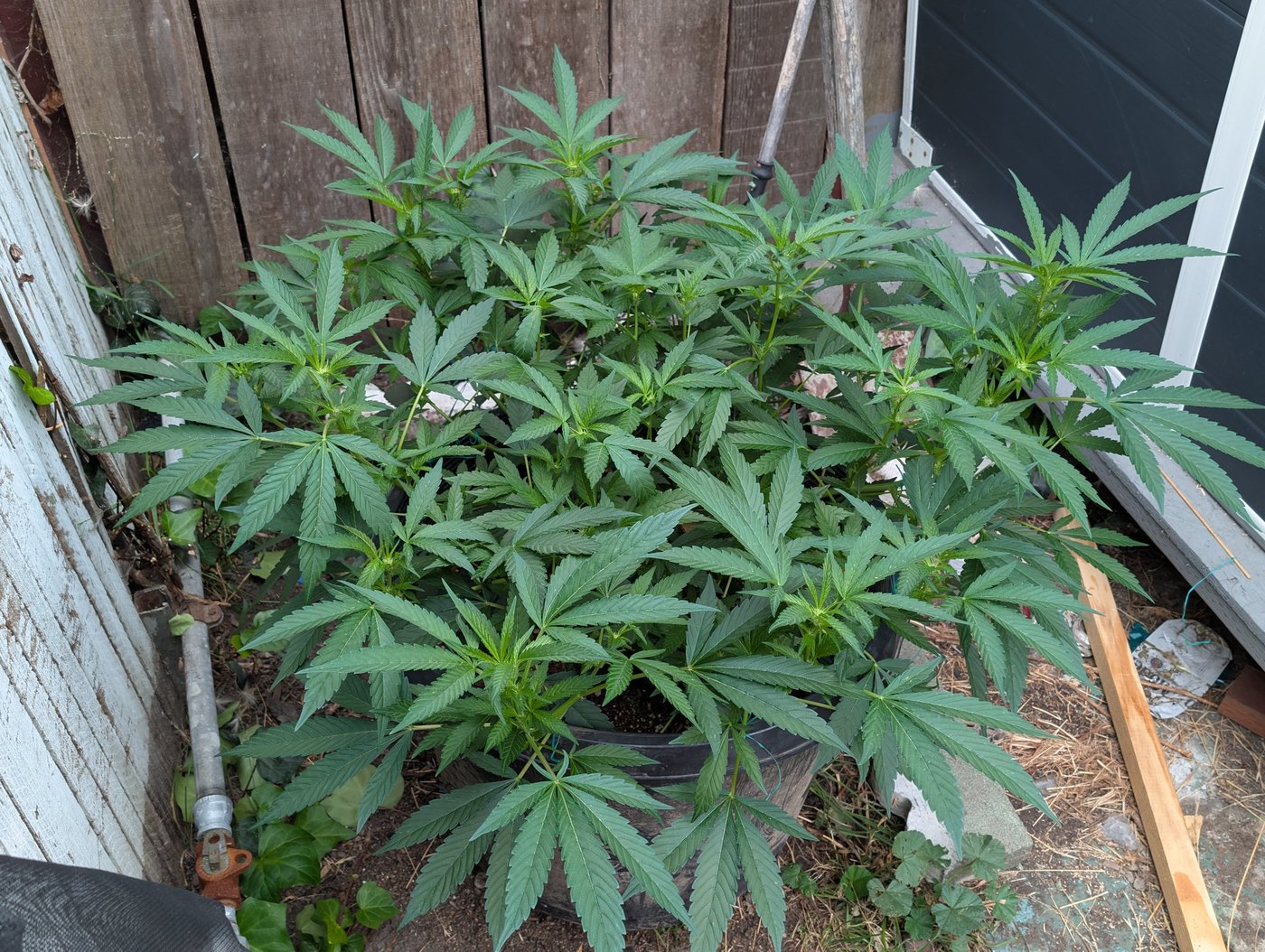
This is a textbook win. The plant's canopy is incredibly wide, flat, and perfectly managed through low-stress training (LST). The rich, uniform emerald green across both old and new leaves completely rules out any mobile or immobile nutrient deficiencies.
In huge 40-gallon pots, the root zone holds a massive buffer of moisture. Even though outdoor conditions were cold and damp, which normally slows down plant transpiration, the active, massive root system successfully drank its fill. Transitioning to organic feeds now, right before the flowering stretch begins, prepares the rhizosphere biology (the root-zone microbes) to break down nutrients when the plant's demand peaks.
How to replicate it
- Mix a gentle introductory dose of 1 tablespoon (15 milliliters) of fish fertilizer and 1 teaspoon (5 milliliters) of seaweed extract per gallon of water.
- Target 2 to 3 gallons (7.5 to 11.3 liters) of total liquid to lightly saturate the giant root zone without causing massive runoff.
- Adjust the pH of the feeding solution to 6.3-6.5, which is the sweet spot for nutrient availability in outdoor coco mixes.
- Apply the mixture evenly across the dry surface of the 40-gallon pot to encourage even root growth.
- Let the large pot dry down for 3-4 days under these cool conditions before watering again with plain pH-adjusted water.
Keep it going
- Continue using low-stress training ties to keep the canopy flat and open, ensuring good airflow to prevent powdery mildew in high humidity.
- Monitor the weather forecast, as cool, overcast days mean you must stretch the days between waterings to avoid a cold, soggy root zone.
- Watch the center shoots for the first signs of pistils, the little white hairs that signal the official start of the pre-flower stretch.
- Maintain clean undergrowth by removing any low-altitude leaves that touch the soil surface to block crawling pests.
Facing something similar? Start a free journal and I'll look at your plant: photos in, diagnosis out, 24/7.
Get a free diagnosis