
How to Train a Massive Outdoor Canopy: Perfect LST Before the Stretch
The setup
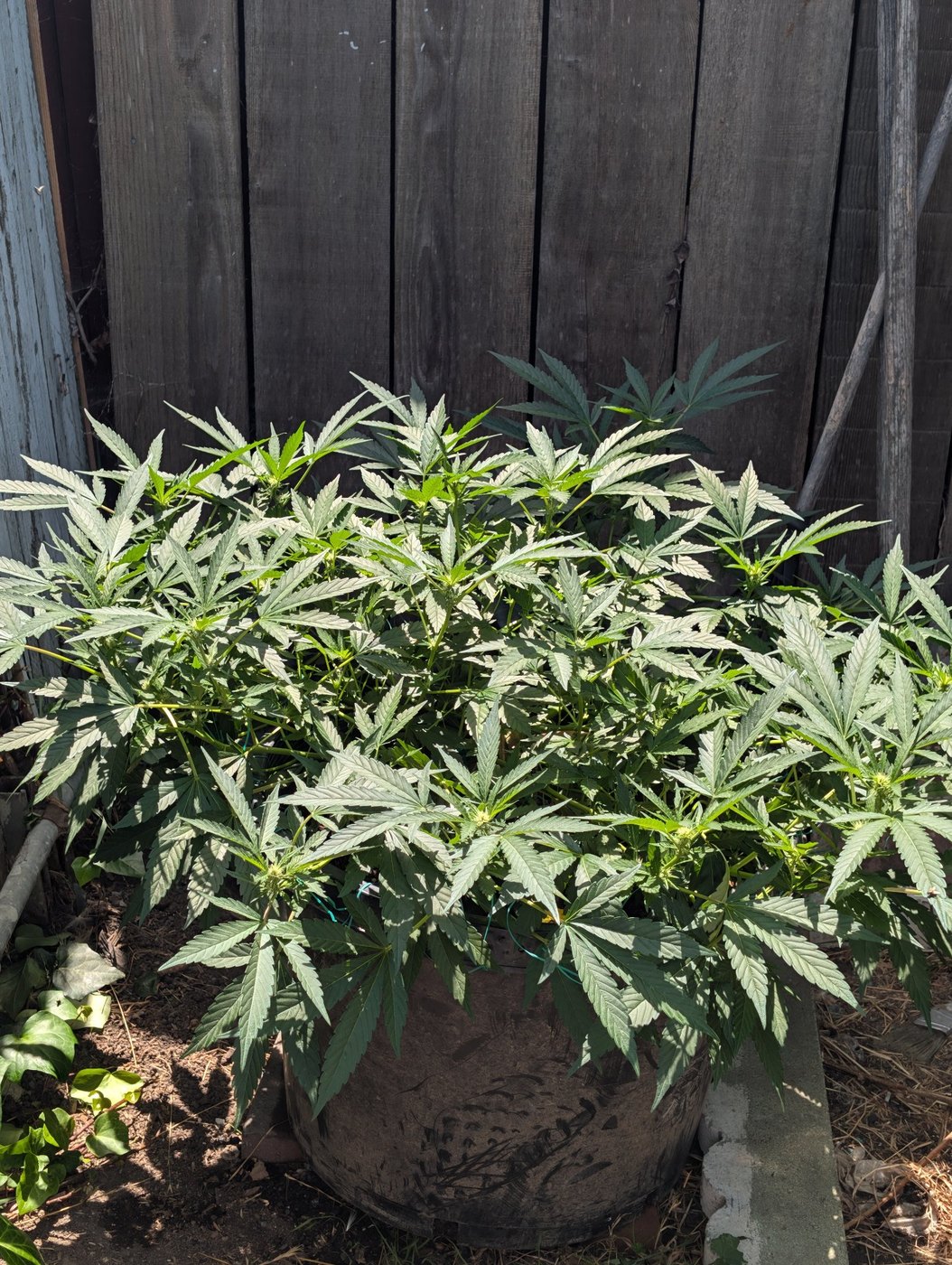
Our grower was managing a photoperiod hybrid, Purple Pomegranate, in a massive 30-40 gallon pot of coco outdoors. On Day 58 of veg, under mostly sunny skies with temperatures around 81F and 50 percent relative humidity, the plant was absolutely thriving.
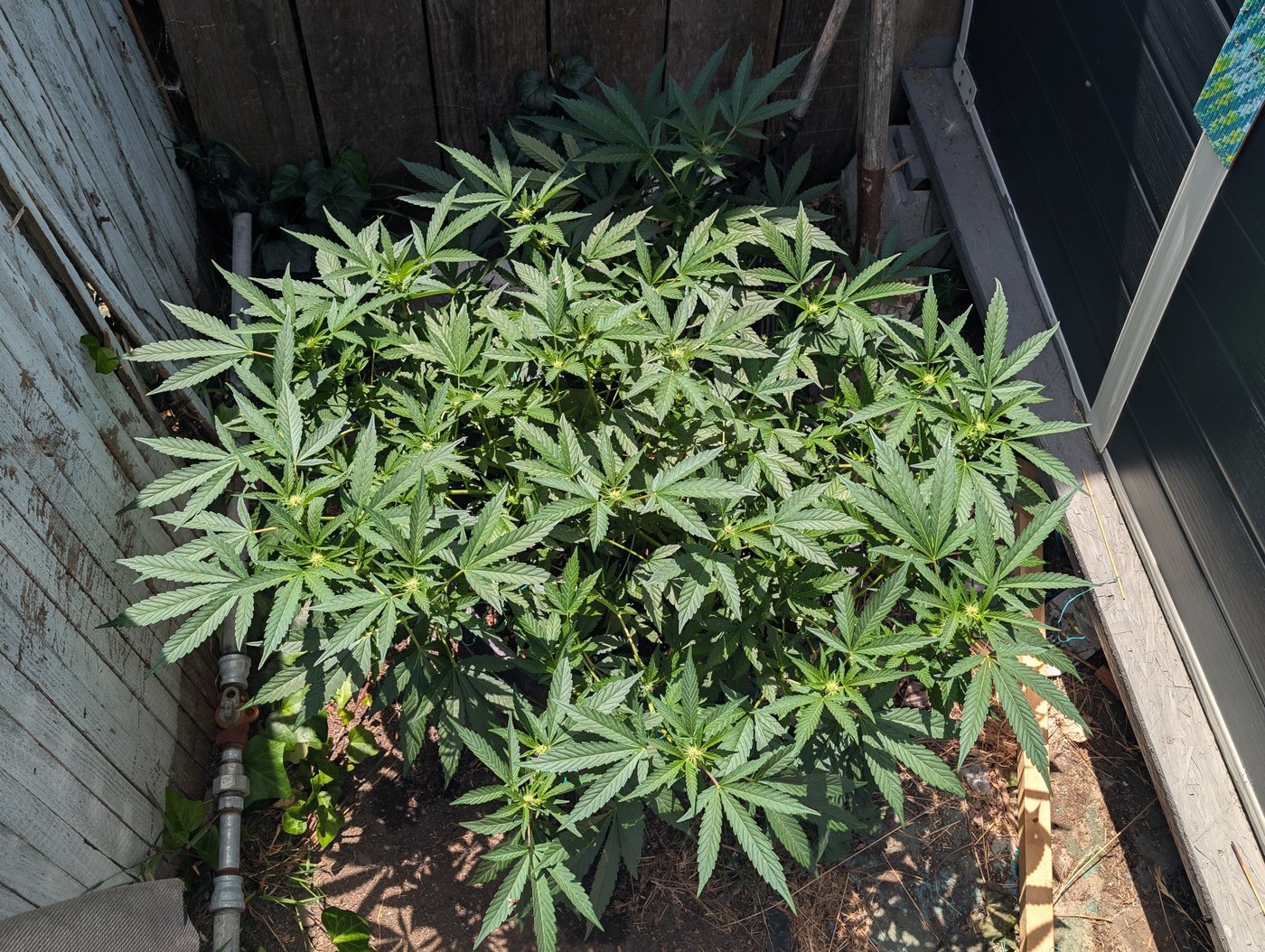
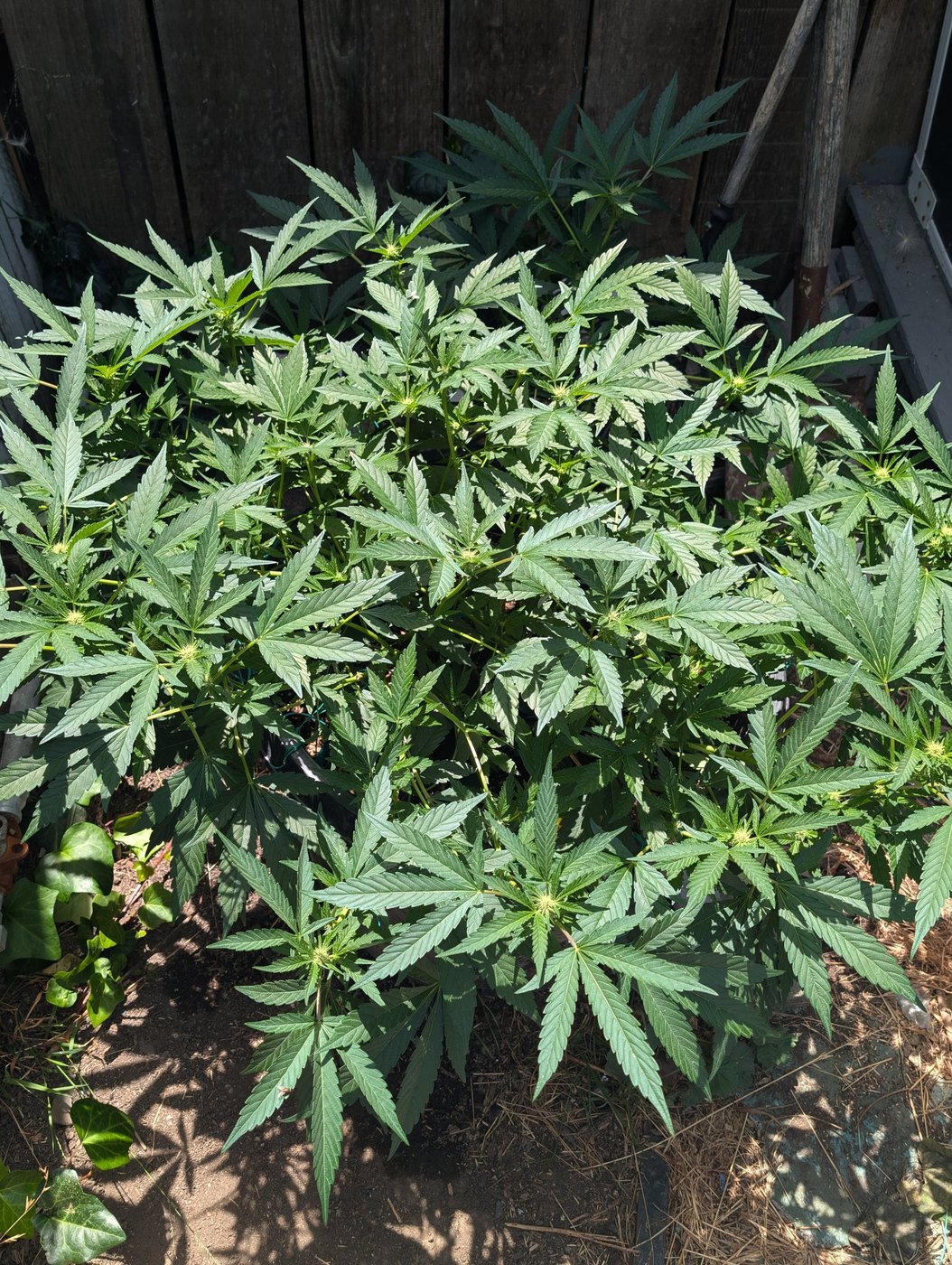
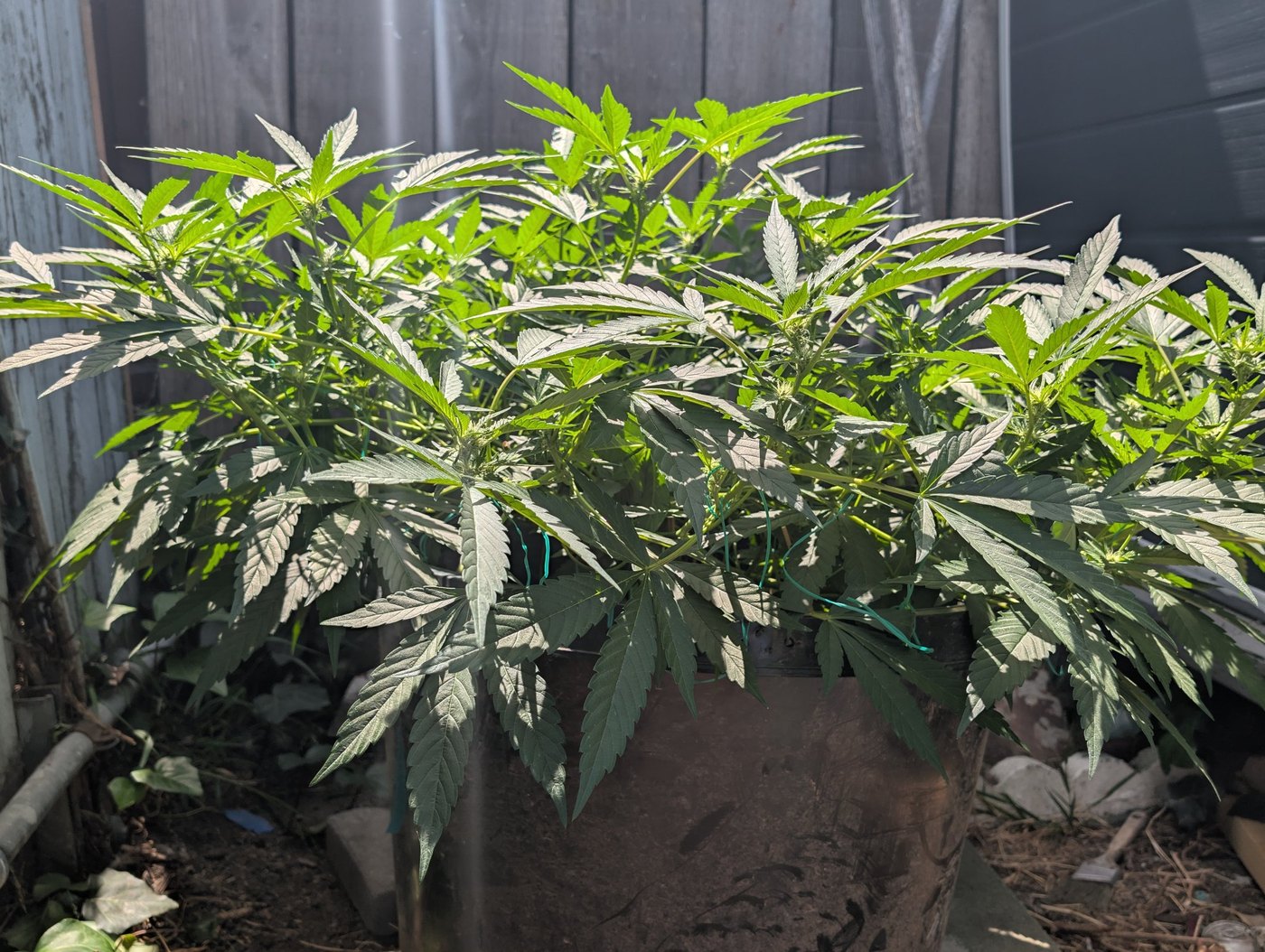
The grower had used soft green training wires anchored directly to the pot rim to pull down the robust lateral branches. Instead of a classic Christmas tree shape with one dominant main stem, the canopy was completely flat, wide, and open. The soil surface was healthy, elevated on concrete blocks for excellent drainage, and just coming off a heavy 3-gallon watering.
Every single future bud site was receiving direct, even sunlight. There were zero signs of pests, wind burn, or nutrient deficiencies, and the deep green leaf posture showed perfect water and nutrient uptake. This is what world-class canopy training looks like right before the stretch.
Why it worked
Why did this training work so beautifully? It comes down to a botanical principle called apical dominance. Naturally, a cannabis plant sends its growth hormones (auxins) to the very top shoot, causing it to grow tallest while shading out the lower branches. By bending that main shoot down so it is level with the side branches, you trick the plant. It redistributes those growth hormones evenly across all branches.
The timing here was perfect. Doing heavy low stress training (LST) on Day 58 of veg, right as the plant prepares to transition into the pre-flower stretch, ensures that all those newly exposed shoots will shoot upward at the same rate. Over the next 2-3 weeks, this plant will undergo its pre-flower stretch, where it can double in size. Because the canopy is already flat, that stretch will create dozens of uniform, massive colas instead of just one big one and a bunch of small, leafy buds at the bottom.
We ruled out any transplant shock or root issues because the leaves showed excellent turgor, meaning they were firm and reaching for the sun, not drooping. The massive pot size also acted as a buffer, preventing the rapid drying out that often stresses smaller container grows outdoors.
How to replicate it
- To replicate this flat, high-yielding canopy in your own outdoor garden, follow these steps:
- Start early: Begin training when the plant is in active vegetative growth and the stems are still soft, pliable, and green. If the stem feels woody, it is too late to bend safely.
- Tie to the rim: Use soft, rubber-coated garden wire. Anchor one end gently around a branch, bend the branch outward toward the edge of the pot, and secure the other end to the pot rim or a landscape staple in the soil.
- Level the playing field: Pull the tallest branches down until they are the same height as the lowest branches. This creates a flat table of growth.
- Open the center: Pull branches outward, away from the middle of the plant, to let sunlight penetrate deep into the inner node sites.
- Let her rest: After a heavy training session, do not prune or cut anything. Give the plant a thorough watering and let it rest for 3-4 days to adjust to its new position.
Keep it going
- Watch the water: Large containers hold a lot of moisture. Always wait for a clear dry-down, where the top 2-3 inches of medium feel dry and the pot is light to lift, before watering again.
- Support the stretch: As the pre-flower stretch begins, those trained branches will grow rapidly. Be ready to adjust your tie-downs or add a trellis net to support the weight of the incoming buds.
- Inspect the inner canopy: A dense, flat canopy blocks airflow. Keep an eye out for pests or high humidity pockets inside the foliage as the plant transitions into true flower.
- Monitor runoff: In large outdoor coco setups, salts can build up at the bottom of the pot. Ensure you get 10-20 percent runoff every few waterings to keep the root zone clean.
Facing something similar? Start a free journal and I'll look at your plant: photos in, diagnosis out, 24/7.
Get a free diagnosis