
Mastering Outdoor LST: How to Build a Flat, Massive Veg Canopy
The setup
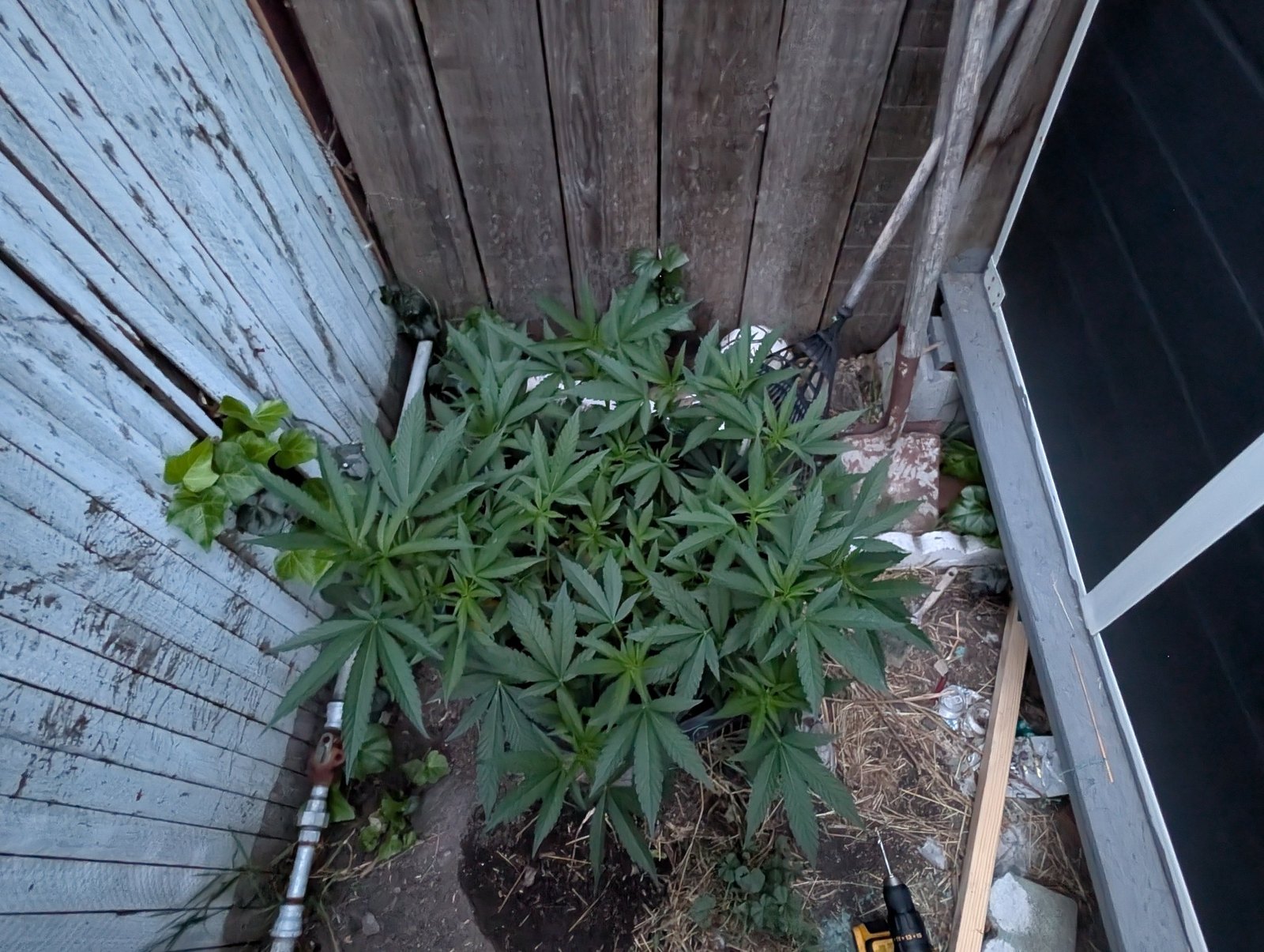
Imagine a massive 30-40 gallon pot sitting outdoors, housing a gorgeous photoperiod hybrid on Day 46 of the vegetative stage. The grower is dealing with cool, damp morning conditions (57F and 94 percent relative humidity), which can easily stall growth and slow down water uptake if root health is not locked in.
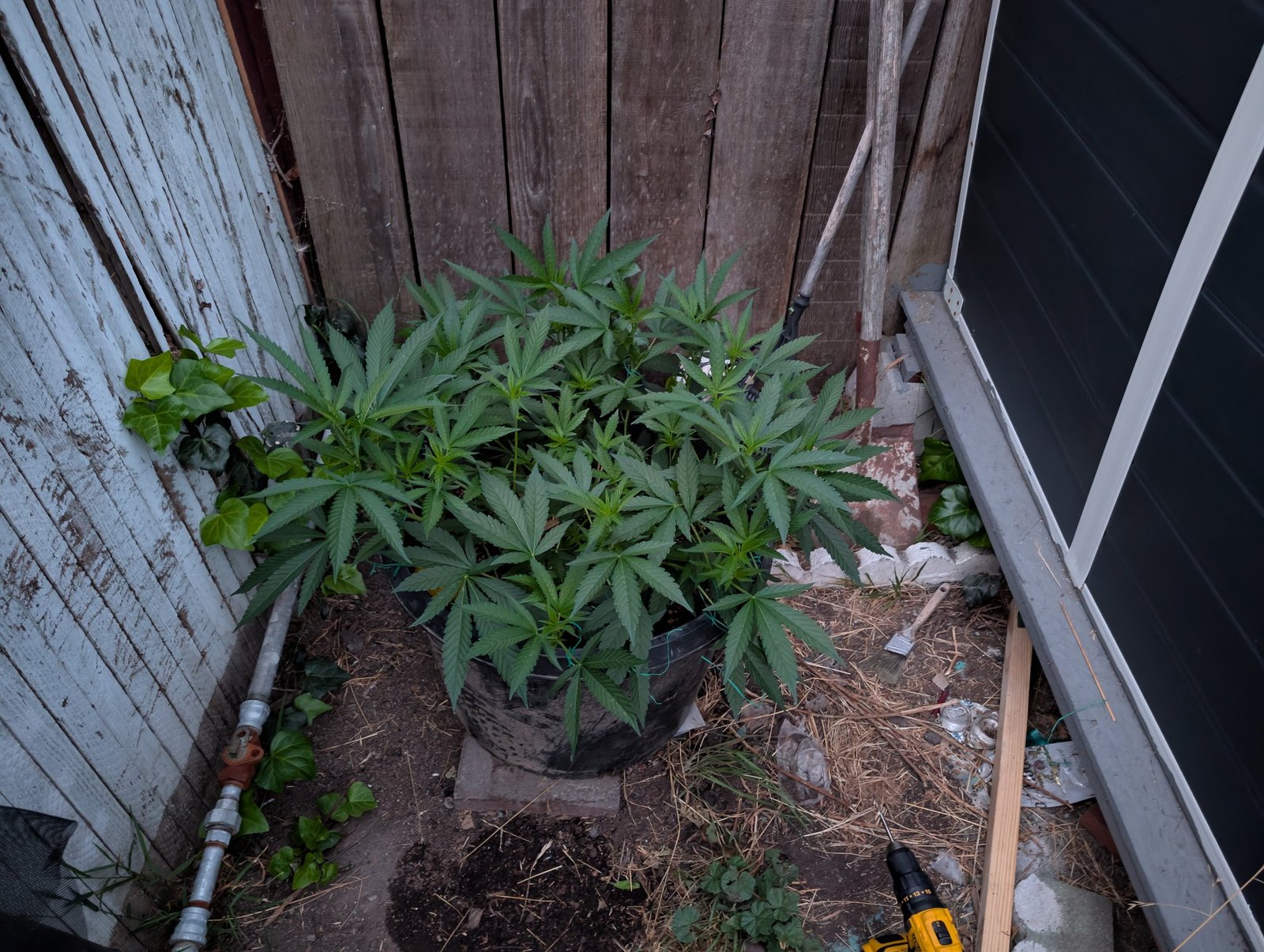
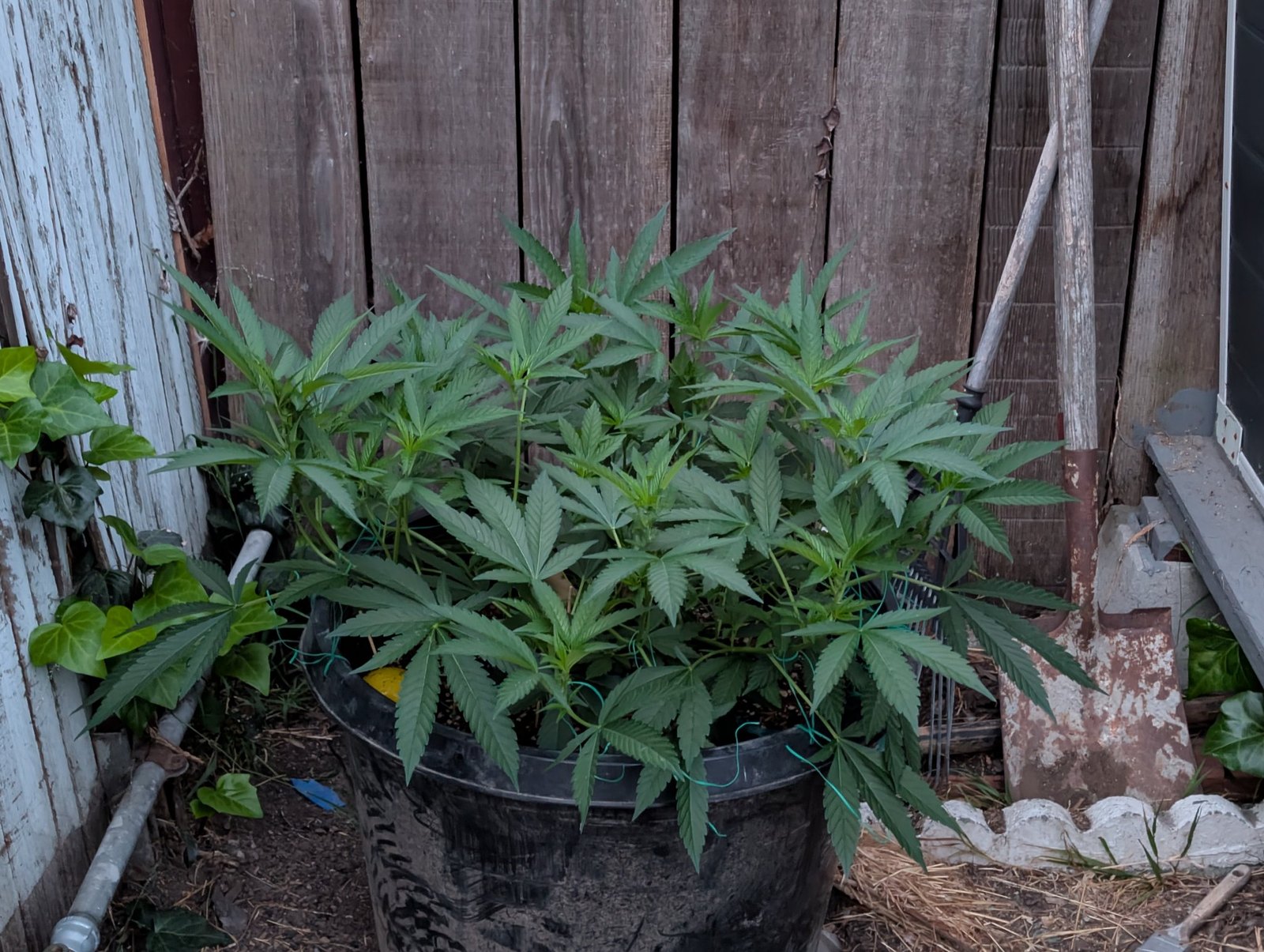
Instead of letting the plant grow into a tall, single-cola Christmas tree, this grower has been steadily applying low-stress training (LST). Using thick green rubber training wires, they have pinned the outer branches down and outward, opening up the center of the plant to the sky.
Why it worked
This is a textbook win for outdoor canopy management. The top-down view reveals a dense, deep-green vegetative canopy with outstanding leaf posture. The leaves are actively praying to the sun, indicating excellent turgor pressure (the internal water pressure that keeps cells stiff and upright). This perfect posture proves the roots are highly active and uptake is running smoothly despite the cool, damp morning air.
By pulling the outer branches down, the grower has broken apical dominance. This is the plant's natural habit to channel most of its growth hormone (auxins) to the very top shoot. Distributing these hormones evenly across all branches encourages uniform lateral vigor, turning what would have been tiny side buds into robust, thick-stemmed main colas.
How to replicate it
- Use soft, rubber-coated training wire instead of thin string, which can slice into rapidly expanding, fleshy stems.
- Anchor the training ties directly to the rim of your container (drilling holes in plastic pots or using spring clips on fabric pots works beautifully).
- Gently bend the tallest, outermost branches down and outward, away from the center, aiming to keep all growing tips at the exact same height.
- Adjust the ties every 3-5 days during active vegetative growth to keep up with the plant's rapid expansion and prevent ties from choking the stems.
- Keep the center of the plant open to increase airflow, which is critical for preventing mold and powdery mildew in high-humidity outdoor environments.
Keep it going
- Monitor the weather closely, as cool nights and mornings (below 60F) slow down transpiration, meaning you should wait for a proper dry-down before watering again.
- Check the tension on your training wires weekly to ensure they are not cutting into the bark as the stems thicken into wooden branches.
- Watch for the early signs of pre-flower, such as tiny white pistils at the nodes, which signal that the stretch is about to begin.
- Complete your major structural training before the transition to flower, as stems become woody, stiff, and prone to snapping once flowering begins.
Facing something similar? Start a free journal and I'll look at your plant: photos in, diagnosis out, 24/7.
Get a free diagnosis