
How to Save a Split Stem: Emergency First Aid for Training Accidents
The situation
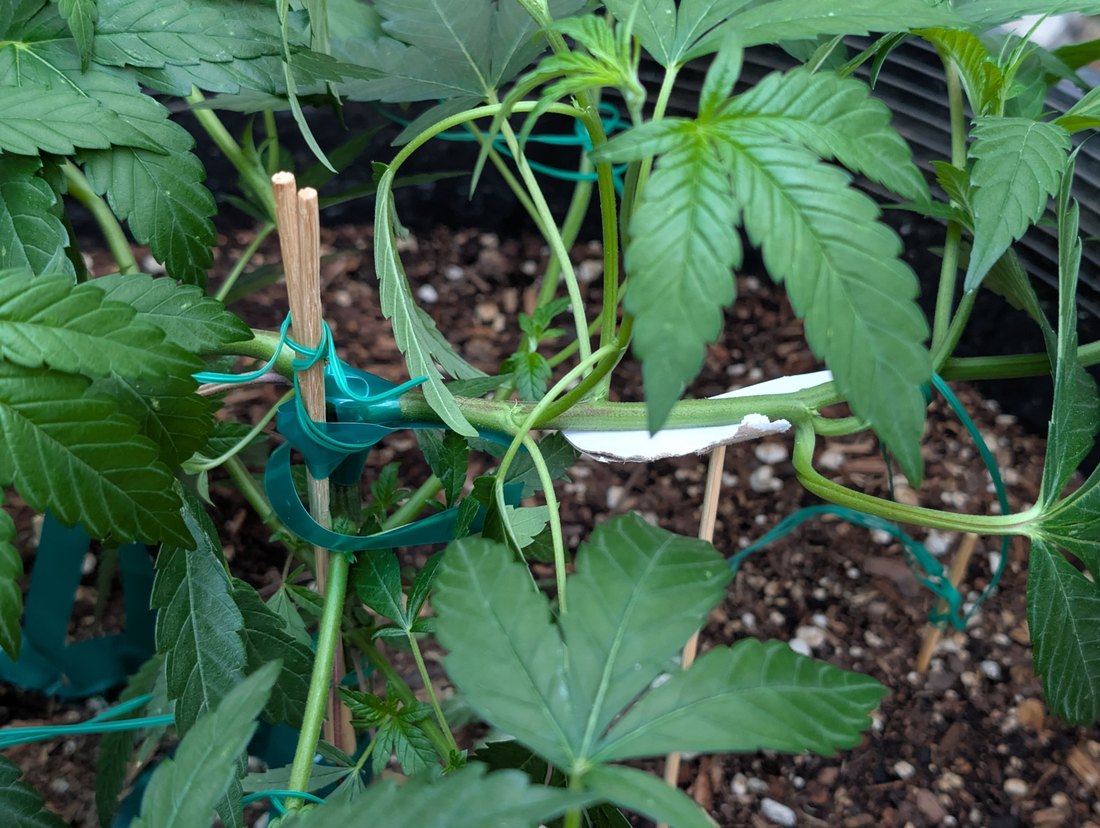
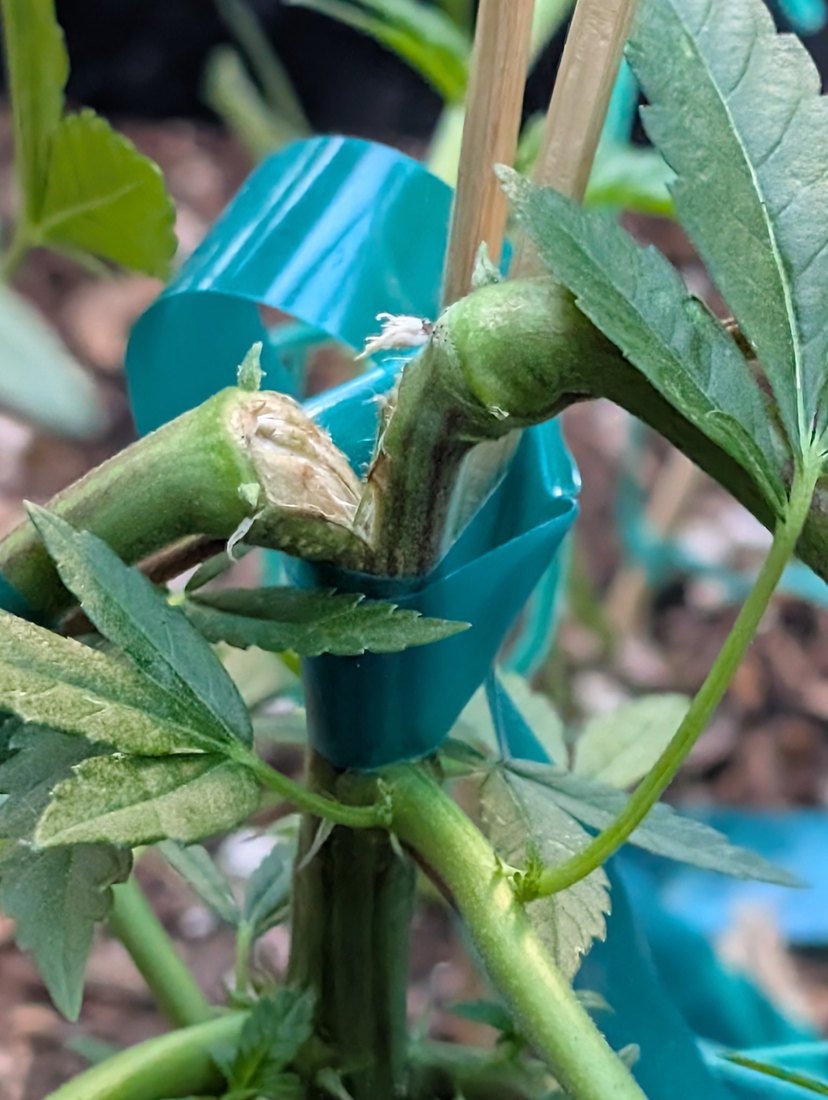
It happens to the best of us. You are bending a thick, vigorous branch on an outdoor plant to spread the canopy, you hear a sickening pop, and suddenly your main junction is split wide open. This vegetative plant, growing in a massive 30-40 gallon coco pot under 66F clear skies, suffered a deep vertical tear right down the center of its main node during low-stress training.
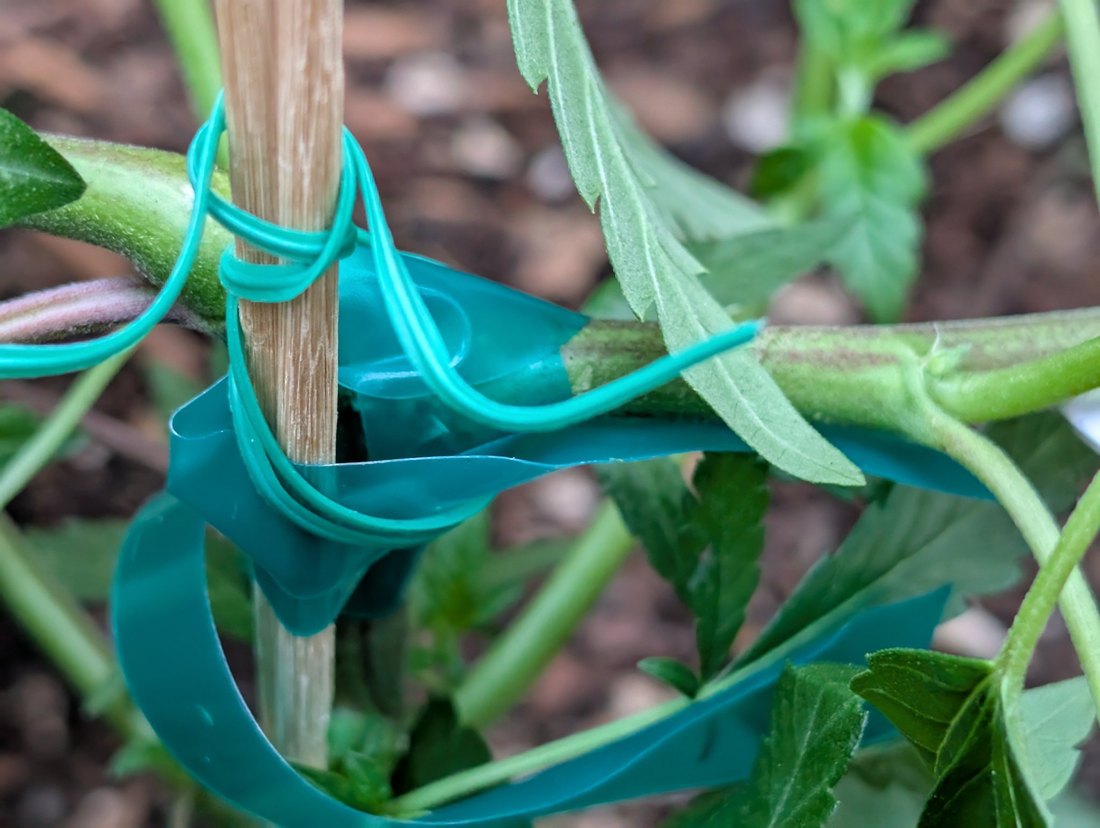
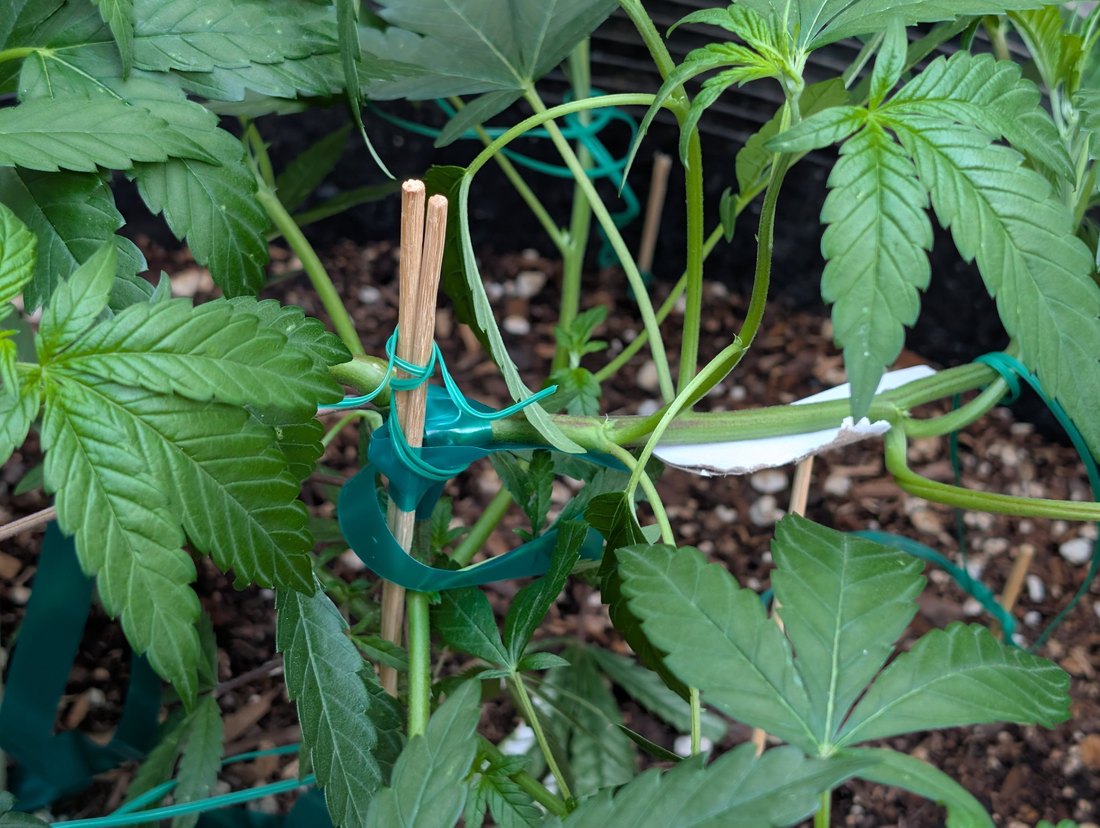
The grower did not panic. They immediately brought the two halves back together, wrapped the wound, and built a creative support system using bamboo stakes, green vinyl ties, and a cardboard sling to cradle the heavy lateral branch.
When they reached out, they wanted to know how long to keep the splint on and if the branch would survive. Despite the scary looking rip, the leaves on the split branch were still upright, turgid, and actively praying, with zero signs of wilting.
The diagnosis
The swift first aid saved this plant. Because the leaves did not droop or wilt within hours of the accident, we know the internal vascular pipeline, the xylem and phloem, was not completely severed. By quickly clamping the split back together, the grower kept the plumbing aligned, allowing water and nutrients to keep flowing up the branch.
In the plant kingdom, a clean split is not a death sentence. Underneath the bark, active parenchymal cells will rapidly multiply to form a callus, which is essentially a woody scar tissue knuckle. This knuckle will eventually make the junction even stronger than it was before the split.
Some purple coloring was visible on the leaf stems, but we ruled out phosphorus deficiency. That color is a genetic trait of this Purple Pomegranate strain, intensified by cool 56-59F night temperatures. The leaf blades themselves were a healthy, vibrant green, proving the plant was processing nutrients normally.
The solution
- Leave the wrap and splint completely undisturbed for 14-21 days (two to three weeks) to let the woody callus fully form.
- Do not peek, loosen, or adjust the binding during this healing phase, as even tiny movements can tear the delicate new cells apart and restart the clock.
- Replace temporary cardboard supports with sturdier, weather-resistant plastic or heavy-gauge wire hooks to prevent morning dew or rain from collapsing the sling.
- Keep the plant on its normal watering and feeding schedule, as coco dries out quickly outdoors and the healing process requires steady moisture and nutrients.
- Monitor the foliage daily: if the leaves stay upright for the first 48 hours, the branch is fully out of danger.
How to avoid this
- Bend and train branches during the warmest part of the day when plants are more pliable, rather than in the cool morning when stems are turgid and brittle.
- Pinch and massage the stem gently between your thumb and forefinger to soften the inner fibers before attempting a major bend.
- Apply training pressure gradually over several days using adjustable ties, rather than forcing a stiff branch into position all at once.
- Install a central bamboo support stake early in vegetative growth to anchor main junctions before they carry heavy outdoor foliage.
Facing something similar? Start a free journal and I'll look at your plant: photos in, diagnosis out, 24/7.
Get a free diagnosis