
How to Save a Split Stem: Emergency Splinting for Heavy LST
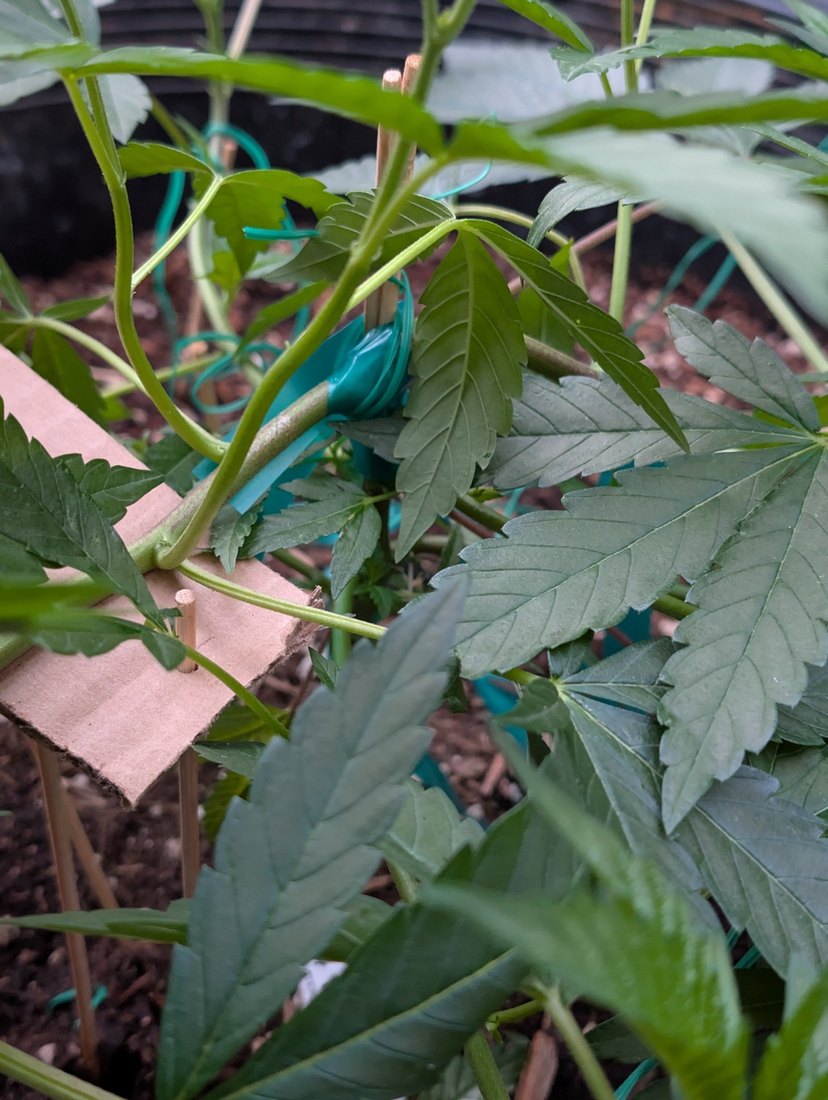
The setup
During heavy low-stress training (LST) in the vegetative stage, a grower working with a vigorous outdoor hybrid in a massive 35-gallon container applied too much outward tension. The main junction split right down the center, threatening to kill half the canopy by severing the vascular highway that moves water and nutrients.
The outdoor environment was cool and damp (54°F and 85% relative humidity in the mornings), which slows down transpiration but also increases the risk of fungal pathogens entering an open wound. The grower needed to act fast to seal the split before the foliage wilted and infection set in.
Why it worked
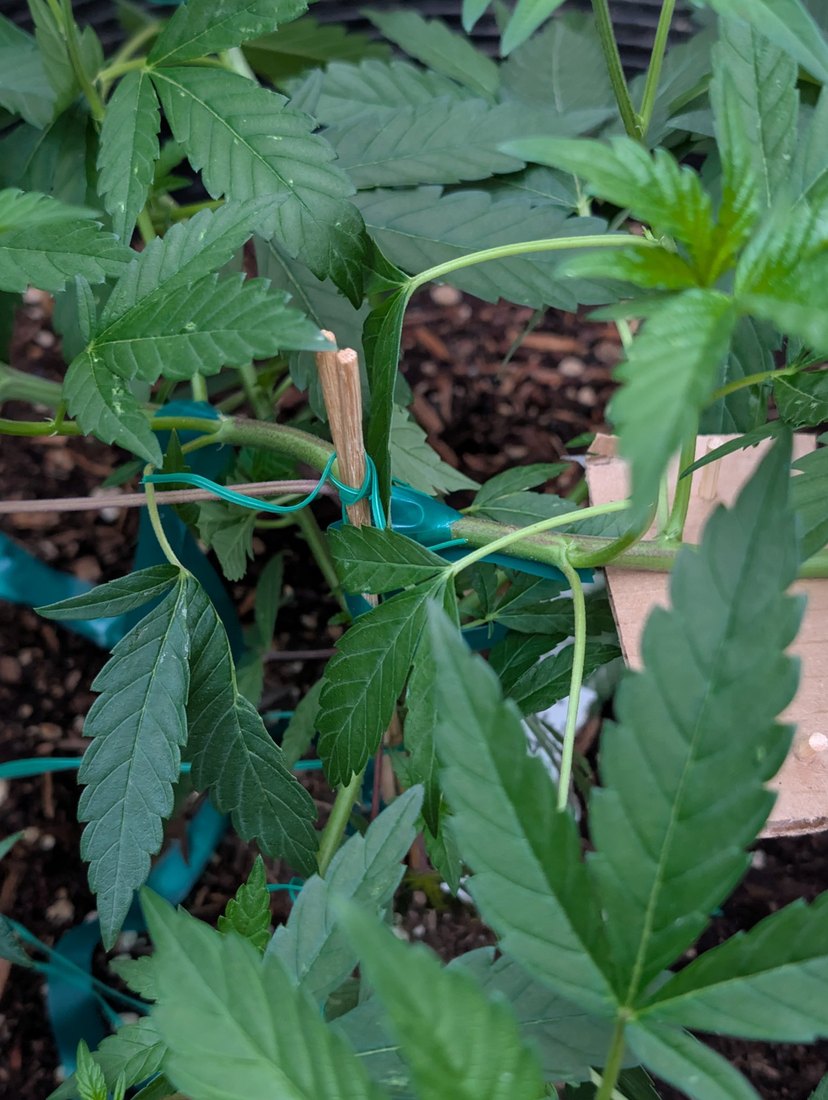
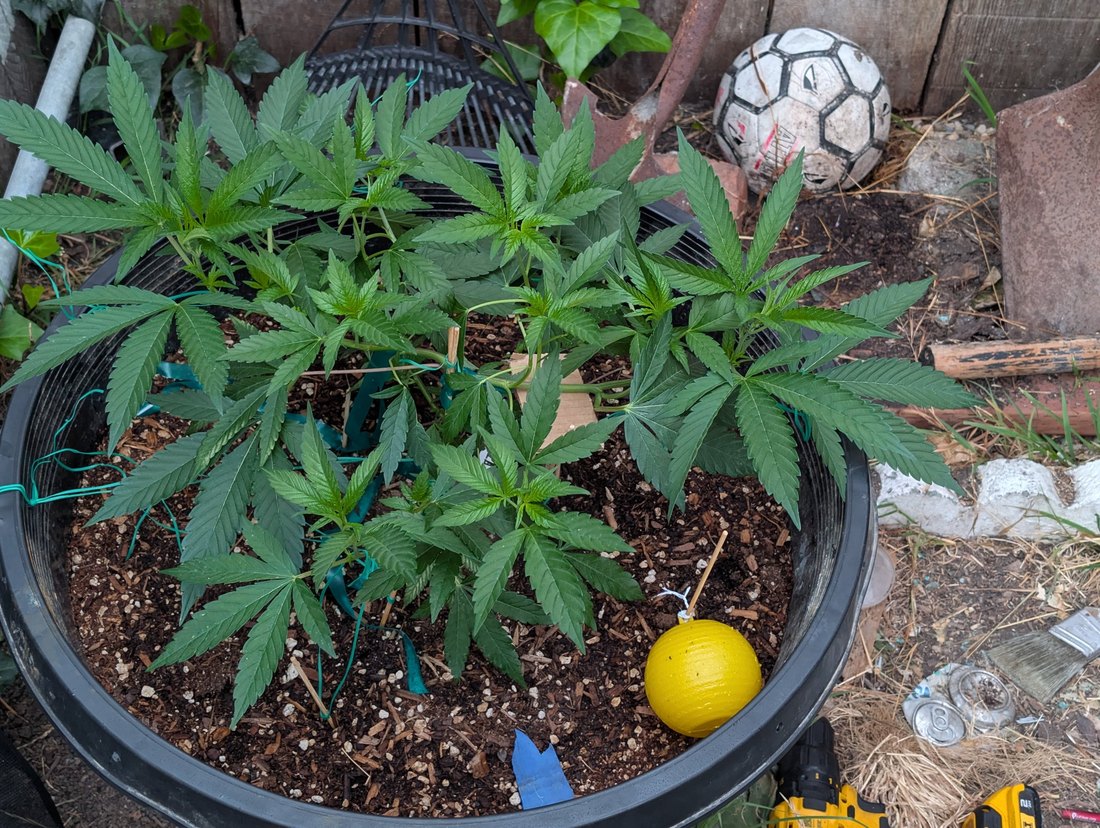
The plant survived because the grower restored vascular contact immediately. When a stem splits, the inner xylem (which carries water up) and phloem (which carries sugars down) are torn apart. If the tissues are pressed back together quickly, the plant can knit them back together through callusing, forming a protective, swollen, woody knuckle.
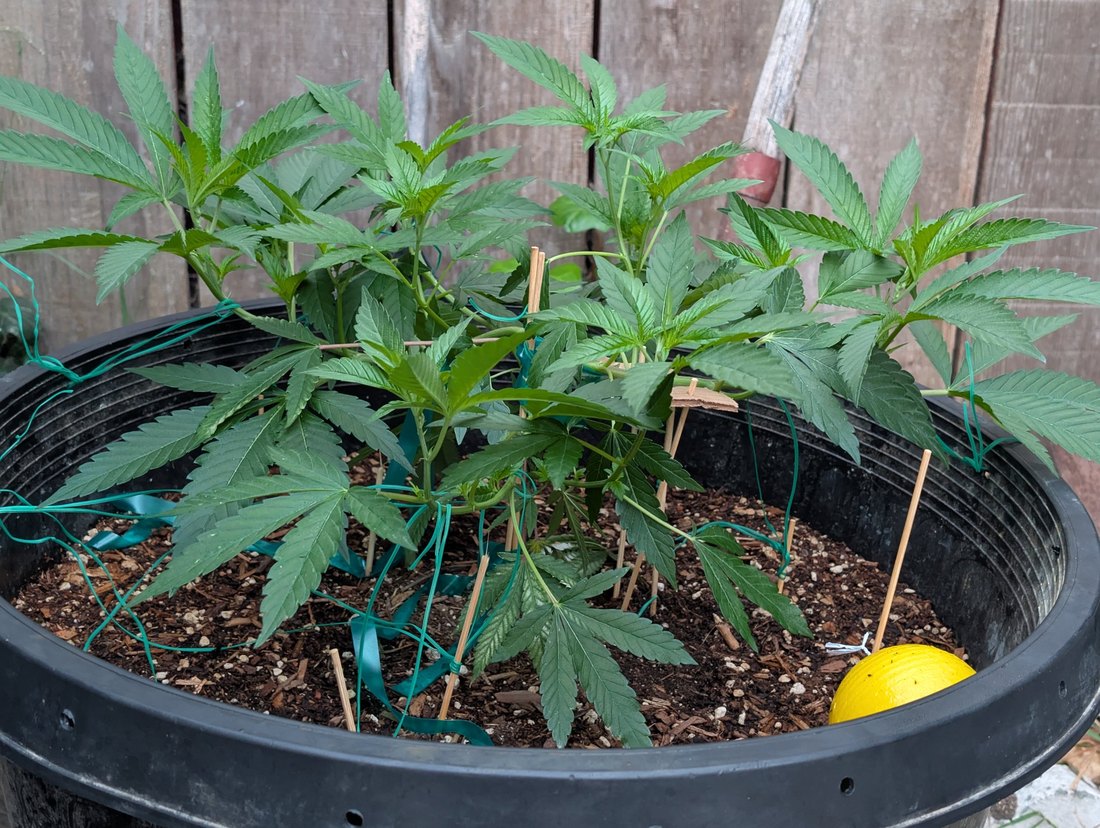
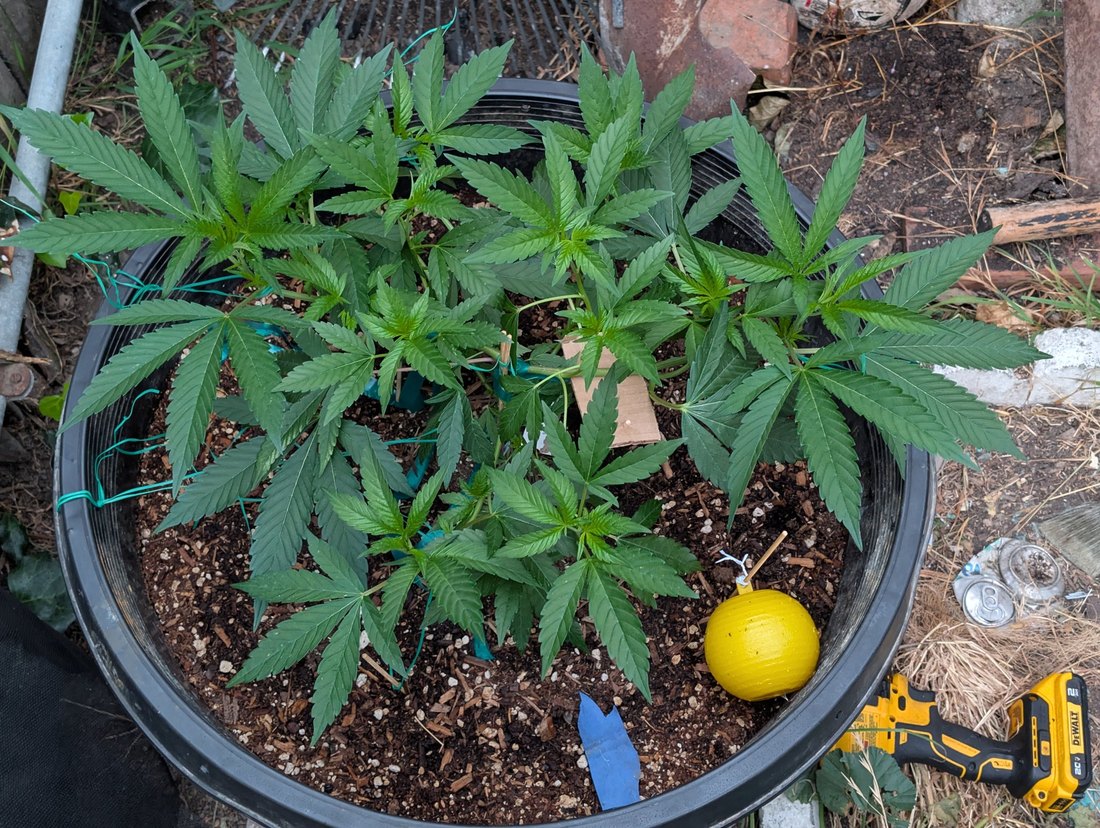
We knew the rescue was a total success because the leaves on the split branch stayed turgid and fully hydrated, showing no signs of vascular wilt. The plant's active "praying" posture and vibrant green color confirmed that the water highway was fully operational under the splint, and the local humidity did not lead to rot.
How to replicate it
- Bring the split halves back together immediately: Do not let the exposed inner tissue dry out or get dirty.
- Create a supportive backing: Use a sterile piece of cardboard, a wooden popsicle stick, or a plastic splint to support the weight of the branch and take pressure off the joint.
- Wrap the wound securely: Use garden tape, grafting tape, or even a soft zip-tie to hold the split shut. Wrap it firm enough to keep the tissues pressed together, but not so tight that it strangles future outer growth.
- Support the branches with tension: Run external soft ties (like green rubber training wire) to anchor the branches to stakes, ensuring wind or gravity cannot pull the split open again.
- Step back for 7-10 days: Do not adjust any LST ties, do not prune, and do not touch the healing area. The healing tissue is highly fragile and needs undisturbed rest to calcify.
Keep it going
- Support junctions before you pull: If you are going to pull branches horizontally, apply a loose support wrap around the main crotch first to prevent splitting.
- Train when the plant is thirsty: Pliable, slightly dehydrated stems bend much easier than turgid, freshly watered stems, which snap like celery.
- Work in the warmth of the afternoon: Stems are naturally more flexible during the warmest part of the day compared to stiff, cold mornings.
- Watch for the knuckle: Once the splinted area swells up into a thick, woody knot, you can safely remove the wraps, usually after 14-21 days.
Facing something similar? Start a free journal and I'll look at your plant: photos in, diagnosis out, 24/7.
Get a free diagnosis