
Holes in Flower Leaves: Caterpillar Damage vs Nutrient Deficiency
The situation
An outdoor grower noticed physical damage on their Purple Pomegranate hybrid, growing in massive 30-40 gallon coco pots. The weather was a beautiful, clear 72F with 49% relative humidity, but the leaves had a worrying look. The grower reached out, unsure if they had a pest issue or some other mystery causing eaten-looking leaves.
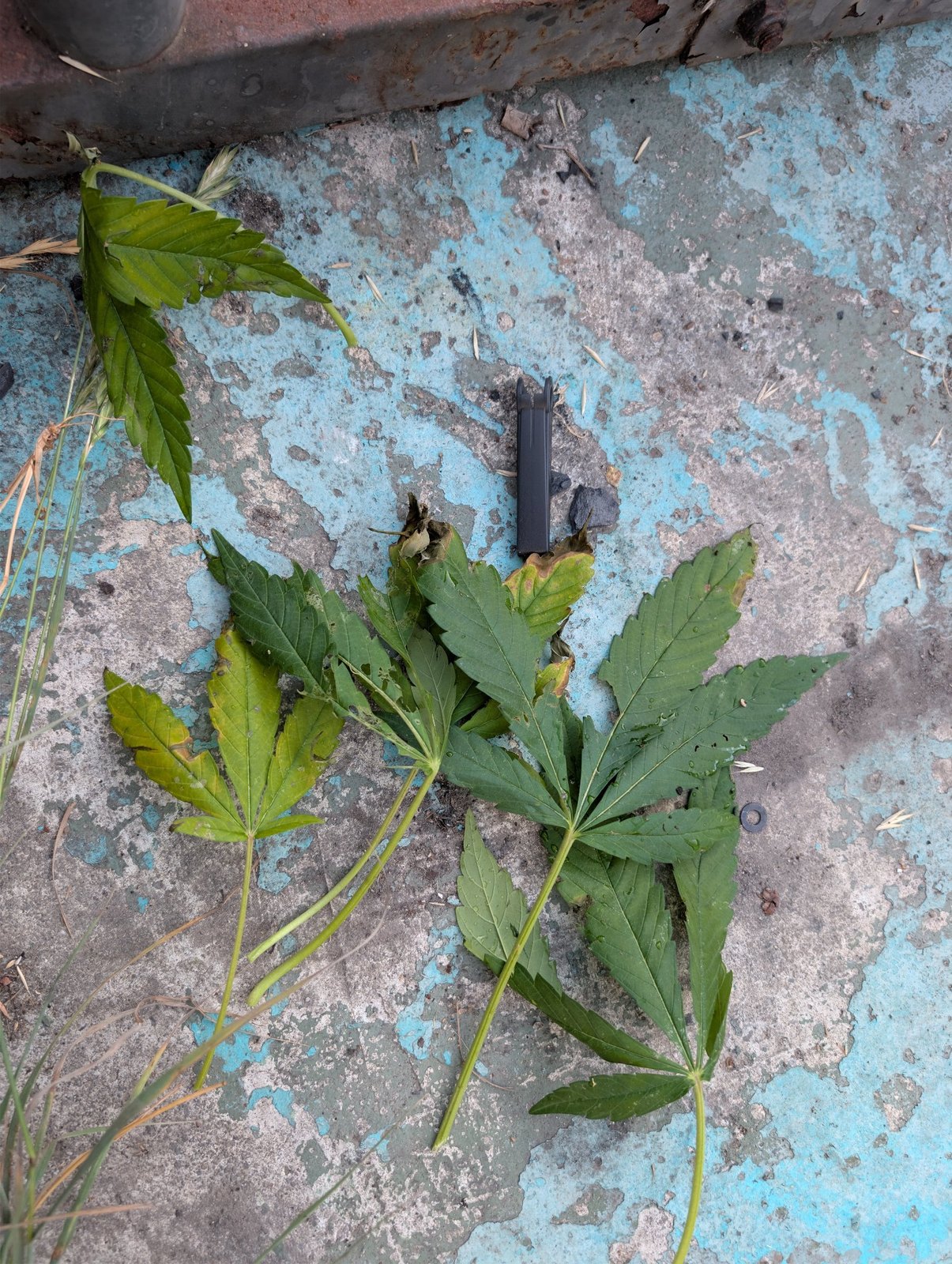
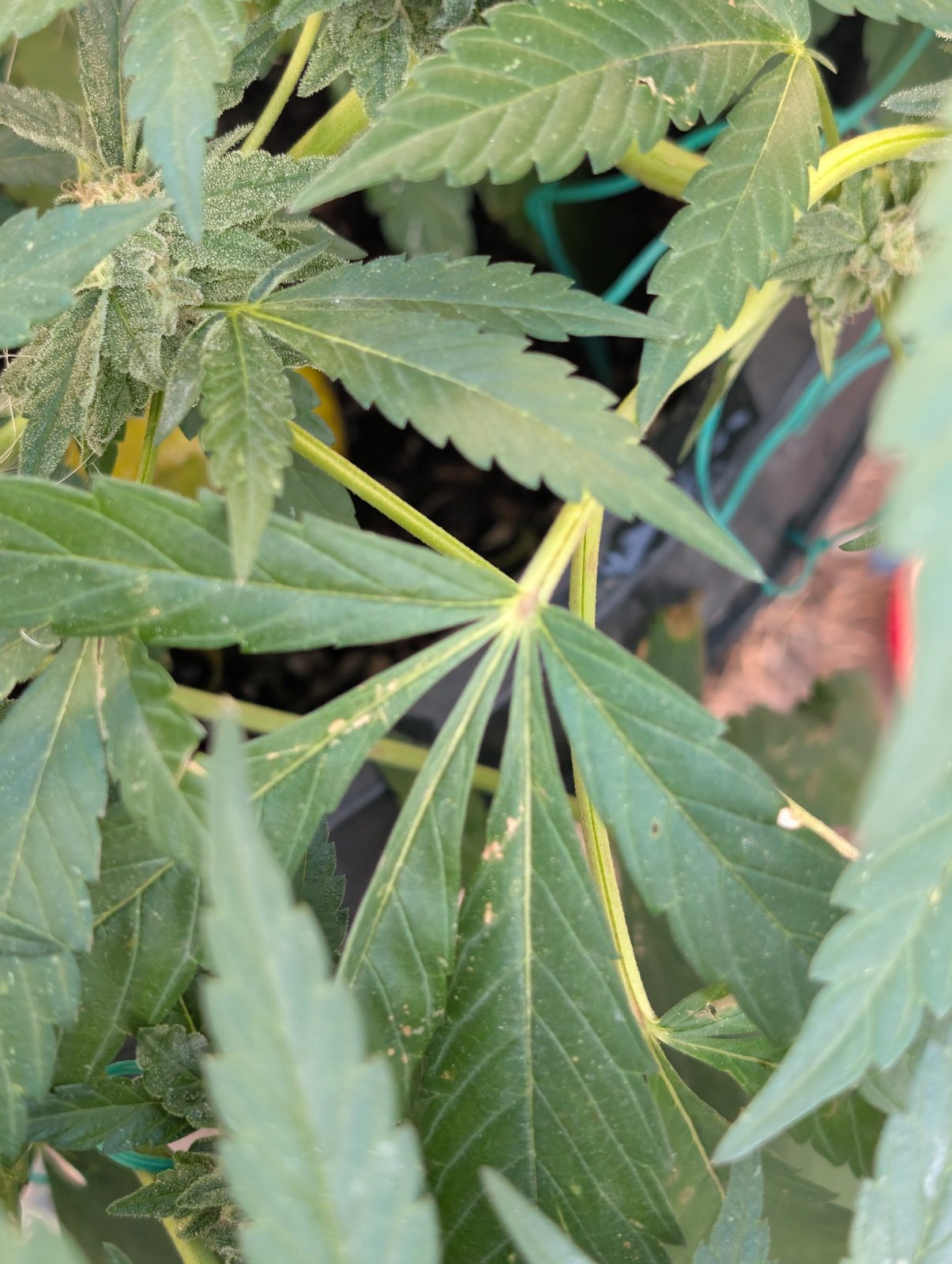
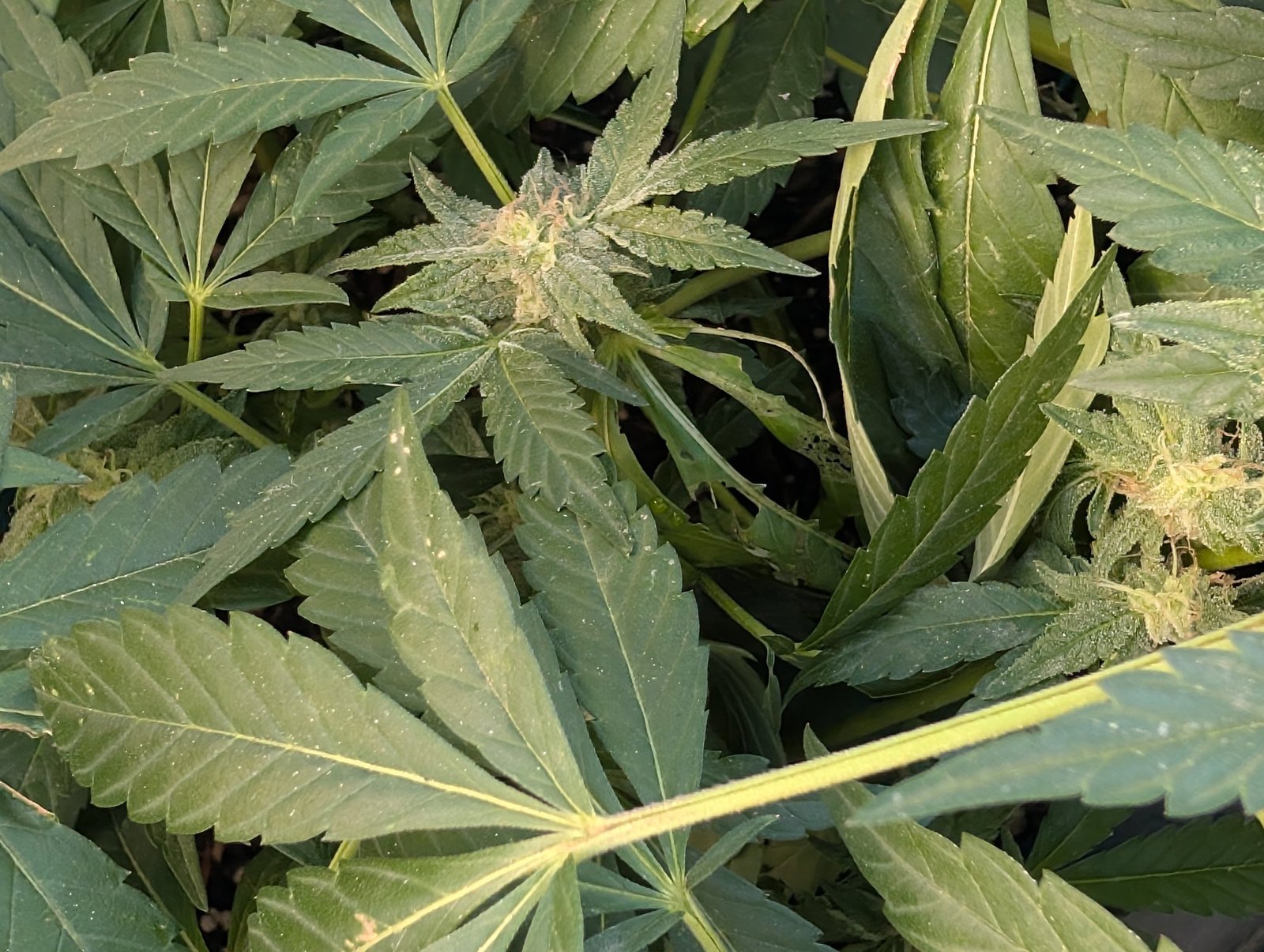
While the canopy showed a robust, green profile with frosty mid-flower buds and plenty of white pistils, several leaves had distinct chunks and clean, rounded holes eaten right through the middle. Some plucked lower leaves also showed yellowing and crispy brown edges, creating a confusing mix of symptoms.
The diagnosis
Let's look at the clues. First, we localize the symptoms. The yellowing is on the old, lower growth, which typically points to mobile nutrient mobilization or past uptake issues, like a temporary pH lock. But the physical chunks missing from both old and new leaves? That is not a nutrient deficiency. Nutrients do not bite.
This physical damage is classic chewing insect behavior, specifically caterpillars or cabbage loopers. The yellowing on the lower leaves is normal senescence (the plant naturally shedding old, shaded leaves), made slightly worse by past pH swings that the grower already dialed in. In mid-flower, we cannot ignore caterpillars, as they love to burrow into sweet, developing buds, leaving waste that triggers bud rot.
The solution
- Go on night patrol with a flashlight to hand-pick and remove caterpillars when they are most active.
- Apply Bacillus thuringiensis (BT), a natural, organic bacteria spray that safely targets caterpillars without harming beneficial bugs.
- Spray the BT thoroughly at dusk to avoid leaf burning from the sun, and avoid spraying the heavy flower clusters directly.
- Maintain your stable 6.3 pH watering routine to keep nutrient uptake smooth in your coco medium.
- Let the large coco pots dry down slightly between waterings to keep the root zone oxygenated.
How to avoid this
- Inspect the undersides of leaves weekly for tiny butterfly or moth eggs before they hatch.
- Deploy physical barriers like insect netting early in the season to prevent moths from laying eggs on your canopy.
- Keep the ground around your outdoor pots clear of weeds and debris where pests love to hide.
- Keep a close eye on the weather, as cool, damp mornings can slow down plant defenses and make them easier targets.
Facing something similar? Start a free journal and I'll look at your plant: photos in, diagnosis out, 24/7.
Get a free diagnosis