
Fungus Gnats in Large Outdoor Pots: The Dry-Down Cure
The situation
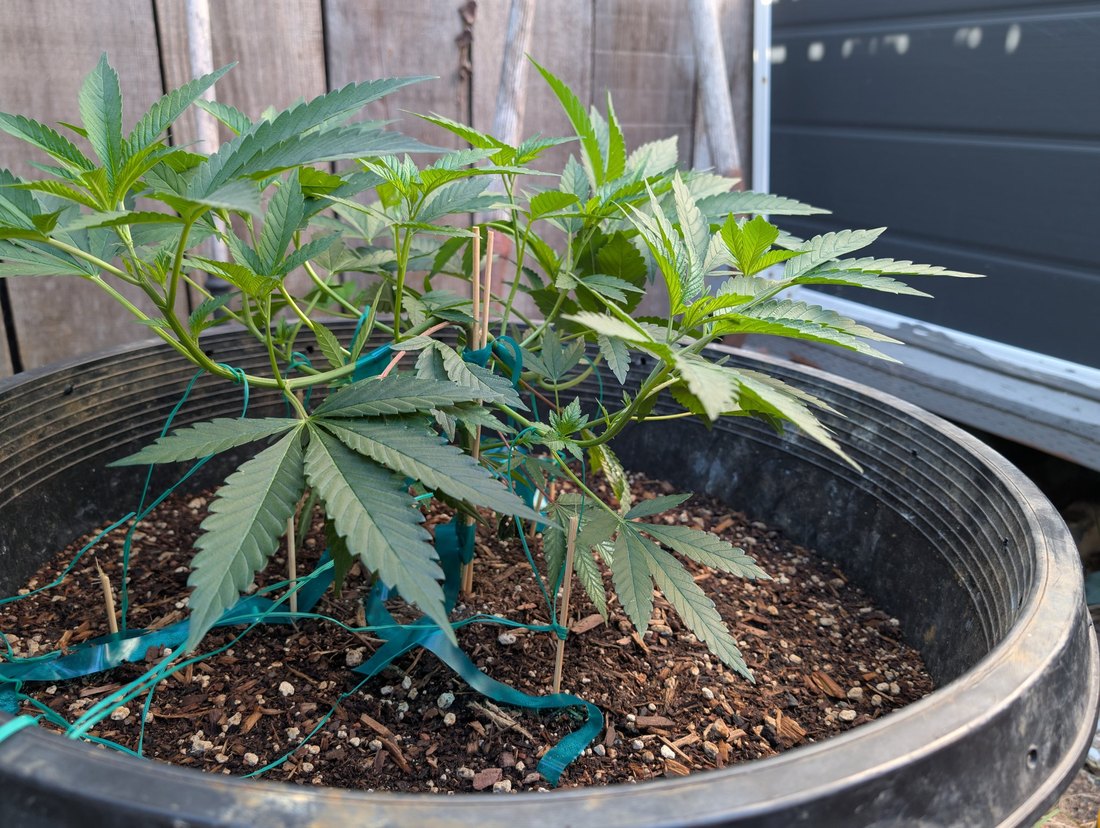
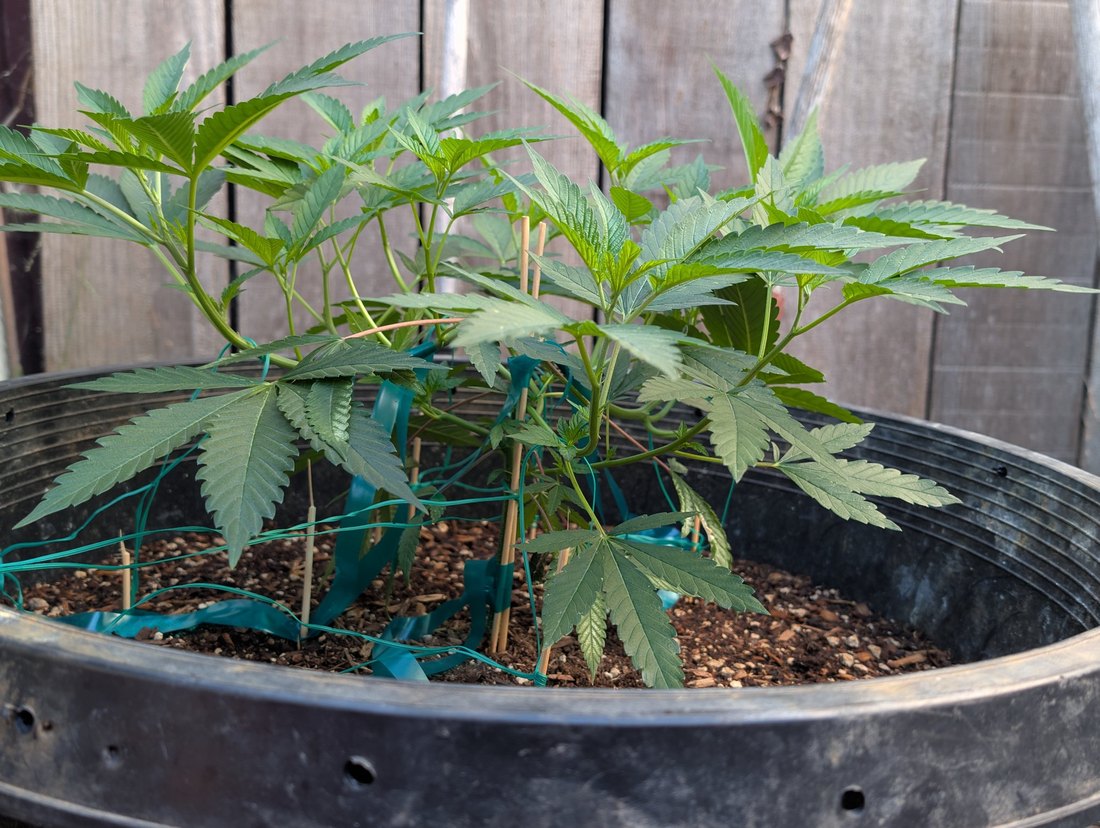
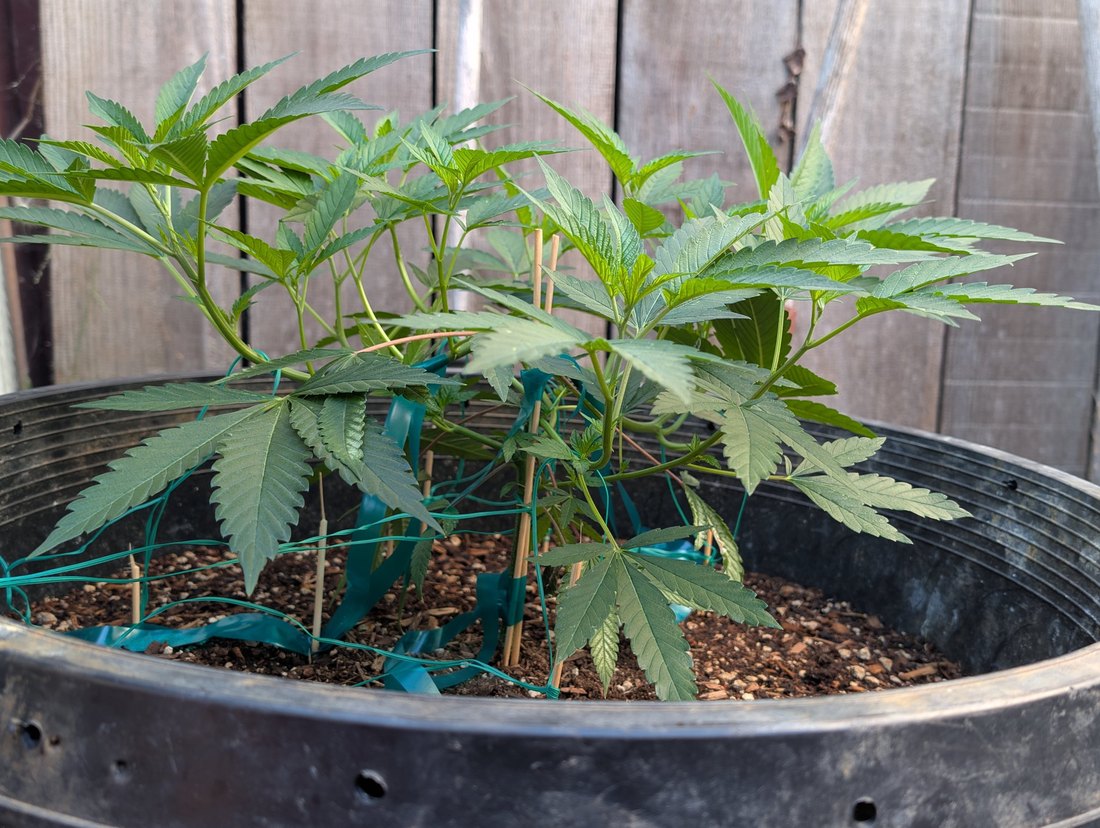
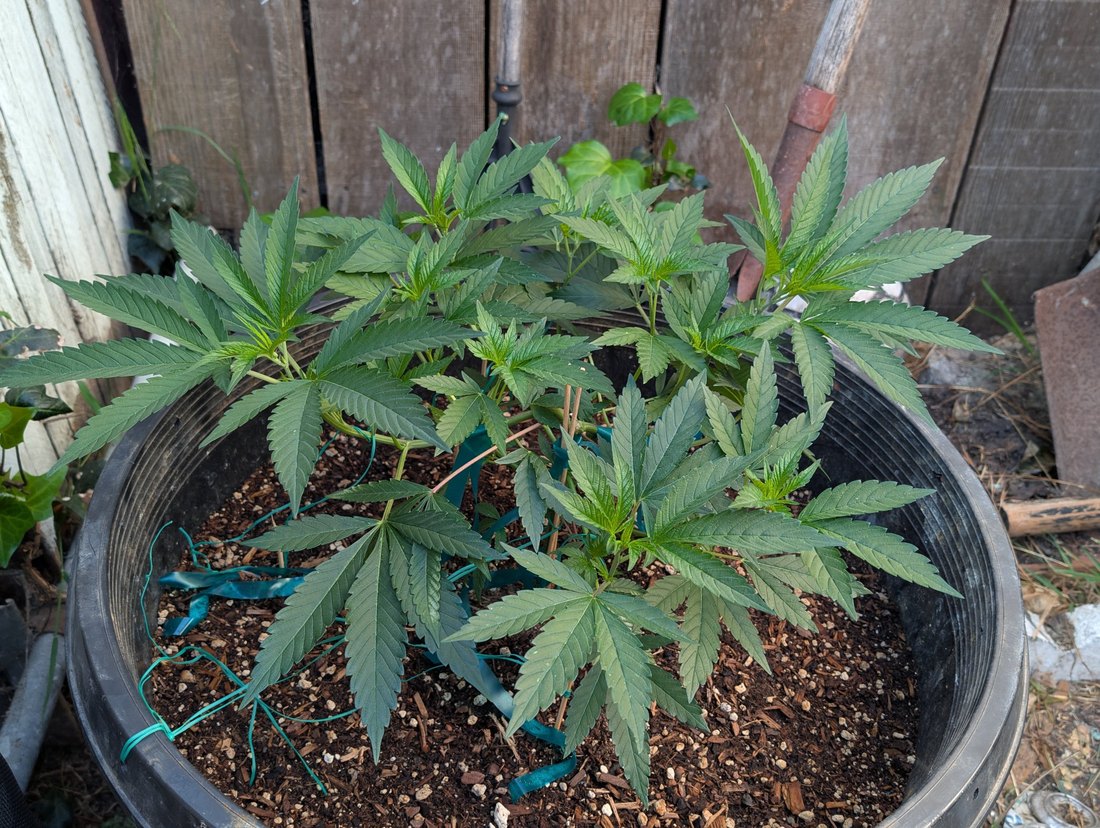
An outdoor grower running a beautiful Purple Pomegranate hybrid in a massive 30-40 gallon pot noticed small black flies hopping around the damp surface of the medium. The plant itself was in day 30 of vegetative growth, radiating health with perfectly level trained branches and great vigor.
The outdoor conditions that day were 66F with a high humidity of 72 percent. While the plant was praying and showing great water uptake, the massive volume of the pot combined with cool, damp mornings kept the top layer of the medium constantly wet. This created the perfect breeding ground for these unwanted visitors.
The diagnosis
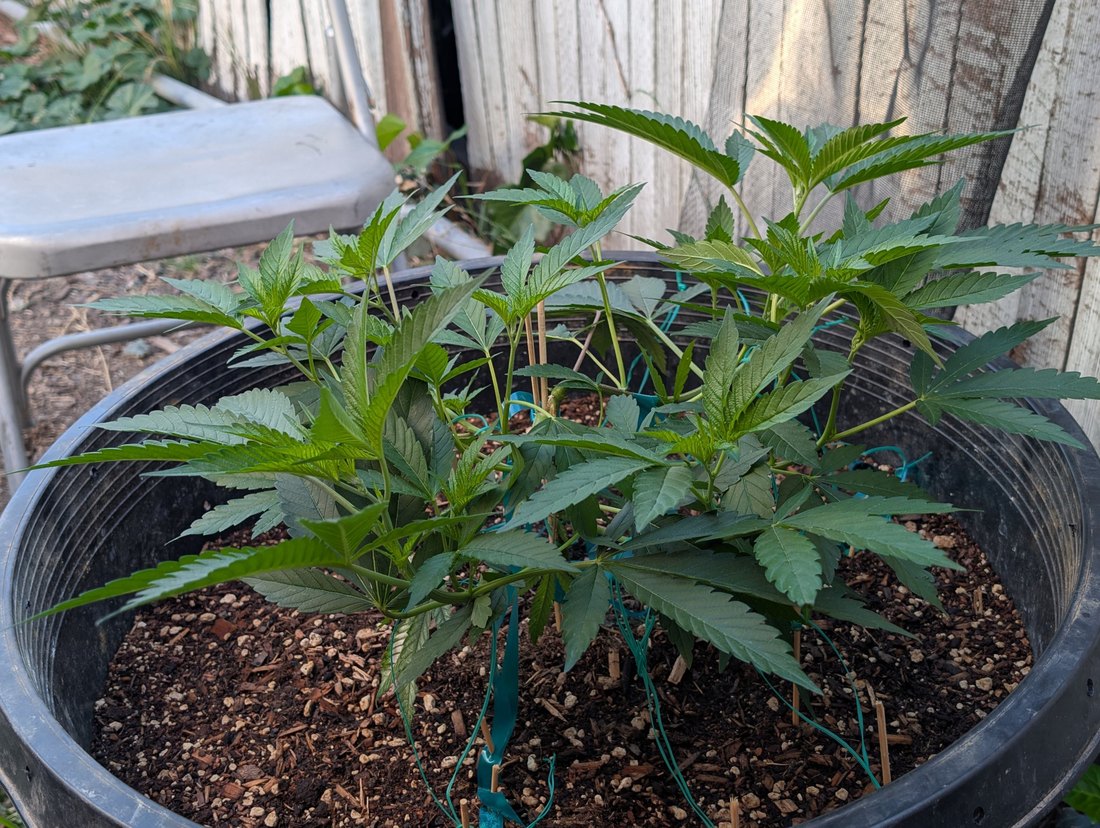
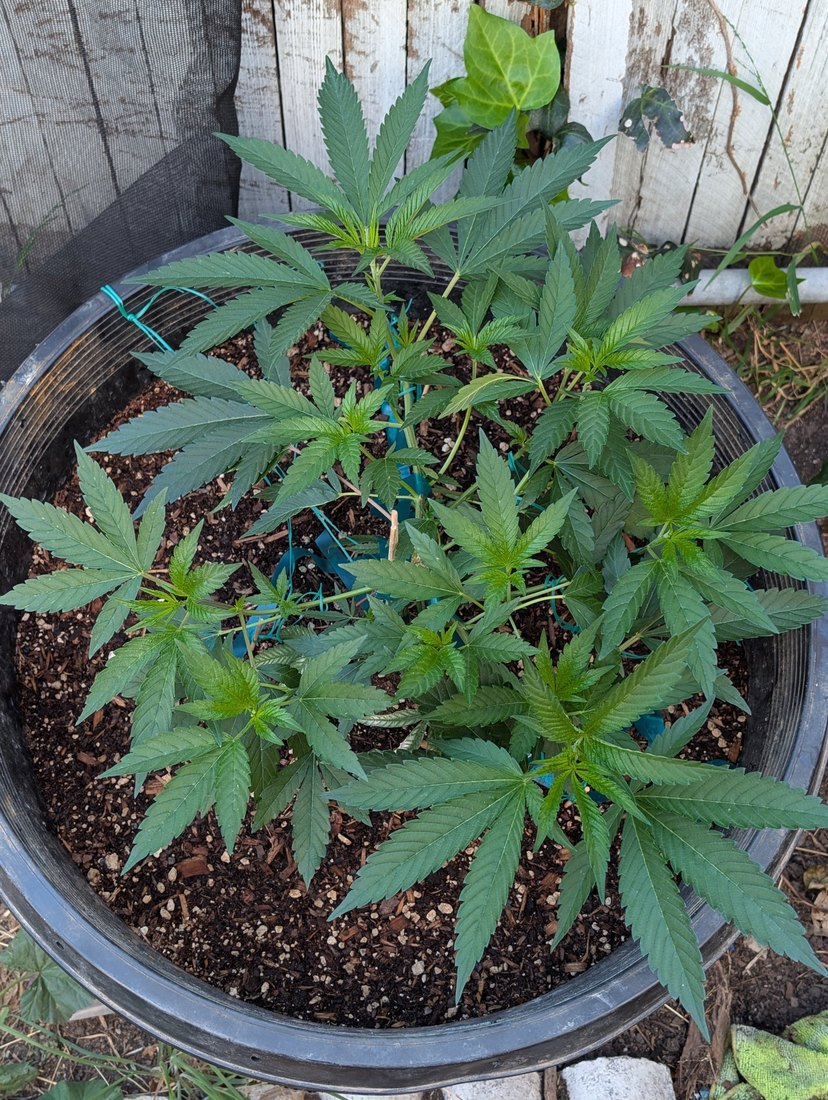
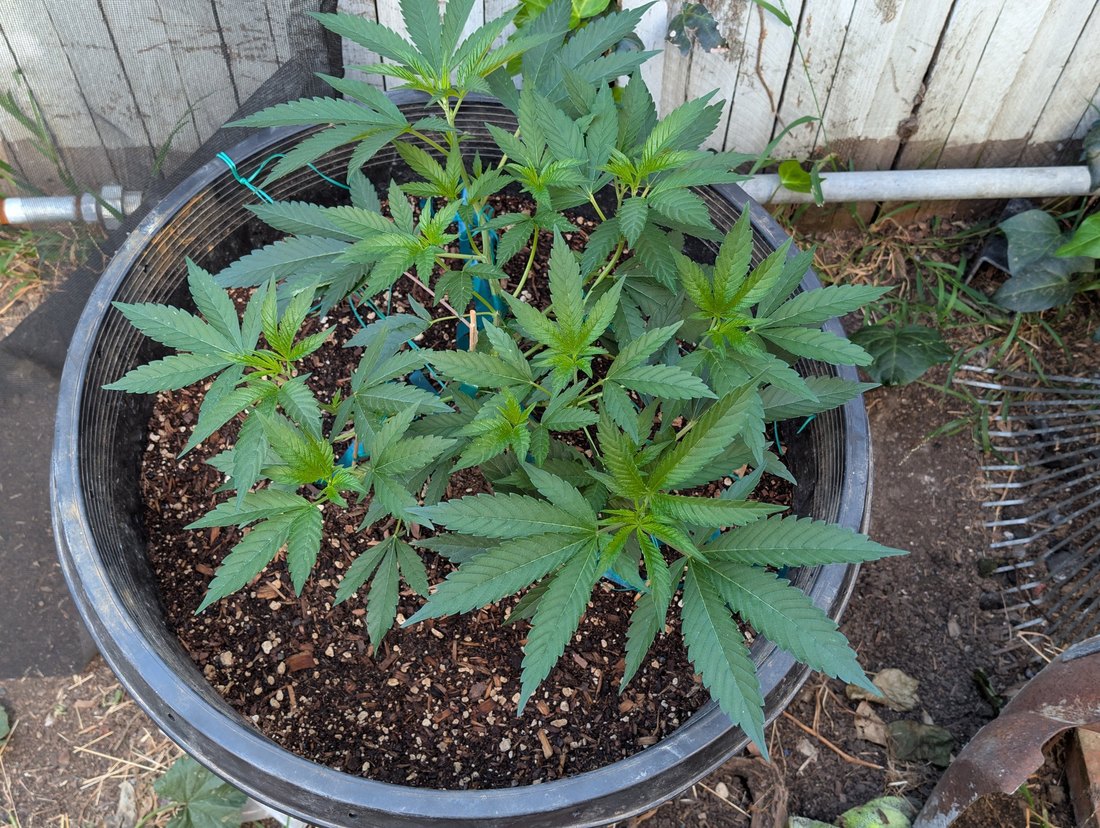
These little hoppers are sciarid flies, commonly known as fungus gnats. They are attracted to wet, decaying organic matter and fungus in the top layer of your medium. While the adult flies are mostly just an annoyance, their microscopic larvae live underground and chew on your plant's delicate root hairs, which can slow down growth and invite root rot pathogens.
Because the plant was showing excellent leaf posture and high turgor (water pressure), we ruled out systemic root rot or nutrient lockout. The roots were still functioning beautifully. The issue was strictly a surface-level pest explosion caused by a lack of dry-down cycles in a very large container.
The solution
- Initiate a strict 3-4 day dry-down. Do not water until the top 2-3 inches of the medium are bone-dry to the touch and the pot feels noticeably lighter.
- Place yellow sticky traps flat on the soil surface. This intercepts the adult flies before they can lay hundreds of eggs in the wet medium.
- Utilize the natural weather. Let the warm 78F daytime sun evaporate the surface moisture, while the cool 58F nights naturally slow down gnat reproduction.
- Avoid any insecticide flushes. At this stage, physical drying is highly effective and preserves the beneficial biology in your root zone.
How to avoid this
- Always water based on pot weight, not a calendar schedule, especially when using massive 30-40 gallon containers.
- Mulch the top layer of your pots with a 1 inch layer of clean sand, perlite, or rice hulls to create a dry barrier that gnats cannot penetrate.
- Use biological controls like Bacillus thuringiensis israelensis (BTI) or beneficial nematodes in your regular watering routine to eat gnat larvae before they hatch.
- Ensure good airflow across the top of the pots to speed up surface evaporation and prevent adult gnats from landing.
Facing something similar? Start a free journal and I'll look at your plant: photos in, diagnosis out, 24/7.
Get a free diagnosis