
Flat Canopy Win: Shaping an Outdoor Giant in Cool, Humid Weather
The setup
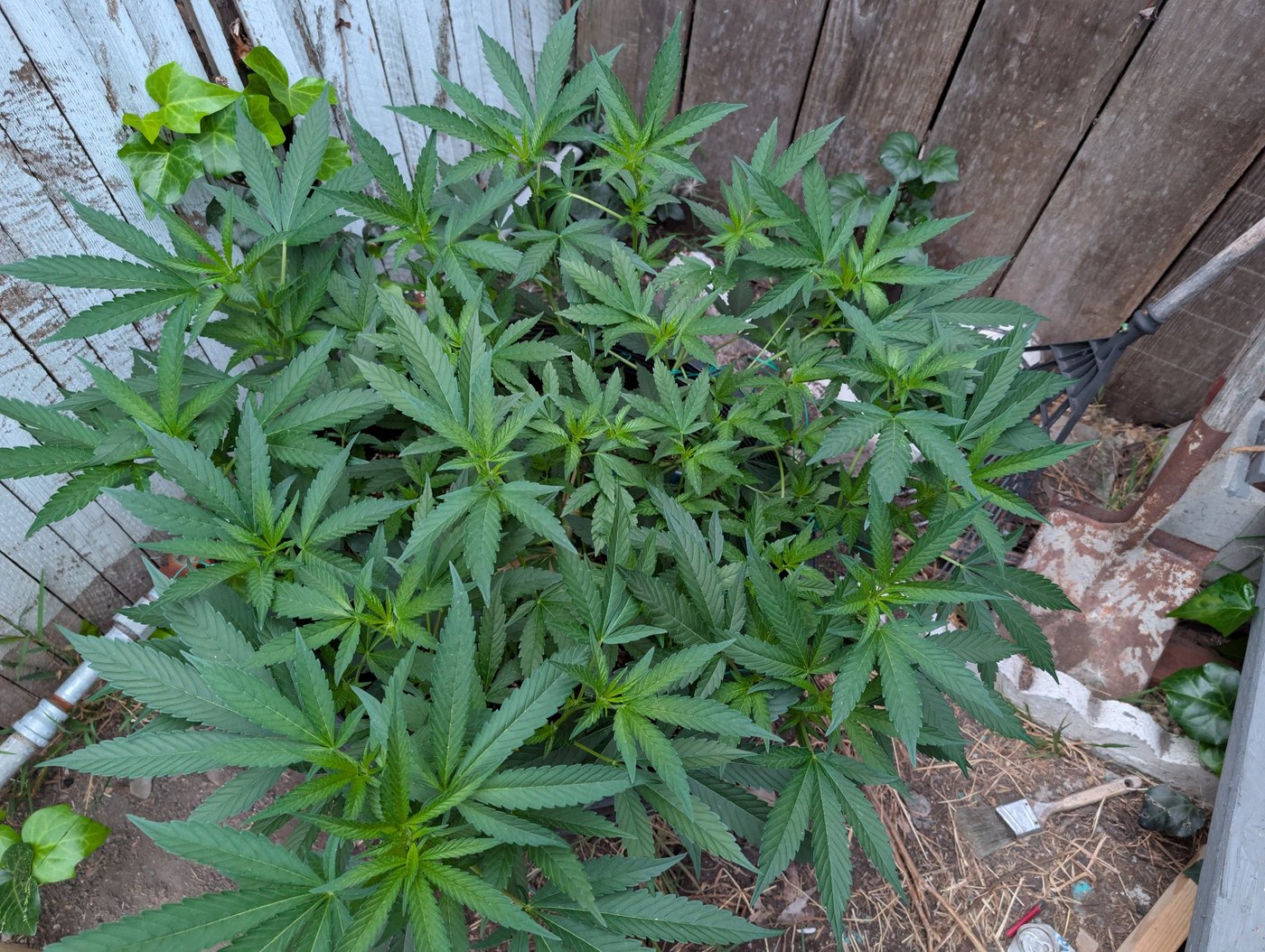
Our grower is managing a photoperiod hybrid (Purple Pomegranate) outdoors in a massive 30-40 gallon container of coco. The plant is currently on Day 49 of its vegetative stage, which is the growth phase when the plant focuses on building leaves and stems.
The weather that day was cool and damp: 58°F (14.4°C) with a high relative humidity of 86% under partly cloudy skies. Cool, moist mornings slow down how fast water evaporates from the medium and how fast the plant drinks. Despite these conditions and a recovery from past pH issues, the plant is a lush, uniform green with a wide, open canopy.
Why it worked
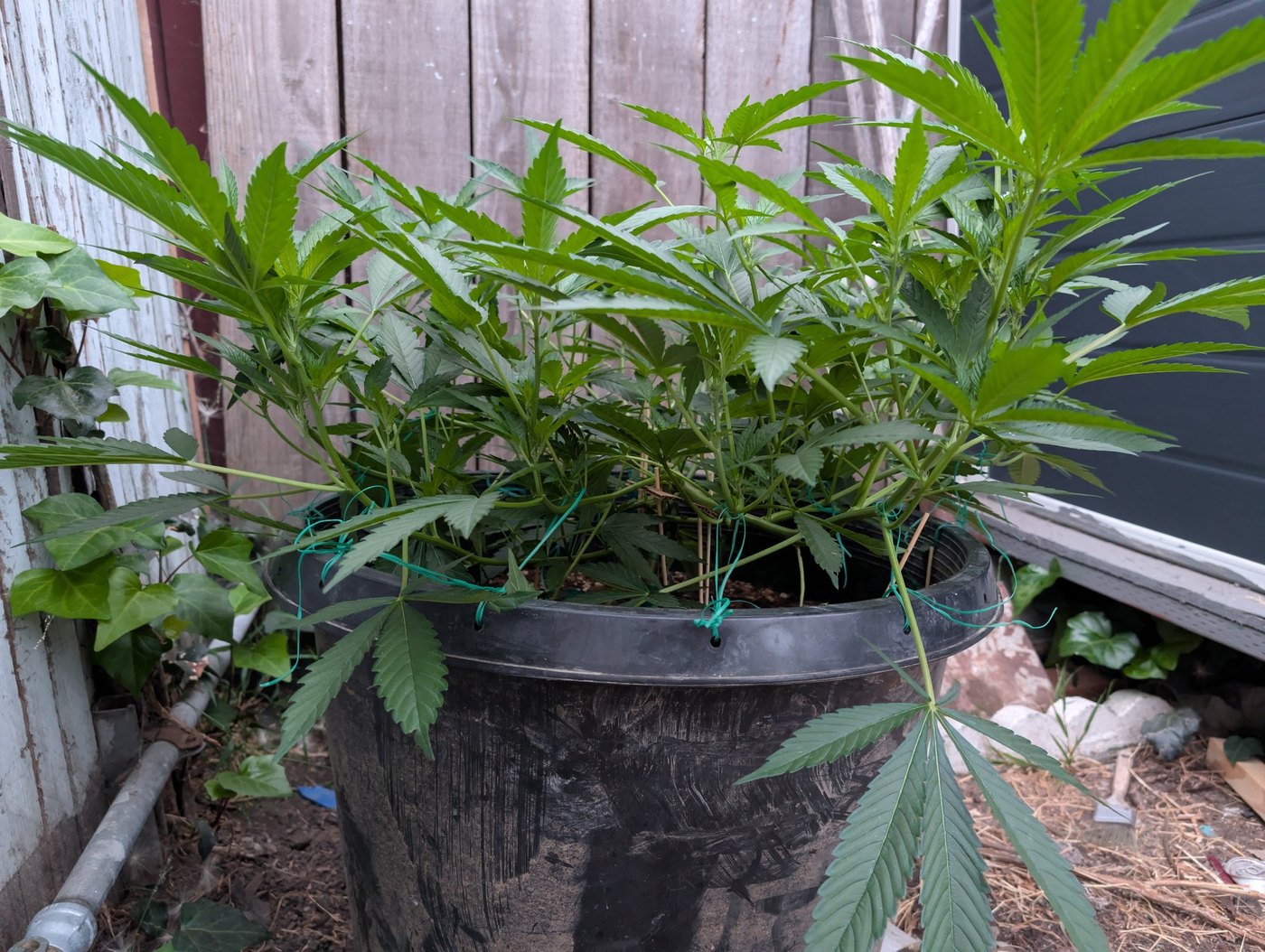
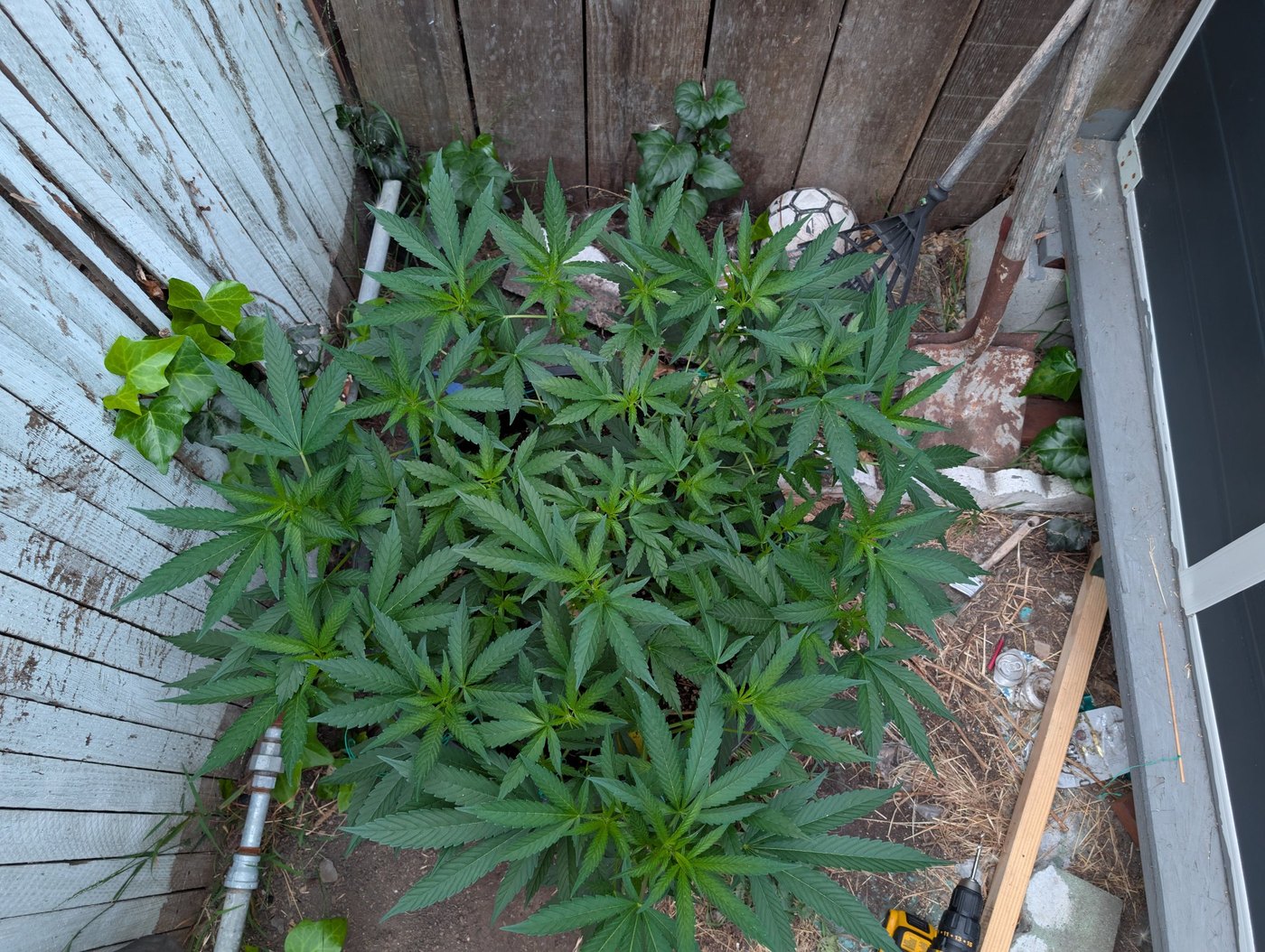
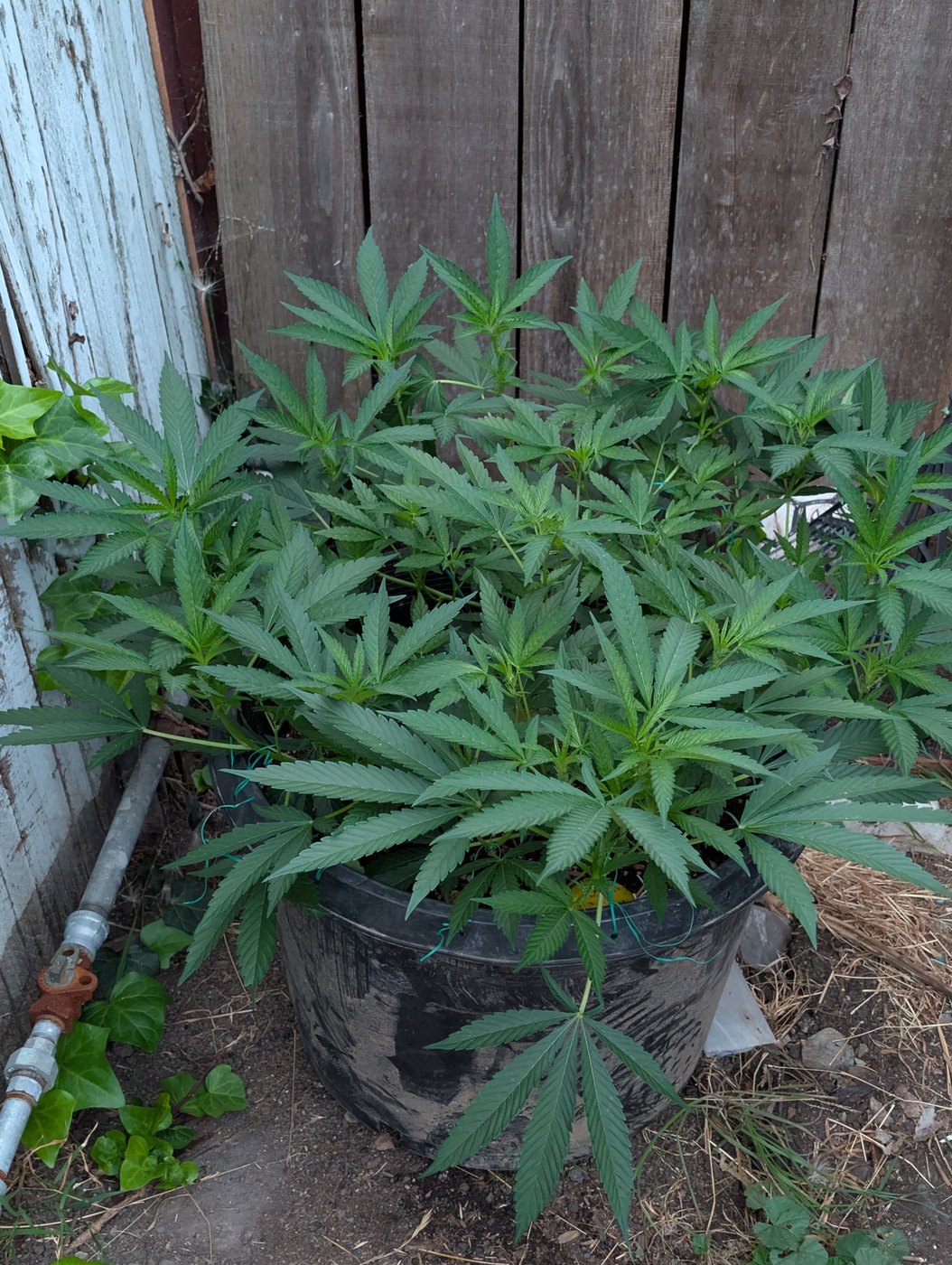
This layout is a textbook win for low-stress training (LST) and smart root-zone management. The grower used green wire ties anchored to the pot rim to gently pull the main branches down and outward. This technique breaks apical dominance, which is the plant's natural urge to grow like a tall Christmas tree, and signals the lower branches to rise up, creating a flat table of growth.
Second, the grower avoided the classic trap of overwatering in cool weather. At 58°F and 86% RH, a plant transpires (sweats out water) very slowly. By waiting for a proper dry-down (letting the top 3 inches of coco dry completely before watering again), they kept vital oxygen in the root zone, preventing root rot and nutrient lockout. The rich, even green color across both old and new leaves confirms that nutrients are moving freely and the root system is thriving.
How to replicate it
- Start training early: Begin bending branches when they are young and pliable, using soft plant wire ties secured to the pot rim.
- Pull outward, not just down: Route branches away from the center to expose the inner nodes to direct sunlight.
- Read the weather, not the calendar: In cool conditions (below 60°F), extend the time between waterings to let the medium dry down.
- Check by feel: Gently insert your finger 3 inches into the medium; do not water if you still feel cool dampness.
- Watch the neighborhood: Keep nearby wild vegetation (like ivy) cleared or closely monitored, as it acts as a launchpad for pests like spider mites and aphids.
Keep it going
- Prepare for the stretch: As the plant transitions to flower, expect branches to double in length, requiring additional support or cage netting.
- Monitor pre-flowers: Watch the node joints for the first white pistils, signaling the start of the pre-flower transition.
- Dial in pH: Keep your input water pH between 5.8-6.2 for coco to ensure optimal absorption of calcium and magnesium.
- Transition nutrients gradually: Slowly taper off high-nitrogen vegetative feeds and introduce phosphorus and potassium as true buds form.
Facing something similar? Start a free journal and I'll look at your plant: photos in, diagnosis out, 24/7.
Get a free diagnosis