
Overcoming Outdoor Growth Stalls with LST and Dry-Down Cycles
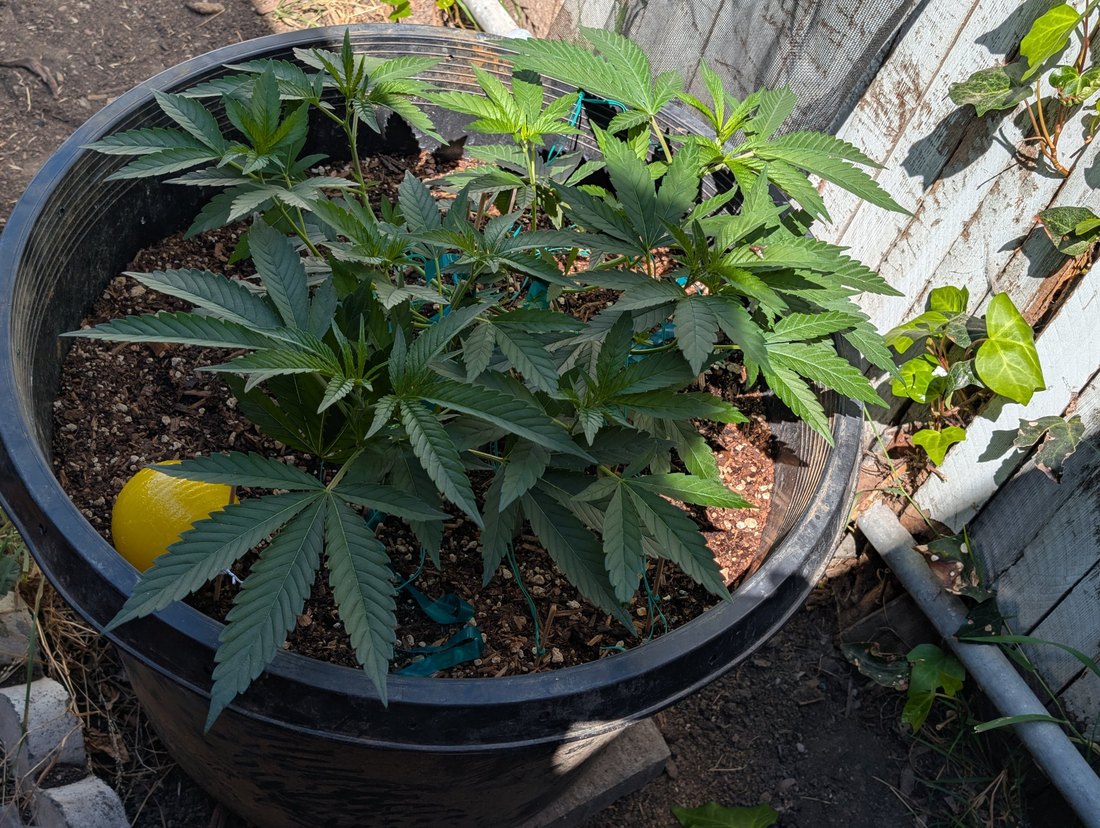
The setup
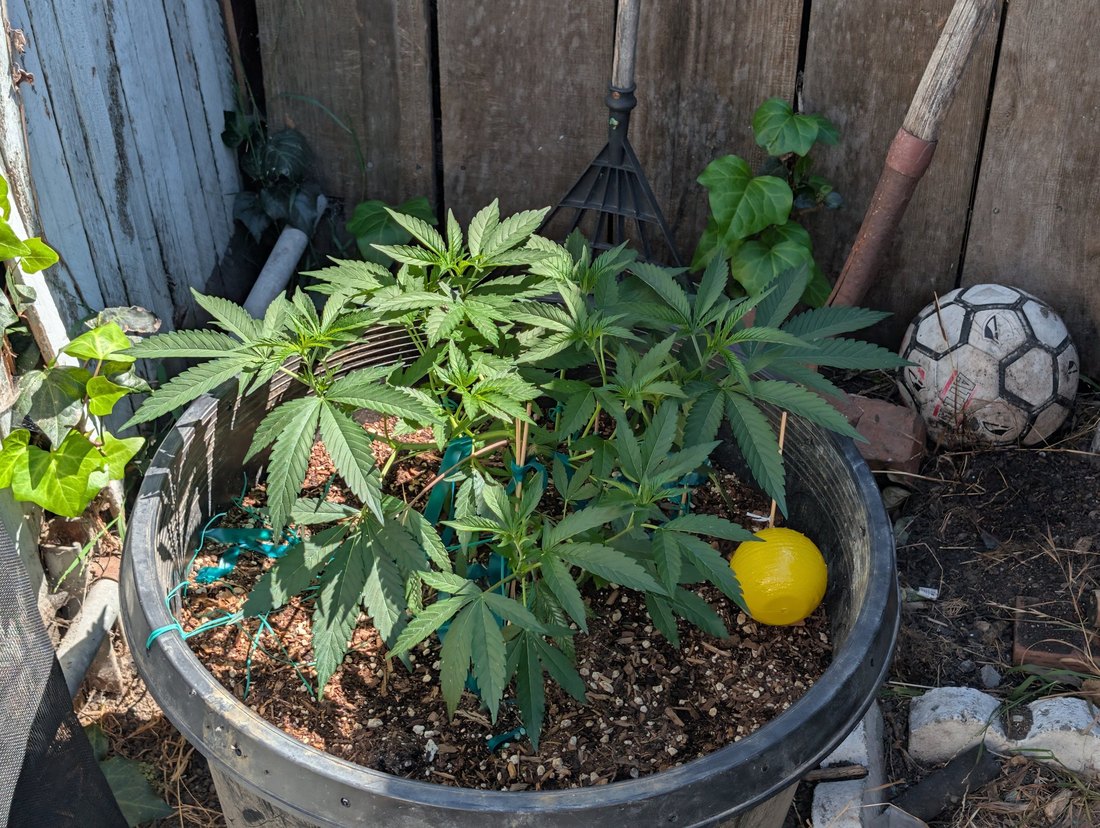
Our grower was managing a photoperiod hybrid in the vegetative stage, sitting outdoors in a massive 30-40 gallon coco coir pot. The plant was recovering from early pH fluctuations that had caused a temporary nutrient lockout, while a rising population of fungus gnats was taking advantage of the damp, giant volume of coco.
The grower needed to kickstart vegetative growth, get control of the canopy shape, and eliminate the pests without relying on heavy chemical pesticides. They corrected their watering pH to 6.3-6.4 and began pulling down the dominant branches to see if the plant could recover its vigor.
Why it worked
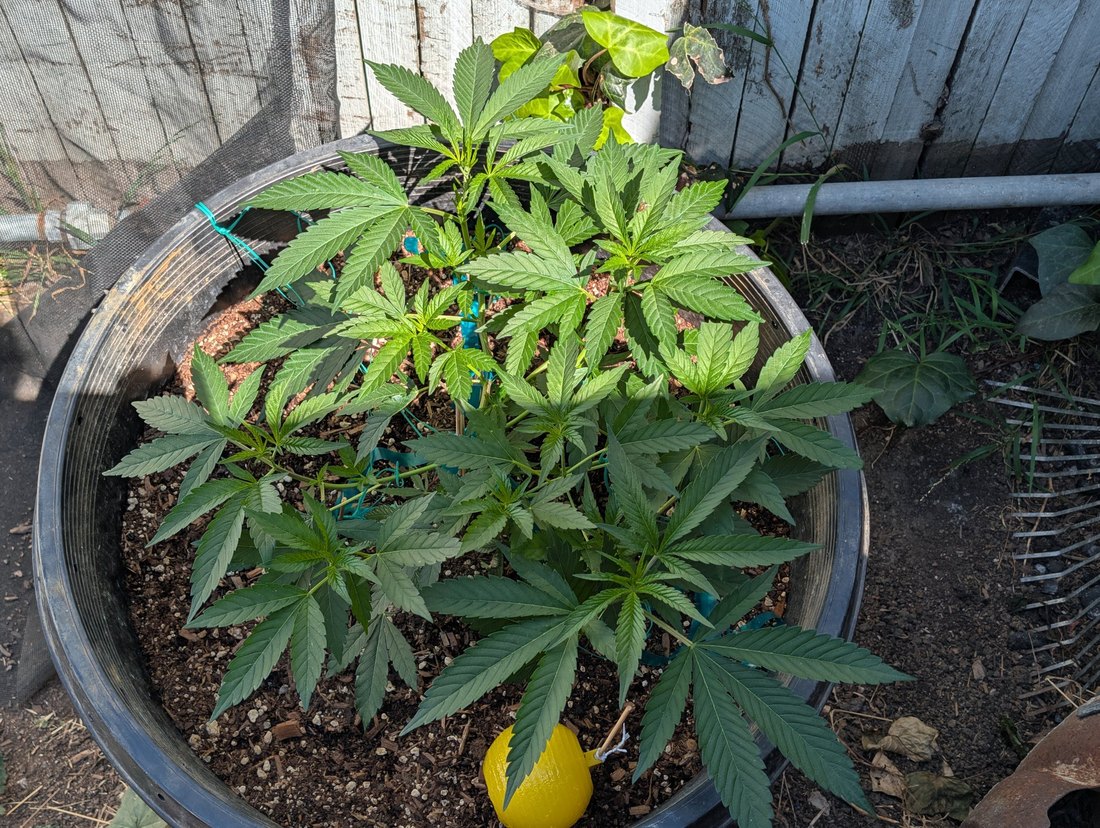
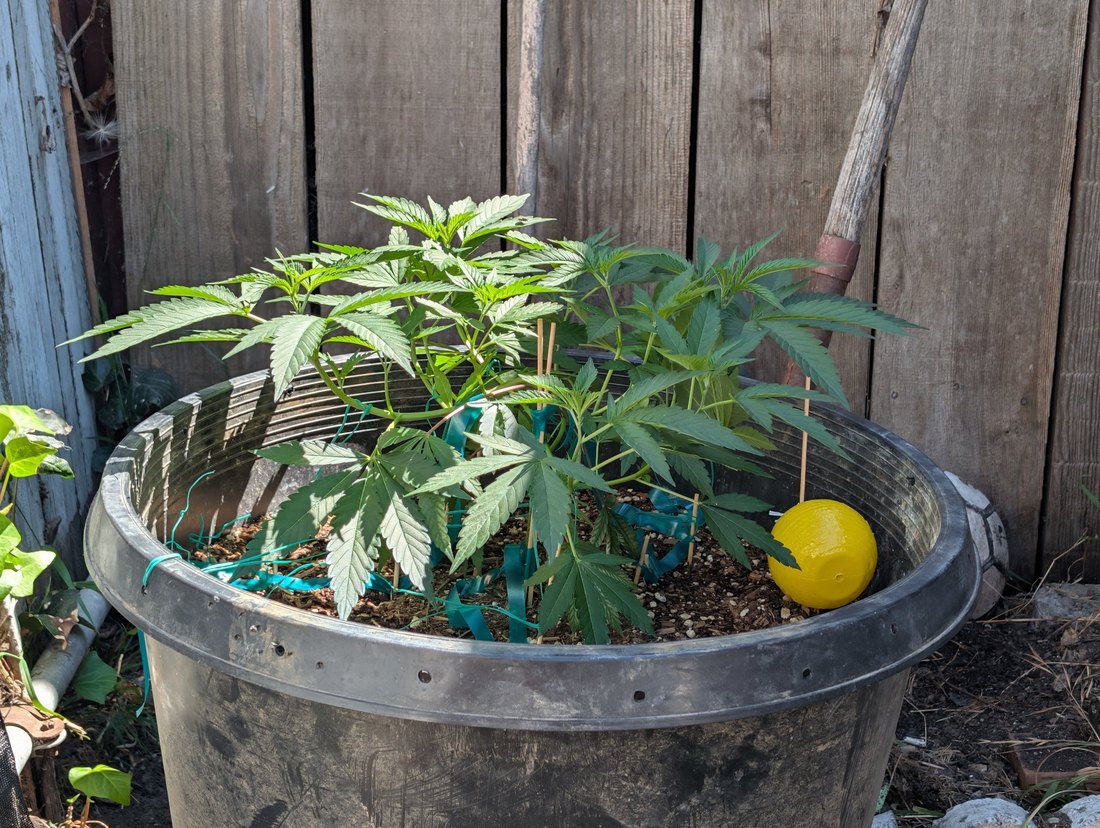
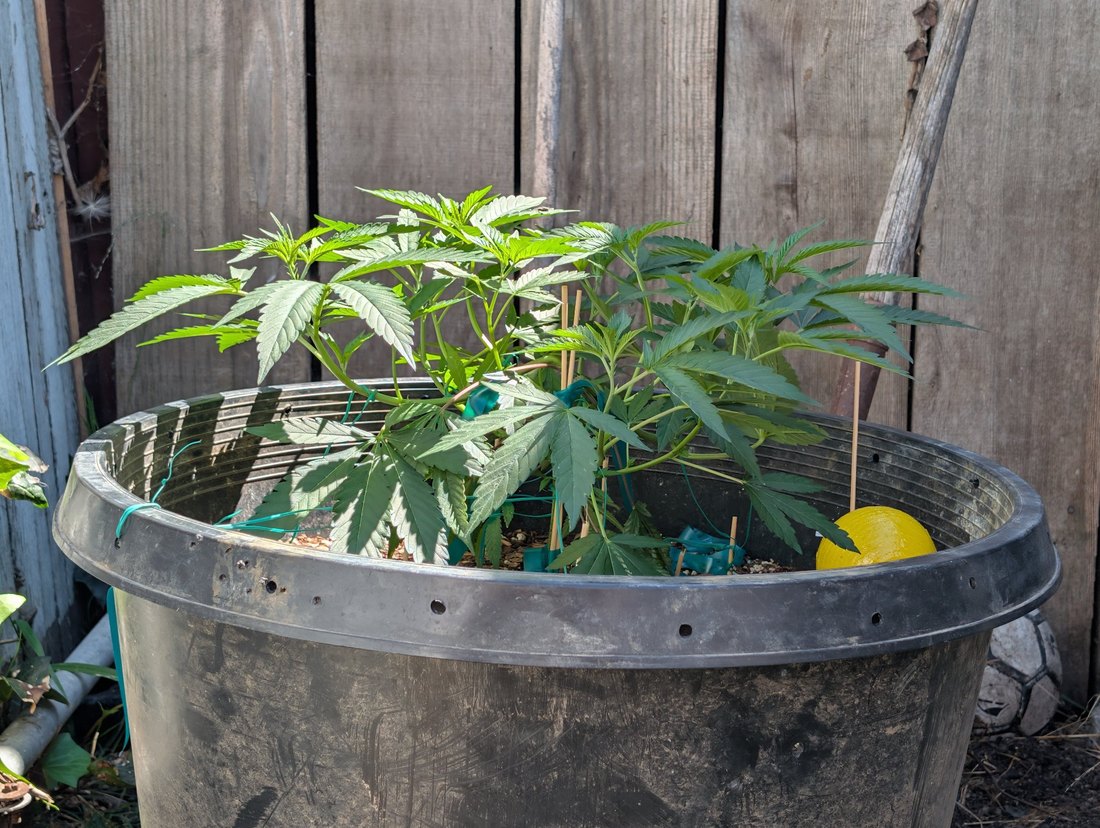
The recovery was a massive success because the grower combined structural training with a critical shift in rhizosphere management. Pulling the main stem down horizontally broke apical dominance, redistributing growth hormones (auxins) evenly across the plant. This sent a rush of energy to the lower nodes, turning what would have been a single tall stalk into a wide, flat table of green.
At the same time, the root zone received a much-needed correction. In a massive 30-40 gallon container, coco coir holds a huge volume of water. By allowing a strict 2-3 day dry-down cycle, the grower starved the fungus gnat larvae of the moisture they need to survive in the top layer of coco. The corrected pH of 6.3-6.4 then allowed the plant to immediately absorb the nutrients it needed to fuel its explosive new lateral growth.
How to replicate it
- Secure the main stem early when it is still pliable (around 4-6 nodes) using soft garden ties and anchor stakes to pull it parallel to the ground.
- Allow the top 2-3 inches of your medium to dry out completely between waterings to naturally disrupt the fungus gnat life cycle.
- Calibrate your liquid feeds to a pH of 6.3-6.4 for outdoor coco grows to maximize nutrient availability during the vegetative stretch.
- Hang yellow sticky traps close to the surface of the medium to capture adult gnats before they can lay eggs in the topsoil.
Keep it going
- Avoid watering on a fixed calendar schedule (always feel the weight of the pot or check the top layer of medium before feeding).
- Monitor new vegetative shoots daily as they reach for the sun, adjusting soft ties weekly to maintain a uniform canopy height.
- Keep a close eye on runoff pH and EC to catch salt buildup before it causes a nutrient lockout.
- Use a thin top-dress layer of perlite or gnat-barrier sand if pest pressure returns to physically block insects from the coco.
Facing something similar? Start a free journal and I'll look at your plant: photos in, diagnosis out, 24/7.
Get a free diagnosis