
Transitioning to Early Flower Outdoors: When to Hold the Nutes
The setup
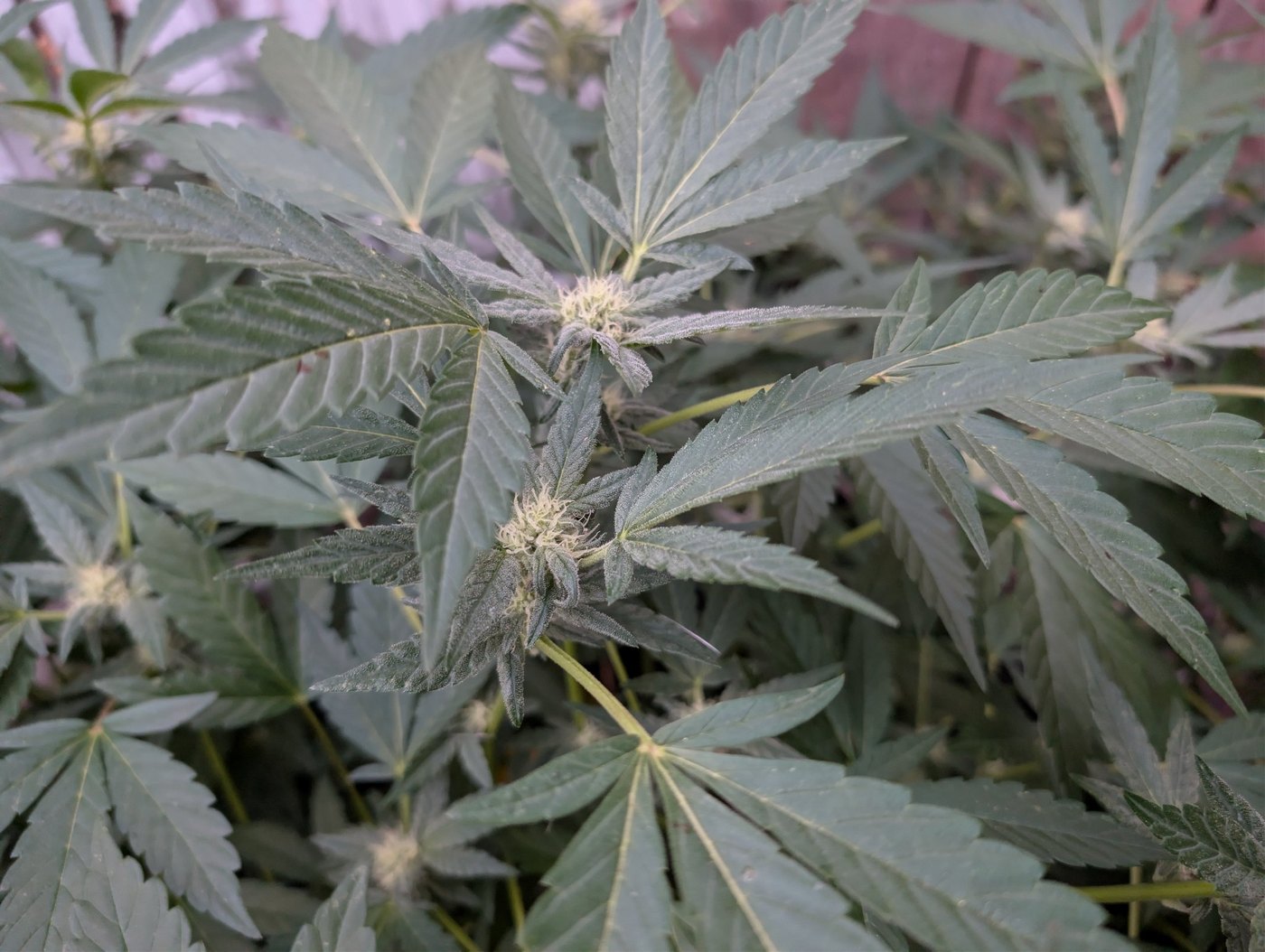
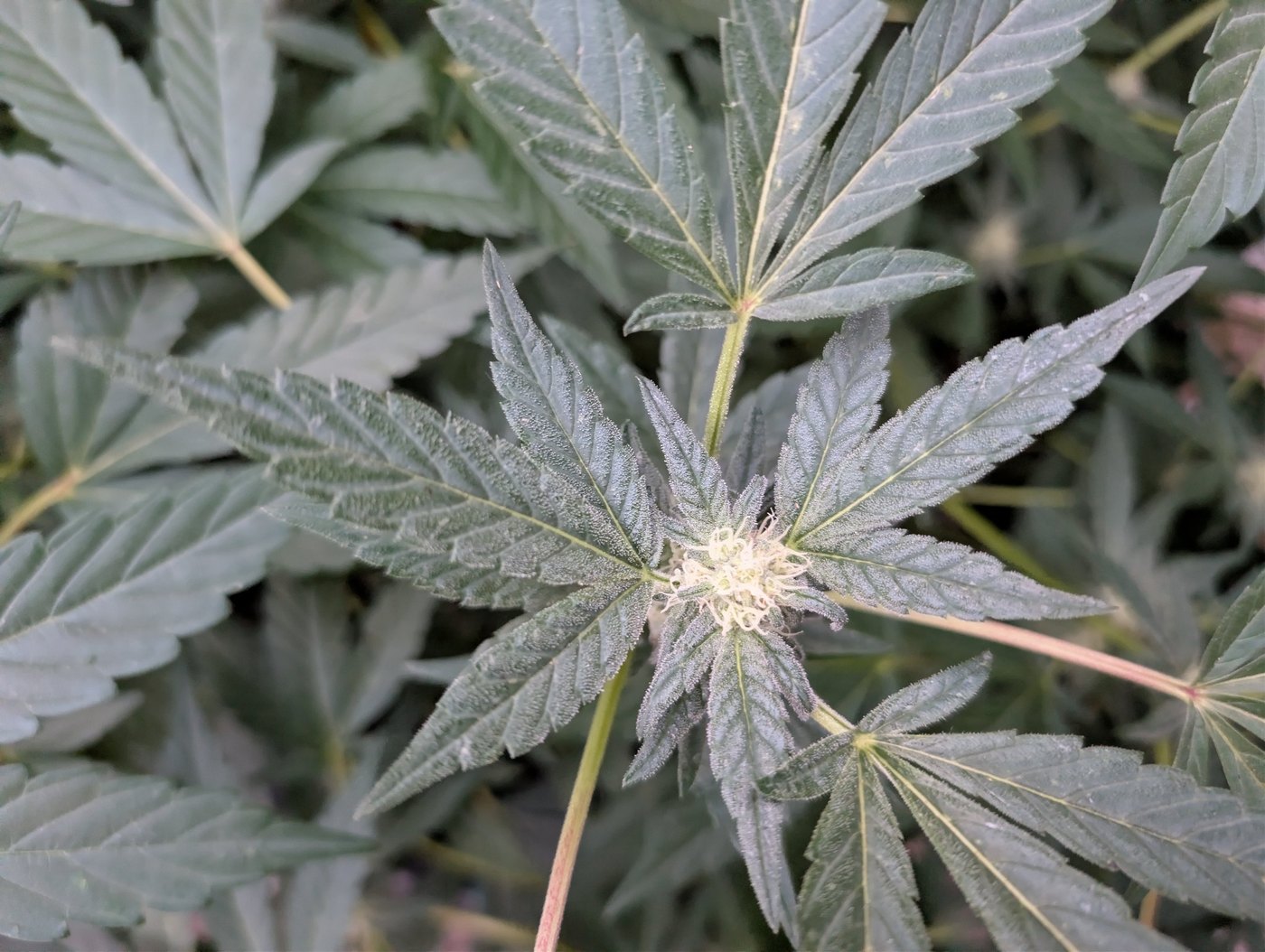
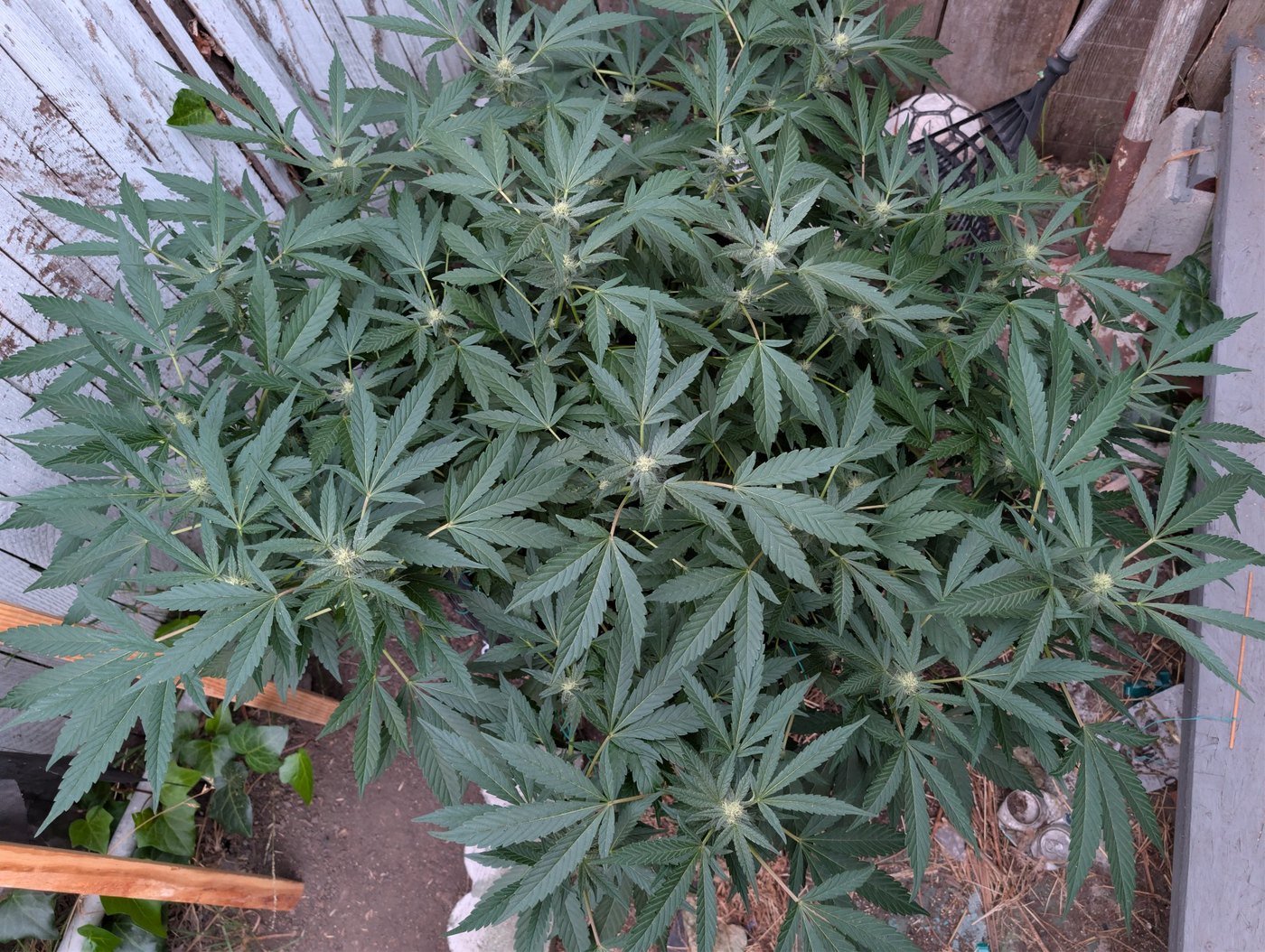
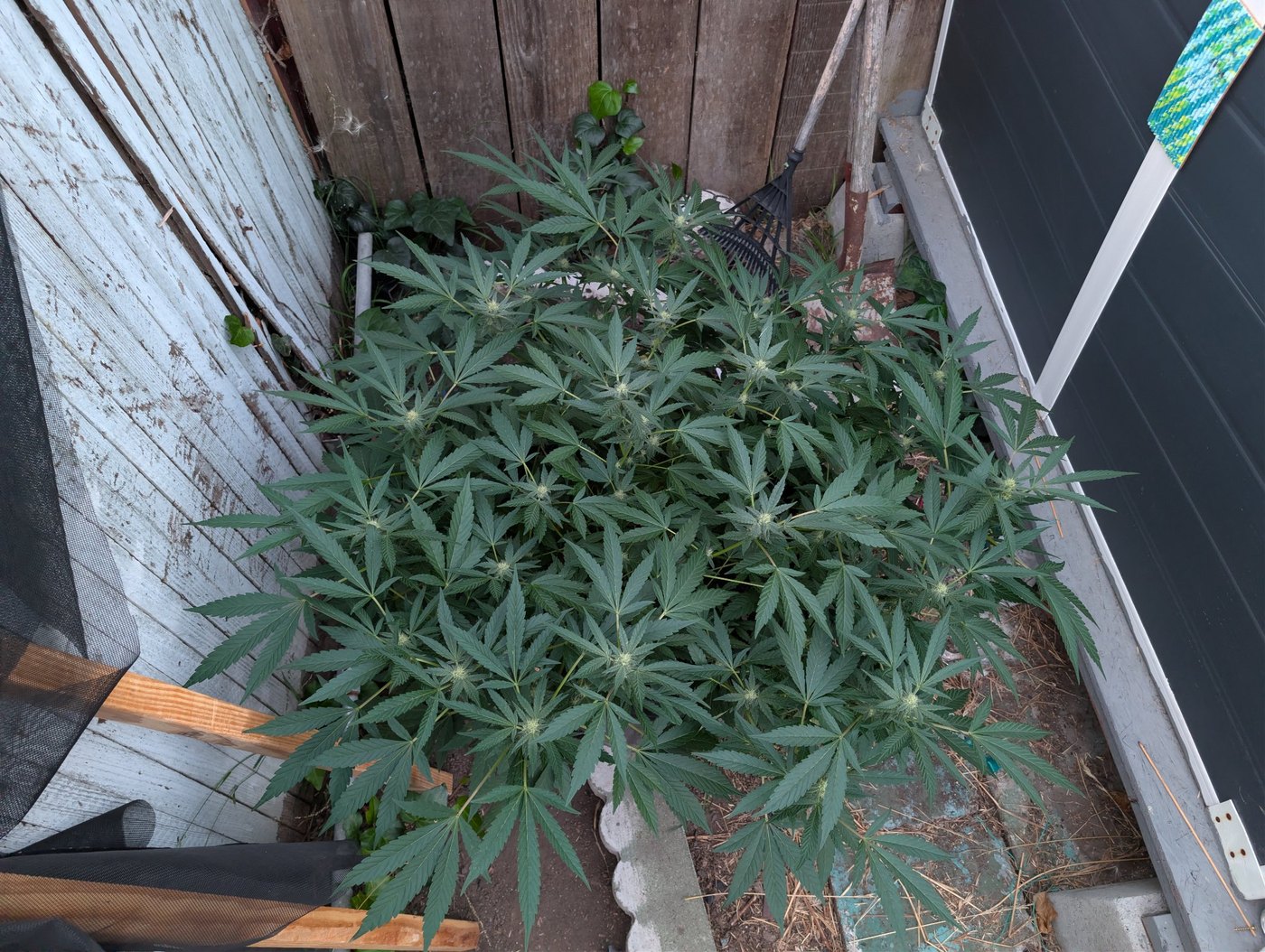
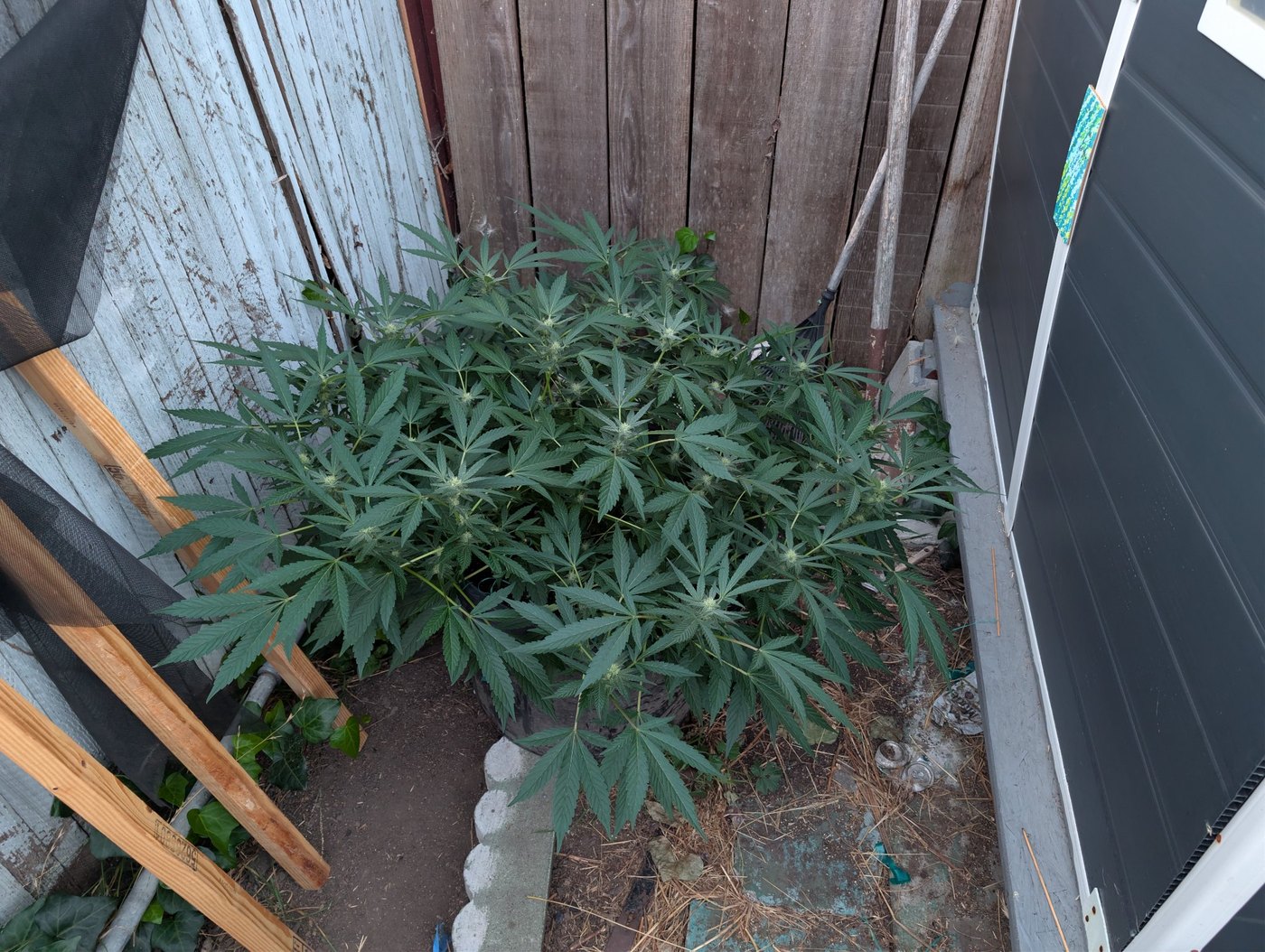
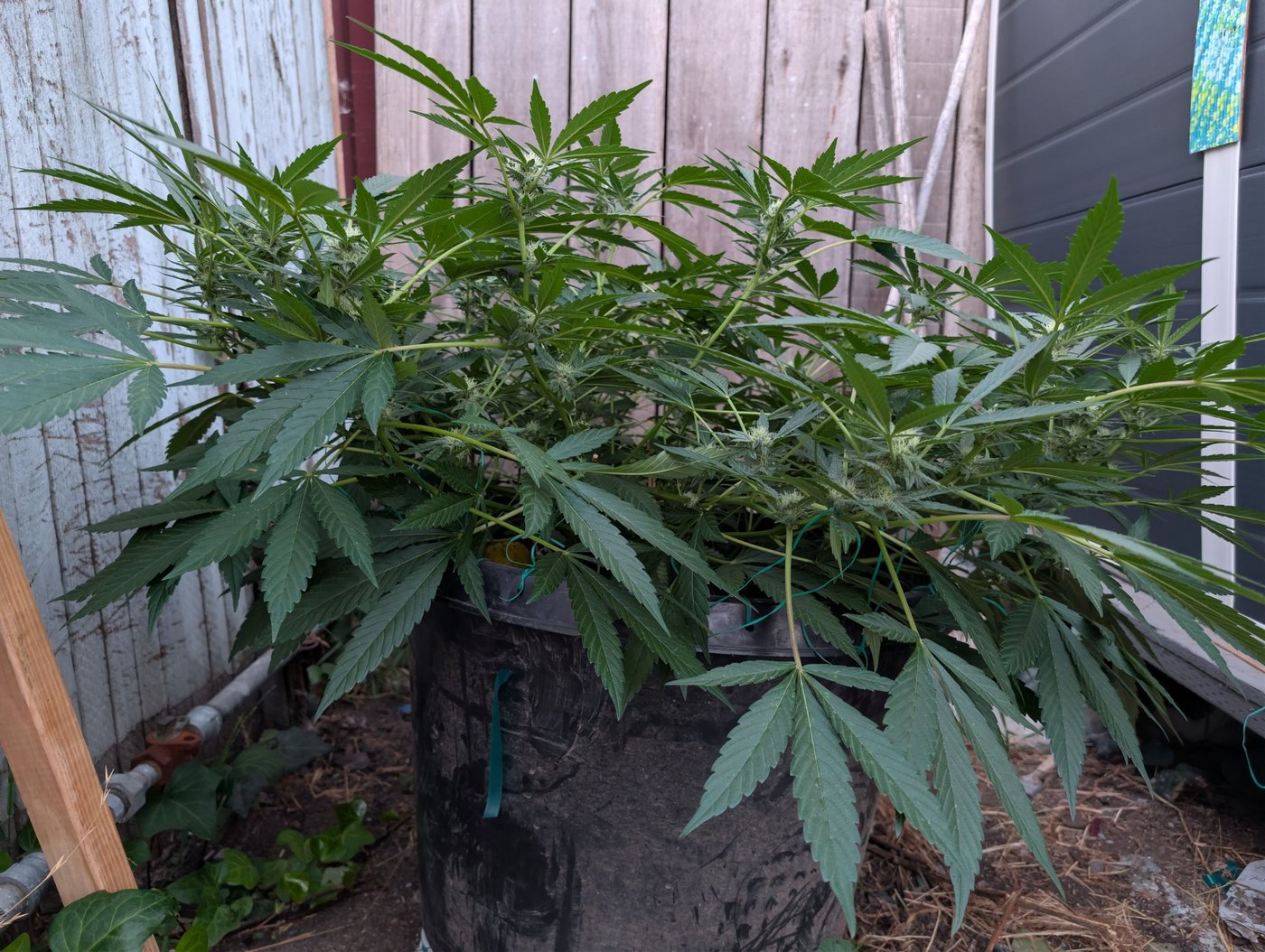
Our grower is running a beautiful Purple Pomegranate hybrid outdoors in a massive 30-40 gallon container of coco coir. The plant has been trained beautifully into a wide, flat, bush-like canopy using low-stress training wires. We are transitioning out of the vegetative stage, and the first young flower clusters are popping up with bright white pistils and a light dusting of early resin glands.
The weather that day was a cool 56F (13C) with a high relative humidity of 82% under clear skies. The grower noted they had not watered for four days since a 3-gallon flush. The plant was looking incredibly healthy, but they were planning to water that evening.
Why it worked
This is a textbook example of a perfect transition into early flower. The foliage is a rich, uniform deep green from the oldest fan leaves to the newest growth tips. This uniform color rules out any mobile nutrient issues like nitrogen or potassium deficiencies, as well as immobile issues like iron or calcium shortages.
The cool 56F (13C) overnight temperatures naturally slow down transpiration (how the plant drinks and breathes), meaning the root zone stays damp longer. Letting the medium dry down for four days was the absolute correct move. It prevented the roots from suffocating in the cool, damp weather and encouraged them to search outward for moisture, strengthening the root architecture. Because the leaves are so dark green, the plant has ample nitrogen stored, meaning adding more food right now would risk nitrogen toxicity, which can claw the leaves and stall flower development.
How to replicate it
- Give a plain water drink: Water with 3 gallons (11.4 liters) of plain water adjusted to pH 6.3 to refresh the root zone without over-saturating.
- Skip the fertilizer: Hold off on any extra nutrients for this watering cycle since the deep green leaves show the plant has plenty of stored energy.
- Add structural support early: Push vertical bamboo stakes into the outer edges of the pot now while the medium is damp so they lock in place.
- Secure the heavy branches: Use soft garden ties to loosely secure the outward-reaching branches to the stakes before the buds start putting on real weight.
Keep it going
- Monitor weather changes: Keep track of cool, damp mornings (below 60F or 15C) and extend the days between watering to match the slower evaporation rate.
- Check leaf color before feeding: If the leaves are already forest-green, skip the nitrogen-heavy veg nutrients to prevent clawing and delayed flowering.
- Support branches before they bend: Never wait for branches to sag under the weight of buds; support them when they are still light and upright.
- Watch the pH range: Keep the water pH in coco between 5.8 and 6.3 to ensure all essential flowering minerals remain fully available to the roots.
Facing something similar? Start a free journal and I'll look at your plant: photos in, diagnosis out, 24/7.
Get a free diagnosis