
Drooping Leaves in Early Flower: Is She Thirsty or Hungry?
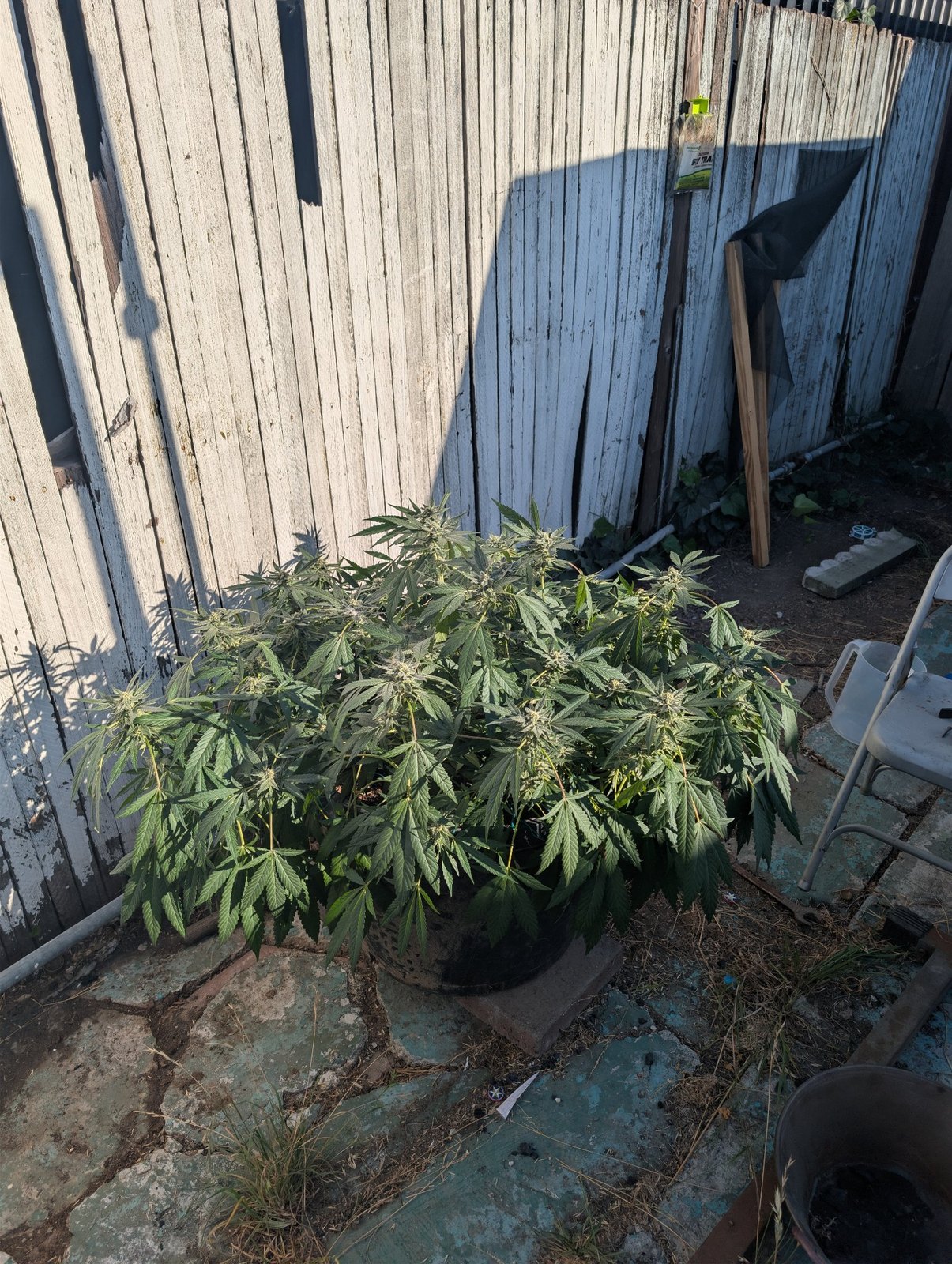
The situation
An outdoor grower with a beautiful Purple Pomegranate hybrid, growing in a massive 30-40 gallon coco pot, noticed the leaves taking on a uniform, tired-looking droop. The weather was a comfortable 77F with a dry 44% relative humidity under clear skies. At the same time, the plant was actively transitioning, showing beautiful clusters of fresh white pistils (the hair-like female flowers) at every bud site.
Unsure if the droop meant the plant was starving for flowering fuel or simply dry, the grower asked a classic question, "She is thirsty, how much bloom should I give?" It is a critical moment. In large outdoor containers, water and nutrient demands shift rapidly as those first pistils pop, and making the wrong move can lead to root shock or leaf burn.
The diagnosis
The first step was localizing the symptoms. The slight droop was completely uniform across the entire plant, affecting old and new growth equally, with no yellowing, spotting, or burnt tips. Because the droop was universal and the leaf blades themselves remained clean and green, this pointed directly to temporary dehydration (lack of water pressure in the cells) rather than a mobile or immobile nutrient deficiency.
The timeline backed this up perfectly. The plant had received four consecutive plain waterings since its last light feed. In a massive 30-40 gallon coco setup, the root zone had plenty of buffer, but after several plain waterings, the available nutrients were running low right as the plant's demand for phosphorus and potassium peaked. The diagnosis was dual: she was genuinely thirsty, and she was ready for her first mild dose of bloom nutrients, but the droop itself was purely from a dry medium.
The solution
- Hydrate with a gentle nutrient mix: Give the plant 3-4 gallons of clean water mixed with 1 teaspoon per gallon of a gentle bloom formula like Fox Farm Tiger Bloom, which is 3-4 teaspoons total for the whole pot.
- Mix in the correct order: Always add your nutrients to the water first and stir thoroughly before checking or adjusting anything else.
- Target the sweet spot pH of 6.3: For outdoor coco blends in large pots, keeping the water pH at 6.3 ensures excellent uptake of both major nutrients and trace minerals.
- Pour slowly and evenly: Distribute the 3-4 gallons across the entire surface of the 30-40 gallon pot to ensure the dry coco re-wets uniformly without channeling down the sides.
- Wait for the dry-down: Let the massive pot lighten up, which should take about 4-5 days in mild 70-80F weather, before watering again.
How to avoid this
- Lift the pot to gauge water weight: Get used to the physical weight of the container when dry versus wet, which is the most reliable water meter on earth.
- Do not let coco dry out completely: While soil loves a deep dry-down, coco performs best when kept consistently damp, so water just before the medium becomes bone-dry.
- Feed lightly and frequently: Instead of heavy, sporadic feedings, use mild nutrient doses (EC 1.6-1.8 during early flower) to keep a steady stream of food available.
- Track your water runs: Keep a simple count of plain waterings between feeds so you do not accidentally wash out all the nutrition during the critical stretch phase.
Facing something similar? Start a free journal and I'll look at your plant: photos in, diagnosis out, 24/7.
Get a free diagnosis