
Bud Rot Risk in Outdoor Corners: Airflow Tips for Dense Canopies
The situation
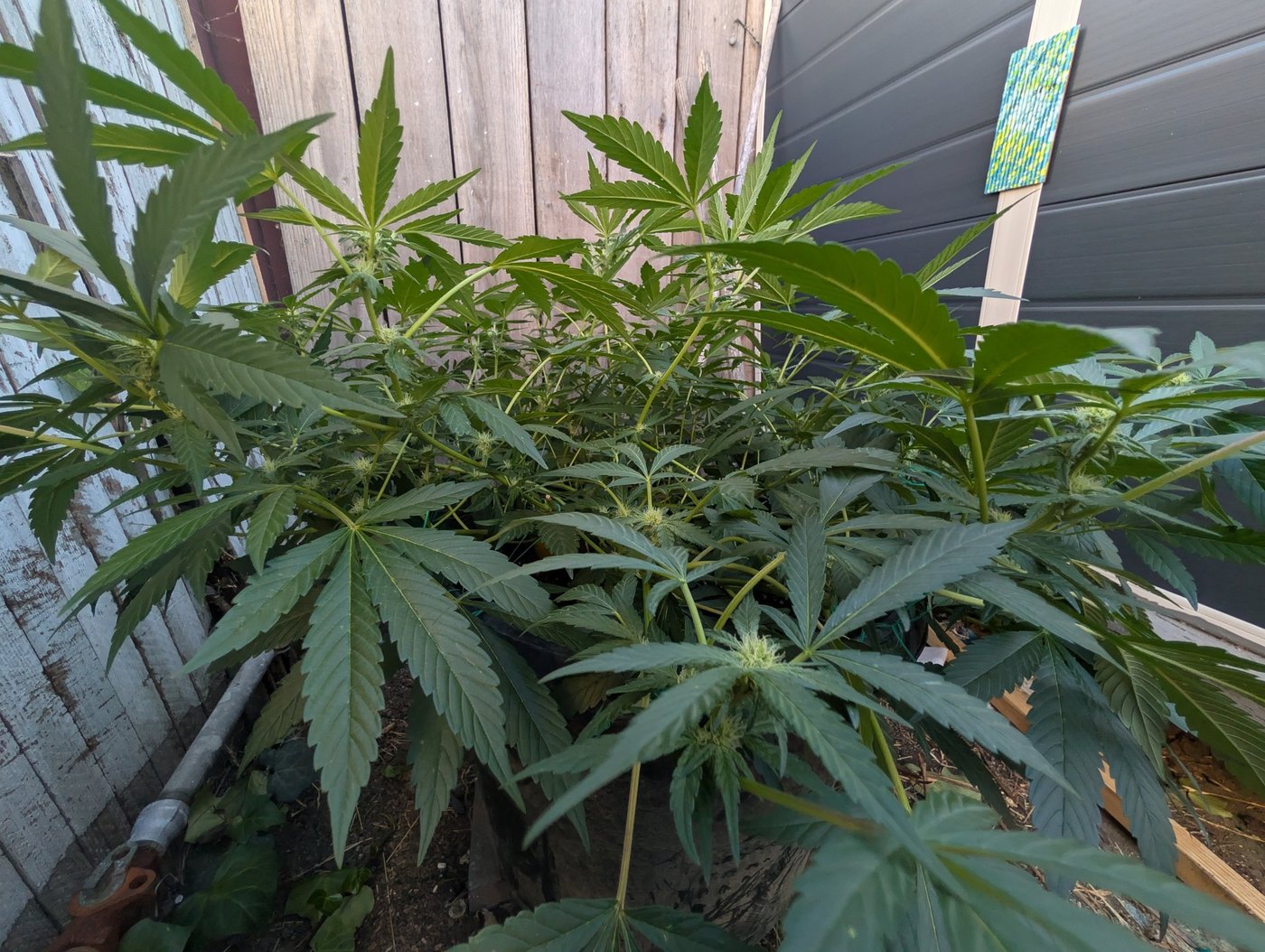
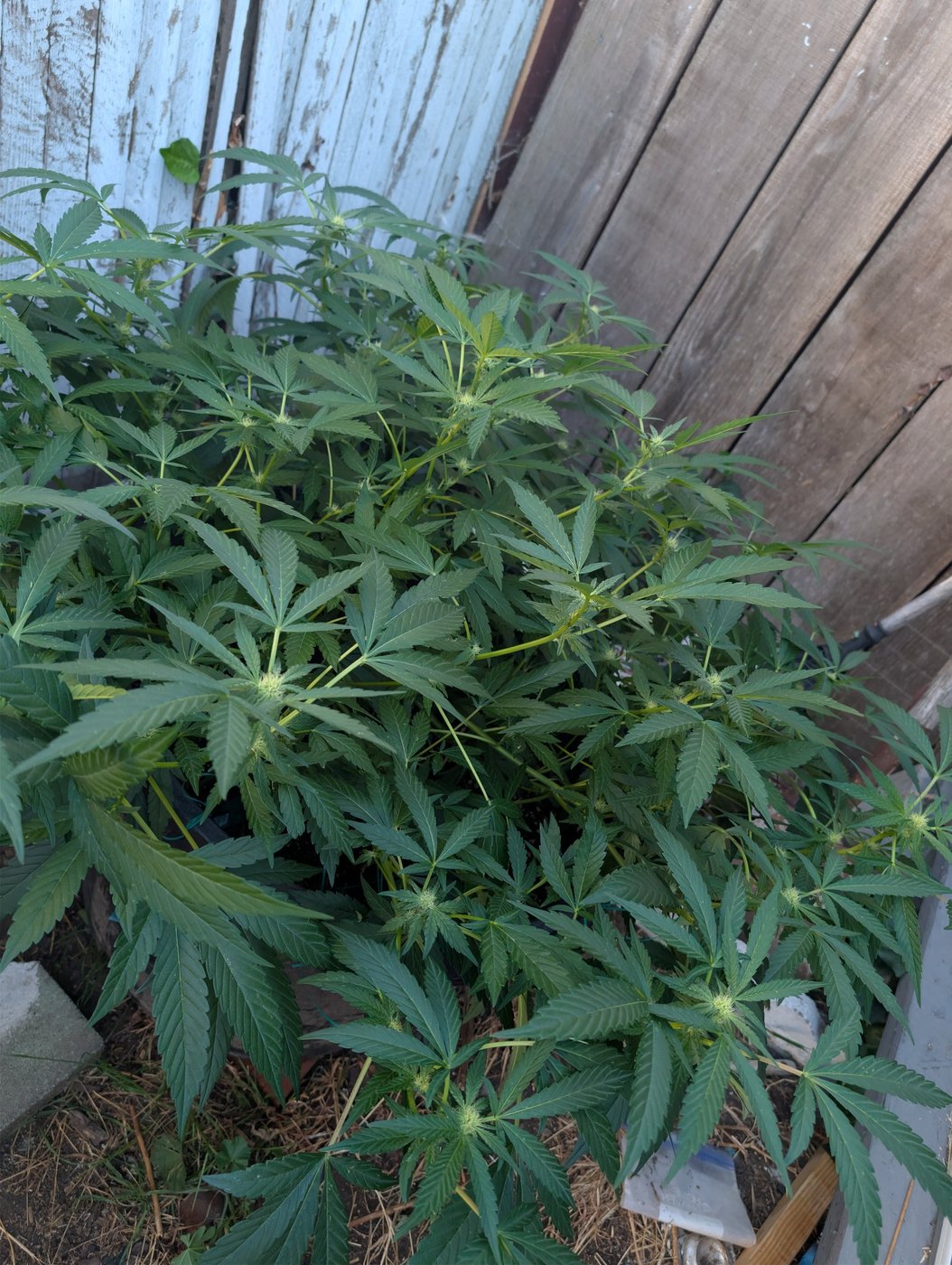
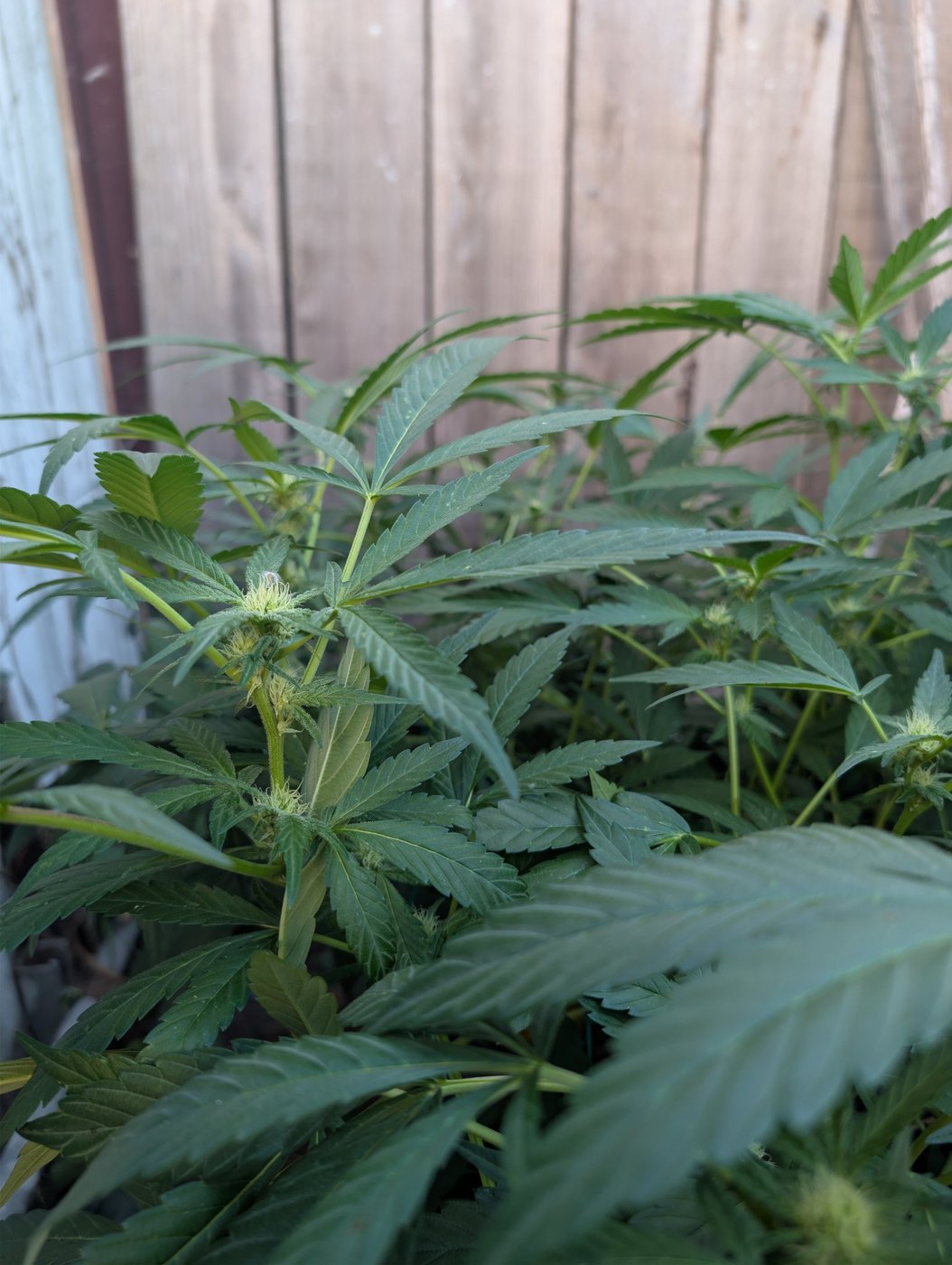
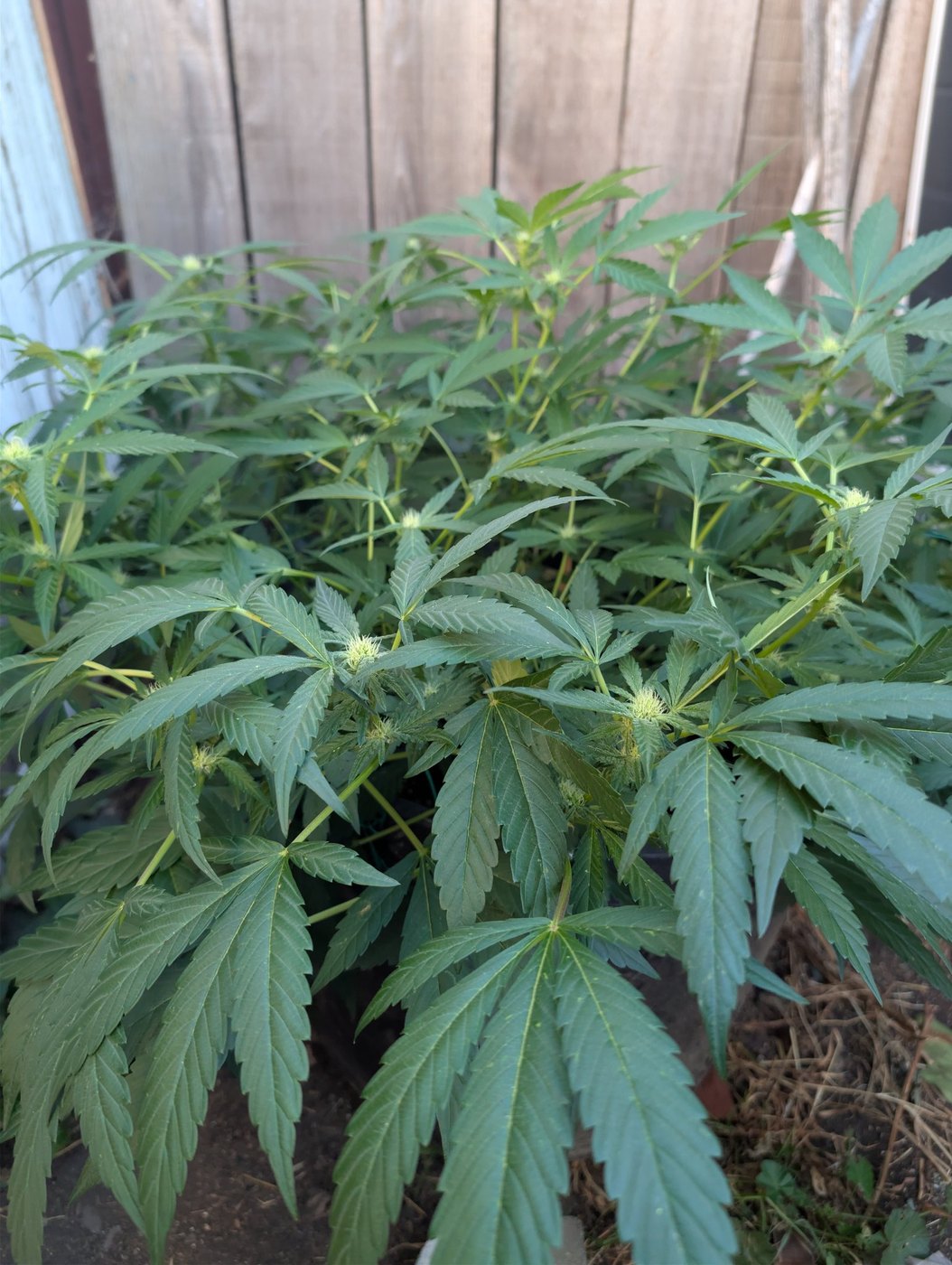
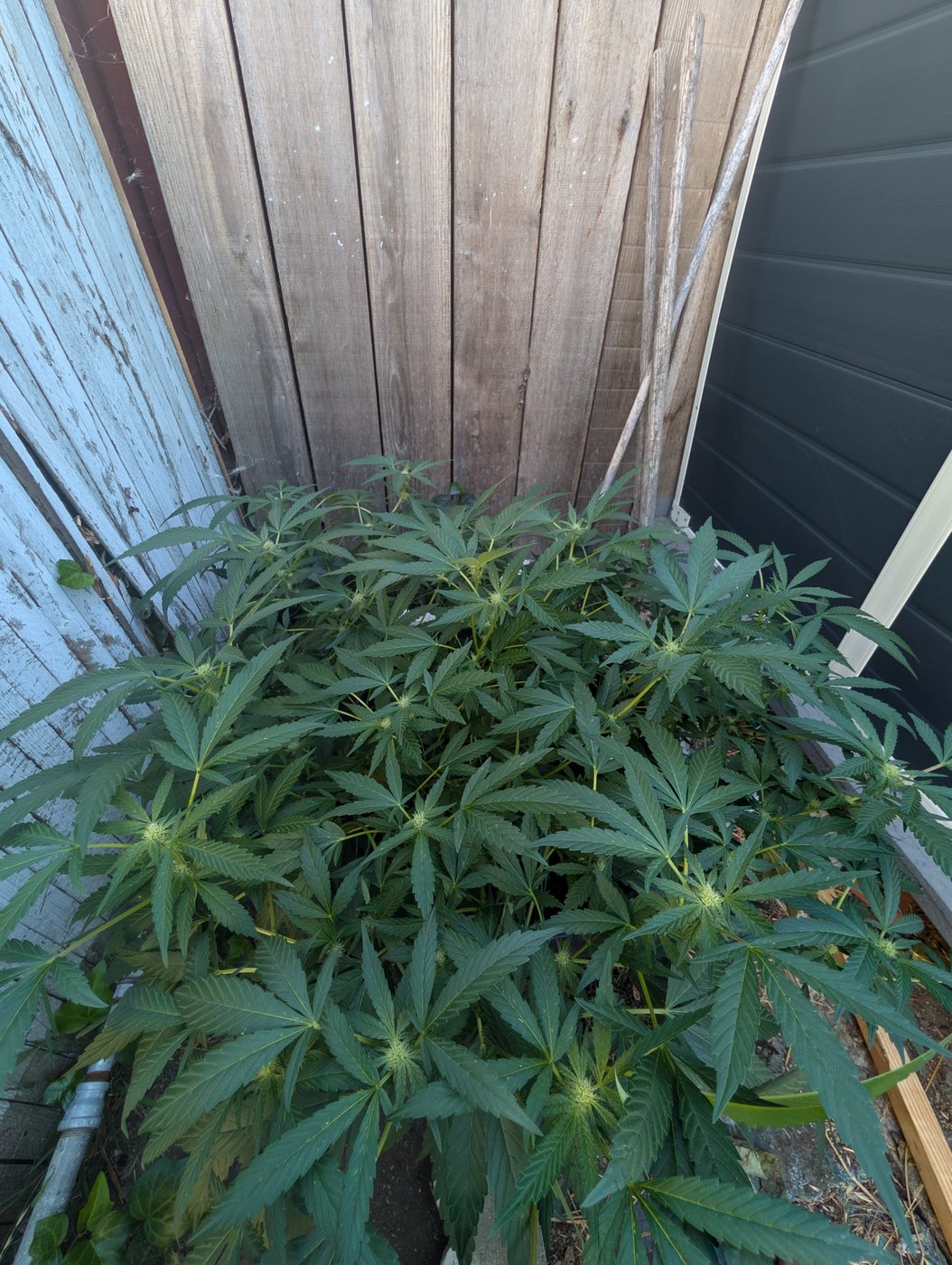
A grower has a beautiful, thriving Purple Pomegranate hybrid photoperiod sitting in a massive 30-40 gallon pot of coco. The grower did an outstanding job with low-stress training during the vegetative stage, creating a wide, flat, and incredibly dense bush. But as the plant transitions into early flowering, throwing out its first white pistils, the grower noticed how crowded the center was.
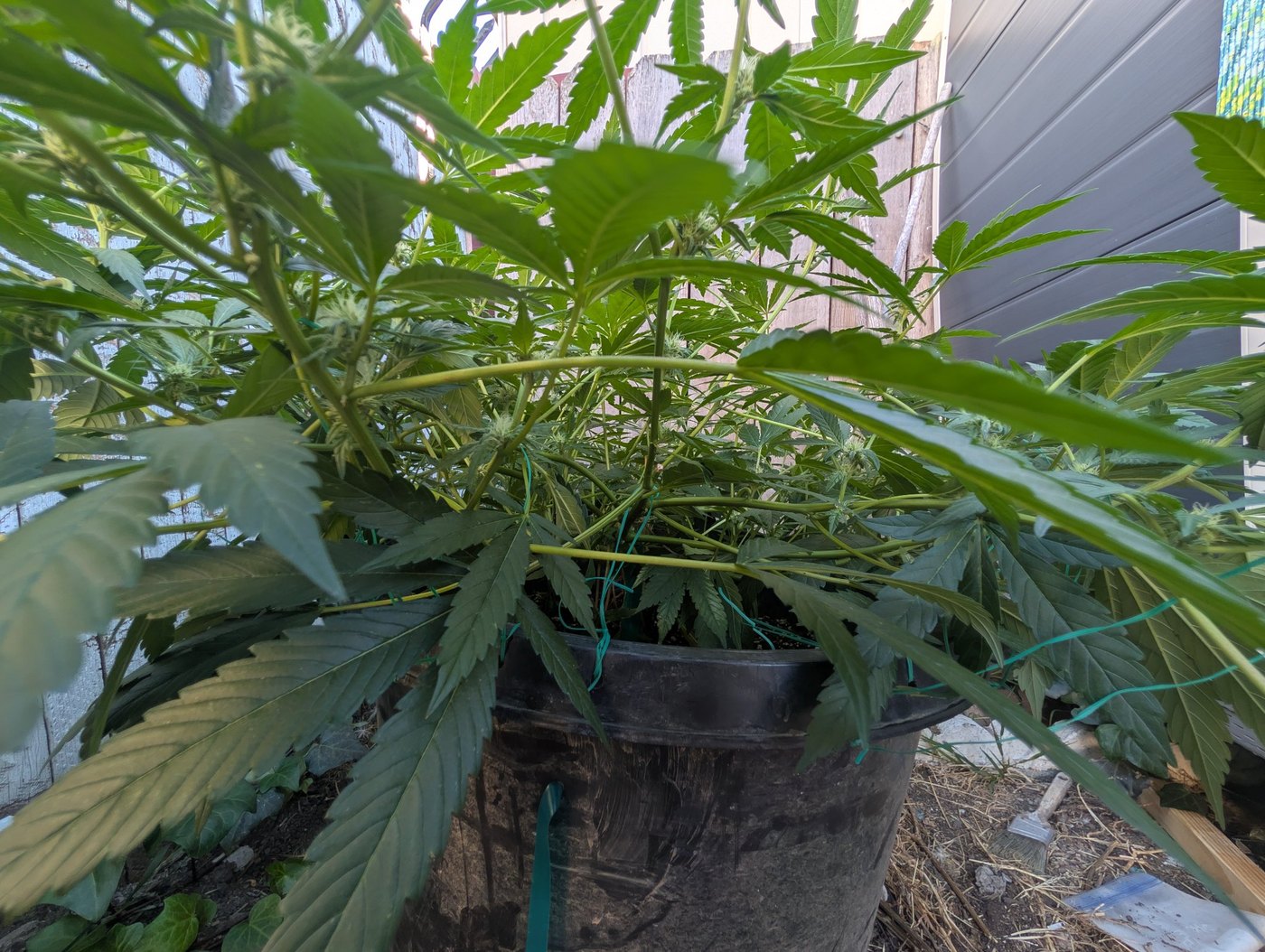
The ambient weather that day was gorgeous: 83 degrees Fahrenheit and a dry 27 percent relative humidity. To help light penetrate, the grower tucked the large fan leaves inward instead of cutting them. However, they worried about airflow and asked if the ventilation was sufficient, especially from the side angles.
The big clue was the plant's physical location. It was tucked neatly into a tight wooden corner on a patio. While this offers excellent privacy and wind protection, it blocks natural outdoor breezes and limits fresh air movement right around the dense under-canopy.
The diagnosis
To figure this out, we have to look at the plant's current stage and its microclimate. In the pre-flower stretch stage, plants pump out moisture through transpiration. Even when the ambient air is at a dry 27 percent humidity, the air inside a dense, leaf-tucked canopy sitting in a wind-shielded wooden corner can easily climb to 70 percent or higher. This creates a high-humidity microclimate, which is the perfect breeding ground for powdery mildew or bud rot as those beautiful pre-flowers turn into dense buds.
Leaf tucking is a fantastic vegetative technique because it preserves the plant's energy factories (the leaves) while exposing lower shoots. But once white pistils show up and the plant transitions to flower, tucking too many leaves into the center creates a moist, dark tangle.
We ruled out active pests or nutrient lockouts: the leaves are beautifully green and turgid, and the leaf stems show healthy, sun-induced purple coloration rather than a phosphorus deficiency. The real issue here is physical: wind block from the wooden corner combined with a highly congested canopy core.
The solution
- Move the pot if possible: Slide the container at least 3-4 feet away from the wooden walls to let the natural breeze pass through the canopy.
- Stop tucking and start selective pruning: Instead of tucking leaves into the center, selectively clip the largest fan leaves that are blocking major bud sites or pressing against other leaves. Focus on the inner 20 percent of the plant.
- Thin the bottom skirt: Remove the lowest, spindly growth and yellowing leaves within 6 inches of the pot rim. This opens up a clear channel for air to sweep under and up through the plant.
- Set up a small outdoor fan: If the pot cannot be moved out of the corner, run an outdoor-rated fan on a low setting pointed at the base of the plant to keep the air moving.
- Monitor morning dew: Shake the morning dew off the branches gently during early morning hours to prevent water from pooling in the dense bud sites.
How to avoid this
- Plan outdoor placement for wind paths: Position large containers in spots that receive open air circulation from at least three sides.
- Transition from tucking to defoliation: Switch from leaf tucking to strategic defoliation as soon as the first white pistils appear to prevent moisture traps.
- Monitor local humidity changes: Keep a close eye on weather changes, especially cool, damp nights when the temperature drops near the dew point.
- Keep the under-canopy clean: Routinely clear away dead leaves or debris from the coco surface to prevent mold spores from taking hold.
Facing something similar? Start a free journal and I'll look at your plant: photos in, diagnosis out, 24/7.
Get a free diagnosis